.webp)

What an HVAC Maintenance Visit Actually Includes (And Why It Matters)
What does an HVAC maintenance visit include is a fair question — and here's the short answer:
A standard HVAC maintenance visit includes:
• Air Filter — What Gets Done: Inspected, cleaned, or replaced
• Thermostat — What Gets Done: Tested and calibrated
• Electrical Connections — What Gets Done: Tightened and tested for safe voltage/amperage
• Moving Parts — What Gets Done: Lubricated to reduce friction and wear
• Condensate Drain — What Gets Done: Flushed and cleared to prevent water damage
• Coils (Evaporator & Condenser) — What Gets Done: Cleaned for efficient heat transfer
• Refrigerant Levels — What Gets Done: Checked and adjusted (cooling systems)
• Blower & Airflow — What Gets Done: Measured and adjusted
• Safety Controls — What Gets Done: Tested for proper startup and shutdown
• Heating Components — What Gets Done: Burner, heat exchanger, ignition, and gas connections inspected (heating systems)
• Ductwork — What Gets Done: Visually inspected for leaks or damage
A thorough visit should take one to one and a half hours per system in your home. If a technician is in and out in under 45 minutes without measuring or cleaning anything, that's a problem.
Most Minneapolis-Saint Paul homeowners only think about their HVAC system when something goes wrong. But just like a car needs regular oil changes to stay reliable, your heating and cooling system needs routine maintenance to run safely and efficiently. Skip it long enough, and a small issue — a clogged drain line, a worn capacitor, a dirty coil — quietly turns into a costly repair or an early system replacement. Your furnace and air conditioner should last 10 to 15 years, but neglected systems often give out well before that.
What Is HVAC Maintenance and Why Is It Important for Homeowners?
When we talk about HVAC maintenance, we aren't just talking about a quick "look-see." True maintenance is a proactive, multi-point inspection and cleaning process designed to keep your system in peak condition. Think of it as a health physical for your home’s most expensive appliance.
For homeowners in areas like Wayzata or Minnetonka, where the seasons swing from humid summers to sub-zero winters, this service is vital. Here is why we emphasize it:
• Efficiency and Energy Savings: According to the Department of Energy, a well-maintained system can consume up to 25% less energy. For example, an AC with a clean filter uses as much as 15% less energy than one with a dirty one.
• System Longevity: Your system is an investment. While a neglected unit might die at age 8, a maintained one can easily reach 15 or 20 years of service.
• Safety: We check for cracked heat exchangers and gas leaks that could lead to carbon monoxide poisoning. We also look for frayed wiring that poses a fire hazard.
• Warranty Compliance: Most manufacturers require proof of annual professional maintenance to keep your warranty valid. If a part fails and you haven't had your yearly tune-up, they may deny your claim.
How Long Should a Professional HVAC Maintenance Visit Typically Take?
If you’ve ever had a "technician" show up, poke a screwdriver at the outdoor unit, and leave 20 minutes later, you didn't receive a maintenance visit—you received a drive-by.
A thorough HVAC maintenance appointment should take between one and one and a half hours per system. If you have a separate furnace and air conditioner, or a complex heat pump system, your technician will likely be at your home for a significant amount of time. If you have two full systems (common in larger homes in Eden Prairie or Maple Grove), expect the visit to last up to three hours.
Quality takes time because the technician has to open the cabinets, clean the interior components, measure electrical draws, and test the system through a full cycle. If the visit is shorter than 45 minutes, it’s a major red flag that critical steps were skipped.
What Qualifications Should an HVAC Technician or Company Have?
You wouldn't let an unlicensed surgeon operate on you, so why let an uncertified person work on the complex machinery that keeps your family safe? When looking for HVAC Services, check for these credentials:
1. NATE Certification: North American Technician Excellence (NATE) is the gold standard. It means the technician has passed rigorous testing on real-world HVAC knowledge.
2. EPA Certification: This is legally required for any technician handling refrigerants.
3. Licensing and Insurance: A reputable company must be licensed, bonded, and insured. This protects you from liability if an accident occurs on your property.
4. Local Expertise: Companies familiar with the specific demands of the Twin Cities climate—like the intense workload our furnaces face in January—are better equipped to spot regional issues.
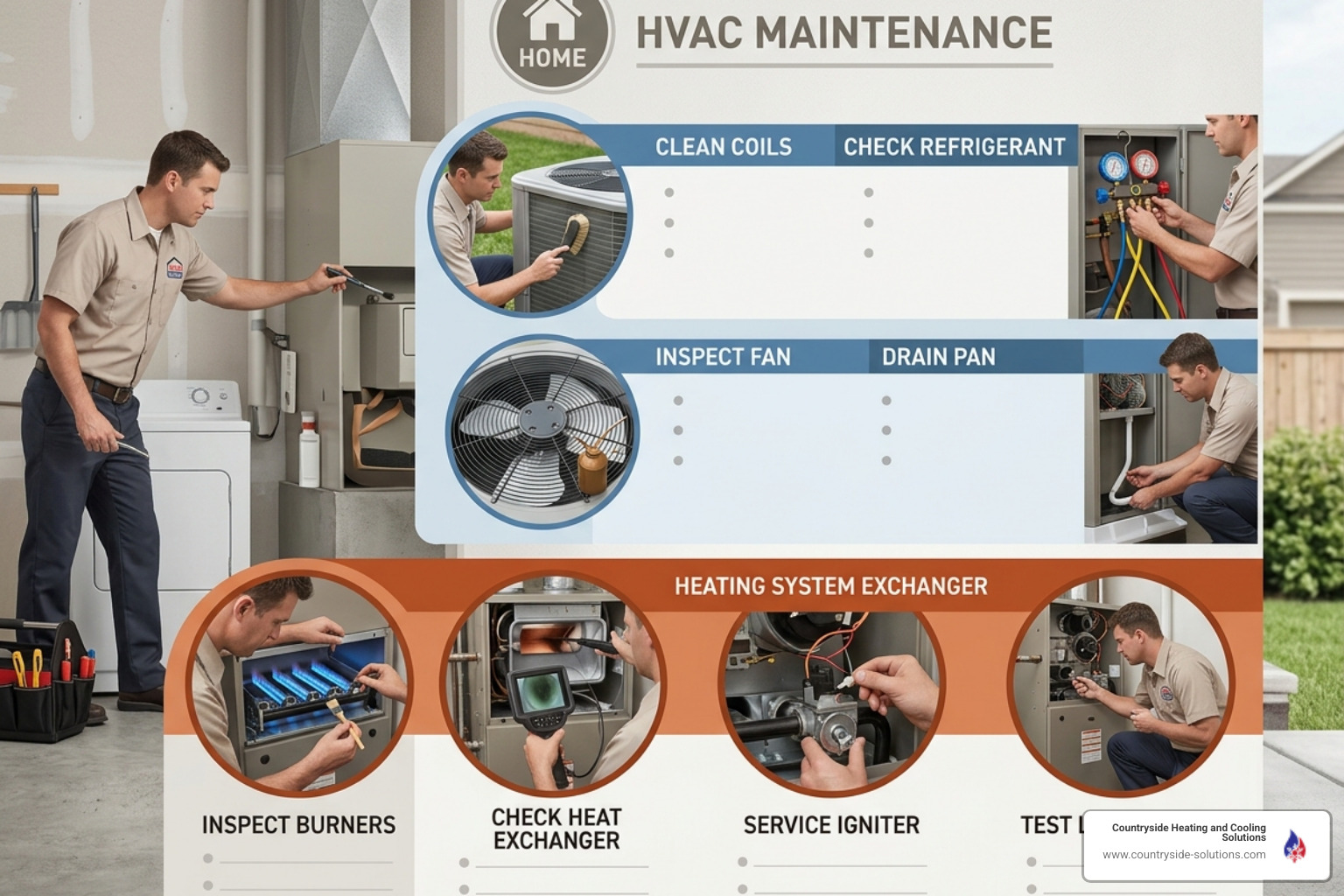
What Specific Components Are Inspected During a Cooling System (AC) Maintenance Check?
During the spring, we focus on getting your system ready for the "dog days" of summer. When you Schedule Professional HVAC Maintenance for your AC, the technician will dive into several specific areas:
The Outdoor Condenser Unit
The technician will remove debris, leaves, and dirt from the outdoor cabinet. They will inspect the aluminum fins for damage and clean the condenser coil. A dirty coil forces the compressor to work harder, increasing your bills and shortening its life.
Refrigerant Levels
We don't just "top it off." We measure the pressure and temperature to ensure the refrigerant charge is exactly where the manufacturer intended. Low refrigerant usually indicates a leak, which we need to find and fix.
The Evaporator Coil
Located inside your home, this coil is where the cooling actually happens. We check it for dust and biological growth. If it's dirty, it can't absorb heat effectively, which can lead to your system "freezing up" into a block of ice.
Condensate Management
As your AC cools the air, it removes moisture. This water collects in a pan and flows out a drain line. We flush this line to prevent clogs. A clogged drain is the #1 cause of HVAC-related water damage in homes.
For residents specifically looking for AC Maintenance Medina MN, these steps are non-negotiable for a reliable summer.
What Specific Components Are Inspected During a Heating System (Furnace/Heat Pump) Maintenance Check?
In the fall, the priority shifts to safety and reliability for the winter. Whether you are looking at Heating Maintenance Maple Plain MN or Heat Pump Maintenance Waconia MN, the checklist is extensive.
Heat Exchanger Inspection
This is the most critical safety check. We look for cracks, rust, or soot. A cracked heat exchanger can leak deadly carbon monoxide into your home’s airstream.
Burner and Pilot Assembly
We clean the burners to ensure a clean, blue flame. If the flame is yellow or flickering, it indicates improper combustion. We also check the flame sensor or thermocouple to ensure the system stays lit safely.
Gas Connections and Pressure
We test gas lines for leaks and measure the gas pressure. Improper pressure can lead to "booming" ignitions or inefficient heating.
Heat Pump Specifics
If you have a heat pump, we test the defrost cycle and the reversing valve. These components allow the system to switch between heating and cooling modes. You can learn more about these specific needs at Heat Pump Maintenance Solutions.
What General System Checks Are Included?
Beyond the heating and cooling specifics, there are general "housekeeping" tasks that apply to every visit. These ensure the mechanical and electrical "brains" of the system are functioning.
• Thermostat Calibration: We verify that your thermostat is reading the room temperature accurately. An uncalibrated thermostat can cause your system to run too long or not long enough.
• Electrical Connections: We tighten all wire connections. Loose connections can cause sparks, system failure, or even fires. We also measure the "amp draw" on motors; if a motor is pulling too much power, it’s likely about to fail.
• Lubrication: We lubricate all moving parts, such as the blower motor bearings. This reduces friction, which saves electricity and prevents the motor from burning out.
• Safety Controls: We test the limit switches and safety shut-offs. These are designed to turn the system off if it begins to overheat or if a dangerous condition is detected.
How Are Air Filters Addressed During an HVAC Maintenance Visit?
The humble air filter is perhaps the most important part of your system that you can manage yourself, but it’s also a core part of our professional visit.
During the maintenance call, we inspect your filter and replace it if you have a replacement on hand. We also evaluate if you are using the right type of filter. While high-efficiency MERV 13 filters are great for air quality, some older systems in homes across Buffalo or Delano aren't designed for that level of restriction. A filter that is too "thick" can actually choke your system, reducing efficiency by up to 15%.
Manufacturers generally recommend replacing filters every 60 to 90 days. However, if you have pets, allergies, or live in a dusty area, once a month is better. For more details on system-specific care, see How Often Should You Get Your Bryant HVAC System Serviced?
What Should Homeowners Expect in Terms of Reporting and Recommendations?
A professional technician should never just say "Everything looks good" and hand you an invoice. You should receive a detailed, written report of the findings. This report should include:
1. The Checklist: A list of every component inspected and cleaned.
2. Measurements: Specific data like refrigerant pressures, temperature splits, and motor amperage.
3. Safety Status: A clear statement on the integrity of the heat exchanger and gas connections.
4. Recommendations: If the technician finds a part that is "drifting" out of spec—like a capacitor that is losing its charge—they should recommend replacing it now to avoid a breakdown later.
Transparency is key. If a technician says you need a repair, ask them to show you the part or the reading on their diagnostic tool. For more common questions, our HVAC FAQ is a great resource.
What Should Homeowners Look for in an HVAC Maintenance Plan?
Many homeowners find that Service Plans are the easiest way to stay on top of maintenance. These plans typically include two visits per year (one for heat, one for AC) and often come with perks like priority scheduling or discounts on repairs.
However, watch out for red flags in maintenance plans:
• Vague Descriptions: If the contract just says "System Check," that isn't enough. It should list specific tasks like coil cleaning and drain flushing.
• Hidden Fees: Ensure the "tune-up" price includes the actual cleaning, not just a visual inspection.
• No Written Report: If they don't provide a record of their work, it’s hard to prove the maintenance was done for warranty purposes.
Exploring Comprehensive AC Maintenance Plans can help you compare what a high-quality agreement looks like.
When Is the Best Time to Schedule HVAC Maintenance?
Timing is everything. Most professionals recommend scheduling maintenance twice a year:
• Spring (March - May): For your cooling system.
• Fall (September - November): For your heating system.
Scheduling in the "shoulder seasons" ensures your system is ready before the extreme weather hits. It also means you won't be stuck waiting weeks for an appointment during the mid-summer or mid-winter rush when technicians are busy with emergency repairs.
If you're wondering about the specifics of the furnace side of things, check out What Is Involved In Heating Maintenance? or What Maintenance Needs To Be Done On A Gas Furnace?
Summary: The Value of a Professional Visit
Understanding what does an hvac maintenance visit include helps you hold your service provider to a high standard. When done correctly, maintenance is the single best way to ensure your home remains a sanctuary of comfort, no matter what the Minnesota weather throws at it.
From checking the electrical "heartbeat" of your system to ensuring the air you breathe is clean and safe, these visits pay for themselves through lower utility bills and fewer emergency calls. If it's been more than six months since your last check-up, now is the time to act.
Ready to protect your home's comfort? Schedule HVAC Service with our NATE-certified team today. Whether you need to know What Happens When You Get Your Furnace Serviced? or want to learn the Top Reasons To Service Your Air Conditioner Regularly, Countryside Heating and Cooling Solutions is here to help our neighbors in Maple Plain and the surrounding Twin Cities metro.
Call to Action: Don't wait for a breakdown to find out your system needs help. Ensure your family's comfort and safety by booking your seasonal tune-up now. Visit our HVAC Maintenance Page to learn more about our local services in Minnetonka and beyond!
