.webp)

The Hidden Threat to Rural Maple Plain Heating Systems in Early Fall
At Countryside Heating & Cooling Solutions, our technicians find that more than 60% of emergency no-heat calls in rural areas during the first true cold snap trace back to issues that could have been caught weeks earlier. Preparing Maple Plain propane furnaces for the first deep freeze isn't just about changing a filter; it's about anticipating the unique vulnerabilities of rural heating systems before the temperature plummets. Minnesota's first freeze typically strikes between late September and early October, creating a very brief window for you to evaluate your system's readiness.
If you live in the city, natural gas lines provide a constant, regulated flow of fuel regardless of the weather outside. However, rural propane setups are entirely different beasts. Because your fuel is stored on-site and exposed to the elements, your system faces severe vulnerabilities during early fall temperature swings. The sudden drop in temperature that characterizes the severe, freezing winters of Maple Plain, MN can catch many rural homeowners off guard—a pattern our team sees year after year. Failing to prepare your LP (propane) furnace systems can result in dangerous emergency no-heat situations exactly when you need warmth the most. By securing reliable heating services and understanding exactly what to check safely during the September pre-heating season, you guarantee uninterrupted comfort for your family.
The Physics of Propane in Extreme Minnesota Cold
In our years of servicing rural Hennepin County properties, we've learned that to truly understand why your rural heating system is vulnerable, you have to look at the underlying mechanics of liquid propane. Severe Minnesota temperature swings in early fall heavily impact propane vaporization rates, making this a climate-specific physics issue rather than just a mechanical furnace problem. As the temperature drops, the physical properties of the fuel inside your tank change dramatically.
1. Volume contraction: Propane volume naturally shrinks in cold weather. As the liquid condenses, the overall level in the tank drops, which significantly reduces the surface area of the liquid exposed to the empty space above it.
2. Vaporization pressure drop: Your furnace does not burn liquid propane; it burns the vapor that boils off the top. This reduction in surface area causes a massive drop in vaporization pressure. If the pressure drops too low, the vapor cannot reach the burners, and the furnace will fail to fire entirely.
3. The 30% rule: Maintaining a tank level of at least 30% to 40% full is a critical defense mechanism against pressure loss during a deep freeze. A fuller tank has more surface area and more thermal mass to keep vaporization happening even at sub-zero temperatures.
4. Masked symptoms: Temperature swings in early fall can mask these pressure issues. A warm afternoon might provide enough pressure for the furnace to run, but a freezing night will shut it down.
If your system repeatedly fails to ignite on cold nights, you may need professional Maple Plain furnace repair to diagnose whether the issue is tank pressure, a faulty regulator, or a failing ignition sequence.
Why Tank Volume Matters Before the Freeze
Our technicians always stress that the relationship between ambient temperature and propane vaporization capacity is absolute. Running low on fuel in September is far more dangerous than running low in July. In the summer, even a tank at 10% capacity can generate enough pressure to run a water heater. In the dead of winter, that same 10% tank will likely fail to produce enough vapor pressure to keep your furnace running. This is why filling your tank before the first freeze is non-negotiable.
• Mild Early Fall — Ambient Temperature: 50°F to 60°F — Propane Volume Behavior: Normal expansion — Vaporization Risk Level: Low (Adequate pressure even at low tank levels)
• First Freeze — Ambient Temperature: 32°F and below — Propane Volume Behavior: Noticeable shrinkage — Vaporization Risk Level: Moderate (Requires at least 30% tank capacity)
• Deep Winter Snap — Ambient Temperature: 0°F to -20°F — Propane Volume Behavior: Severe contraction — Vaporization Risk Level: High (Low tanks will stop vaporizing entirely)
September Visual Inspections Every Homeowner Should Perform
Before the snow flies, our heating specialists recommend several safe, actionable DIY steps you can take to evaluate the readiness of your rural Maple Plain properties. These visual checks allow you to catch obvious problems without crossing into dangerous professional territory.
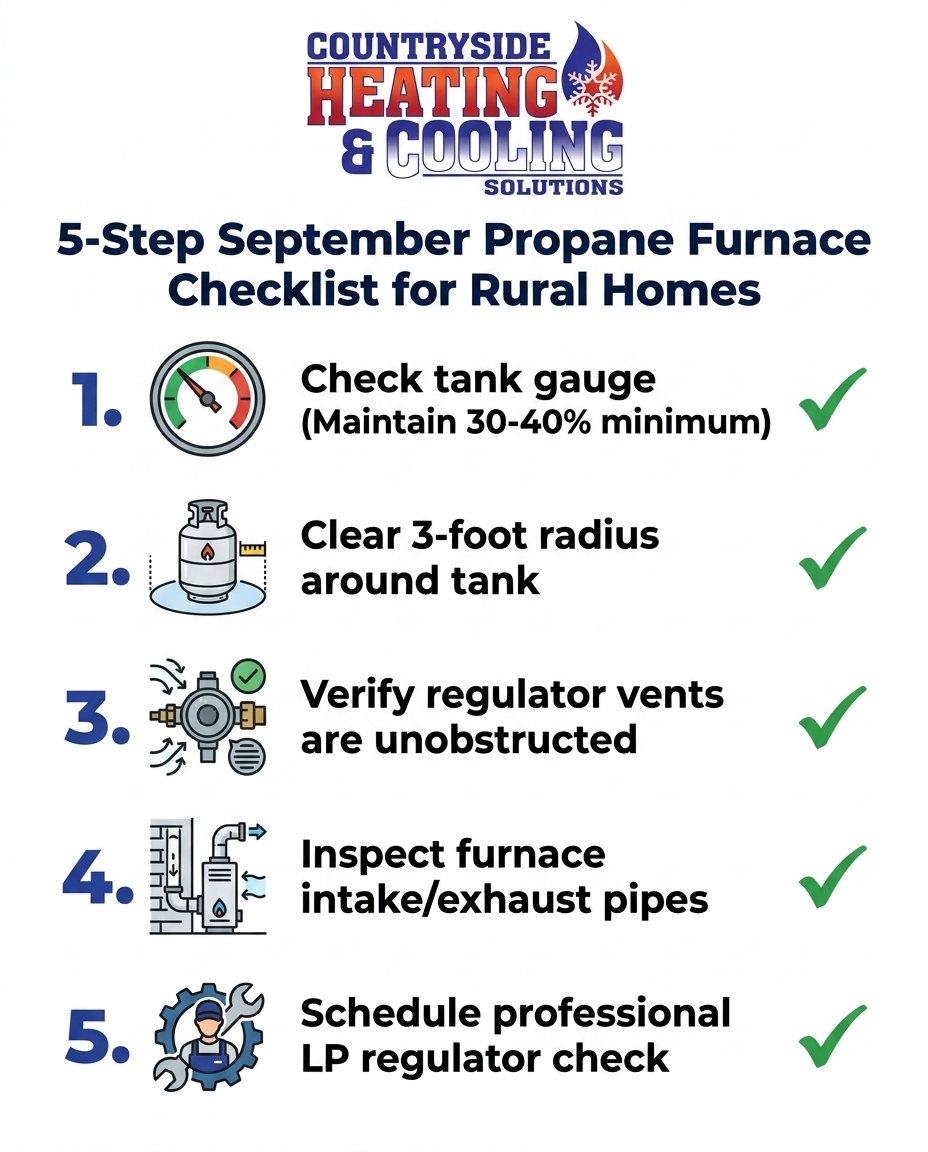
• Checking the tank pressure gauge: Locate the gauge under the dome of your propane tank. It reads in percentages, not gallons. If the dial is hovering near 30%, call your fuel supplier immediately to schedule a delivery before the cold sets in.
• Clearing the surrounding area: Visually inspect the area around the tank for encroaching vegetation, tall grass, or debris. You need a clear, three-foot radius around the tank to ensure proper airflow and to allow delivery drivers safe access during deep snow.
• Inspecting exterior furnace venting: High-efficiency LP (propane) furnace systems vent exhaust and draw intake air through PVC pipes on the side of your home. Check these pipes for early fall blockages like leaves, spider webs, or insect nests. Blocked vents are one of the most common issues causing your furnace to shut off unexpectedly.
• Looking for physical wear: Identify physical signs of wear on the tank exterior, such as heavy rust or leaning foundations. Do not attempt to repair these yourself; simply note them and notify your propane supplier.
The Vulnerability of Exterior LP Regulators to Freezing Rain
One of the most overlooked components of rural heating our technicians encounter is the exterior LP regulator. This device sits between your tank and your home, stepping down the high pressure of the tank to the low pressure required by your furnace. Exterior regulators feature specific vent holes that allow the internal diaphragm to breathe. These vents must remain completely clear to function safely.
Rural Hennepin County properties face unique wind-driven snow and freezing rain challenges that city properties often avoid due to natural windbreaks. Out in the open, wind-driven snow drifts can easily bury these regulators overnight. Worse, early fall freezing rain can create a hard ice shell over the regulator, sealing the vent hole. When the vent is blocked, the regulator stops working, leading to a sudden furnace shut-off.
Sudden heating failures in cold weather require immediate, knowledgeable intervention to prevent your home's pipes from freezing. Just last fall, our Countryside Heating & Cooling Solutions team responded to a local customer who experienced a sudden furnace failure during a cold snap. Our technician quickly identified the frozen regulator and restored heat the same day, proving that having an expert troubleshoot unexpected cold-weather shutdowns is vital for rural homeowners.
The Boundary Between Visual Checks and Mandatory Professional Maintenance
While visual inspections are highly encouraged during the September pre-heating season, there is a strict safety boundary you must never cross. Homeowners must never attempt to adjust, thaw with open flames, or physically alter propane regulators. Propane is highly combustible, and the pressure dynamics require specialized tools and training.
Working with rural LP setups requires a different skill set than working with city natural gas. Our specialists at Countryside Heating & Cooling Solutions understand the specific pressure requirements and freezing vulnerabilities that city-focused technicians might miss. You gain immense peace of mind knowing that a certified expert has verified your system's integrity before extreme weather arrives.
If you notice any signs of trouble, it is time to schedule a heating inspection with a licensed professional who is trained in LP gas codes and safety standards.
When to Call a Propane Furnace Specialist
The warning signs: You should immediately call for professional help if you identify abnormal odors near the tank or the regulator. Propane has a distinct "rotten egg" smell added for safety. Additionally, if you hear hissing sounds coming from the regulator housing, or if you see frost build-up on the unit itself when it is not raining or snowing, the regulator is likely failing.
The operational failures: Repeated furnace lockouts or a failure to ignite after multiple attempts usually point to a pressure issue that only a professional can resolve. Visual damage to the regulator housing or the copper supply lines also mandates an immediate service call.
Securing Your System with Preventative Fall Maintenance
Beyond the propane supply and the exterior regulator, the furnace unit inside your home requires a comprehensive tune-up. Preventative maintenance is the safety net that catches failing parts before they cause a midnight breakdown in December.
A thorough tune-up involves changing the blower filter, cleaning the flame sensor, and testing the ignition sequence while the weather is still mild. The blower motor works incredibly hard during a Minnesota winter, and a dirty motor runs hotter and draws more electricity, leading to premature failure. Recently, our crew performed a routine cleaning for a local homeowner whose system was struggling last winter. Our technician cleaned the extremely dirty furnace and ductwork, providing before-and-after pictures that showed the system looking brand new—a perfect example of why our team champions proactive care to restore efficiency.
Enrolling in structured preventative maintenance plans offers long-term benefits for rural properties. You get priority scheduling, regular professional eyes on your LP system, and the assurance that your thermostat and safety switches are calibrated perfectly for the season ahead.
Frequently Asked Questions About Rural Propane Heating
How does cold weather affect propane pressure?
Cold weather causes liquid propane to shrink, which lowers the pressure inside the tank. When the temperature drops, the liquid cannot boil into vapor as quickly. If the tank level is too low during extreme cold, the pressure can drop so much that the vapor cannot reach your furnace, causing your heating system to shut down.
How can I protect my propane regulator in winter?
You protect your propane regulator by ensuring the protective dome cover is in place and the vent hole points downward, away from falling snow and freezing rain. Keep the area around the regulator clear of snow drifts and ice build-up. Never try to build an airtight box around it, as the regulator needs to breathe to function safely.
At what temperature does a propane tank lose pressure?
A propane tank begins to lose pressure as soon as temperatures drop below 60°F, but severe pressure loss usually occurs at 0°F and below. Propane stops vaporizing entirely at -44°F. However, if your tank is less than 30% full, you can experience pressure failures at much warmer winter temperatures due to the lack of liquid surface area.
Why did my propane furnace stop working in the cold?
Your propane furnace likely stopped working because the tank pressure dropped too low for the gas valve to open, or the exterior regulator froze over. It can also happen if the PVC exhaust vents on the side of your house become blocked by snow drifts or ice. A professional technician can determine whether the issue is fuel delivery or a mechanical furnace failure.
Should I cover my propane tank in the winter?
No, you should never cover your propane tank with a tarp or blanket in the winter. The tank needs to absorb ambient heat from the sun and the surrounding air to help vaporize the liquid propane inside. Covering the tank blocks this natural heat transfer and can actually make pressure problems much worse.
What is the ideal propane tank level for a Minnesota winter?
The ideal propane tank level for a Minnesota winter is between 30% and 80% full. Suppliers generally will not fill a tank past 80% to allow room for the gas to expand if the weather warms up. Dropping below 30% during a deep freeze puts you at high risk for a loss of vaporization pressure and a complete heating failure.
Preparing Maple Plain Propane Furnaces for the First Deep Freeze: Your Next Steps
Ensuring your rural home stays warm through the deep freeze comes down to taking action before the severe weather arrives. By reviewing the importance of the September checklist, you can verify your tank levels and clear away debris while the weather is still cooperative. Always remember the strict distinction between DIY visual checks and professional safety inspections—never attempt to service your regulators or gas lines yourself.
Preparing Maple Plain propane furnaces for the first deep freeze is the smartest investment you can make in your home's winter resilience. Don't wait until the first major cold snap leaves you shivering. Book a comprehensive inspection and tune-up with our Countryside Heating & Cooling Solutions team today to secure a clear, actionable path to uninterrupted warmth all season long.
