.webp)

Understanding Water Heater Installation in Wayzata, MN
Water heater installation Wayzata MN is a critical home service that ensures your family has reliable access to hot water year-round. This is especially true during Minnesota's harsh winters, when a broken water heater goes from a minor inconvenience to a major disruption of daily life. Whether you're replacing an aging, inefficient unit or upgrading to a modern, high-performance model, understanding the installation process is key to making informed decisions that improve your home's comfort, safety, and value.
Quick Overview: Water Heater Installation Wayzata MN
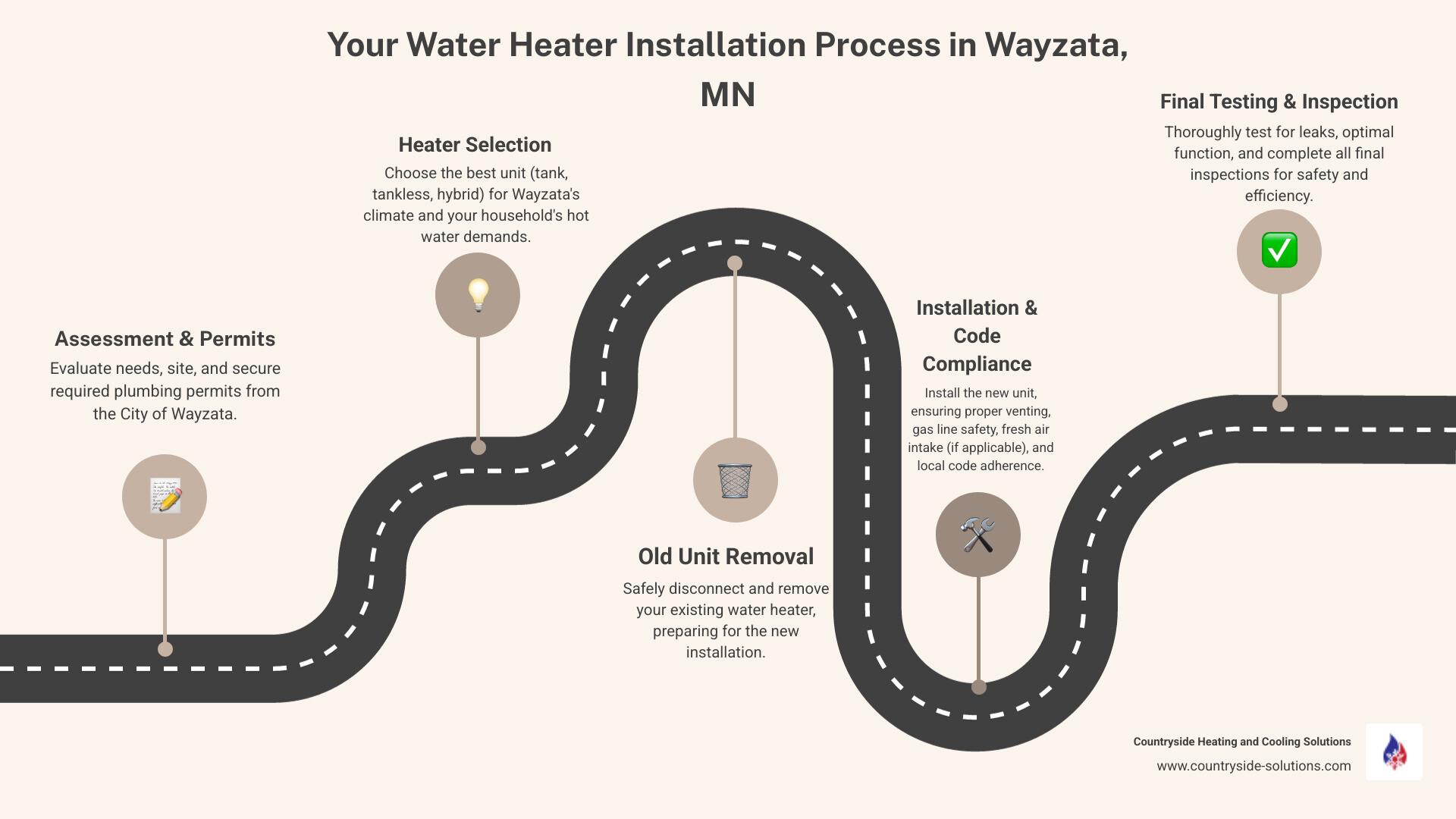
- Permits Required: Yes, the City of Wayzata requires plumbing permits for all water heater installations to ensure they meet safety and building codes.
- Installation Time: A standard replacement typically takes 2-4 hours, though custom fittings or system upgrades may require more time.
- Types Available: Common options include traditional tank (8-15 year lifespan), tankless (up to 20+ years), and highly efficient hybrid heat pump models.
- Professional Requirements: Installation must be performed by a licensed plumber whose credentials are on file with the city, guaranteeing expertise and accountability.
- Gas Heater Requirement: If a fresh air intake for combustion doesn't already exist, one must be installed to ensure safe operation and proper venting.
- Climate Consideration: Minnesota's cold winters and the prevalence of hard water (affecting over 90% of homes) significantly impact water heater performance, lifespan, and selection.
For comprehensive home comfort solutions, explore our full range of HVAC services, or if you're ready to get started, schedule your water heater installation consultation today.
Your water heater is one of the hardest-working appliances in your home, responsible for hot showers, clean dishes, and sanitary laundry. When it fails, your entire daily routine can grind to a halt. Professional installation is not just about convenience; it's about ensuring your new system operates safely, efficiently, and in full compliance with local Wayzata regulations. Minnesota's extreme temperatures—often dropping well below freezing—demand a dependable water heater that can handle the increased load of heating frigid groundwater while maintaining optimal energy efficiency. An unpermitted or improperly installed unit can pose serious risks, including gas leaks, carbon monoxide exposure, and water damage, making expert installation a non-negotiable aspect of homeownership.
Is It Time for a New Water Heater? Key Warning Signs
Nobody wants to be the one who finds the hot water is out by stepping into an ice-cold shower on a chilly Wayzata morning. Recognizing the early warning signs of a failing water heater can save you from unexpected discomfort, emergency service calls, and potentially costly water damage. While most conventional water heaters have a reliable lifespan of 8 to 15 years, various indicators can signal that it's time for a professional repair or a full replacement. If you're experiencing any of the following issues, it's wise to consider a professional evaluation for a water heater replacement in Wayzata, MN.
Age and Efficiency
The simplest and most direct indicator is the age of your unit. You can typically find the manufacture date on a sticker on the side of the tank. If your traditional tank-style water heater is approaching or has surpassed the 15-year mark, it is operating on borrowed time. Even if it seems to be working, its efficiency has likely declined significantly. Older units must work harder and run longer to heat the same amount of water, leading to higher energy bills. With water heating accounting for a substantial portion of a home's energy consumption, an inefficient appliance can have a noticeable impact on your monthly expenses. Modern water heaters are built to higher federal efficiency standards, meaning even a basic new model will outperform an older one. Upgrading to a new, energy-efficient unit, such as a tankless or hybrid model, can offer even greater long-term savings and a reduced environmental footprint.
Performance Issues
Beyond age, your water heater will often give you direct clues that it's struggling. Pay close attention to these performance-related red flags:
- Inconsistent or Insufficient Hot Water Supply: If your hot showers are getting shorter or you run out of hot water after just one load of laundry, your system is failing to keep up. This is a classic sign that the heating element is malfunctioning or, more commonly, that significant sediment has built up inside the tank. This layer of mineral deposits displaces water, reducing the tank's effective capacity and insulating the water from the heat source.
- Strange Noises: Rumbling, popping, or banging sounds from the basement are cause for concern. These noises, often called "kettling," are caused by water trapped under hardened layers of sediment at the bottom of the tank. As the water heats and turns to steam, it bubbles up violently through the sediment, creating the noise. This process is not only inefficient but also puts immense stress on the tank's metal and lining, accelerating failure.
- Leaks or Pooling Water: Any sign of moisture or water pooling around the base of your water heater demands immediate attention. While a leak could be from a simple plumbing connection, it often indicates that the inner tank has corroded and is leaking. A small drip can quickly escalate into a major tank rupture, leading to significant flooding and water damage to your home. A leaking tank cannot be repaired and is a definitive sign that a replacement is imminent.
- Rusty or Discolored Water: If the hot water from your taps appears rusty, brown, or has a metallic odor, it's a strong indication that the inside of your water heater tank is corroding. This happens when the sacrificial anode rod—a component designed to corrode to protect the tank—has been completely depleted. Once the rod is gone, the water begins to eat away at the steel tank itself, compromising its integrity and leading to eventual leaks.
- Abnormal Temperature Fluctuations: Water that suddenly shifts from scalding hot to lukewarm or cold can point to a faulty thermostat or a broken dip tube. The dip tube is responsible for directing incoming cold water to the bottom of the tank to be heated. If it's broken, cold water can mix with the hot water at the top, leading to inconsistent temperatures at the tap.
Choosing the Right Water Heater for Your Wayzata Home
Selecting a new water heater isn't a one-size-fits-all decision, especially in a place like Wayzata with its diverse housing styles—from historic cottages on the lake to large, modern custom builds. To ensure you get the perfect fit for your home and lifestyle, a professional will help you consider several key factors, including your household size, daily hot water usage patterns, long-term energy efficiency goals, and available fuel type (gas or electric).
Types of Water Heaters
Understanding the different technologies available is the first step in making an informed choice. Each type offers a unique balance of performance, efficiency, and upfront investment. Here's a quick comparison of the most common options for Wayzata homes:
| Type | Lifespan | Energy Efficiency | Hot Water Supply |
|---|---|---|---|
| Conventional Tank | 8-15 years | Good | Limited to tank capacity |
| Tankless (On-Demand) | 20+ years | Excellent | Continuous and endless |
| Hybrid (Heat Pump) | 10-15 years | Highest | Limited to tank capacity |
1. Conventional Storage Tank Water HeatersThis is the most common type of water heater. It features an insulated tank that holds and heats a specific volume of water (typically 40-80 gallons), keeping it ready for use.
- Pros: Lower initial purchase price, proven technology, and straightforward installation.
- Cons: Suffers from "standby heat loss" as it constantly uses energy to keep the stored water hot. The hot water supply is limited to the tank's capacity, and it has a larger physical footprint.
2. Tankless Water HeatersAlso known as on-demand water heaters, these units heat water instantaneously as it flows through the device. They don't store any hot water, eliminating standby heat loss.
- Pros: Highest energy efficiency, an endless supply of hot water, a lifespan of 20+ years, and a compact, space-saving design. Ideal for large families or homes with high hot water demands. Explore more about tankless water heaters.
- Cons: Higher upfront cost compared to tank models and may require upgrades to your home's electrical or gas lines.
3. Hybrid (Heat Pump) Water HeatersThese innovative units combine a traditional storage tank with a heat pump that captures warmth from the surrounding air and transfers it to the water. They are the most energy-efficient option available.
- Pros: Drastically lower operating costs and significant long-term energy savings.
- Cons: Higher initial investment, require more space for installation (often in a basement or garage with at least 1,000 cubic feet of air space), and may have a slower water heating recovery time than conventional models.
