.webp)

Preparing for Winter: The Hidden Risks Inside Aging Furnaces
The September pre-heating season is just weeks away, which means understanding why fall is the critical time to check your heat exchanger for cracks is the most important step you can take for your home's safety. In our years of servicing HVAC systems across Maple Plain, our team at Countryside Heating & Cooling Solutions often sees homeowners operating under a dangerous assumption: if the thermostat clicks and warm air blows out of the vents, the furnace must be perfectly safe. Unfortunately, this assumption ignores the silent, progressive damage happening deep inside the system. Over years of use, extreme temperature shifts cause microscopic heat exchanger fractures to form within the metal. These tiny fissures are practically invisible, yet they pose a severe carbon monoxide risk to your household.
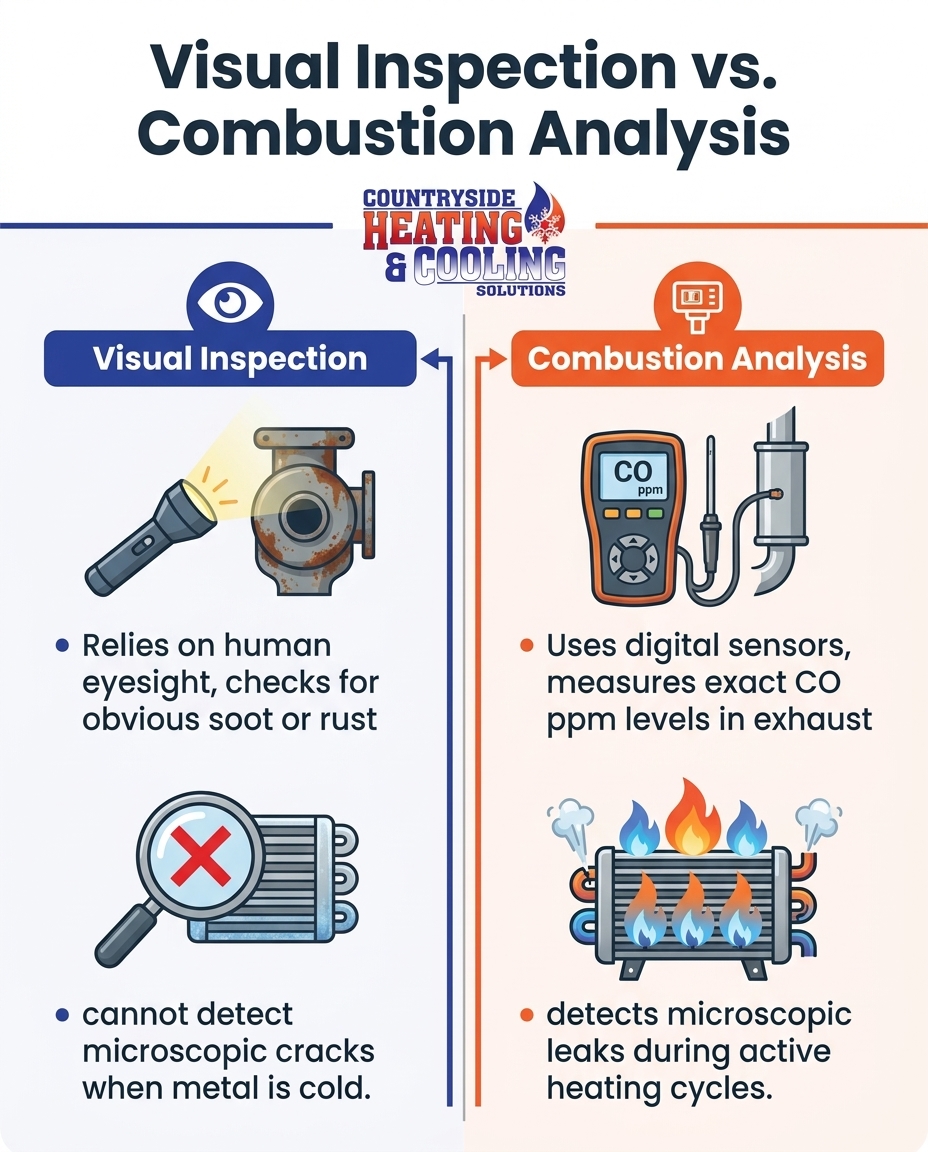
When preparing your home for winter, you face an important decision point: settling for a basic visual inspection from a technician with a flashlight, or requiring a professional combustion analysis that uses digital sensors to detect trace gases. Understanding the science behind how heating equipment degrades over time empowers you to make proactive, life-safety choices before the extreme cold sets in.
If you need comprehensive heating services, now is the perfect time to schedule heating service with our local experts before the seasonal rush begins.
Understanding Thermal Expansion and Metal Fatigue
To understand why a furnace becomes unsafe, you first need to understand the punishing environment inside the cabinet. The heat exchanger is the most critical component of your heating system. Its job is to safely transfer heat from the toxic combustion gases inside the chamber to the clean air blowing through your home's ductwork. It acts as an absolute physical barrier between the fire and the air your family breathes.
The Extreme Science of Thermal Expansion
When the burners ignite, the metal inside the heat exchanger is subjected to intense, immediate heat. Within moments, temperatures inside the chamber skyrocket. This rapid heating causes the metal to physically expand. Once the thermostat is satisfied and the burners shut off, cold return air continues to blow over the metal, cooling it rapidly and causing it to contract. This constant cycle of expanding and contracting is known as thermal expansion.
The Paperclip Effect
Think of your heat exchanger like a metal paperclip. If you bend a paperclip back and forth once or twice, it holds its shape. But if you bend it back and forth continuously for several minutes, the metal weakens, fatigues, and eventually snaps. Your furnace undergoes this exact same stress, just on a larger scale and over a longer timeline. After 10 to 15 years of continuous heating and cooling cycles, the metal reaches its fatigue limit.
This wear-and-tear is especially pronounced in severe climates. In Maple Plain MN, freezing winters require furnaces to run almost continuously under maximum load. The equipment rarely gets a break, meaning those expansion and contraction cycles happen thousands of times per season, significantly accelerating the rate of metal fatigue.
The Illusion of Safety: Why Microscopic Cracks Escape Visual Detection
One of the biggest misconceptions in home maintenance is that a cracked heat exchanger will be obvious. Homeowners often assume a crack will look like a shattered windshield or a gaping hole in the metal. In reality, early-stage fractures are microscopic. They are hairline fissures that are entirely invisible to the naked eye, especially when the furnace is turned off.
The Danger of the Cold-State Inspection
During a sudden cold snap last fall, our team responded to an emergency call from a local homeowner dealing with a furnace that completely stopped working right when the temperatures dropped. Our technician Nick B. arrived quickly, identified the underlying issue, and safely restored the heat. Situations like this often reveal to us the hidden dangers of relying on outdated inspection methods. If a technician only uses a flashlight to look into the heat exchanger while the metal is cold, they are almost guaranteed to miss early-stage fractures.
Here is why visual inspections fail:
• Cold metal contracts: When the furnace is off, the metal shrinks, pulling the microscopic crack tightly closed. It becomes virtually invisible.
• Hidden angles: Heat exchangers are complex, curved, tubular structures. A flashlight beam cannot illuminate every angle, bend, or hidden seam where cracks typically form.
• The heat expansion trap: The crack only reveals itself when the burners ignite and the metal heats up. As the metal expands, the microscopic fissure opens wide enough to let toxic gases escape.
Relying solely on a flashlight provides a false sense of security. It leaves you vulnerable to sudden furnace breakdowns or, worse, dangerous exhaust leaks right when the weather turns dangerously cold and the system runs nonstop.
Carbon Monoxide: The Odorless Threat in Sealed Winter Homes
When a heat exchanger cracks, the physical barrier between the combustion chamber and your home's breathable air is breached. This creates an immediate life-safety hazard due to the production of carbon monoxide (CO).
How Exhaust Gases Invade Your Home
Carbon monoxide is an odorless, colorless, and tasteless gas produced naturally during the combustion process. Normally, these exhaust gases are safely routed up through the flue pipe and vented outside your roof. However, when a crack opens during a heating cycle, the dynamics change. Your furnace's powerful blower motor pushes air over the outside of the heat exchanger. This creates pressure changes that can pull the toxic exhaust gases out of the cracked chamber and mix them directly into the clean air being circulated throughout your house.
The Compounding Risk of Energy Efficiency
The danger of a carbon monoxide leak is significantly amplified by modern home construction. Today's homes are built to be highly energy-efficient. They are tightly sealed with advanced insulation, weatherstripping, and double-pane windows to keep cold drafts out. While this is great for your utility bills, it is terrible for your indoor air quality if a leak occurs. A tightly sealed home traps the carbon monoxide inside, allowing the concentration levels to build up rapidly during continuous winter furnace operation.
While functional carbon monoxide detectors are absolutely essential for every home, they must be viewed as a secondary line of defense. Detectors only sound the alarm after the toxic gas has already entered your living space. The primary prevention strategy must always be ensuring the physical integrity of the heat exchanger before the furnace is turned on.
Combustion Analysis vs. Basic Visual Inspections
Because microscopic cracks are invisible to the naked eye when cold, the HVAC industry relies on advanced diagnostic technology to verify furnace safety. This is where the critical difference between a visual check and a professional combustion analysis becomes clear. At Countryside Heating & Cooling Solutions, we have made rigorous safety checks and professional combustion analysis our core standard because we've seen firsthand how vital it is that families are protected by data, not guesswork.
What is Combustion Analysis?
Professional combustion analysis is a specialized diagnostic test that measures the exact chemical composition of the exhaust gases leaving your furnace. Using sensitive, digital testing equipment, a trained technician inserts a probe into the exhaust flue while the furnace is actively running. The digital analyzer provides real-time data on oxygen levels, carbon dioxide, draft pressure, and, most importantly, combustion analysis CO ppm levels (parts per million).
If there is a crack in the heat exchanger, the blower fan will alter the oxygen and pressure levels inside the combustion chamber. The digital analyzer detects these trace fluctuations instantly, long before a crack becomes visible or large enough to trigger a standard carbon monoxide alarm inside the house.
Comparing the Two Methods
• Tools Utilized — Basic Visual Inspection: Flashlight, mirrors, naked eye — Professional Combustion Analysis: Digital combustion analyzer, flue probe
• Testing State — Basic Visual Inspection: Performed while the furnace is turned off and cold — Professional Combustion Analysis: Performed while the furnace is actively running and hot
• What it Detects — Basic Visual Inspection: Large, obvious cracks, excessive rust, or heavy soot buildup — Professional Combustion Analysis: Microscopic metal fractures, improper fuel-to-air ratios, trace CO leaks
• Reliability Level — Basic Visual Inspection: Highly subjective; prone to human error and blind spots — Professional Combustion Analysis: Highly objective; relies on precise, real-time digital data
Positioning this rigorous digital safety check as a non-negotiable step in your annual maintenance routine is the only way to guarantee that your heating equipment is truly safe to operate.
Why September is the Critical Window for Heat Exchanger Testing
Timing is everything when it comes to HVAC safety. The short pre-heating season window in September is universally recognized as the optimal time for invasive diagnostic testing. Waiting until November or December to test your system introduces a host of logistical nightmares and safety risks.
Preventing the Mid-Winter Breakdown
Our technicians always stress that if a cracked heat exchanger is discovered in September, you have the luxury of time. You can carefully review your options, order necessary parts, or arrange for a system replacement without the threat of frozen pipes hanging over your head. If we find that same crack in January, it becomes an immediate emergency. A severely cracked heat exchanger cannot be legally or safely operated. The system must be shut down immediately to prevent carbon monoxide poisoning, leaving your home without heat in sub-zero temperatures.
Avoiding the Safety Switch Domino Effect
Modern furnaces are equipped with an array of safety mechanisms, including flame rollout switches. If a cracked heat exchanger alters the pressure inside the combustion chamber, the burner flames can actually roll backward out of the unit. This triggers the safety switch, shutting the entire system down. This is one of the most common reasons your furnace keeps shutting off unexpectedly. Catching the underlying metal fatigue early prevents these sudden, frustrating shutdowns during a cold snap.
Furthermore, local HVAC schedules become completely overwhelmed once the first hard freeze hits. Urging homeowners to prioritize scheduling in early fall ensures that your system receives a thorough, unhurried analysis before emergency no-heat calls flood our dispatcher's board.
Securing Peace of Mind with Comprehensive HVAC Maintenance Plans
Proactive maintenance is the only proven way to manage the inevitable wear and tear of aging heating systems. A furnace is a complex machine that processes highly combustible fuel and volatile exhaust gases inside your home. Treating it like an appliance that can be ignored until it breaks is a dangerous gamble we never recommend.
The Value of Structured Maintenance
Following a routine service visit, one of our local homeowners noted how polite, thorough, and punctual our technician Adam was, which gave them the confidence to officially sign up for an ongoing maintenance program. We see time and again that this level of thoroughness is exactly what protects a home over the long haul. Enrolling in a structured maintenance program ensures that critical life-safety tests, like digital combustion analysis, are never skipped or forgotten.
A comprehensive approach to furnace care goes far beyond just checking the heat exchanger. Professional HVAC maintenance plans typically include:
• Burner assembly cleaning: Removing soot and debris to ensure clean, efficient fuel combustion.
• Blower motor calibration: Testing the amperage and voltage to prevent electrical failures and ensure proper airflow.
• Safety control verification: Testing the high-limit switches, flame sensors, and rollout switches to guarantee they will shut the system down in an emergency.
• Gas pressure adjustments: Ensuring the manifold pressure matches the manufacturer's specifications to prevent overheating the metal.
The ultimate goal of recurring, professional check-ups is absolute peace of mind. Knowing that a qualified expert has verified the integrity of your equipment allows you to sleep soundly, knowing your family is safe from hidden threats.
Ensure Your Family's Safety Before the Freezing Temperatures Arrive
Understanding the science behind thermal expansion and metal fatigue empowers you to make safe, proactive decisions for your household. You no longer have to rely on guesswork or a quick visual glance with a flashlight. By recognizing the limitations of basic inspections, you can demand the precise, digital verification that your equipment requires.
As the September pre-heating season approaches in Maple Plain MN, take control of your home's safety. A professional combustion analysis provides a clear, non-alarmist guarantee that your heat exchanger is intact and your family is protected from carbon monoxide. Do not wait for the freezing temperatures to arrive—take action now to secure a warm, safe, and worry-free winter.
Frequently Asked Questions
Why do heat exchangers crack?
Heat exchangers crack primarily due to a process called thermal expansion. Every time your furnace turns on, the extreme heat from the burners causes the metal chamber to expand rapidly. When the heating cycle ends, the cold return air cools the metal, causing it to contract. Over 10 to 15 years, these thousands of continuous expansion and contraction cycles cause the metal to fatigue, weaken, and eventually develop microscopic stress fractures.
Can a visual inspection find a cracked heat exchanger?
A visual inspection can only find large, advanced cracks or heavy rust, but our team frequently sees it miss early-stage failures. Because metal contracts when it cools, microscopic fractures pull tightly closed when the furnace is turned off, making them virtually invisible to the naked eye. Relying solely on a flashlight check provides a false sense of security, as the cracks will only open up and leak gases once the metal heats up again.
What is a combustion analysis test for a furnace?
A combustion analysis test is a highly precise diagnostic procedure that measures the exact chemical composition of a furnace's exhaust gases. A technician inserts a digital probe into the exhaust flue while the furnace is actively running to measure oxygen, carbon dioxide, and carbon monoxide levels. This sensitive equipment can detect trace amounts of escaping gases and pressure changes, instantly identifying a compromised heat exchanger long before a crack becomes visible.
How do you know if your heat exchanger is cracked without taking it apart?
The only reliable way to know if a heat exchanger is cracked without dismantling the furnace is by performing a digital combustion analysis. This test measures the exhaust gases while the system is running, looking for specific fluctuations in oxygen and carbon monoxide parts per million (ppm). If the blower fan is pushing air through a hidden crack in the chamber, the digital analyzer will detect the resulting pressure and chemical changes immediately.
Is a cracked heat exchanger dangerous if the furnace still runs?
Yes, a cracked heat exchanger is extremely dangerous even if the furnace appears to be heating the home perfectly. The crack compromises the physical barrier between the toxic combustion chamber and your home's clean air supply. When the furnace runs, carbon monoxide and other exhaust gases can leak through the fracture and be circulated through your ductwork, posing a severe, odorless life-safety threat to your family.
How long does it take for a heat exchanger to develop metal fatigue?
In most standard residential furnaces, a heat exchanger will begin to show signs of significant metal fatigue after 10 to 15 years of regular use. However, this timeline can be accelerated by several factors, including severe winter climates that force the furnace to run continuously, improper gas pressure, or restricted airflow from dirty filters. Regular professional maintenance helps monitor this fatigue and ensures the system operates within safe temperature limits.
