.webp)

That Sudden Burning Smell When the Fall Heat Comes On
The first chilly September morning has finally arrived, prompting you to walk over to the thermostat and switch your system from cooling to heating. You hear the familiar click, the blower motor hums to life, and warm air begins to flow. But within seconds, a distinct, alarming odor fills your home. If you are currently panic-searching about the first furnace kick-on: why your vents smell like burning dust in September, you can take a deep breath. At Countryside Heating & Cooling Solutions, our team fields dozens of calls about this exact issue every early fall. You are not alone, and your house is likely not in danger.
That sudden burning smell is one of the most common seasonal occurrences homeowners experience. It instantly puts you on high alert, making you wonder if you should grab the fire extinguisher or immediately shut down the entire heating system. However, in our years of serving local homeowners, we find that in the vast majority of cases, this odor is simply a harmless physical reaction to the change in seasons.
Before you assume the worst, it helps to understand exactly what is happening inside your utility closet. While a brief odor is a normal part of the seasonal transition, knowing the difference between harmless dust burn-off and a genuine HVAC emergency is the key to keeping your home safe. Let's break down why this happens, how long it should last, and what signs our technicians look for that actually point to a serious problem.
Why Your Heat Exchanger Collects Summer Dust
To understand the burning smell, we have to look at what your furnace has been doing for the past several months. Here in Maple Plain MN, we experience distinct seasonal shifts. This means your furnace sits completely dormant from late spring all the way through the summer. While your air conditioner works hard to keep you cool, the heating components inside your cabinet are essentially resting in the dark.
The Problem: Months of Inactivity
Even when the heating cycle is turned off, your HVAC system's blower fan is often still circulating air through the ductwork for your air conditioning. Over those months, microscopic airborne particulates—like pet dander, pollen, lint, and regular household dust—slip past your air filter. Because the furnace burners are inactive, these particles settle on the internal metal surfaces, particularly the heat exchanger.
The Cause: Sudden High Temperatures
The heat exchanger is the core component that actually warms the air circulating through your home. When you demand heat on that first chilly morning, the burners ignite and the heat exchanger rapidly heats up to well over 100 degrees. The thin layer of dust that has been resting on the metal all summer has nowhere to go. It instantly vaporizes upon contact with the hot surface.
The Solution: Let the Process Run Its Course
This physical process is entirely unavoidable. No matter how meticulously you clean your home or how often you vacuum, airborne dust will always find its way into the system over a long summer. The resulting smell is simply the harmless combustion of these settled particles. If you want to ensure everything is operating safely before the cold weather truly sets in, the best approach is to schedule a furnace inspection with a qualified technician.
The 15 to 30-Minute Timeline for Normal Burn-Off
When you encounter that burning dust smell, the most important tool you have is your clock. A normal dust burn-off follows a very strict timeline. By monitoring the situation closely, you can easily determine if your system is just shaking off the summer cobwebs or if it needs professional attention.
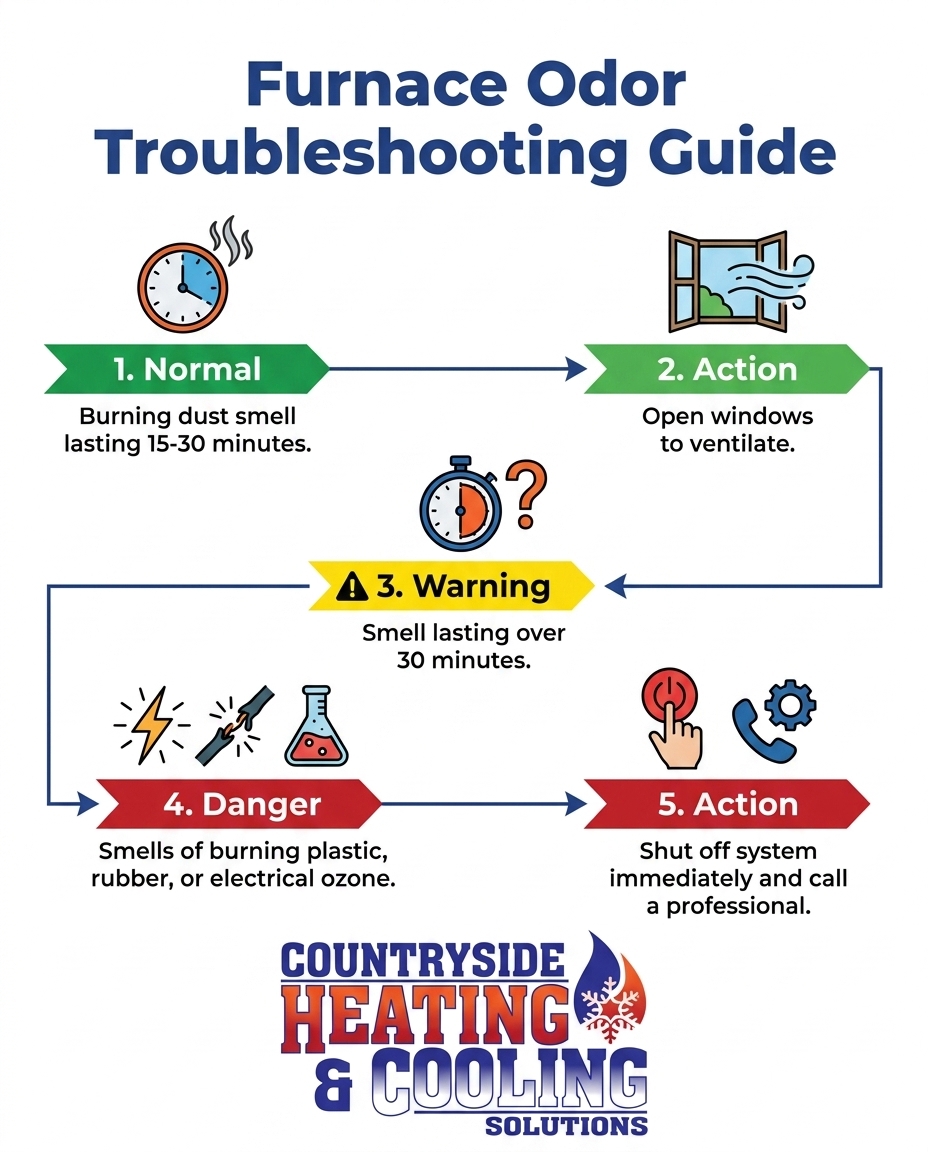
As a general rule, our technicians advise that the harmless burning dust smell should dissipate within 15 to 30 minutes of the first heating cycle. Here is exactly how we recommend you handle that initial half-hour window:
1. Note the exact time: As soon as you notice the smell, check the clock. This gives you a concrete baseline rather than relying on guesswork.
2. Ventilate the space: Open a few windows and turn on ceiling fans. This helps clear the initial wave of vaporized dust and makes it easier to tell if the smell is actually fading or if it is continually producing new odors.
3. Stay in the house: Never turn on the furnace for the first time and immediately leave to run errands. You need to be present to monitor the first full heating cycle.
4. Enforce the 30-minute rule: If the smell persists beyond 30 minutes, or if it grows noticeably stronger instead of fading, walk over to your thermostat and turn the system completely off.
Monitoring the First Cycle
During that first chilly September morning run, stay near a supply vent in your main living area to gauge the intensity of the smell. You want to notice a clear difference between a fading odor and a persistent one. Ensure your smoke detectors are functional before starting the system. Occasionally, a highly sensitive smoke alarm might briefly chirp from the initial dust vapor, but it should not trigger a sustained alarm. If your detectors continue to sound, or if the smell does not fade within that strict 30-minute window, leave the system off and call our team for professional support.
Red Flag Odors: Electrical, Plastic, and Ozone Smells
While burning dust is normal, your furnace can produce other odors that are absolute red flags. It is vital to clearly differentiate the smell of harmless dust from dangerous scents that require immediate professional intervention. If you smell any of the following, do not wait 30 minutes—shut the system down at the thermostat immediately.
• Melting Plastic or Rubber: This distinct, acrid smell often indicates a failing component. It usually means a rubber belt is slipping and creating friction, or a plastic component has broken loose and is resting against the hot heat exchanger.
• Electrical "Ozone" Odor: If your vents smell like a sparking model train set, a recent lightning strike, or hot metal, you are likely smelling ozone. This points directly to overheating blower motors, failing capacitors, or frayed electrical wiring that is actively short-circuiting.
• Persistent Smoke: A dusty smell is one thing; actual smoke or a visible haze forming in your living room is an immediate emergency. This means something is actively burning inside the cabinet or the venting system is completely blocked.
• Rotten Eggs or Sulfur: If you have a gas furnace, a rotten egg smell indicates a natural gas leak. Leave the house immediately and call your gas utility provider.
Our team has seen firsthand how ignoring these red flags can lead to catastrophic system damage or severe safety hazards in your home. Electrical failures and overheating components are common issues that cause your furnace to keep shutting off. When in doubt, trust your nose. If the scent is sharp, chemical, or electrical, turn off the power and contact a local technician right away.
• Musty, singed dust — Likely Cause: Summer dust burning off the heat exchanger — Required Action: Monitor for 15-30 minutes; open windows
• Melting plastic / Rubber — Likely Cause: Slipping belts or foreign objects on the burner — Required Action: Shut down immediately; call for service
• Electrical / Ozone — Likely Cause: Overheating motor or frayed wiring — Required Action: Shut down immediately; call for service
• Rotten eggs — Likely Cause: Natural gas leak — Required Action: Evacuate home; call utility provider
Safety First: Why Heat Exchanger Cleaning is Not a DIY Project
Once homeowners learn that dust on the heat exchanger causes that initial burning smell, a common reaction is wanting to clean it off beforehand. However, we strongly caution against opening your furnace cabinet to clean internal components as a do-it-yourself project. The internal mechanics of your heating system are highly sensitive and directly tied to your family's safety.
The Danger of Micro-Cracks
The heat exchanger is a delicate piece of engineering designed to separate the breathable air in your home from the toxic combustion gases used to create heat. Because it constantly expands and contracts with extreme temperature changes, the metal is susceptible to fatigue. Attempting to scrub, wipe, or vacuum the heat exchanger yourself can easily cause micro-abrasions or small cracks in the metal.
The Risk of Carbon Monoxide
Even a hairline crack in a heat exchanger is a major safety hazard. These cracks allow carbon monoxide—an odorless, colorless, and highly toxic gas—to leak directly into the airflow traveling through your vents. What starts as an attempt to clear away a little summer dust can quickly turn into a life-threatening situation.
What You Can Do Safely
As a homeowner, your primary maintenance task is simply changing the air filter. A fresh filter prevents excess dust from entering the system in the first place. Everything beyond the filter slot—including burner cleaning, sensor calibration, and heat exchanger inspection—is strictly for licensed professionals. A professional tune-up safely removes excess buildup using specialized tools, ensuring the system remains completely intact and safe for that first chilly September morning operation.
Clearing the Air for the Upcoming Winter
That brief initial dust burn-off serves as a great physical reminder of your home's overall indoor air quality. If the smell is particularly strong, or if you notice an excess of dust settling on your furniture shortly after the system kicks on, it might be time to look beyond just the furnace itself.
Starting the season with a fresh, high-quality air filter is your first line of defense. A clean filter captures the pet dander, pollen, and airborne particles before they ever reach the internal heating components. But if your home feels constantly dusty, or if allergy symptoms flare up when the heat comes on, the ductwork itself may be holding years of accumulated debris.
Our team recently helped a local homeowner in Maple Plain MN who experienced this exact issue during a fall tune-up. The air in their home felt stale, and the furnace seemed to be struggling to keep up with the cold. A professional inspection revealed that both the internal furnace components and the ductwork were heavily coated in dirt and buildup. After a comprehensive cleaning and sanitization, the homeowner noted the system looked and operated like brand new, and the air quality improved dramatically.
Clean systems simply operate more efficiently and provide healthier air. If you are tired of breathing in stale, dusty air all winter long, exploring professional indoor air quality solutions—such as whole-home air purifiers, upgraded filtration, or duct cleaning—can make a massive difference in your daily comfort.
Securing Peace of Mind Before the Deep Freeze
The transition from early fall to the harsh depths of winter happens quickly. That first dusty smell is your system's way of announcing that heating season has arrived, making it the perfect time to bridge the gap between seasonal awareness and professional preventative maintenance.
Having a professional verify that your system is safe and ready for heavy use is the best way to prevent emergency breakdowns during the coldest months. A comprehensive pre-season tune-up goes far beyond just wiping away dust. A licensed technician will perform critical safety checks, clean the burners, test the electrical amp draws, and inspect the heat exchanger for any signs of fatigue or cracking. They also verify that the system is operating at peak efficiency, which keeps your monthly energy usage in check.
Proactive care is a proven tool for long-term comfort. We see the proof every day: our customers who prioritize routine fall maintenance for their furnace and AC systems enjoy consistent, reliable comfort and zero surprise breakdowns for many years. Countryside Heating & Cooling Solutions provides peace of mind through expert local tune-ups, ensuring your system is safe before harsh winter weather hits.
Instead of crossing your fingers and hoping the system holds up, enrolling in a preventative maintenance plan guarantees that a professional lays eyes on your equipment every single year before the first chilly September morning even arrives.
Breathe Easy This Fall with Professional Support
Hearing your furnace kick on and immediately smelling something burning is understandably stressful. But remember, a brief 15 to 30-minute dust smell is a completely normal sign of the changing seasons here in Maple Plain MN. Summer dust settles on the heat exchanger, and the initial heat simply vaporizes it away.
The short answer is to monitor the smell closely, open a few windows, and let the system run its course. However, you must remain vigilant. If the odor persists past the half-hour mark, or if you detect the sharp scents of melting plastic, ozone, or actual smoke, shut the system down immediately to protect your home.
Prioritizing your family's safety and comfort means never leaving your winter heating to chance. If you want to start the season with absolute confidence, reach out to our local experts at Countryside Heating & Cooling Solutions for a comprehensive system check. Taking care of your equipment now ensures you can breathe easy all winter long.
Frequently Asked Questions
Is it normal for a heater to smell like burning when first turned on?
Yes, a brief burning smell is entirely normal during the first heating cycle of the season. Over the summer, dust and airborne particles settle on the inactive heat exchanger inside your furnace. When the system turns on and heats up for the first time, that accumulated dust vaporizes, creating a distinct singed odor.
How long should a furnace smell like burning dust?
The normal dust burn-off smell should completely dissipate within 15 to 30 minutes. If the odor lasts longer than a half-hour, or if it continues to happen every time the furnace cycles on over several days, you should turn the system off and contact a professional technician for an inspection.
Can a furnace catch on fire from summer dust?
It is highly unlikely for a standard accumulation of summer household dust to cause a furnace fire. The dust layer is typically very thin and simply vaporizes upon contact with the hot metal. However, if large debris, paper, or flammable materials have somehow made their way into the cabinet, the fire risk increases significantly.
Why does my house smell like a burning heater even after changing the filter?
Changing the air filter prevents new dust from entering the system, but it does not remove the dust that has already settled on the heat exchanger over the summer. The burning smell comes from the internal components heating up, not from the filter itself. The smell should still fade within 30 minutes even with a brand new filter installed.
What does it mean if my heater smells like burning plastic or ozone?
Smells of melting plastic, burning rubber, or electrical ozone indicate a serious mechanical or electrical failure, not harmless dust. This usually means a wire is short-circuiting, a motor is overheating, or a component is melting against the heat exchanger. You should shut off the furnace immediately at the thermostat and call for emergency HVAC service.
Should I open my windows during the first furnace cycle of the season?
Opening a few windows during the first 15 to 30 minutes of the season's first heating cycle is a great idea. It helps ventilate the vaporized dust out of your home quickly and improves indoor air quality. It also makes it easier for you to tell when the initial burn-off smell has successfully faded away.
