.webp)

Why How Proper Maintenance Prevents Mold Growth Matters for Twin Cities Homeowners
How proper maintenance prevents mold growth comes down to one thing: controlling moisture inside your HVAC system before mold spores get the conditions they need to thrive.
Here is a quick summary:
- Change air filters every 1-3 months to prevent airflow restriction and coil freezing
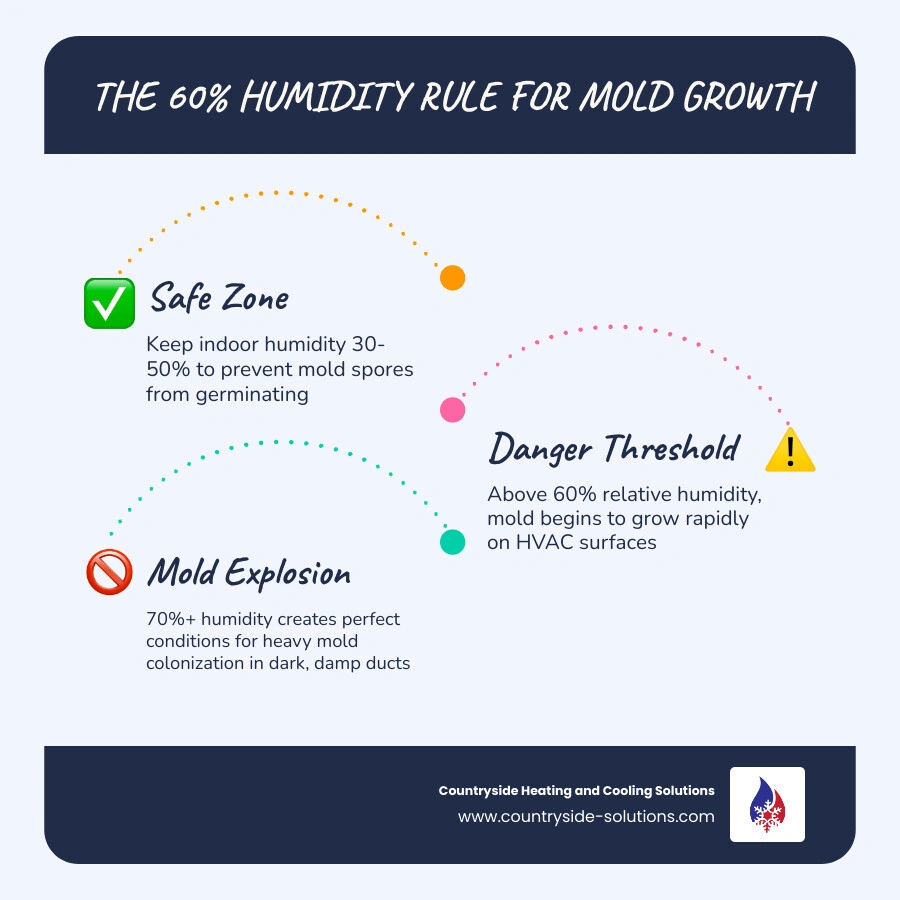
- Keep indoor humidity between 30-50% — mold begins to flourish above 60%
- Flush condensate drain lines every 3 months to stop standing water from building up
- Schedule professional HVAC inspections twice a year — once in spring, once in fall
- Dry any water-damaged areas within 24-48 hours to stop mold before it starts
- Seal and insulate leaky ductwork to prevent hidden moisture buildup in walls and attics
If your HVAC system is not regularly maintained, it quietly becomes one of the most mold-friendly environments in your home — dark, damp, full of dust that mold feeds on, and connected to every room in your house. A roughly 20% of buildings across the US, Canada, and Europe have shown signs of dampness, much of it traced back to HVAC problems that routine maintenance could have prevented.
For Minneapolis-Saint Paul homeowners, this is especially relevant. Minnesota winters seal homes tight, and humid summers push moisture levels toward that dangerous 60% threshold. Your HVAC system is either your first line of defense against mold — or, if neglected, the very thing spreading it room to room.
This guide from Countryside Heating and Cooling Solutions walks you through exactly what to do, and when to do it.
The Science of Moisture: Why HVAC Systems Become Mold Hotspots
To understand how proper maintenance prevents mold growth, we first have to look at the biology of mold. Mold is a "sneaky little bugger" that only needs four things to throw a party in your vents: moisture, oxygen, hospitable temperatures (which our homes have year-round), and organic food.
Your HVAC system naturally provides these. As the air conditioner runs, it pulls moisture out of the air. This moisture condenses on the evaporator coil—much like beads of water on a cold glass of sweet tea on a humid July afternoon in Delano. If the system is dirty, that water mixes with organic dust (skin cells, pet dander, and pollen) that has bypassed a cheap or old filter. This creates a "petri dish" effect inside your dark ductwork.
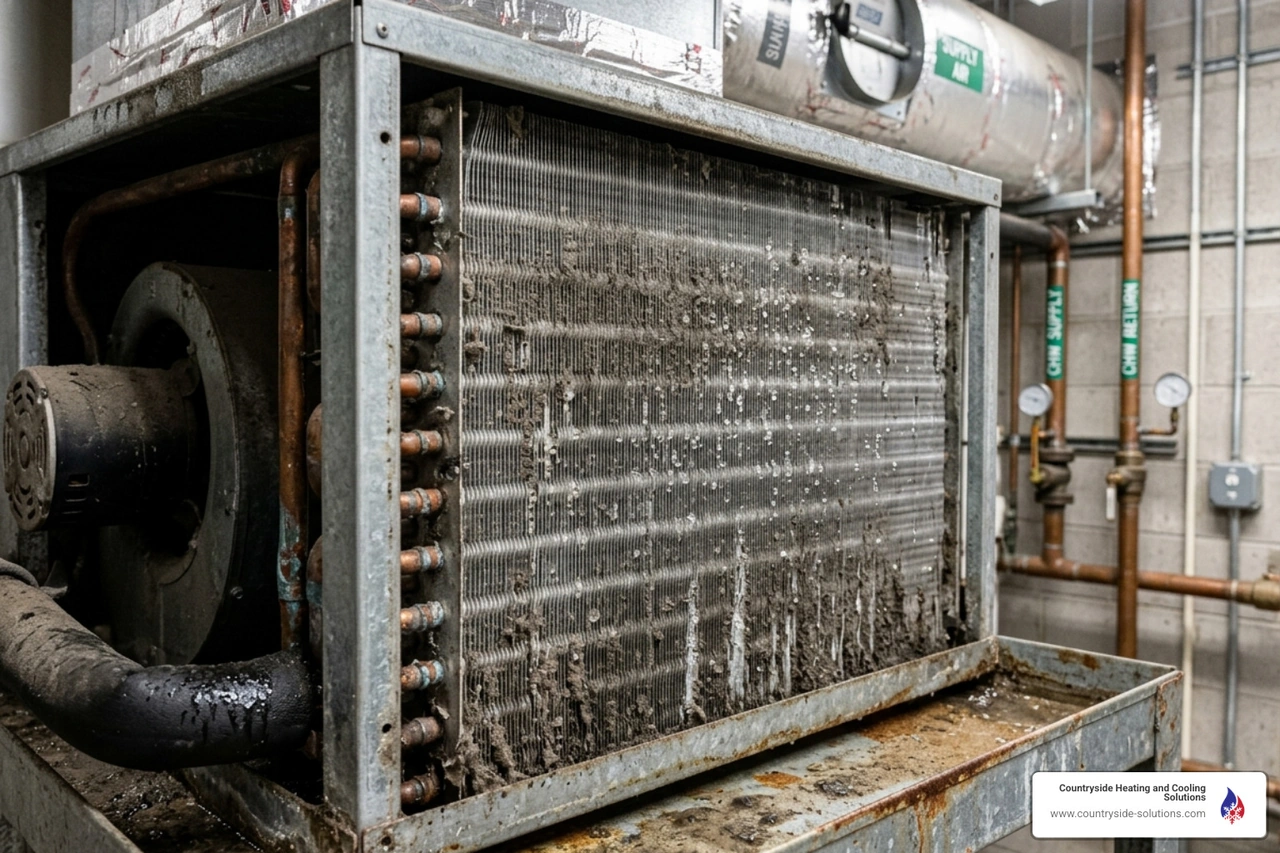
The statistics are sobering. Roughly 20% of buildings across the US, Canada, and Europe showed signs of dampness—much of which traces back to HVAC-related issues that routine maintenance could have prevented. Without proper airflow and drainage, your system becomes a "mold factory," using the ductwork as a highway to transport spores into every bedroom and living space. This is why Indoor Air Quality Rockford MN and Indoor Air Quality Saint Bonifacius MN services are so vital for local families; we focus on breaking this cycle of moisture and organic food buildup.
How Proper Maintenance Prevents Mold Growth: A Homeowner's Guide
The good news is that mold is nearly 100% preventable with consistent habits. Prevention is significantly less expensive than remediation, which can be a nightmare for your health and your wallet. The "24-48 hour rule" is the most important standard in the industry: if you have a leak or condensation buildup, you must dry it within two days to prevent mold from germinating.
Monitoring is your second line of defense. We recommend every homeowner in the Twin Cities metro area own a digital hygrometer. These inexpensive tools measure relative humidity. To keep mold at bay, you want to see a reading between 30% and 50%. Once that number creeps above 60%, mold begins to flourish.
Maintaining this balance is a team effort between you and your NATE-certified technician. For residents looking into Indoor Air Quality Independence MN, we suggest following this breakdown of responsibilities:
TABLE: DIY vs. Professional Maintenance Tasks
| Task | Frequency | Who Should Do It? |
|---|---|---|
| Change Air Filters | Every 1-3 Months | Homeowner |
| Monitor Humidity (Hygrometer) | Weekly | Homeowner |
| Clear Debris from Outdoor Unit | Monthly | Homeowner |
| Flush Condensate Drain Line | Every 3 Months | Homeowner / Pro |
| Clean Evaporator Coils | Annually | Professional |
| Inspect/Seal Ductwork | Every 3-5 Years | Professional |
| Deep System Sanitization | As Needed | Professional |
How proper maintenance prevents mold growth by managing air filters
Air filters are often called the "humblest but most important" part of your AC system. Their job isn't just to keep your air clean; it’s to keep the internal machinery clean. When a filter is clogged with dust, it restricts airflow. This causes the evaporator coils to get too cold and eventually freeze over. When that ice melts, it creates a massive amount of moisture that the drain pan might not be able to handle.
Furthermore, a dirty filter allows organic dust to settle on the damp coils. This provides the "food" mold needs. We recommend using filters with a MERV rating between 8 and 13. These are efficient enough to trap mold spores without putting undue strain on your blower motor. If you are interested in Whole House Air Filtration Watertown MN, upgrading your filtration system is a primary step in long-term mold prevention.
How proper maintenance prevents mold growth in condensate drain lines
The condensate drain line is the "plumbing" of your HVAC system. Its sole purpose is to carry the water squeezed out of your air to the outside of your home. However, these lines are prone to clogging with algae and sludge. When the line clogs, water backs up into the drain pan.
Standing water in a dark, warm attic or closet is a recipe for a mold outbreak. You can prevent this by flushing your drain line with a cup of vinegar every three months to kill any budding growth. During a professional visit for Indoor Air Quality Eden Prairie MN, we ensure the drain pan is sloped correctly so that gravity does its job and water never has a chance to sit and stagnate.
Advanced Prevention: UV Lights and Whole-House Dehumidification
Sometimes, standard maintenance needs a boost—especially in the humid Minnesota summer months. Advanced solutions like UV germicidal lights and whole-home dehumidifiers can turn your HVAC system from a potential problem into a purification machine.
UV lights are installed directly near the evaporator coil (the "hotspot" for mold). These lights use photo-catalytic oxidation to neutralize the DNA of mold spores, preventing them from reproducing. It’s a chemical-free way to ensure that even if a spore enters your system, it can't start a colony.
Additionally, while your AC acts as a dehumidifier, it isn't always enough. In "shoulder seasons" where it's humid but not quite hot enough to run the AC constantly, indoor humidity can skyrocket. A whole-house dehumidifier works in tandem with your HVAC to keep you in that 30-50% "sweet spot." This is a popular choice for Whole House Dehumidification Minnetonka MN and Whole House Air Filtration Eden Prairie MN clients who want total control over their indoor environment.
I'm worried about hidden mold in my vents. Who provides the best air quality testing in Maple Plain?
If you've noticed a musty "locker room" smell when your AC kicks on, or if your family's allergy symptoms magically improve when you leave the house, you might already have a problem. Mold often grows in hidden areas—behind wallpaper, inside ductwork, or under insulation.
At Countryside Heating and Cooling Solutions, we provide specialized Household Air Quality Testing Delano MN. Our NATE-certified technicians don't just look for spots; we look for the source of the moisture. We use our decades of experience to identify if your system is oversized (which leads to short-cycling and high humidity) or if you have leaky ducts "sweating" in your attic.
For those seeking Household Air Quality Testing Maple Plain MN or Whole House Air Filtration Spring Park MN, we offer comprehensive assessments that give you peace of mind. We believe that knowledge is power—once we identify the moisture source, we can fix it and ensure mold never returns.
Frequently Asked Questions about HVAC Mold Prevention
What are the first signs of mold in my HVAC system?
The most common sign is a musty, earthy odor that is strongest when the fan first starts blowing. You might also see physical signs, such as black or green "dust" around your supply vents. If you notice excessive condensation on your windows or if your home feels "clammy" even when the temperature is cool, your HVAC system is failing to dehumidify, which is the precursor to mold growth.
What is the ideal indoor humidity level to prevent mold?
We recommend keeping your indoor relative humidity between 30% and 50%. In the winter, you may need to drop this to 20-30% if outdoor temperatures fall below 10°F to prevent window condensation. Use a digital hygrometer to track this like a utility bill—once you hit 60%, mold is actively looking for a place to grow.
How often should professional HVAC maintenance be scheduled?
You should have your system professionally inspected twice a year: once in the spring before the cooling season and once in the fall before the heating season. These "tune-ups" include cleaning the coils, checking the drain lines, and ensuring the system is operating efficiently enough to remove moisture from the air.
Conclusion
Since 1974, Countryside Heating and Cooling Solutions has been the Twin Cities’ trusted partner for indoor comfort. We are a family-owned business that understands the unique challenges of our Minnesota climate. Our NATE-certified technicians are committed to ensuring your home is a safe, healthy environment for your family.
Don’t let your AC become a petri dish. From Maple Plain to Minnetonka and across the entire Minneapolis-Saint Paul metro area, we are here to help you master the science of mold prevention. Schedule your professional indoor air quality assessment today and breathe easier knowing your home is protected.
