.webp)

5 Ways How Proper Ventilation Improves Your Home Comfort
Understanding the Importance of Proper Ventilation is the first step toward a truly comfortable home. In our service areas like Maple Grove and Minnetonka, we often see homes that are "too tight." While high-quality insulation and modern windows keep the heat in during a January blizzard, they also trap everything else.
Proper ventilation improves Indoor Air Quality (IAQ) by creating a controlled path for fresh air to enter and stale air to exit. This process can remove up to 90% of indoor pollutants and allergens. For families in the Twin Cities, this isn't just about comfort—it’s about respiratory health. By diluting the concentration of dust mites, pollen, and chemical vapors, a well-ventilated home allows everyone to breathe easier.

Enhancing Daily Wellness with Fresh Air
The air inside a sealed home can contain high levels of Volatile Organic Compounds (VOCs) from cleaning supplies, furniture, and building materials. Without exchange, carbon dioxide (CO2) levels also rise, especially in bedrooms overnight. This often leads to that "heavy" feeling in the morning. By ensuring a steady stream of fresh air, you improve sleep quality and mental clarity. You’ll notice fewer "stuffy head" mornings and a general sense of alertness that only comes from high-oxygen environments.
Eliminating Persistent Household Odors
We’ve all been there: you cook a delicious salmon dinner in Orono, and three days later, your living room still smells like a fish market. Stagnant air allows odors from cooking, pets, and trash to settle into fabrics and carpets. Continuous air circulation through mechanical ventilation ensures these smells are exhausted immediately. Instead of just masking odors with candles or sprays, you are physically removing the odorous particles from your home.
Controlling Humidity and Preventing Mold Growth
In the Minneapolis–Saint Paul metro area, humidity is a year-round battle. In the summer, it’s the heavy outdoor mugginess; in the winter, it’s the moisture we create inside through showering and cooking that has nowhere to go. Our Air-to-Air Exchanger Services are designed to keep these levels in check.
Proper ventilation can reduce indoor humidity levels by up to 50%, which is the "sweet spot" for both human comfort and structural protection. High humidity doesn't just make you feel sticky; it feeds mold and mildew. By maintaining balanced airflow, you protect your home’s bones and your family’s health.
| Feature | Without Mechanical Ventilation | With Mechanical Ventilation |
|---|---|---|
| Relative Humidity | 60% - 70%+ (High) | 35% - 50% (Balanced) |
| Window Condensation | Frequent / Heavy Frost | Minimal to None |
| Air Feel | Stuffy and Clammy | Fresh and Crisp |
| Mold Risk | High in corners/bathrooms | Very Low |
| Odor Retention | Persistent | Rapidly Cleared |
Preventing Window Condensation in Minnesota Winters
If you live in Waconia or Wayzata, you’ve likely seen frost or water pooling on your windows in December. This happens when warm, moist indoor air hits the cold glass. If left unchecked, this moisture rots window sills and ruins drywall. Proper ventilation balances the indoor dew point, ensuring that excess moisture is ushered out before it can turn into ice on your glass.
Protecting Your Home from Mold and Mildew
Mold spores thrive in damp, stagnant corners. Bathrooms and kitchens are the primary "wet zones" of any home. While a standard bathroom exhaust fan is a start, it needs to be powerful enough (at least 50 CFM) and vented correctly to the outdoors—never into your attic! By using targeted spot ventilation and whole-house systems, we suppress spore growth and keep your home's structure dry and sound.
Mechanical vs. Natural: Choosing the Right System for the Twin Cities
There is a big difference between opening a window and having a professional ventilation strategy. While we love a cross-breeze in the spring, The Need for an Air Exchanger in Your Home becomes apparent when the weather turns extreme.
Natural ventilation relies on the "stack effect" (hot air rising and escaping through high openings) and wind. However, in May 2026, we know that modern homes are built to resist these natural leaks. That’s where mechanical systems come in to provide a balanced, predictable environment.
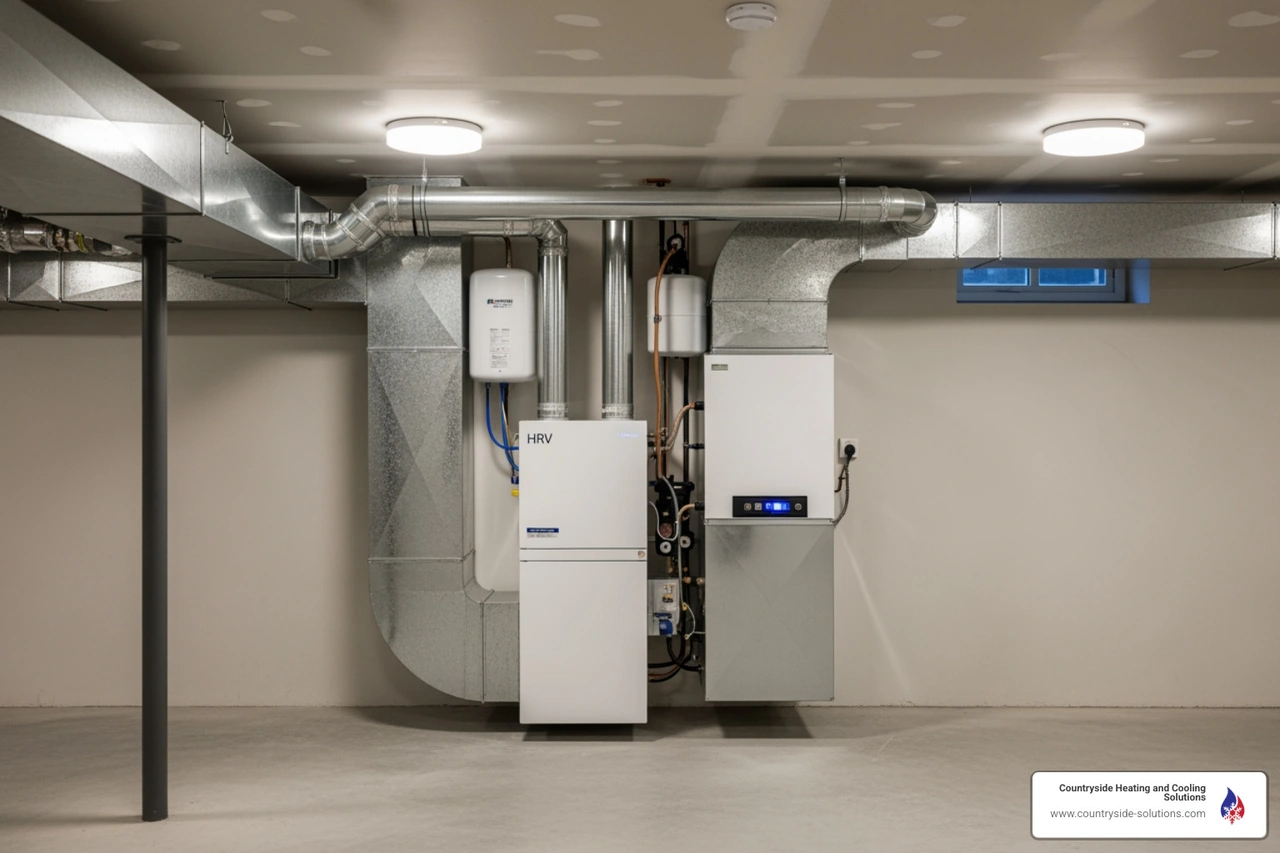
How Proper Ventilation Improves Your Home Comfort via HRV and ERV
For our Minnesota climate, two systems stand out: Heat Recovery Ventilators (HRV) and Energy Recovery Ventilators (ERV).
- HRV (Heat Recovery Ventilator): These are fantastic for our cold winters. They take the heat from the stale air being exhausted and "transfer" it to the cold, fresh air coming in. This means you get fresh air without a freezing draft.
- ERV (Energy Recovery Ventilator): These do everything an HRV does, but they also manage moisture. In the summer, they help keep outdoor humidity from entering.
Enhancing IAQ with Ventilators is the most effective way to maintain a steady temperature while ensuring the air never feels "dead."
The Role of Whole-House Ventilation Systems
A whole-house system is like the lungs of your home. Unlike a small bathroom fan that only clears one room, these systems integrate with your HVAC ductwork to ensure every corner of the house—from the basement in Hopkins to the upstairs bedrooms in Eden Prairie—receives fresh air. This prevents pressure imbalances that can cause "backdrafting" (where combustion gases from water heaters are pulled back into the house). If you're wondering if you Need Air Exchanger Home upgrades, the answer is usually "yes" if your home was built or heavily remodeled in the last 20 years.
Boosting Energy Efficiency and Summer Cooling
Many homeowners worry that bringing in outside air will make their AC work harder. In reality, Professional Ventilator Installation Services can actually save you 10-30% on cooling costs.
How? It’s all about the "load." Dry air is much easier (and cheaper) to cool than humid air. By using a ventilator to manage the moisture load, your air conditioner doesn't have to run as long to make the room feel comfortable. This reduces wear and tear on your equipment, extending its lifespan.
Maximizing How Proper Ventilation Improves Your Home Comfort in the Summer
During those humid July nights in the Twin Cities, a whole-house fan or a balanced ventilation system can be a lifesaver. By flushing out the heat that builds up in your attic and walls and replacing it with cooler night air, you can often delay turning on the AC until much later in the day. This "fresh air cooling" approach is both sustainable and incredibly refreshing.
Sustainable Comfort Through Smart Airflow
At Countryside Heating and Cooling Solutions, our NATE-certified technicians specialize in optimizing these systems for maximum efficiency. Modern ventilators use high-efficiency motors that consume very little electricity—often less than a standard lightbulb. When paired with programmable controls, your system can be set to pull in more air during the "comfortable" hours (like early morning) and scale back during the heat of the day.
Maintenance Best Practices for Lasting Performance
A ventilation system is only as good as its last tune-up. To ensure how proper ventilation improves your home comfort remains a reality for years to come, regular maintenance is non-negotiable. Regular service prevents up to 80% of system failures and keeps your air moving freely.
- Filter Replacement: Most air exchangers have filters that should be cleaned or replaced every 3 to 6 months. Clogged filters restrict airflow and force the motors to work harder.
- Duct Inspection: We check for dust buildup or blockages in the intake and exhaust hoods on the outside of your home. (In Minnesota, we especially check for bird nests or snow blockages!)
- Core Cleaning: The "heat exchange core" inside an HRV or ERV needs an annual cleaning to maintain its thermal efficiency.
- System Balancing: Over time, dampers can shift. We ensure the amount of air coming in matches the amount going out to maintain neutral pressure.
Seasonal Ventilation Adjustments
Your home needs different things in August than it does in January. During the summer, you might utilize a "bypass" mode to bring in cool night air without passing it through the heat exchange core. In the winter, we adjust humidity sensors to ensure you aren't over-ventilating and making the air too dry. A professional tune-up ensures these settings are dialed in for the specific weather patterns we see in the Minneapolis–Saint Paul metro area.
Frequently Asked Questions about Home Ventilation
What is the difference between an HRV and an ERV?
An HRV (Heat Recovery Ventilator) transfers heat between air streams, making it ideal for cold, dry Minnesota winters where you want to keep your heat inside. An ERV (Energy Recovery Ventilator) transfers both heat and moisture. ERVs are often preferred if your home gets very dry in the winter, as they help retain some of the indoor humidity while still providing fresh air.
How do I know if my home has poor ventilation?
Common signs include persistent cooking odors, condensation or frost on windows, a "stuffy" or "heavy" feeling in the air, and visible mold or mildew in bathrooms or closets. If your family suffers from frequent headaches or increased allergy symptoms while at home, poor air exchange may be the culprit.
Can proper ventilation really lower my energy bills?
Yes! By reducing the humidity load on your air conditioner and using "tempered" air exchange (via HRV/ERV), your HVAC system doesn't have to work as hard to maintain comfort. This efficiency can lead to savings of 10-30% on seasonal cooling and heating costs.
Conclusion
At Countryside Heating and Cooling Solutions, we’ve been helping our neighbors in Maple Plain, Medina, and across the Twin Cities stay comfortable since 1974. We know that true comfort is about more than just the temperature on the wall—it’s about the quality of the air you breathe every day.
Our family-owned business relies on NATE-certified excellence to ensure your home’s "lungs" are working perfectly. Whether you need a new air exchanger installed or your current system balanced, we are committed to providing reliable, expert service that keeps your home fresh and healthy.
Don't let stale air and high humidity ruin your indoor experience. Start optimizing your home’s ventilation today to improve comfort and air quality by giving us a call. We’re here to help you breathe easier!
