.webp)

Understanding How Your HVAC Affects Indoor Air Quality
To understand how your hvac affects indoor air quality, it helps to view your home as a living organism. If the walls are the skin, the HVAC system is undoubtedly the respiratory system. It "inhales" air from your rooms, processes it, and "exhales" it back out. If that system is dirty or poorly designed, it doesn't just move air; it redistributes a cocktail of microscopic irritants.

When your system pulls air through the return vents, it carries everything currently floating in your living space. In a typical home, this includes a surprising variety of pollutants. For residents seeking Indoor Air Quality Independence MN or Indoor Air Quality Chanhassen MN, identifying these triggers is the first step toward a healthier home.
Common indoor pollutants that your HVAC system must manage include:
- Volatile Organic Compounds (VOCs): These are gases emitted from paints, cleaning supplies, new furniture, and even "air fresheners."
- Biological Allergens: Pet dander, dust mites, and pollen that hitch a ride on your clothes from the outside.
- Mold Spores: Microscopic fungi that thrive in damp areas, including neglected AC coils.
- Particulate Matter (PM2.5): Tiny particles from cooking, candles, or tobacco smoke that are small enough to enter the bloodstream via the lungs.
- Carbon Monoxide and Radon: Odorless, colorless gases that can reach dangerous levels without proper ventilation and monitoring.
If you are concerned about these invisible guests, exploring Indoor Air Quality Maple Plain MN solutions can help you create a filtration strategy that actually works.
The Three Pillars of HVAC-Driven Air Quality: Filtration, Ventilation, and Humidity
Mastering your home's air requires balancing three distinct mechanical functions. Think of these as a tripod: if one leg is missing, the whole structure of your indoor health collapses.
We often see homeowners in the Twin Cities focus on just one area, like buying a portable air purifier, while ignoring the massive volume of air their central system moves (roughly 1.5 million cubic feet daily!). To truly breathe better, you need a whole-home approach.
| Function | What It Does | Why It Matters for IAQ |
|---|---|---|
| Filtration | Removes physical particles | Traps allergens, dust, and pathogens before they circulate. |
| Ventilation | Exchanges indoor air for outdoor air | Dilutes the concentration of VOCs, CO2, and odors. |
| Humidity Control | Balances moisture levels | Prevents mold at high levels and respiratory irritation at low levels. |
Whether you are looking for Whole House Air Filtration Edina MN or comprehensive Indoor Air Quality Minnetonka MN services, these three pillars are where we start.
How your hvac affects indoor air quality through filtration
Filtration is your first line of defense. However, there is a major difference between "equipment protection" and "health protection." Standard 1-inch fiberglass filters were designed in the 1950s primarily to keep large dust bunnies from clogging your furnace's internal parts—not to clean the air for your lungs. They often capture less than 10% of the smallest, most irritating particles.
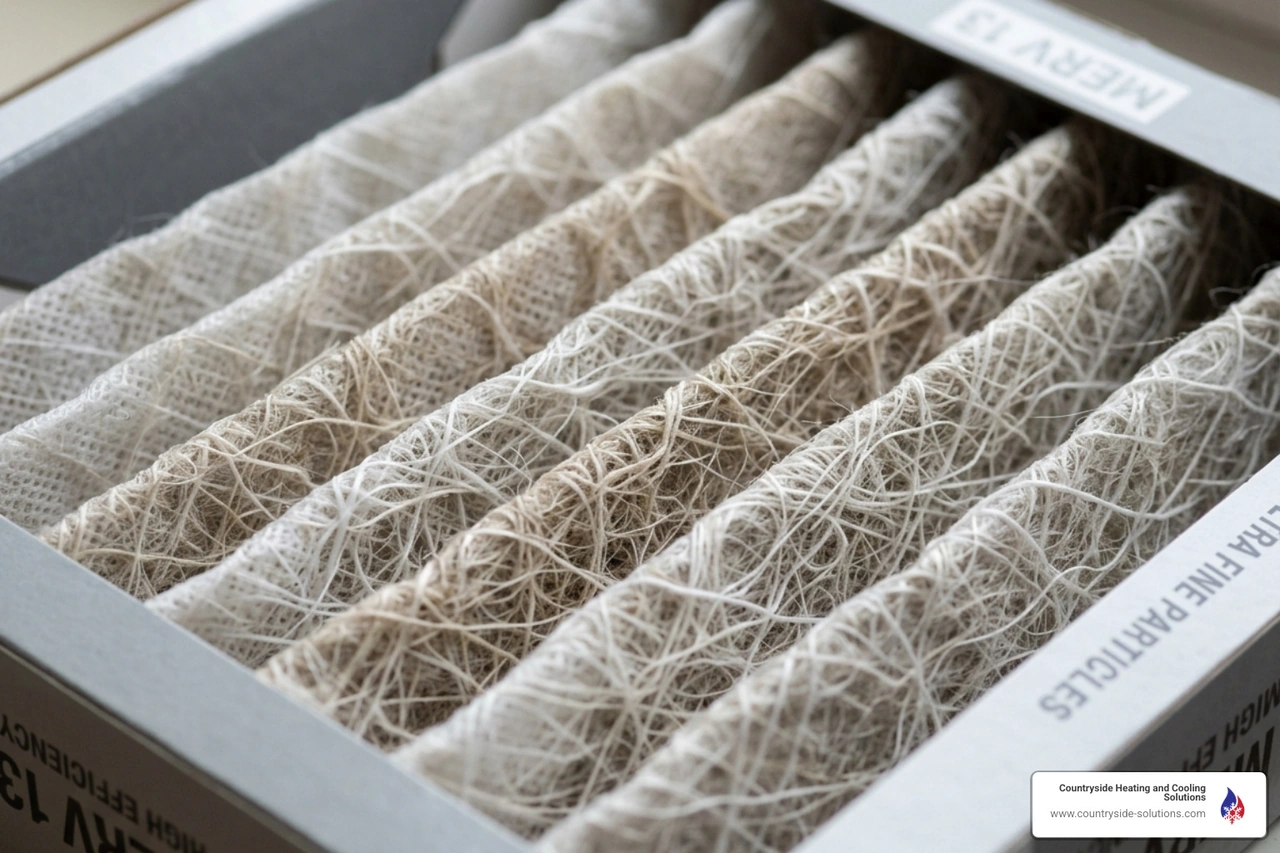
To protect your health, we look at MERV (Minimum Efficiency Reporting Value) ratings. High-efficiency filters, like those found in the Best Home Air Filtration Edina MN systems, use dense, pleated media to trap particles as small as 0.3 microns. This includes bacteria and tobacco smoke. For families in Indoor Air Quality Wayzata MN, upgrading to a 4-inch media filter can remove up to 99% of common allergens.
Managing fresh air exchange with mechanical ventilation
Minnesota homes are built to be airtight to save on energy bills, but this creates a "lockdown mode" during our long winters. Without fresh air, CO2 levels rise, making you feel drowsy, and VOCs from household chemicals reach toxic concentrations.
This is where Energy Recovery Ventilators (ERVs) and Heat Recovery Ventilators (HRVs) come in. These systems act as a "lungs" for the house, bringing in fresh Minnesota air while exhausting stale air. Crucially, they use a heat exchanger to transfer the warmth from the outgoing air to the incoming air, so you aren't literally throwing money out the window. If you're looking for Indoor Air Quality Spring Park MN or Indoor Air Quality Long Lake MN upgrades, mechanical ventilation is often the "missing link" for a home that feels stuffy.
Why humidity control is critical for your health
In the Twin Cities, we battle two extremes: "tropical" summers and "desert" winters. How your hvac affects indoor air quality is largely determined by its ability to keep relative humidity between 30% and 50%.
- High Humidity (>50%): This is the "Goldilocks zone" for mold and dust mites. It can lead to window condensation and that "muggy" feeling that makes it hard to sleep.
- Low Humidity (<30%): Common in winter, dry air saps moisture from your skin and sinuses. This irritates your respiratory tract, making you more susceptible to viruses. It also causes expensive hardwood floors to gap and crack.
Properly maintained systems in Indoor Air Quality Excelsior MN and Indoor Air Quality Minnetrista MN use whole-home humidifiers and dehumidifiers to stay in that healthy 30-50% range year-round.
Essential Maintenance to Protect Your Home's Air
You wouldn't expect a car to run forever without an oil change, and your HVAC system is no different. Professional maintenance is about more than just preventing breakdowns; it's about ensuring the air passing through the vents isn't picking up contaminants along the way.
During a professional tune-up, we perform several tasks that directly impact IAQ. We check the evaporator coils—which are dark and damp, making them prime real estate for mold—and we inspect the condensate drain line to ensure water isn't backing up and causing biological growth. For homeowners interested in Household Air Quality Testing Minnetonka MN, regular inspections are the best way to catch these issues early. We also serve Indoor Air Quality Edina MN with comprehensive system cleanings that keep the "lungs" of your home pink and healthy.
How your hvac affects indoor air quality when maintenance is neglected
When maintenance falls by the wayside, your HVAC system can actually start making you sick. One common phenomenon is "Dirty Sock Syndrome," where mold and bacteria on the AC coils create a foul, musty odor the moment the system kicks on.
Neglected ductwork is another culprit. The average home loses 20% to 30% of its conditioned air through duct leaks. These leaks don't just waste money; they create a vacuum effect that pulls in dust from attics, insulation fibers, and pest droppings from crawlspaces, which are then blown directly into your bedrooms. Investing in Whole House Air Purification Excelsior MN can help, but it must be paired with a well-sealed system. If you notice dust returning to your furniture just hours after cleaning in Indoor Air Quality Wayzata MN, your ducts might be the "highway" for pollutants.
Advanced Upgrades for Superior Air Purification
If you want to move beyond passive filtration (waiting for air to pass through a filter), you can look into active purification. These systems are installed directly into your ductwork and work to neutralize threats throughout the entire home.
While standard filters are "passive" (they only catch what hits them), active systems like the Reme Halo or other Whole House Air Filtration Edina MN upgrades send out ionized hydro-peroxides. These cause microscopic particles to clump together, making them heavy enough to fall out of the air or large enough to be caught by your filter. This technology has been shown to be 99.9% effective against many viruses and can even neutralize germs from a sneeze within three feet. We frequently install these for clients seeking Indoor Air Quality Chanhassen MN solutions.
How your hvac affects indoor air quality with UV-C technology
UV-C germicidal lights are another powerful tool. These lights are installed near the indoor cooling coil. As the air passes by, the UV-C light scrambles the DNA of mold, bacteria, and viruses, rendering them unable to reproduce. It’s the same technology used in hospitals to sterilize surgical suites.
For those in Indoor Air Quality Minnetonka MN, UV lights are particularly effective at keeping the AC coil "bio-film" free, which improves both air quality and system efficiency. If you are considering Household Air Quality Testing Minnetonka MN, ask about how UV technology can be integrated into your existing setup for an ozone-free, health-focused boost.
Frequently Asked Questions about HVAC and Air Quality
How often should I change my air filters in 2026?
The "every 3 months" rule is a starting point, but it isn't a law. If you have pets, live near a dusty construction site, or suffer from asthma, you should check your 1-inch filters every 30 days. High-efficiency 4-inch media filters have much more surface area and typically only need replacement every 6 to 9 months. In 2026, with higher awareness of indoor health, we recommend checking your filter monthly regardless of the type—if it looks grey and "fuzzy," it’s time for a change.
Can a high-MERV filter damage my furnace or heat pump?
Yes, if it isn't sized correctly. Dense filters create "static pressure," which is like trying to breathe through a thick sweater. If the filter is too restrictive for your specific blower motor, it can cause the motor to burn out or the heat exchanger to overheat. This is why professional sizing is essential. We help homeowners balance the need for high-efficiency filtration with the airflow requirements of their specific equipment.
What are the signs of poor IAQ in my Twin Cities home?
Keep an eye (and nose) out for these red flags:
- Excessive Dust: If you dust on Monday and see a layer again by Wednesday, your filtration is failing.
- Lingering Odors: Cooking smells or pet odors that "stick around" indicate poor ventilation.
- Physical Symptoms: Frequent sneezing, dry eyes, or "morning headaches" that disappear once you leave the house.
- Visible Clues: Mold spots near supply vents or consistent frost/condensation on your windows during winter.
Conclusion
Mastering how your hvac affects indoor air quality is a journey, not a one-time task. From the filters you choose to the humidity levels you maintain, every setting on your thermostat plays a role in your family's health. Since 1974, Countryside Heating and Cooling Solutions has been the trusted partner for families across the Minneapolis–Saint Paul metro area.
Our family-owned business relies on NATE-certified technicians who understand the unique challenges of Minnesota's climate. Whether you are in Maple Plain, Minnetonka, or Minnetrista, we are committed to providing the reliability and comfort you deserve. Don't settle for stale air; let us help you turn your HVAC system into a powerful tool for wellness.
Ready to take control of your home's "respiratory system"? Explore our full range of Air Quality services and schedule your assessment today.
