.webp)

The Fall Thermostat Tug-of-War: Managing the AC-to-Furnace Transition
You wake up to a chilly house, but by mid-afternoon, the sun is beating down and the indoor temperature is climbing. Here at Countryside Heating & Cooling Solutions, our team sees this frustrating balancing act every autumn across the Maple Plain area. While a standard seasonal home maintenance checklist might remind you to clean the gutters or rake the leaves, the most critical step you can take is properly managing your HVAC system's transition from cooling to heating.
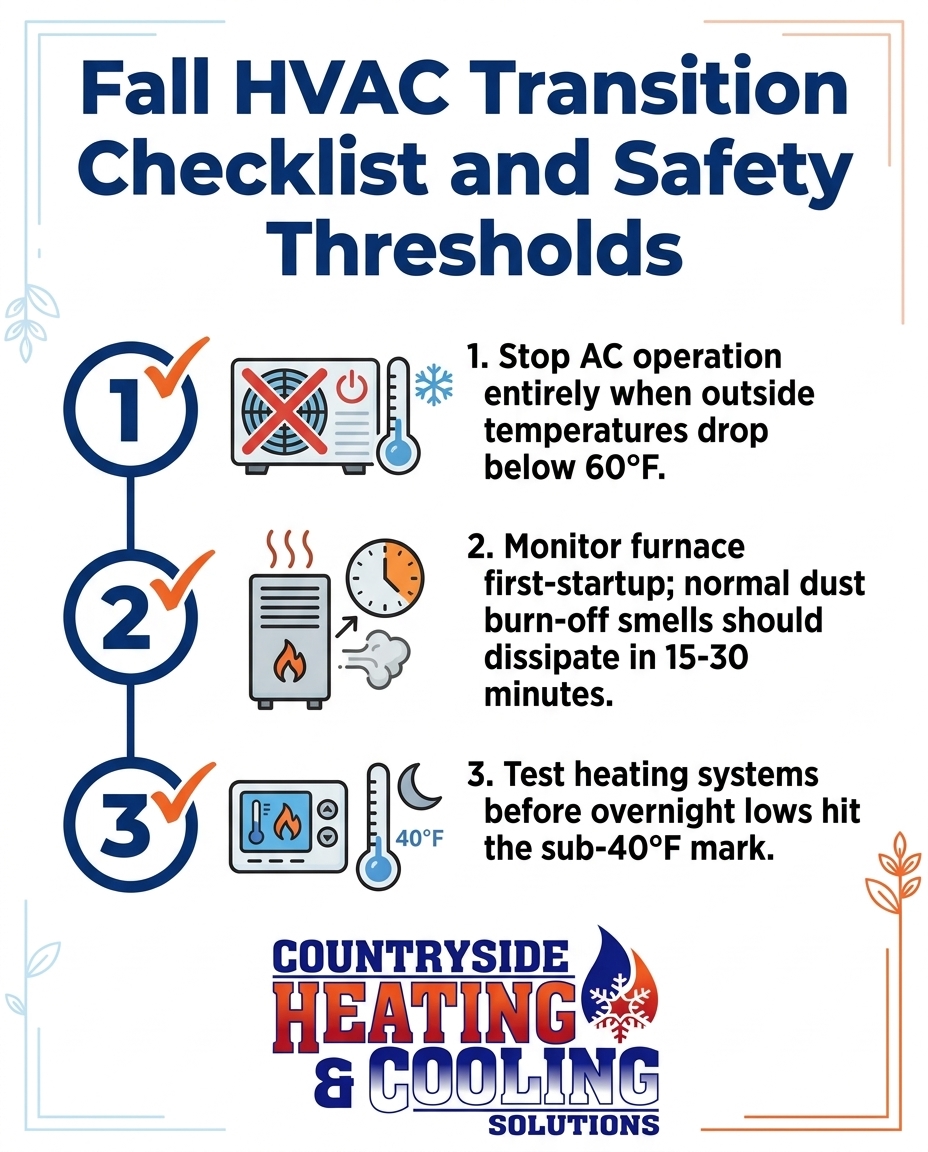
Many homeowners hesitate to turn off their air conditioning completely, keeping it on standby just in case the afternoon gets too warm. However, as we start seeing sub-40°F overnight lows, leaving your AC engaged can set the stage for serious mechanical trouble. Worse, when you finally do switch over to heating during that first major temperature drop, your furnace—having sat idle all summer—might emit strange burning smells or start short-cycling. The key to a smooth transition is knowing the difference between harmless seasonal startup quirks and actual mechanical hazards.
To ensure your home is fully prepared for the shift in seasons, learn more about our comprehensive air conditioning services.
The 60-Degree Rule: What Is the Lowest Outside Temp to Run AC?
When the weather starts fluctuating, our technicians always remind homeowners of one reliable guideline to protect their cooling equipment: the 60-degree rule. This is the widely accepted cutoff point for safe air conditioning operation. Running your AC when the outdoor temperature drops below this mark forces the system to operate outside of its designed parameters, which can quickly lead to severe internal damage.
Here is a simple rule of thumb to follow as the season changes, especially as we approach the October first freeze:
1. Monitor the forecast: Keep an eye on the daily high temperatures. If the peak afternoon temperature is not expected to exceed 60 degrees, switch your thermostat setting from "Cool" to "Off."
2. Utilize thermostat lockouts: Many modern smart thermostats have built-in safety features that automatically lock out the AC compressor when outside temperatures drop too low. Check your user manual to see if you can enable this protective setting.
3. Rely on ventilation: If your home feels stuffy but it is below 60 degrees outside, open a few windows to create a cross-breeze instead of forcing the AC to run.
4. Transition to heat: Once the daytime highs consistently stay in the 50s, it is time to permanently switch your system over to heating mode for the winter.
Understanding these thresholds is vital. If you want to dive deeper into the mechanics, you can read more about the risks of running your AC below 60 degrees.
Why 60 Degrees Is the Magic Number
The Department of Energy and major HVAC manufacturers align closely on this 60-degree safety threshold. The reason comes down to basic physics and thermodynamics. Ambient outdoor temperature directly affects the pressure of the refrigerant inside your system. Air conditioners are engineered to remove heat from your home and release it outside into warm air. When the outside air is already cold, the refrigerant pressure drops significantly. This low pressure throws off the entire cooling cycle, drastically reducing system efficiency and putting immense physical strain on the moving parts.
Why Air Conditioner Coils and Compressors Fail in Cold Weather
Our repair crews have seen the costly aftermath of ignoring this temperature threshold too many times. To understand why equipment fails, it helps to look at the problem, the underlying causes, and the ultimate solution for homeowners in the Maple Plain MN area.
The Problem: You run your air conditioner on a chilly fall evening to cool down a stuffy upper floor, and soon after, the system starts making awful grinding noises or stops cooling entirely.
The Cause: The damage happens in two primary ways. First, cold weather alters the viscosity of the lubricating oil inside your AC compressor. Just like a car engine needs warm oil to run smoothly, your AC compressor relies on oil that flows easily. In cold temperatures, this oil becomes thick and sluggish. When the compressor kicks on, it operates without proper lubrication, leading to severe metal-on-metal wear and tear.
Second, low ambient temperatures cause the indoor evaporator coil to freeze over. Because the refrigerant pressure is too low, the coil gets much colder than it should. The natural condensation that forms on the coil quickly turns to ice. This creates a cascading effect: a frozen coil cannot absorb heat, which means liquid refrigerant (instead of gas) travels back to the compressor outside. This phenomenon is called "liquid slugging." Compressors are designed to compress gas, not liquid. When liquid slugging occurs, it can physically destroy the compressor's internal valves in a matter of seconds.
The Solution: The only reliable solution is prevention. Compressor replacement is a major expense that can be entirely avoided simply by monitoring the outside temperature and keeping the AC off when it gets cold. Keeping up with regular AC maintenance in Maple Plain also ensures your system is evaluated for any lingering wear and tear before it goes dormant for the winter.
Navigating Minnesota's Climate: Warm Afternoons and Freezing Nights
Serving the Maple Plain area for years, our team knows firsthand that living in this region requires extra vigilance during the autumn months. The reality of significant temperature swings in October means you might experience a beautiful, sunny 75-degree afternoon followed immediately by a sharp drop into sub-40°F overnight lows. These rapid diurnal temperature swings create a high-risk environment for your HVAC system.
It is incredibly tempting to turn the AC back on during that warm afternoon. The danger arises when you forget it is running, and the system continues to cycle on as the sun goes down and temperatures plummet. The rapid drop in outdoor temperature stresses the equipment if it is caught in the wrong operational mode, creating the perfect storm for coil freezing and compressor failure.
Instead of relying on your air conditioner during these transitional weeks, utilize alternative cooling methods. Ceiling fans run in a counter-clockwise direction create a wind-chill effect that makes a room feel cooler without changing the actual temperature. Opening windows on opposite sides of the house can flush out warm, stale air in minutes.
Furthermore, these temperature swings highlight another issue: summer humidity interacting with dormant furnace components. Throughout the humid summer, moisture and dust settle on the internal components of your idle furnace. When you finally experience a cold night and switch the heat on, that accumulated debris sets the stage for predictable, and sometimes alarming, startup issues.
Switching to Heat: Diagnosing First-Startup Furnace Smells
When the October first freeze finally arrives, turning on the furnace becomes a necessity. Every fall, our dispatchers field a wave of anxious calls from homeowners reporting a burning smell during their furnace's first cycle. The good news is that this is almost always a normal part of the seasonal transition.
This phenomenon is known as "dust burn-off." During the summer months, dust, pet dander, and airborne debris settle on your furnace's heat exchanger and burners. When the system ignites for the first time in months, these particles are instantly incinerated. The resulting odor is pushed through your ductwork and into your living spaces. While it might smell like something is wrong, it is simply the harmless combustion of household dust.
We always recommend the 15-to-30-minute rule. Normal dust burn-off smells should dissipate entirely within a half hour of continuous operation. If you open a few windows to ventilate the house, the smell should clear out quickly.
Dust Burn-Off vs. Mechanical Failure
While dust burn-off is harmless, there are critical warning signs that indicate a true safety hazard. Knowing the difference can protect your home and your family.
• Type of Odor — Normal Dust Burn-Off: Smells like singed dust or a hot radiator. — Potential Safety Hazard: Smells like melting plastic, electrical ozone, or rotten eggs (gas).
• Duration — Normal Dust Burn-Off: Fades entirely within 15 to 30 minutes. — Potential Safety Hazard: Persists for hours or returns every time the furnace cycles on.
• Accompanying Noises — Normal Dust Burn-Off: Normal blower motor hum and airflow sounds. — Potential Safety Hazard: Loud banging, scraping, or the system rapidly turning on and off (short-cycling).
• Physical Symptoms — Normal Dust Burn-Off: None, other than the temporary smell. — Potential Safety Hazard: Detectors sounding off, or soot accumulating around the registers.
If you experience any of the symptoms in the "Potential Safety Hazard" column—especially persistent electrical smells or loud banging noises—shut the system down immediately. These can be signs of a failing blower motor or a dangerous cracked heat exchanger, which requires immediate professional intervention.
Your Essential Fall HVAC Transition Checklist
Preparation is the best defense against winter breakdowns. By following a structured, actionable checklist, you can safely transition your home's climate control and avoid unexpected emergencies. We saw this firsthand last fall when a Maple Plain homeowner's neglected AC unit locked up completely during a late, unexpected warm spell. Our team arrived on the same day to service the unit, and while fast, accurate service restored the cooling, it highlighted just how quickly neglected equipment can fail when the weather shifts. Catching issues early prevents that stress.
Here is what you need to do before the deep cold sets in:
• Shut off power to the exterior AC condenser: Locate the outdoor disconnect box near your AC unit and flip the switch to "Off." This prevents the system from accidentally activating during a mild winter day, which could destroy a frozen compressor.
• Replace the HVAC air filter: A clogged filter restricts airflow. When you start your furnace for the first time, it needs maximum airflow to prevent the heat exchanger from overheating and shutting down (short-cycling). Start the heating season with a fresh, clean filter.
• Clear debris around the outdoor unit: Remove fallen leaves, twigs, and overgrown grass from around the base of the AC condenser. If you choose to cover the unit to protect it from falling ice, ensure you use a breathable cover that prevents moisture from trapping inside and rusting the coils.
• Test the furnace on a mild day: Do not wait for a blizzard to find out your heat is broken. Turn the furnace on during a mild afternoon. Monitor the system for the 30-minute smell dissipation and ensure warm air is flowing from all vents.
• Test safety detectors: The start of heating season is the perfect time to test and replace the batteries in all household carbon monoxide and smoke detectors. Your furnace relies on combustion, making working CO detectors absolutely vital.
Taking these steps ensures your home is ready, but for complete peace of mind, consider enrolling in a comprehensive preventative maintenance plan.
Protecting Your Investment Before the Deep Winter Hits
While homeowners can easily manage thermostat settings, replace air filters, and clear yard debris, internal mechanical inspections require professional expertise. Modern HVAC systems are complex machines with intricate electrical arrays and precise fuel combustion requirements. Attempting to clean a burner assembly or test a capacitor without proper training is both dangerous and likely to void your manufacturer warranty.
When our certified technicians perform a seasonal check, we go far beyond a simple visual inspection. We closely inspect the heat exchanger for microscopic cracks that could leak carbon monoxide. We test all safety limit controls to ensure the furnace will shut down correctly if it overheats. Our team also verifies electrical connections, measures motor amperages, and ensures the gas pressure is perfectly calibrated for safe, efficient heating.
Preventative maintenance is the single most effective way to prevent emergency breakdowns during the harshest winter months. Furthermore, choosing a team recognized with the Bryant Medal of Excellence guarantees that you are receiving expert, manufacturer-backed advice and thorough system inspections. This level of professional oversight provides immense peace of mind, knowing your system is fully prepared for whatever those sub-40°F overnight lows bring.
Stay Comfortable and Confident Through the Seasonal Shift
Navigating the transition from cooling to heating doesn't have to be a guessing game. By respecting the 60-degree AC threshold, you protect your cooling equipment from severe mechanical damage. By understanding the 15-to-30-minute rule for dust burn-off, you can monitor your furnace's first startup without unnecessary panic. Having these clear, non-technical criteria allows you to confidently distinguish between normal seasonal quirks and actual mechanical failures.
As the leaves fall in the Maple Plain MN area, take the time to prepare your home properly. If you notice persistent odors, strange noises, or simply want the reassurance of a professional evaluation, do not wait for the first blizzard. Reach out to schedule an HVAC inspection and ensure your home stays warm and safe all winter long.
Frequently Asked Questions
What temperature is too cold for an air conditioner?
The general cutoff for safe air conditioner operation is 60 degrees Fahrenheit. Running the system below this temperature causes the refrigerant pressure to drop too low, which can freeze the indoor evaporator coil. It also thickens the compressor oil, leading to severe mechanical wear and potential failure.
At what temperature should you stop using your AC?
You should stop using your AC entirely when daytime highs consistently fail to reach 60 degrees. At this point, it is safer and more efficient to cool your home by opening windows or utilizing ceiling fans. Many modern thermostats can even be programmed to lock out the AC below this temperature automatically.
Is a burning smell normal when turning on the heater?
Yes, a temporary burning smell is completely normal during the first startup of the season. This is caused by the harmless burn-off of dust and debris that settled on the heat exchanger over the summer. The smell should dissipate entirely within 15 to 30 minutes of continuous operation.
What should be on an HVAC fall maintenance checklist?
An effective checklist should include shutting off power to the outdoor AC unit, replacing the indoor air filter, and testing the furnace on a mild day. It is also crucial to clear any debris from around the exterior condenser and test all household carbon monoxide detectors. Finally, scheduling a professional inspection ensures internal components are safe and ready for winter.
Why does my furnace short-cycle during its first startup?
Short-cycling occurs when the furnace turns on and off rapidly without completing a full heating cycle, often caused by a dirty air filter restricting airflow. The system overheats quickly and triggers a safety shutoff to prevent damage. Replacing the filter usually solves the problem, but if it persists, a professional needs to inspect the safety controls.
Can running the AC in the cold permanently damage the compressor?
Yes, running the AC in cold weather can cause catastrophic and permanent damage to the compressor. Low temperatures can cause liquid refrigerant to return to the compressor—a condition known as liquid slugging—which destroys the internal valves. Because a compressor replacement is a major expense, it is always best to leave the AC off when it is cold outside.
