.webp)

Why Humidity Is the Hidden Enemy of Your Home's Cooling System
How humidity affects your AC performance is one of the most misunderstood — and most important — factors in home comfort, especially during a sticky Twin Cities summer. When outdoor relative humidity climbs into the 80% range, your air conditioner isn't just fighting heat. It's fighting moisture, too. And that changes everything about how hard your system works, how comfortable your home feels, and how much you're paying on your energy bill.
Here's a quick summary of how humidity impacts your AC:
- Makes your home feel hotter — High humidity slows sweat evaporation on your skin, raising the "feels like" temperature even when the thermostat reads correctly
- Forces longer run cycles — Your AC must remove moisture (latent heat) before it can effectively lower air temperature, so it runs longer
- Reduces cooling efficiency — Under normal conditions, an AC drops air temperature by 18–22°F across the evaporator coil; in high humidity, that drop can fall to 10°F or less
- Increases wear on components — Longer cycles put more stress on the compressor and blower motor, shortening system lifespan
- Raises energy bills — More run time means more electricity consumed, even if your home never quite reaches a comfortable temperature
- Creates health and home risks — Persistent indoor humidity above 60% encourages mold growth, musty odors, and structural damage to wood
There's a useful way to think about this: a home kept at 76°F with 45% relative humidity actually feels more comfortable — and costs less to maintain — than a home at 72°F with 70% humidity. Chasing a lower thermostat number when humidity is the real problem is one of the most expensive mistakes homeowners make.
In the sections below, we'll walk through exactly what's happening inside your system, the warning signs to watch for, and what you can do about it — from simple thermostat adjustments to professional solutions.
Understanding How Humidity Affects Your AC Performance
Humidity is simply the amount of moisture in the air. In homes, we usually talk about relative humidity, which is the percentage of moisture the air is holding compared to the maximum it could hold at that temperature.
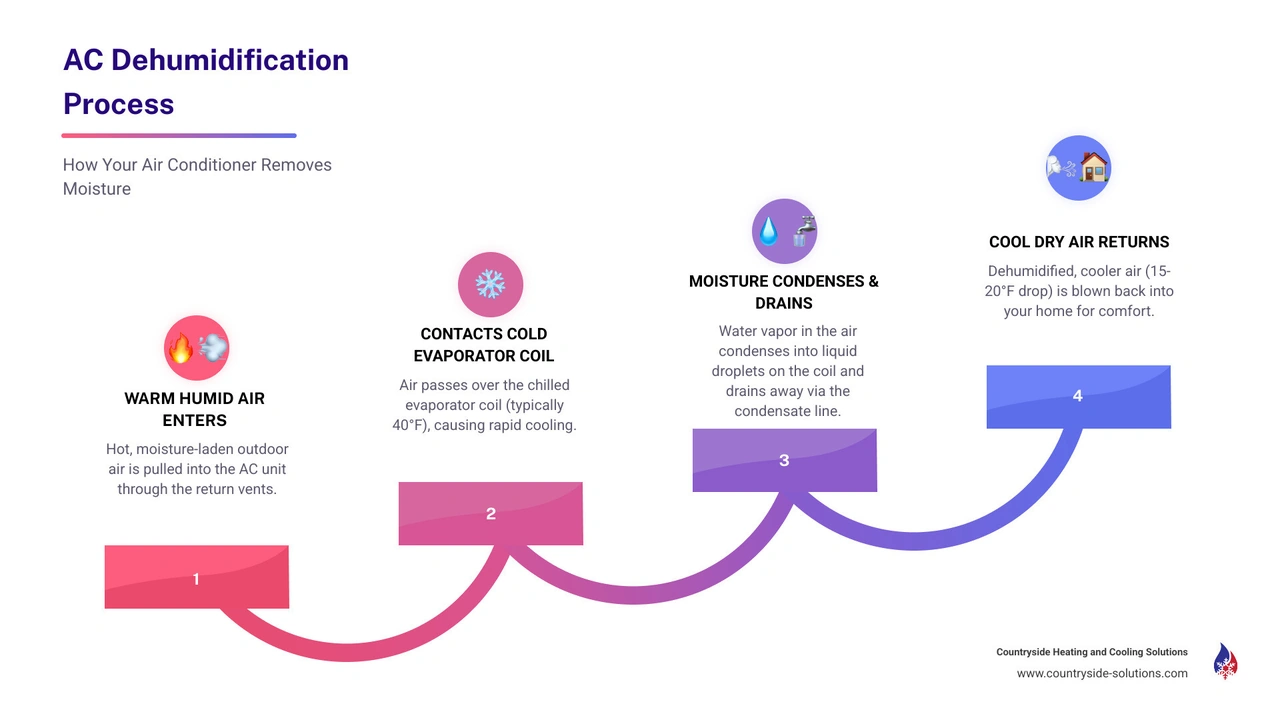
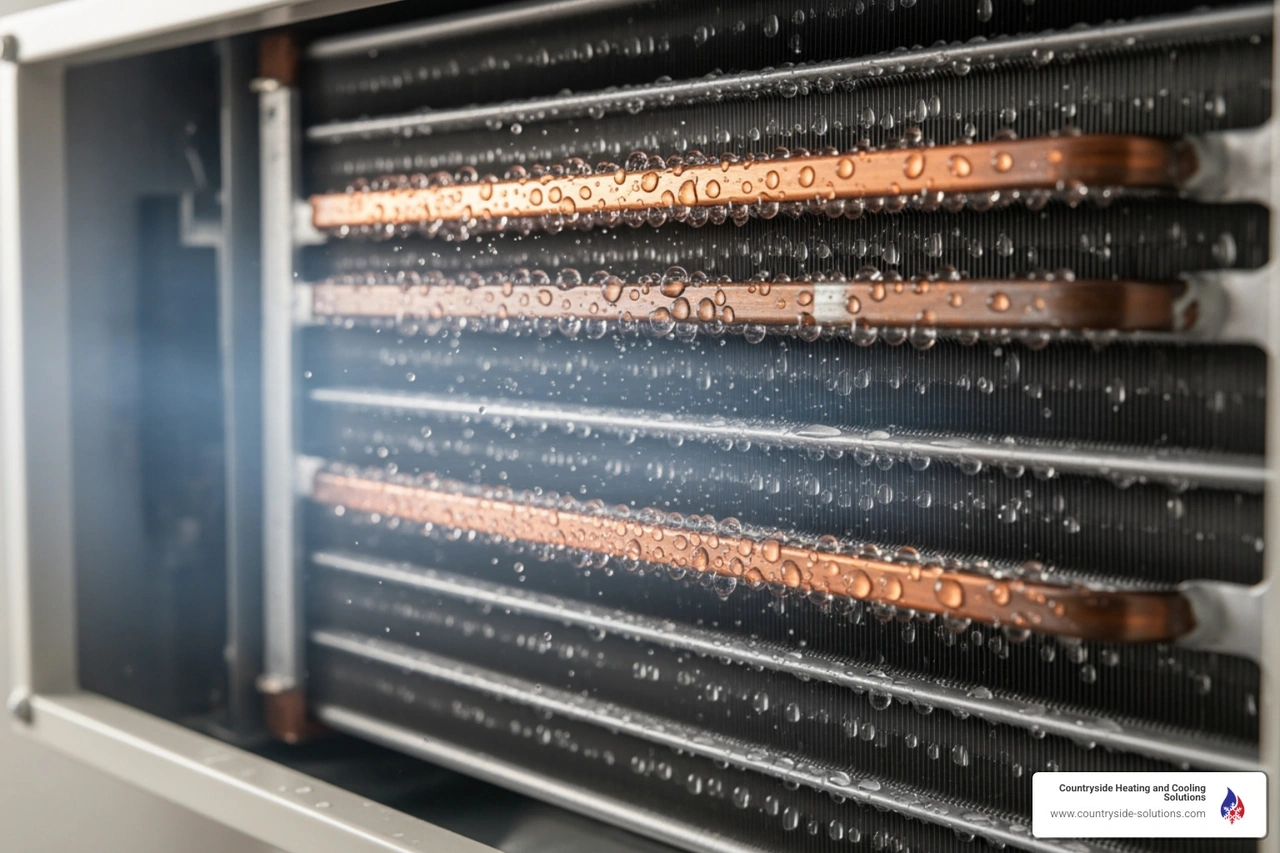
Your air conditioner cools air, but it also removes moisture as a secondary job. As warm indoor air passes over the cold evaporator coil, water vapor condenses into liquid and drains away. That is how an AC dehumidifies.
The problem is that in a humid Minnesota summer, your AC has to do two jobs at once:
- Remove sensible heat, which lowers the temperature
- Remove latent heat, which lowers the moisture content
When indoor humidity rises above about 50% to 60%, the system has to spend more of its capacity on moisture removal. That means less capacity is left for straightforward cooling.
| Indoor Condition | Comfort Level | Typical AC Temperature Drop |
|---|---|---|
| 76°F at 45% humidity | Comfortable, drier, easier to maintain | Often within the normal 18-22°F range |
| 72°F at 70% humidity | Cool on paper, clammy in real life | Can drop to 10°F or less in heavy humidity |
That is the heart of how humidity affects your AC performance: your system may be running, but much of its effort is going toward moisture instead of making the space feel cooler.
Why High Humidity Makes Your Home Feel Warmer
If you have ever said, "The thermostat says 72, so why do I still feel sticky?" humidity is probably the answer.
Your body cools itself by evaporating sweat. When the air is already packed with moisture, sweat evaporates more slowly. That makes your body feel warmer, even if the actual air temperature is not that high. This is why humid air feels heavy, muggy, and uncomfortable.
High humidity can cause:
- Clammy skin
- A sticky feeling indoors
- Rooms that feel warmer than the thermostat setting
- More frequent thermostat adjustments because comfort never quite arrives
In other words, comfort is not just about temperature. It is about the combination of temperature and moisture.
The Impact of Latent Heat on Cooling Cycles
Latent heat is the energy tied up in moisture. Before your AC can fully focus on lowering the air temperature, it has to remove some of that moisture load.
That can lead to:
- Longer cooling cycles
- More electricity use
- Less noticeable temperature improvement
- More wear on the compressor and blower motor
Sometimes homeowners assume a system that runs a long time must be broken. Not always. In humid weather, the AC may be battling a large latent load. But if your system seems to run endlessly or never satisfies the thermostat, it is worth reading why your air conditioner won't turn off to understand when long run times point to a bigger issue.
Warning Signs of How Humidity Affects Your AC Performance
When humidity starts overwhelming your AC, your house usually gives you clues. Some are obvious. Others are easy to miss until the problem grows.
Watch for these warning signs:
- Your home feels damp or muggy even when the AC is running
- Windows look foggy or have condensation
- Musty odors from vents, closets, or lower levels
- Mildew spots around vents, bathrooms, or window frames
- Wood floors, trim, or doors swelling or warping
- Bedding, towels, or upholstery feel slightly damp
- You keep lowering the thermostat but still do not feel comfortable
If you also notice water near the indoor unit, humidity may be overloading the condensate system or contributing to drainage issues. Learn more about why your air conditioner is leaking water inside.
Identifying Moisture Overload in Your HVAC System
A moisture overload problem can show up both in the air and in the equipment.
Signs inside the home include:
- Foggy bathroom mirrors that linger longer than usual
- Condensation on windows in summer
- Damp-smelling rooms
- Allergy or asthma symptoms that seem worse indoors
- A basement or lower level that feels cool but wet
Signs at the system include:
- Excess moisture around the air handler
- A clogged or slow condensate drain
- Reduced cooling performance
- Mold or biological growth near the coil or drain pan
If your AC has started leaking or you suspect drainage trouble, our guide on how to fix your AC leaking problems explains what homeowners can check and when to call for service.
One useful tool here is a hygrometer. It is a small, inexpensive device that measures indoor relative humidity. If your home regularly sits above 55% to 60%, your AC may not be keeping up with moisture removal.
Why Oversized Units Struggle with Humidity Control
Bigger is not always better in air conditioning. In fact, an oversized AC is one of the most common reasons a home feels cold and clammy at the same time.
Here is why:
- A large unit cools the air very quickly
- The thermostat is satisfied fast
- The system shuts off before it runs long enough to remove enough moisture
That pattern is called short-cycling.
Effective dehumidification depends on run time. The evaporator coil needs time to get cold, condense moisture, and drain it away. If the cycle is too short, the house may hit the target temperature without reaching a comfortable humidity level.
Single-speed systems can also struggle because they run at full blast or not at all. They do not have the flexibility to operate longer at lower output, which is often better for humidity control. Variable-speed and two-stage systems usually do a better job because they can run longer, more steadily, and remove more moisture along the way.
Proper sizing matters just as much as efficiency ratings. A professional load calculation should consider the home's square footage, insulation, windows, air leakage, and occupancy, not just a rough rule of thumb.
Professional Tips to Manage How Humidity Affects Your AC Performance
The good news is that humidity problems are very manageable once you identify the cause. Some fixes are simple homeowner habits. Others call for professional HVAC or indoor air quality upgrades.
A dedicated whole-home dehumidifier is often the most effective solution when the AC alone cannot keep humidity in range. These systems integrate with your ductwork and remove moisture throughout the house, rather than only in one room. You can learn more about whole house dehumidification services.
Other professional options may include:
- Variable-speed blowers for longer, gentler cycles
- Two-stage or inverter-driven systems for improved moisture removal
- Ventilation adjustments to reduce unwanted humid air infiltration
- Smart thermostats or humidistats that monitor moisture levels
- Duct sealing and insulation upgrades
Simple Homeowner Actions for Better Comfort
You do not always need major equipment changes to improve humidity control. Start with the basics:
- Set the thermostat fan to AUTO, not ON
- Use bathroom exhaust fans during showers and for 15 to 20 minutes after
- Use the kitchen exhaust fan when cooking
- Keep windows and doors closed on humid days
- Seal obvious air leaks around doors, windows, and attic access points
- Dry damp areas quickly and address plumbing leaks promptly
- Replace dirty air filters regularly
That fan setting matters more than many people realize. With the fan set to ON, air keeps blowing over a wet evaporator coil after the cooling cycle ends. Some of that moisture can evaporate right back into the house. AUTO lets the water drain away instead.
Good insulation and sealing can also make a meaningful difference. Research shows that reducing humid air infiltration through sealing and insulation can improve AC efficiency by up to 20%.
If you want help improving comfort beyond basic cooling, our indoor air quality services can help address moisture, ventilation, and whole-home air concerns together.
The Importance of Regular Maintenance
Humidity puts extra stress on an air conditioner, so maintenance becomes even more important.
Regular AC maintenance helps by:
- Cleaning evaporator coils so heat transfer stays efficient
- Flushing condensate drain lines to prevent backups
- Checking refrigerant levels and system performance
- Improving airflow with clean filters and blower adjustments
- Catching mold, corrosion, or drainage issues early
When coils are dirty or airflow is restricted, dehumidification suffers. When drain lines clog, water can back up into the unit or the home. And when refrigerant charge is off, the system may not cool the coil properly enough to remove moisture efficiently.
Minnesota homeowners also deal with the opposite seasonal problem: air that becomes too dry during heating season. If you are curious about balancing moisture year-round, see why use a humidifier during summer for added context on when humidification may or may not make sense.
Seasonal Humidity Management for Minnesota Homeowners
In the Minneapolis-Saint Paul metro area and western suburbs, humidity is not just a summer issue. It changes with the season.
In summer, the challenge is usually too much moisture. The comfort target is typically around 40% to 55% relative humidity, with many experts recommending you stay under 60% and, ideally, closer to 50% or below for best AC performance.
In winter, the issue flips. Cold outdoor air holds less moisture. Once that air is brought inside and heated, its relative humidity drops even more. That is why homes can feel dry, itchy, and static-filled in the heating season.
Ideal winter humidity often falls around 25% to 40%, depending on outdoor temperature. In very cold conditions, keeping indoor humidity slightly lower helps prevent window condensation and frost.
Low winter humidity can lead to:
- Dry skin and scratchy throats
- Static electricity
- Cracking or shrinking wood floors and furniture
- Air that feels cooler than the thermostat setting
That last point surprises a lot of homeowners. Moist air tends to feel warmer than very dry air, so balancing winter humidity can improve comfort without endlessly nudging the thermostat upward.
Frequently Asked Questions about AC and Humidity
What is the ideal indoor humidity level for summer?
For most homes, the best summer range is 40% to 55% relative humidity. That range supports comfort, helps limit mold growth, and allows your AC to work more efficiently.
If indoor humidity regularly climbs above 60%, most people begin to notice the house feels sticky, stale, or warmer than the thermostat suggests.
Why does my AC run constantly when it is muggy outside?
Because the system is trying to remove moisture as well as heat.
In humid weather, your AC has to handle a larger latent load. That means some of its cooling capacity is being used to condense and drain water vapor before the air temperature can drop as much as you expect. Under normal conditions, an AC may produce an 18 to 22 degree temperature drop across the evaporator coil. In very humid conditions, that drop can fall to 10 degrees or less.
Longer run times are common when outdoor humidity is high, but nonstop running, poor comfort, or persistent dampness can also point to issues like:
- Dirty coils
- Low airflow
- Incorrect refrigerant charge
- Oversized equipment
- Infiltration of humid outdoor air
- A need for supplemental dehumidification
Can high humidity cause my AC coils to freeze?
Yes, indirectly.
High humidity creates more condensation on the coil. If airflow is already restricted by a dirty filter, blocked return, dirty coil, or blower problem, that moisture can contribute to ice formation. Low refrigerant or other system issues can also make freezing more likely.
Signs of a freezing problem can include:
- Weak airflow from vents
- Ice on refrigerant lines or the indoor coil
- Water around the unit after the ice melts
- Poor cooling and rising indoor humidity
Frozen coils are never a "wait and see" issue. They need professional diagnosis because the root cause could be airflow, refrigerant, drainage, or a combination of problems.
Conclusion
Humidity changes the way your AC cools, how your home feels, and how hard your system has to work. When moisture levels get too high, comfort drops, run times increase, and problems like musty odors, condensation, mold, and water leaks become more likely.
The key is not just lowering temperature. It is controlling moisture.
At Countryside Heating and Cooling Solutions, we help homeowners in Maple Plain and across the Minneapolis-Saint Paul metro improve comfort with practical, long-term solutions, from maintenance and airflow corrections to humidity control upgrades. Our family-owned team has served the area since 1974, and our NATE-certified technicians are here to help you get your home cool, dry, and comfortable again.
If your home feels sticky, your AC runs too long, or your indoor humidity will not come down, schedule your professional AC service today.
