.webp)

Navigating the Shift from Cooling to Heating Before the First Frost
The afternoon sun is beating down on your windows, making the living room uncomfortably warm, but the local forecast calls for near-freezing temperatures by midnight. This chaotic fall weather leaves many homeowners staring at their thermostats, unsure whether to push the cooling system for one more day or finally surrender to the furnace. At Countryside Heating & Cooling Solutions, our team often fields calls from confused residents during these October temperature swings. If you are looking for reliable home maintenance tips and troubleshooting, the first step we recommend is understanding how your equipment reacts to drastic temperature drops. Running an air conditioner when it is too cold outside does not just waste energy—it actively damages the internal components of the system.
Before the October first frost arrives, you need a clear strategy for managing indoor comfort without risking a catastrophic equipment failure. Making the wrong call on a chilly evening can lead to a completely frozen system or a ruined compressor. If you need professional guidance preparing your system for the seasonal shift, exploring professional Air Conditioning Services or taking a moment to Schedule HVAC Service can save you from a major headache later.
The 60-Degree Rule: What is the Lowest Outside Temp to Run AC?
The short answer is that you should never run your central air conditioner when the outside temperature drops below 60°F. While it might be tempting to cool down a stuffy house on a crisp autumn afternoon, 60 degrees is the widely accepted absolute floor for safe operation. For homeowners in the Maple Plain area, where our technicians see temperatures plummet rapidly as the sun goes down, paying close attention to the outdoor thermometer is critical.
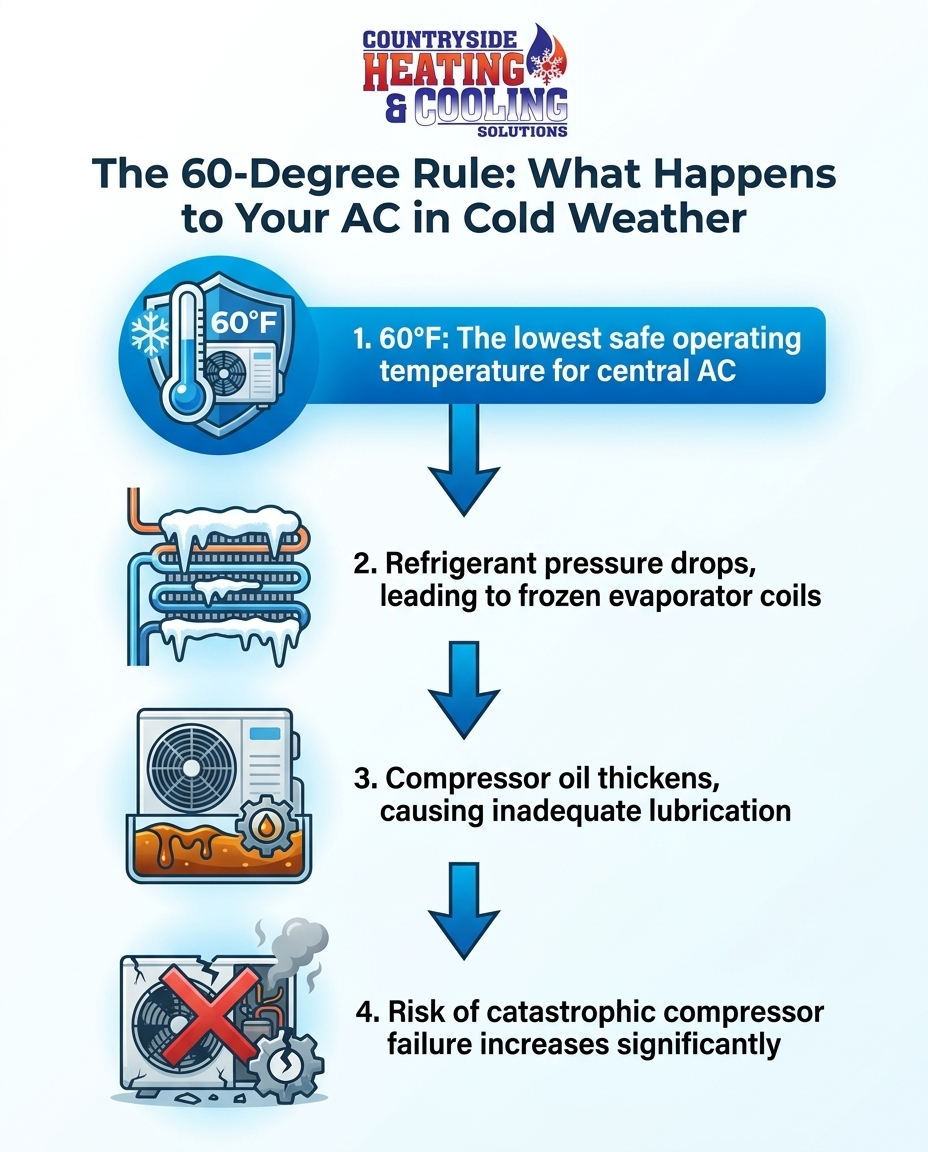
The 60-degree rule exists because running the system lower introduces severe risks, primarily frozen evaporator coils and thickened compressor oil. When ambient temperatures fall below this threshold, the delicate balance of pressure and temperature inside the refrigerant lines is disrupted, turning your cooling system into a block of ice.
Manufacturer Guidelines for Safe Operation
Central air conditioners are engineered specifically to combat summer heat, not cold weather. Major HVAC manufacturers design these units to operate optimally in warm conditions where the heat transfer process works as intended. When you operate the system outside of these design parameters, you are forcing the machinery to perform a task it was never built to handle.
• Design parameters: The internal sensors, pressure switches, and lubricants are all calibrated for warm-weather operation.
• Warranty considerations: Because operating the unit below 60°F is considered improper use, damage resulting from cold-weather operation is rarely covered by manufacturer warranties.
• System stress: Even if the unit manages to turn on, the internal components are working under immense strain, significantly shortening the lifespan of the equipment.
The Department of Energy and leading equipment manufacturers agree: once the outdoor temperature consistently hovers in the 50s or below, it is time to retire the air conditioner for the season.
The Mechanics of Cold Weather Cooling: Why AC Coils Freeze
To understand why the 60-degree rule is so strictly enforced, it helps to look at the physics of how your air conditioner actually works. Your system does not "create" cold air; it absorbs heat from inside your home and releases it outside. This heat transfer relies on refrigerant circulating between the indoor and outdoor units at very specific pressures.
When the outdoor temperature drops, the ambient cold causes the refrigerant pressure inside the system to drop significantly. The evaporator coil, located inside your home, relies on warm air blowing over it to keep the refrigerant inside from getting too cold. If the pressure drops too low due to cold outdoor temperatures, the coil itself drops below the freezing point of water. Any normal condensation or humidity in the air that touches the coil will instantly turn to ice. Before you know it, the entire coil is encased in a solid block of ice, blocking airflow entirely and potentially causing water damage as it eventually thaws. Understanding the danger of running your AC below 60 degrees is essential to preventing this costly scenario before the October first frost hits.
The Danger of Thickened Compressor Oil
Beyond the coils, the compressor itself faces a severe threat in cold weather. The compressor is the heart of your air conditioning system, responsible for pumping refrigerant through the lines. Like the engine in your car, it requires constant lubrication to function smoothly.
The oil used to lubricate the compressor is formulated for warm weather. When the temperature drops below 60°F, this oil becomes thick and sluggish. Think of how hard it is to pour cold syrup compared to warm syrup. If you force the compressor to turn on when the oil is thick, the internal moving parts grind together without proper lubrication. This forces the compressor to overwork, leading to intense friction, overheating, and ultimately, catastrophic mechanical failure. In our years of servicing Maple Plain homes, replacing a burnt-out compressor is one of the most expensive repairs we encounter, and it is entirely preventable by simply leaving the system off in cold weather.
Managing Thermostats During Drastic Fall Temperature Swings
Living in Minnesota means dealing with a highly unpredictable climate during the transition seasons. It is completely normal for our region to experience rapid transitions from mild, sunny fall days to cool summer-like nights, followed by freezing October drops. These diurnal temperature variations—often swinging 20 to 30 degrees in a single day—make thermostat management incredibly tricky for homeowners in the Maple Plain area.
The danger of the "cool" setting: One of the biggest mistakes our team sees is homeowners leaving their thermostat set to "cool" overnight during the fall. You might need the AC at 3:00 p.m. when the house is 78°F, but if you leave that setting on and the outdoor temperature plummets to 45°F by 2:00 a.m., the system might still try to cycle on to maintain the indoor temperature. This late-night cycle is exactly when coils freeze and compressors fail.
Instead of risking your equipment, rely on alternative cooling methods during warm fall afternoons. If the house feels stuffy, open windows on opposite sides of the house to create a cross-breeze. Turn on ceiling fans to circulate the air and create a wind-chill effect that makes the room feel cooler without dropping the actual temperature. Utilizing the natural cool air outside is not only safer for your HVAC system, but it also gives your equipment a much-needed rest before the heavy demands of winter heating begin.
Making the Switch: Transitioning Safely from AC to Furnace
Bridging the gap between shutting down the cooling system and firing up the furnace requires a methodical approach. You want to ensure both systems are properly prepared for their respective off-seasons and on-seasons before the October first frost fully sets in.
Just last fall, a local homeowner reached out to our team at Countryside for a routine system checkup before making the switch. One of our technicians arrived on time, performed a thorough and polite inspection of both the cooling and heating systems, and ensured everything was prepared for the seasonal shift. The homeowner even opted to sign up for an ongoing maintenance plan to keep both systems protected year-round. Taking proactive steps like this is the best way to handle the transition.
1. Turn the thermostat to "Off": Before doing anything else, manually switch your thermostat from "Cool" to the "Off" position. Leave it off for at least a few hours to ensure the system is completely equalized.
2. Never run both on the same day: Avoid the temptation to run the AC in the afternoon and the furnace at night. Rapidly switching back and forth confuses the thermostat, stresses the electrical components, and forces the system to battle itself.
3. Schedule professional maintenance: A professional pre-winter inspection is crucial. A licensed technician will verify that the AC is safely shut down and that the furnace is clean, safe, and ready to burn fuel efficiently. Staying on top of AC maintenance in Maple Plain ensures your cooling system will wake up smoothly next spring.
4. Switch to "Heat": Once you are confident the AC is done for the season and the furnace has been checked, officially switch the thermostat to "Heat" and set your desired winter temperature.
Preparing Your Outdoor Unit for Winter
As you make the switch inside, do not forget about the condenser sitting outside. Take a few minutes to clear away any fallen leaves, twigs, or debris that have accumulated around the base of the outdoor unit. Proper airflow is essential to prevent moisture buildup and rust during the winter months. Check your specific manufacturer guidelines regarding covers; while some homeowners prefer to place a piece of plywood on top of the unit to prevent falling ice damage, fully wrapping the unit in a tight tarp can actually trap condensation and encourage rodent infestations.
Decoding the First Furnace Run: Normal Quirks vs. Warning Signs
Once you finally switch the thermostat to "Heat," the first furnace cycle of the season can be a nerve-wracking experience. After sitting dormant all summer, the system often produces unusual smells and sounds. Every October, our dispatchers at Countryside Heating & Cooling Solutions receive calls from Maple Plain residents worried about strange furnace noises. Knowing the difference between a normal startup quirk and a serious warning sign is essential for peace of mind.
It is important to remember that these symptoms are related to months of furnace dormancy, not your previous air conditioning usage. Here is a breakdown of what to expect during that first run:
• Faint burning smell — Normal Quirk or Warning Sign?: Normal Quirk — What It Means: Dust settles on the heat exchanger over the summer. When the burners ignite for the first time, this dust burns off, creating a temporary odor that should dissipate within an hour.
• Clicking sound before ignition — Normal Quirk or Warning Sign?: Normal Quirk — What It Means: This is typically the sound of the electronic spark igniter attempting to light the burners. A few clicks are perfectly normal.
• Loud banging or booming — Normal Quirk or Warning Sign?: Warning Sign — What It Means: This indicates delayed ignition. Gas is building up in the chamber before igniting all at once. This requires immediate professional attention.
• Rattling or screeching noises — Normal Quirk or Warning Sign?: Warning Sign — What It Means: High-pitched squeals often point to a failing blower motor belt or dry bearings. Rattling can indicate loose panels or a cracked component.
• Short-cycling (turning off quickly) — Normal Quirk or Warning Sign?: Warning Sign — What It Means: If the furnace runs for two minutes and shuts down, it is likely overheating due to a clogged air filter or a failing flame sensor.
Protecting Your HVAC Investment Before Winter Hits
Your heating and cooling system is one of the most significant investments in your home. Protecting that investment means catching early heating anomalies before sub-zero temperatures arrive, and strictly adhering to the 60-degree rule to prevent cooling damage. As your trusted local HVAC experts, our team at Countryside Heating & Cooling Solutions understands exactly how brutal the seasonal transitions can be on residential machinery.
We saw this exact situation play out recently when one of our local customer's A/C units went out unexpectedly during a late fall warm spell. Because they reached out to us immediately rather than ignoring the problem, our technician arrived the same day to provide fast and accurate service. The prompt A/C service was completed before any further damage could occur to the compressor, proving that timely professional intervention is always the safest route.
If you notice persistent smells, banging noises, or a system that refuses to stay running after the October first frost, never attempt DIY diagnostics. Modern HVAC systems involve high-voltage electricity, combustible gases, and pressurized refrigerants. Opening up the cabinet to poke around is incredibly dangerous. Rely on licensed professionals like us to diagnose the issue. Remember, running an AC in freezing temperatures or ignoring a struggling furnace can lead to premature failure and the sudden need for a complete AC installation or furnace replacement. Preventative care is the ultimate key to longevity.
Frequently Asked Questions
Can I run my AC if it is 55 degrees outside?
No, you should not run your air conditioner when it is 55 degrees outside. The universally accepted threshold for safe operation is 60°F. Running the system at 55 degrees causes the refrigerant pressure to drop too low, which can quickly lead to a frozen evaporator coil. It also causes the oil in the compressor to thicken, significantly increasing the risk of mechanical failure.
What happens if you run AC in cold weather?
Running an AC in cold weather disrupts the delicate heat transfer process the system relies on. The immediate result is usually condensation freezing solid on the indoor coil, which blocks airflow and stops the house from cooling. Long-term, the thickened compressor oil fails to lubricate the moving parts, causing the compressor to overheat, grind, and eventually burn out completely.
At what temperature does AC freeze up?
An air conditioning system is at high risk of freezing up anytime the outdoor ambient temperature drops below 60°F. As the outside air gets colder, the refrigerant inside the system becomes too cold, dropping the surface temperature of the indoor coil below 32°F. Any humidity in your indoor air that touches this freezing coil will instantly turn to ice.
Can you run your AC and heat on the same day?
While it is technically possible, it is highly discouraged to run both systems on the exact same day. Switching rapidly between cooling and heating forces the thermostat and the system's control board to work overtime, often leading to short-cycling or blown fuses. If you must switch, turn the system to "Off" for several hours to let the internal pressures equalize before turning on the alternate mode.
Why does my furnace smell when I turn it on for the first time?
A burning smell during the first furnace run is usually just normal dust burn-off. Over the summer, dust and debris settle on the cold heat exchanger inside the furnace cabinet. When the burners ignite for the first time in the fall, this dust is incinerated, creating a distinct odor that should clear out of your home within an hour or two.
How long should I wait between turning off the AC and turning on the heat?
You should wait a minimum of two to three hours after turning off the AC before turning on the heat. This waiting period allows the refrigerant pressures to stabilize and prevents the system from being shocked by a sudden demand for a completely different operation. It also gives the blower motor time to rest before being tasked with distributing heated air.
Taking the time to understand your system's limits is the best way to secure peace of mind before winter truly sets in. A clear, safe approach to seasonal transitions ensures your equipment stays healthy for years to come. If you are experiencing any warning signs or just want to make sure your home is ready for the cold, reach out to our team at Countryside Heating & Cooling Solutions to schedule a professional inspection today.
