.webp)

Navigating Fall HVAC Transitions: When to Cool and When to Heat
Have you ever debated turning on your air conditioner during a surprisingly warm October afternoon, knowing the temperature will plummet by nightfall? You are not alone. Managing indoor comfort during unpredictable autumn weather is one of the most common homeowner questions answered by our technicians every year. Transitioning between cooling and heating during the volatile fall months creates a unique mechanical dilemma for your home's climate control system.
During the October pre-winter heating startup, you face two distinct challenges. First, you need to understand the exact temperature limits for safe air conditioner operation to avoid freezing your system components. Second, you have to diagnose alarming burning smells when the furnace fires up for the first time in months. Guessing wrong on either front can lead to unnecessary panic or severe mechanical damage. To ensure your equipment is ready for this seasonal shift, you can start by exploring our Air Conditioning Services.
This transition period requires a careful balancing act. One day you are trying to cool down a stuffy upper floor, and the next morning you are shivering in your kitchen. Many homeowners mistakenly believe their HVAC system can instantly pivot between extreme cooling and heavy heating without any mechanical consequences. However, these complex systems require specific operating conditions to function safely. Pushing your equipment beyond its intended design limits during these volatile weeks is a pattern we frequently see leading to premature breakdowns. This guide breaks down the manufacturer-approved parameters for safely operating your equipment during the shoulder seasons.
The 60-Degree Threshold: What Is the Lowest Outside Temp to Run AC?
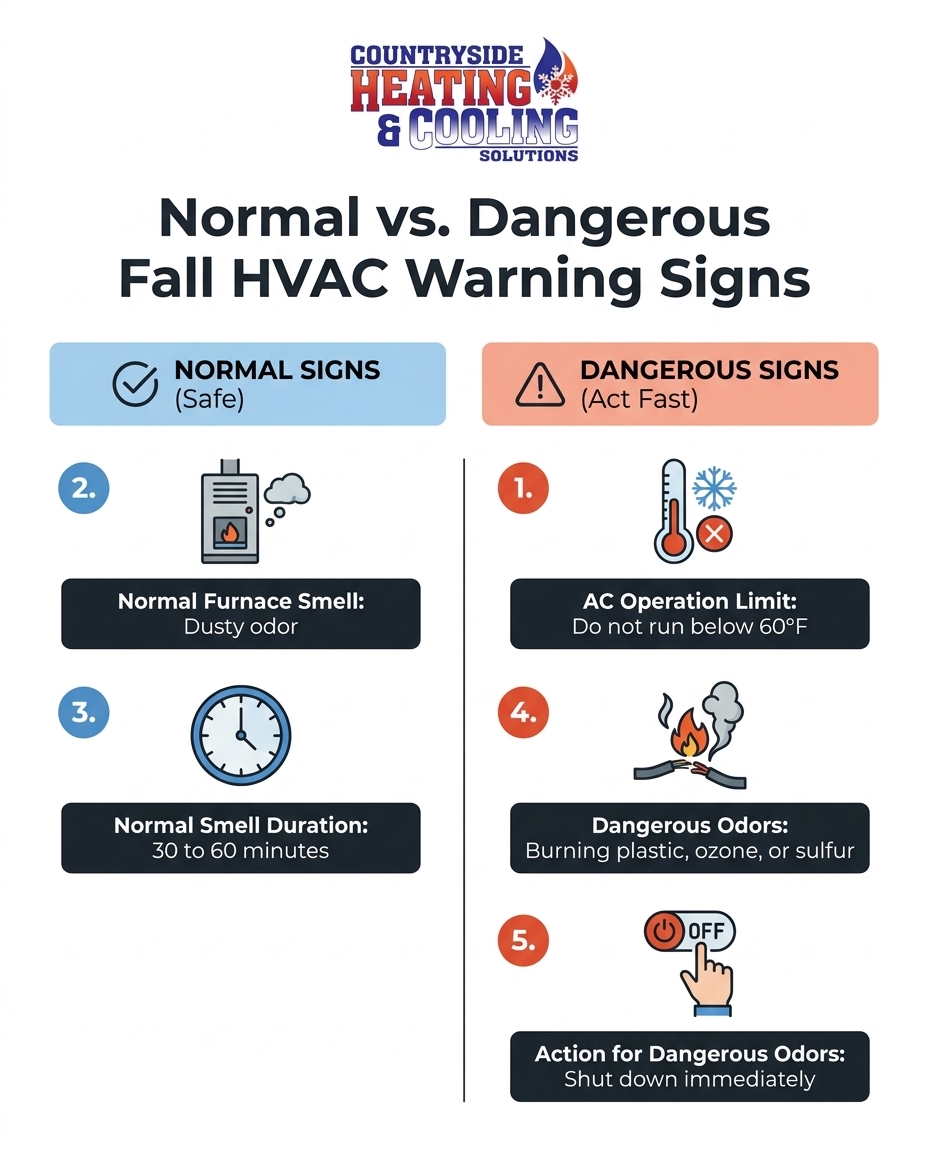
The short answer is clear: 60 degrees Fahrenheit is the absolute minimum outside temperature for safely running an air conditioner. Operating your cooling system when the ambient temperature drops below this threshold forces the equipment to work outside of its engineered design limits. As a Bryant Medal of Excellence dealer, we provide strict, manufacturer-approved parameters to prevent costly damage to your system. The 60-degree rule is not just a general suggestion; it is a rigid mechanical boundary that protects your compressor and coils.
When you ignore this threshold, a specific chain of mechanical failures begins to unfold inside your outdoor unit. Here is exactly what happens when you run the system in cold weather:
1. Lubricant thickening: The oils designed to protect the moving parts begin to congeal.
2. Increased friction: The compressor motor struggles to overcome the resistance of the thickened oil.
3. Pressure drops: The refrigerant cycle loses the necessary ambient heat to maintain proper pressure.
4. Coil freezing: Moisture in the air freezes directly onto the indoor evaporator coil.
5. System lock-up: The compressor eventually overheats and seizes due to a lack of lubrication.
One local customer recently scheduled a routine check of their cooling system during the fall transition. The technician arrived on time, was polite, and thoroughly inspected the unit, noting that running the system in cooler weather had already begun to put unnecessary strain on the components. After understanding the mechanical risks, the customer signed up for a long-term maintenance plan to ensure their equipment stays within safe operating limits year-round.
Why Compressor Oil Thickens in the Cold
Your air conditioner's compressor relies on a specific grade of synthetic lubricant to keep its internal pistons and scrolls moving smoothly. This oil is formulated to maintain its optimal viscosity during warm weather. When the temperature drops below 60 degrees, this lubricant thickens significantly, acting more like molasses than a smooth oil. The compressor motor has to work twice as hard to push this thick fluid through the system, drawing excessive electrical current and generating dangerous internal heat. You can learn more about this specific risk by reading about the Danger of Running AC Below 60 Degrees.
The Risk of Evaporator Coil Freezing
Air conditioners do not actually create cold air; they remove heat from the air inside your home. To do this effectively, the outdoor unit needs a certain amount of ambient heat to facilitate the refrigerant cycle. When it is too cold outside, the refrigerant pressure drops too low. This causes the indoor evaporator coil to drop below freezing. As warm, humid indoor air blows across this super-cooled coil, the condensation instantly turns to ice. Within hours, your system can become entirely encased in a solid block of ice, blocking all airflow and potentially destroying the compressor.
Managing Minnesota's Rapid October Temperature Swings
In Maple Plain, MN, extreme temperature swings are a seasonal reality. We frequently see afternoon highs in the upper 60s followed immediately by nighttime lows dropping into the 30s. This rapid 30-to-40 degree daily swing creates a frustrating environment for managing indoor comfort. When the outdoor air warms up quickly in the afternoon, your home's thermal mass—the physical structure, walls, and insulation—often retains the chill from the night before, while the upper floors bake in the autumn sun.
Because you cannot safely rely on your air conditioner when the temperature hovers near that 60-degree cutoff, you need alternative strategies to keep your home comfortable. Relying on mechanical ventilation and natural airflow is the safest approach during these borderline days. If you need professional assistance preparing your system for these shifts, routine AC Maintenance in Maple Plain is the best proactive step.
Instead of risking AC damage during a brief afternoon warm-up, try these alternative cooling methods:
• Run the HVAC fan independently: Switch your thermostat from "Auto" to "On" to circulate cooler basement air throughout the upper levels of your home without engaging the outdoor compressor.
• Utilize cross-ventilation: Open windows on opposite sides of your home to create a natural breeze that flushes out stale, warm air.
• Optimize ceiling fans: Ensure your ceiling fans are spinning counter-clockwise to push air straight down, creating a wind-chill effect that makes the room feel cooler.
• Manage window treatments: Keep blinds and curtains closed on the south and west-facing windows during the warmest parts of the afternoon to block solar heat gain.
By using these strategies, you can maintain a comfortable indoor environment without pushing your cooling equipment past its safe operational limits right before you need to transition to heating.
The First Furnace Startup: What Is That Burning Smell?
As the evening cold sets in and you finally switch your thermostat to "Heat," you will likely encounter the second major challenge of the season: a noticeable burning odor coming from your vents. During the October pre-winter heating startup, your furnace fires up for the first time after sitting idle for six to eight months. Over the course of the spring and summer, dust, dirt, pet dander, and airborne particles naturally settle on the furnace's internal components, specifically the heat exchanger.
When the burners ignite, the heat exchanger rapidly reaches high temperatures, instantly incinerating this accumulated debris. This process creates a distinct, dusty burning smell that circulates through your ductwork and into your living spaces. While this odor is often alarming to homeowners who fear a fire hazard, it is a completely normal part of the seasonal transition. The key is understanding exactly how long this process should take.
A typical pattern we see is that the 30 to 60 minute duration for normal dust burn-off is the standard window. If the smell dissipates within this timeframe, your system is functioning exactly as intended. One homeowner reached out for a comprehensive system inspection during this transition period to have their heating and cooling systems checked out. The technician checked everything and explained the findings clearly, pointing out exactly where seasonal dust had settled. Because the customer understood what was done and how the system looked, they felt completely prepared and confident when that initial, temporary burning odor occurred.
To minimize the impact of this burn-off period, we recommend opening a few windows slightly during the first heating cycle of the year. This allows the dusty air to escape and fresh air to circulate, making the temporary odor much less noticeable for your family.
Normal Dust Burn-Off vs. Dangerous Electrical Odors
While a temporary dusty smell is harmless, not all furnace odors are benign. Knowing the difference between normal seasonal burn-off and a dangerous mechanical failure is critical for the safety of your home. If you suspect your system is experiencing a mechanical failure, you should immediately Schedule HVAC Service to have the unit evaluated by a licensed professional.
A normal burn-off smells distinctly like dry, dusty air—similar to the smell of a space heater that has just been turned on. It should never smell acrid, chemical, or metallic. If you detect the scent of melting plastic, burning rubber, or a sharp electrical ozone smell, you are likely dealing with a serious problem, such as melting wire insulation, an overheating blower motor, or a failing capacitor.
Signs of Normal Seasonal Burn-Off
Normal operational smells have very specific characteristics. You can safely let your system run if you observe the following:
• The odor profile: It smells strictly like burning dust, dry air, or a slightly toasted scent.
• The timeline: The smell begins immediately upon the first startup and fades completely within 30 to 60 minutes.
• The frequency: It only happens during the very first time you run the heat for the season, or after a prolonged period of inactivity.
Warning Signs of Mechanical Failure
Dangerous odors require immediate action. Turn your thermostat off right away if you experience any of these warning signs:
• The odor profile: Smells like melting plastic, sulfur, rotten eggs, or burning wires.
• The timeline: The smell persists beyond the first hour of operation, or it returns every time the furnace cycles on.
• The severity: The odor is strong enough to trigger your home's smoke alarms or causes physical irritation to your eyes and throat.
Important Safety Warning: Never attempt to open your furnace cabinet to inspect the heat exchanger, blower motor, or internal wiring yourself. These components carry high voltage and operate under extreme temperatures. Diagnosing an electrical burning smell requires a licensed professional with the proper diagnostic tools to safely evaluate the system.
Deep Dive FAQs: Fall HVAC Operations
Navigating the rapid weather changes of autumn generates a lot of questions. We have compiled direct answers to the most frequent concerns to help you manage your home's climate control safely. For more comprehensive answers to all your system questions, visit our HVAC FAQs.
What is the lowest temperature you can run your air conditioner?
The absolute lowest safe temperature to run your air conditioner is 60 degrees Fahrenheit. Operating the system below this threshold causes the compressor lubricants to thicken and lose their protective properties. It also disrupts the refrigerant cycle, leading to dangerous pressure drops that can freeze your evaporator coil solid. Adhering to this 60-degree limit protects your equipment from sudden, expensive mechanical failures.
Is it safe to run AC when it's 50 degrees outside?
No, running your air conditioner at 50 degrees forces the system outside its design limits and risks severe mechanical damage. At 50 degrees, the ambient air does not provide enough heat for the refrigerant to properly vaporize. This can cause liquid refrigerant to flow backward into the compressor—a condition known as "liquid slugging"—which can instantly destroy the compressor motor and require a total system replacement.
How long does the furnace burning smell last?
A normal furnace burning smell caused by seasonal dust burn-off lasts between 30 and 60 minutes. This temporary odor occurs because dust and dander settle on the heat exchanger over the summer and are incinerated during the first heating cycle. If the smell persists for more than an hour, or if it returns during subsequent heating cycles, you should shut the system down and contact a professional.
Why does my furnace smell like burning plastic when I turn it on?
A burning plastic smell typically indicates melting wire insulation, an overheating motor, or a failing capacitor. Unlike the temporary smell of burning dust, a plastic or electrical odor is a serious fire hazard that will not resolve on its own. If you detect this scent, turn off the furnace immediately at the thermostat and do not turn it back on until a licensed technician has inspected the internal wiring.
How can I prepare my HVAC system for unpredictable fall weather?
You can prepare your system by scheduling a dual-season inspection, changing your air filter before the first heating cycle, and relying on fans instead of AC during brief afternoon warmups. A clean air filter ensures your furnace has the proper airflow needed to operate efficiently and safely. A professional inspection verifies that both your cooling and heating components are mechanically sound before the extreme winter weather arrives.
Ensure a Safe Transition to Heating Season
Successfully navigating the fall transition comes down to respecting your equipment's mechanical limits. Always remember the golden rules: never run your air conditioner when it is below 60 degrees outside, and never ignore a burning smell that lasts longer than 60 minutes or smells like plastic. Professional oversight is the safest way to handle the transition into winter. If you are unsure about your system's safety, having a definitive checklist and a trusted local expert to evaluate your equipment will give you the confidence you need heading into the coldest months of the year.
