.webp)

Is Your Home Trying to Tell You Something? The Warning Signs of Poor Ventilation
The signs your home needs better ventilation are often hiding in plain sight — foggy windows, musty smells, rooms that feel stuffy no matter what you do, or a family that seems to catch every cold going around.
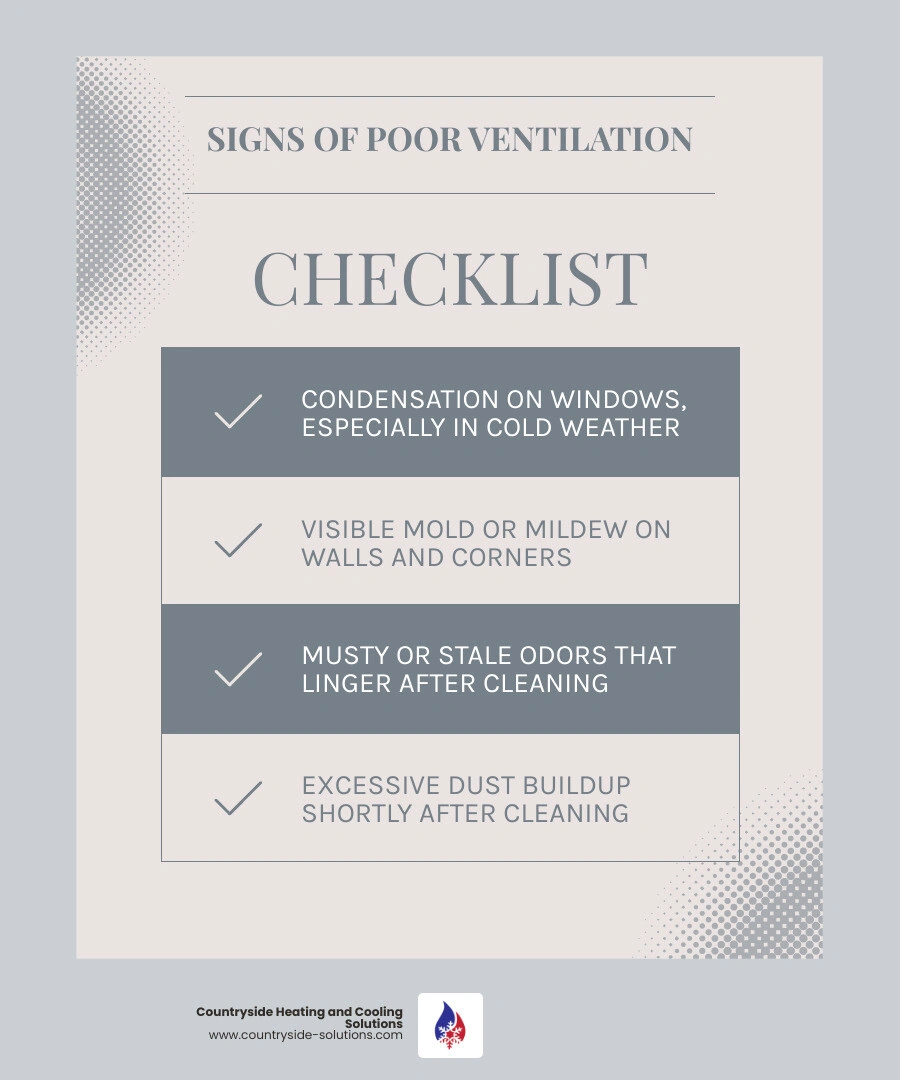
Here are the most common warning signs to look for:
- Condensation on windows — especially during cold Minnesota winters
- Visible mold or mildew in bathrooms, corners, or on walls
- Musty or stale odors that linger even after cleaning
- Excessive dust buildup on surfaces shortly after cleaning
- Hot or cold spots in certain rooms
- Persistent allergy or respiratory symptoms indoors
- Lingering cooking or pet odors that take hours or days to clear
If any of these sound familiar, your home's airflow is likely struggling.
Here's why it matters: Americans spend between 70 and 90 percent of their time indoors, yet indoor air can be up to five times more contaminated than the air outside. In the Twin Cities, where homes are sealed tight against brutal winters, that stale, pollutant-heavy air has nowhere to go — unless your ventilation system is doing its job.
Poor ventilation is not just uncomfortable. Over time, it can damage your home's structure, drive up your energy bills, and quietly harm your family's health. The good news is that once you know what to look for, the signs are easy to spot — and the fixes are more straightforward than you might think.
Why Proper Airflow is Essential for Your Twin Cities Home
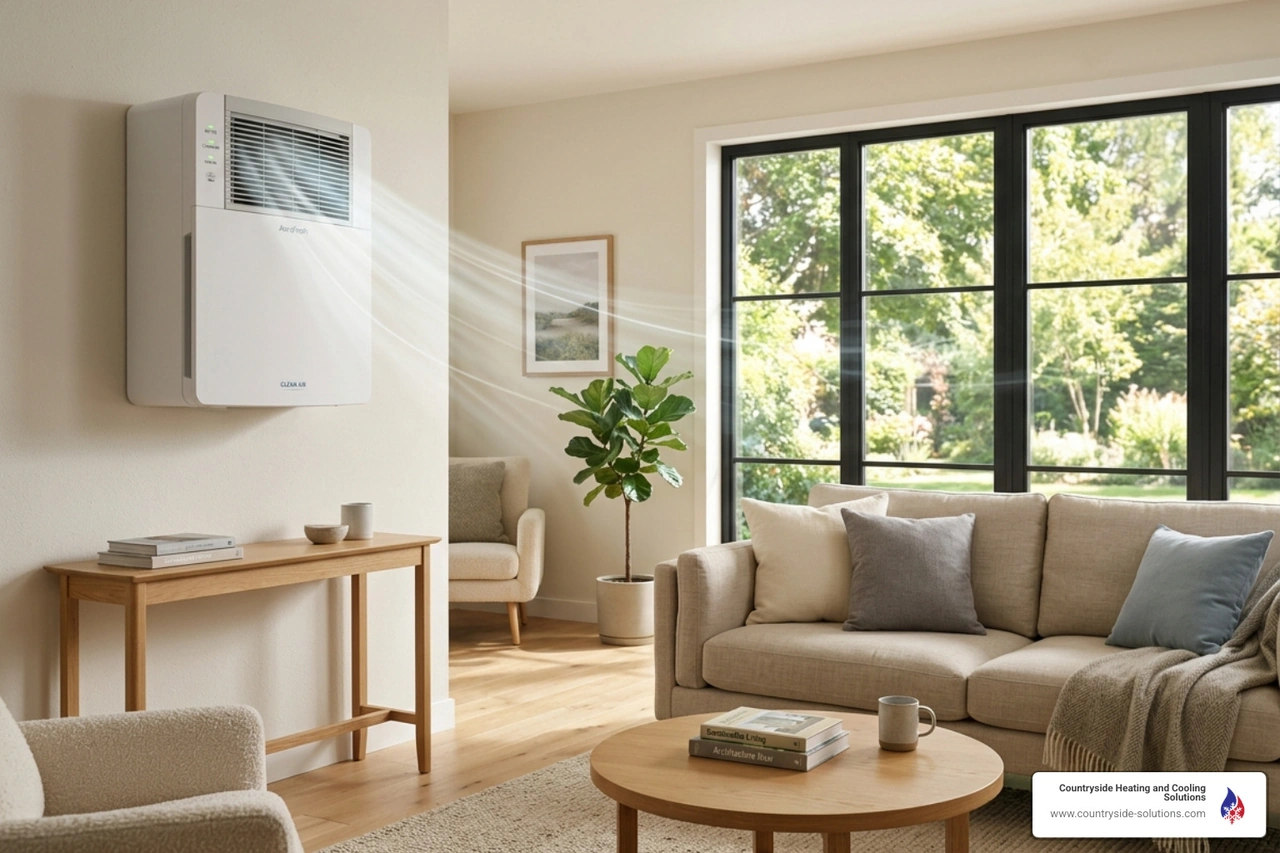
When we talk about ventilation, we aren't just talking about a breeze through an open window. True home ventilation is the process of exchanging stale indoor air with fresh, outdoor air. In our neck of the woods — from Maple Plain to Minnetonka — this process is vital for keeping our homes healthy, especially when the windows stay shut for six months of the year.
Proper airflow serves three major purposes:
- Health and Respiratory Protection: Stagnant air traps allergens, pet dander, and volatile organic compounds (VOCs) from furniture and cleaning products. Without fresh air, these pollutants concentrate, leading to "Sick Building Syndrome," where occupants experience headaches, fatigue, and sinus irritation that mysteriously vanishes when they leave the house.
- Energy Efficiency: You might think sealing a house like a plastic bag saves money, but poor airflow actually makes your HVAC system work harder. Moist, heavy air is more difficult to heat and cool than dry, fresh air. By improving home indoor air quality, you allow your furnace and AC to operate at peak efficiency.
- Structural Integrity: Moisture is the silent enemy of your home's bones. Without adequate ventilation, humidity builds up in attics and wall cavities, leading to wood rot, peeling paint, and even compromised roofing materials.
7 Clear Signs Your Home Needs Better Ventilation
If you’ve lived in the Minneapolis-Saint Paul metro area for any length of time, you know that our homes face unique challenges. We fluctuate from humid summers to bone-dry, freezing winters. This seesaw of weather can highlight the signs your home needs better ventilation quite quickly.
Beyond the obvious stuffiness, look for these specific red flags. Often, homeowners ignore these as "just part of owning an old house" or "typical winter issues," but they are actually cries for help from your indoor environment. Enhancing IAQ with ventilators can solve these issues by ensuring a constant, controlled exchange of air.
Persistent Window Condensation: A Sign Your Home Needs Better Ventilation
Have you ever woken up on a January morning in Wayzata to find your windows fogged over or dripping with water? While it might look like your windows are "sweating," it’s actually a sign that your indoor humidity is too high and your air is too still.
When warm, moist indoor air hits the cold glass, it releases that moisture. If this happens consistently, it means your home isn't exchanging that humid air with the drier outdoor air. Ideally, indoor humidity should stay between 40% and 60%. When it climbs higher, you aren't just dealing with fog; you're risking water damage to your window frames and sills. If you find yourself constantly wiping down glass, you may need to ask, "Do I need humidification?" or more likely, better dehumidification and airflow.
Visible Mold and Mildew Growth
Mold is the most aggressive indicator of a ventilation failure. It thrives in damp, dark, and stagnant spaces. If you see black spots on your bathroom ceiling, fuzzy growth in the corners of your basement, or mildew on the grout in your laundry room, your exhaust fans are likely underpowered or not running long enough.
In a properly ventilated home, steam from a shower should be cleared within 20 minutes. If the mirror stays fogged for an hour, that moisture is seeping into your drywall and insulation, creating a breeding ground for spores. This isn't just a cleaning chore; it's a structural and health risk that can lead to long-term respiratory issues for your family.
Lingering Odors and Stale Air
We’ve all been there: you cooked fish on Tuesday, and you can still smell it on Thursday. Or perhaps you walk into your home after a weekend at the cabin and are greeted by a "heavy," musty scent.
Stagnant air acts like a sponge for odors. In a well-ventilated home, these smells should be flushed out quickly. If odors from pets, cooking, or even trash linger, it’s a sign that your air is "lazy" — it’s sitting in place rather than moving through your filtration and exchange systems. This also means VOCs from new carpets or furniture are building up, which can cause that "oppressive" feeling in a room.
Why Modern Energy-Efficient Designs Struggle with Airflow
It sounds counterintuitive, but the newer and more energy-efficient your home is, the more likely it is to suffer from poor ventilation. In the past, houses were "leaky." Air escaped through gaps in window frames, doors, and floorboards. While this was bad for your heating bill, it provided natural (if accidental) ventilation.
Modern homes in suburbs like Eden Prairie and Maple Grove are built with a "tight" building envelope. High-performance insulation, vapor barriers, and triple-pane windows keep the heat in, but they also trap everything else. This creates a few specific problems:
- Trapped Pollutants: Without a way out, dust, dander, and chemicals from household products reach much higher concentrations than in older homes.
- Negative Air Pressure: If you run a powerful kitchen exhaust fan or a clothes dryer in a very tight home, it can create a vacuum effect.
- Back-drafting: This is the most dangerous result of negative pressure. It can actually pull combustion gases — like carbon monoxide — from your water heater or furnace back into the living space instead of letting them vent out the chimney.
To combat this, modern homes require an air to air exchanger indoor environment to mechanically do what old houses did naturally: breathe.
Mechanical Solutions for Signs Your Home Needs Better Ventilation
When simple DIY fixes like opening windows (which isn't always possible in a Minnesota February!) aren't enough, it’s time to look at mechanical solutions. These systems are designed to manage the "V" in HVAC, ensuring your home stays fresh without wasting the energy you spent heating or cooling it.
For homeowners looking for professional ventilator installation services, there are two primary options that we often recommend for the Twin Cities climate.
| Feature | Heat Recovery Ventilator (HRV) | Energy Recovery Ventilator (ERV) |
|---|---|---|
| Primary Function | Transfers heat between air streams | Transfers heat AND moisture |
| Best Climate | Cold, dry climates (MN Winters) | Humid, warmer climates |
| Winter Benefit | Pre-warms fresh air | Prevents air from getting too dry |
| Summer Benefit | Pre-cools fresh air | Removes humidity from incoming air |
Heat Recovery Ventilators (HRV) for Minnesota Winters
In our region, the HRV is often the MVP. An HRV works by taking the heat from the stale air it’s exhausting and "giving" it to the cold, fresh air it’s bringing in. This means you get a constant supply of fresh, oxygen-rich air without your furnace having to work overtime to heat it from zero degrees. It’s the perfect balance of health and energy savings for our long winters.
Energy Recovery Ventilators (ERV) for Year-Round Comfort
An ERV goes one step further by managing moisture. In the summer, it can help strip humidity out of the fresh air before it enters your home, making your air conditioner’s job much easier. In the winter, it can help retain some of the indoor humidity so your home doesn't feel like a desert. For many modern, tightly sealed homes in the metro area, an ERV provides the most consistent year-round comfort.
Frequently Asked Questions about Home Ventilation
How can I quickly test my home's ventilation?
You don't always need high-tech sensors to find the signs your home needs better ventilation. Start with the "Smell Test": leave your house for an hour, then pay close attention to the scent the moment you walk back in. If it smells "off," musty, or like yesterday's dinner, your ventilation is lacking.
You can also buy a simple tool called a hygrometer (available at most hardware stores in Medina or Plymouth). If your indoor humidity is consistently above 50% in the winter or 60% in the summer, your air isn't circulating properly. Finally, look for "ghosting" — dark, dusty streaks on your walls or ceilings. This happens when moist air causes dust to stick to cold spots, a classic sign of poor airflow.
How often should I service my ventilation system?
To keep your air clean, we recommend a six-month service schedule. As of May 2026, standard maintenance includes:
- Filter Cleaning/Replacement: Just like your furnace, your HRV or ERV has filters that trap outdoor pollutants.
- Core Cleaning: The heat-exchange core should be vacuumed or rinsed (depending on the model) to ensure efficient heat transfer.
- Duct Inspection: Ensuring that the intake and exhaust hoods outside your home aren't blocked by bird nests, leaves, or snow.
- Exhaust Fan Maintenance: Bathroom and kitchen fans should be cleaned of dust buildup to maintain their CFM (cubic feet per minute) rating.
Can poor ventilation increase my energy bills?
Absolutely. When air is stagnant and humid, it feels "heavy." In the summer, humid air holds more heat, forcing your AC to run longer cycles to reach your thermostat setting. In the winter, poor ventilation can lead to uneven temperatures — those annoying hot and cold spots — which often causes homeowners to crank up the thermostat to compensate for a chilly room. By optimizing your airflow, you ensure that conditioned air is distributed evenly and efficiently.
Conclusion
Your home is your sanctuary, but it can only stay that way if it can breathe. Recognizing the signs your home needs better ventilation is the first step toward a healthier, more comfortable, and more efficient living space. Whether you're dealing with fogged windows in Mound or lingering odors in Chanhassen, you don't have to settle for stale air.
At Countryside Heating and Cooling Solutions, we’ve been the Twin Cities' trusted air quality experts since 1974. Our NATE-certified technicians understand the unique challenges of Minnesota homes, from the "tight" construction of new builds in Maple Grove to the beautiful, older estates in Lake Minnetonka. As a family-owned business, we pride ourselves on quality workmanship and guaranteed next-business-day service.
Don't let poor air quality affect your family's health or your home's integrity. Schedule your professional air quality assessment today and breathe easy knowing your home is in expert hands.
