.webp)

Are Cold Drafts Forcing You to Reconsider Your Heating System?
When debating Single-Stage vs. Two-Stage Furnaces: Is the Comfort Upgrade Worth the Cost?, many homeowners wonder if the advanced technology is an unnecessary luxury. Is your current furnace running constantly, yet you still find yourself reaching for an extra blanket when sitting in the living room? Many homeowners assume that cold floors, noticeable temperature swings, and sudden blasts of hot air are just a normal part of surviving the winter. The reality is that these physical discomforts usually stem directly from the mechanical limitations of older heating technology.
For a complete look at your options, explore our heating services to see how modern systems handle severe cold.
Why do some homes feel drafty even when the thermostat says it is warm inside? The answer lies in how the heating equipment delivers warmth to your living spaces. Traditional furnaces operate on a very basic principle: they are either completely on or completely off. While this method eventually raises the temperature on the thermostat, it completely ignores the physical sensation of comfort in the room. You end up trapped in an endless cycle of feeling too hot while the system runs, and too cold the moment it shuts down.
Right now, during the September pre-heating season, you stand at a crucial decision point. Evaluating whether the long-term comfort of an advanced gas valve justifies the upfront investment is much easier to do before the first blizzard hits. Waiting until your current system completely fails forces a rushed decision. By taking the time to understand how different furnace stages affect your daily living environment, you can make an informed choice that prioritizes consistent warmth and eliminates those frustrating cold spots before winter truly begins.
The Mechanics of Single-Stage Furnaces: The 'Blast and Stop' Effect
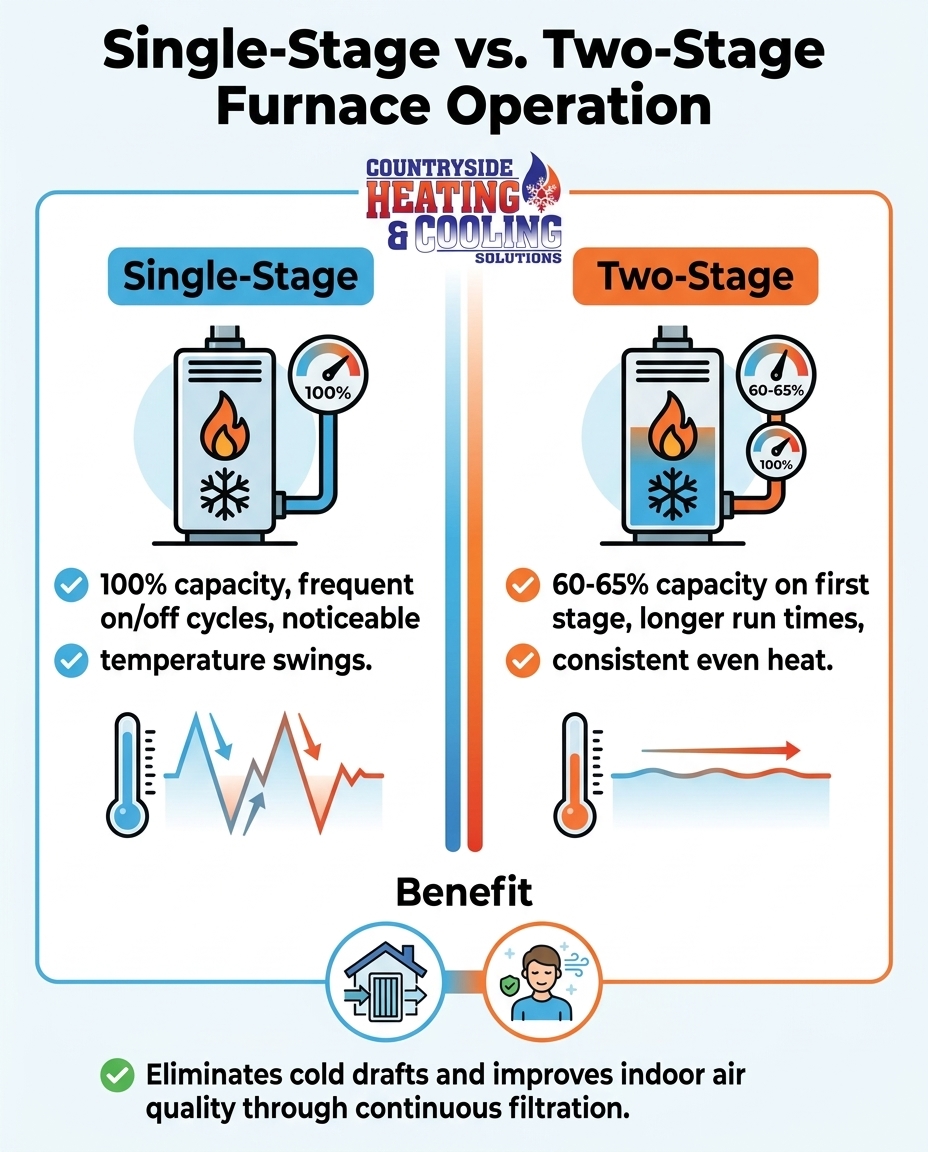
To understand why your living room feels drafty, you first need to understand how traditional heating systems operate. A single-stage furnace is the most basic type of forced-air heating available. It features a gas valve that only has one setting: maximum capacity. Whenever your home drops below the target temperature, the system kicks on at 100 percent power, regardless of whether it is a mild autumn evening or the middle of a blizzard in Maple Plain, MN.
This all-or-nothing approach creates a very specific, and often uncomfortable, heating cycle known as the "blast and stop" effect. Here is exactly how this cycle plays out in a typical home:
1. The Call for Heat: The thermostat detects a drop in temperature and signals the furnace control board to turn on.
2. The Maximum Blast: The gas valve opens fully, and the blower motor pushes a massive influx of extremely hot air through your ductwork at top speed.
3. The Abrupt Halt: Because the system is running at maximum capacity, it satisfies the thermostat reading very quickly. The furnace then shuts off completely.
4. The Settling Phase: With zero air circulating through the ducts, the warm air in your rooms quickly rises to the ceiling, while cold air settles at the floor level.
This period of inactivity is the root cause of your discomfort. Because the furnace satisfied the thermostat so rapidly, it spends a significant amount of time sitting idle. During this idle time, the air in your home stratifies. The lack of continuous circulation allows cold drafts to form and floors to become freezing cold before the system finally decides to kick back on.
Furthermore, in our years of repairing and replacing HVAC systems across the region, our team at Countryside Heating & Cooling Solutions frequently sees how this aggressive operational style puts immense strain on mechanical components. The constant starting and stopping requires a massive surge of electricity each time the blower motor engages. If you find that your furnace keeps shutting on and off rapidly, it is often a symptom of this rigid, single-stage design struggling to maintain a delicate balance in the home.
How Two-Stage Gas Valves Eliminate Temperature Swings
The technical solution to the "blast and stop" problem is the two-stage gas valve. Unlike basic models, a two-stage furnace operates exactly as the name implies: it has two distinct levels of heat output. This seemingly simple mechanical difference completely changes the airflow dynamics inside your home and directly translates to tangible living room comfort.
Here is how the two stages function to keep your home comfortable:
First-Stage Operation: For the vast majority of the time, the furnace operates in its first stage, which utilizes roughly 60 to 65 percent of its total capacity. This lower setting provides a continuous, gentle flow of warm air that quietly maintains the temperature without overheating the space.
Second-Stage Operation: When extreme cold demands it, the furnace automatically shifts into its second stage, utilizing 100 percent capacity to quickly overcome rapid heat loss. Once the temperature stabilizes, it drops back down to the efficient first stage.
By running longer, lower-capacity heating cycles, a two-stage system provides continuous air circulation. This constant movement prevents warm air from rising to the ceiling and cold air from settling near the floor. The physical result is the complete elimination of cold drafts and freezing floors. In areas like Maple Plain, MN, where extreme and prolonged winter freezing temperatures are the norm, our technicians have seen firsthand how the temperature swings of a single-stage system become exponentially more noticeable. The consistent, lower-stage heat of an advanced system is highly valuable for combating this specific regional climate challenge.
Beyond temperature control, sustained operation drastically improves your indoor air quality. Because the blower motor runs for longer periods, it constantly pulls the air in your home through the HVAC filtration system. Airborne particles, dust, and allergens are captured much more effectively when the air is moving continuously, rather than sitting stagnant during long "off" cycles. If you are exploring furnace comparison options, this improvement in air quality is a major factor to consider alongside the physical warmth.
Side-by-Side Comparison: Evaluating the Comfort Upgrade
When deciding which system is right for your home, placing the two technologies side-by-side helps clarify the daily operational differences. The chart below breaks down how each system handles the core aspects of home heating.
• Temperature Consistency — Single-Stage Furnace: Extreme swings; fast heating followed by long idle periods. — Two-Stage Furnace: Even, consistent warmth; minimal temperature fluctuation.
• Air Quality & Filtration — Single-Stage Furnace: Intermittent filtering; air only cleans when the system runs at 100%. — Two-Stage Furnace: Continuous air purification; longer cycles pull more air through filters.
• Noise Levels — Single-Stage Furnace: Loud start-ups; high-velocity air noise during operation. — Two-Stage Furnace: Quiet operation; low-stage runs at a much lower decibel level.
• Wear and Tear — Single-Stage Furnace: Hard starts and stops; increases strain on the blower and igniter. — Two-Stage Furnace: Gentle, prolonged cycles; reduces mechanical fatigue over time.
• Cycle Length — Single-Stage Furnace: Short, intense bursts of heat. — Two-Stage Furnace: Longer, sustained, and gentle heating cycles.
The differences highlighted in this comparison become incredibly apparent during the September pre-heating season when temperatures first begin to dip. A single-stage unit will blast the home with high heat, making it uncomfortably warm for a mild autumn evening. Conversely, a two-stage unit will quietly run on its lowest setting, perfectly matching the mild demand of the early season without over-conditioning the space.
Evaluating the ROI: Long-Term Value vs. Upfront Investment
It is a known fact that two-stage furnaces require a higher initial investment than basic single-stage models. However, evaluating the true return on investment (ROI) requires looking past the initial installation day and considering the long-term energy utilization and qualitative benefits the system provides over its lifespan.
Mechanical efficiency is measured by an AFUE (Annual Fuel Utilization Efficiency) rating. Advanced two-stage systems typically boast higher AFUE ratings because they waste less fuel. By running primarily on a lower setting, the furnace consumes less natural gas to maintain the temperature. Over a decade of harsh winters in Maple Plain, MN, this optimized energy utilization makes a significant impact on your household energy footprint.
However, the true ROI is measured in physical comfort. The elimination of cold spots, the reduction of operational noise, and the improvement of daily living conditions hold immense value. Just last fall, our team worked with a local homeowner who reached out needing a new Bryant furnace after getting multiple bids. After we helped them research their options and prioritize comfort, they chose an advanced system with our top-notch installation. The result? The furnace has had zero issues for over five years, providing consistent warmth without the constant, noisy cycling of their old unit.
Evaluating multiple bids often reveals that the long-term reliability and comfort of advanced systems easily justify the upgrade. Furthermore, there are often generic energy rebates, tax credits, and utility incentives available for installing high-efficiency equipment. When paired with flexible HVAC financing, upgrading to a system that actually keeps your home comfortable becomes a highly accessible reality for most homeowners.
Why Sizing and Expert Installation Matter More Than the Unit
You can purchase the most advanced, highly-rated two-stage furnace on the market, but if it is improperly sized or poorly installed, it will perform worse than a basic builder-grade model. The mechanical equipment is only half of the equation; the expertise behind the installation dictates how well that equipment will function in your specific home.
The Danger of Oversizing: A common misconception is that a larger furnace will heat the home better. In reality, an oversized two-stage furnace will short-cycle. It will heat the space so rapidly that it never has the chance to run in its efficient, gentle first stage. This completely negates the comfort benefits you invested in, bringing back the exact cold drafts and temperature swings you were trying to eliminate.
The Importance of Load Calculations: Professional sizing requires a strict Manual J load calculation. This process accounts for your home's square footage, ceiling height, window quality, insulation levels, and the specific climate demands of Maple Plain, MN. Only by calculating the exact rate at which your home loses heat can a technician prescribe the correct equipment size.
Working with a local HVAC contractor who acts as a trusted advisor is essential. As experienced professionals, we understand the exact demands Minnesota winters place on home heating systems and will provide a comfort-based ROI assessment rather than simply pushing the most expensive equipment. We will evaluate your ductwork, assess your insulation, and ensure the new system is calibrated perfectly for your living space. We highly encourage homeowners to schedule an HVAC consultation with our team to review their specific heating needs before making a final decision.
Frequently Asked Questions About Furnace Upgrades
Is a 2 stage furnace worth the extra money?
Yes, for homeowners prioritizing consistent temperature and the elimination of cold drafts, the upgrade is absolutely worth it. The long-term energy efficiency and drastically improved daily comfort typically offset the higher initial investment. By running at a lower capacity for longer periods, these systems prevent the harsh temperature swings that make living spaces uncomfortable.
Why does a single-stage furnace cause cold drafts?
A single-stage furnace causes drafts because it runs at maximum capacity and then shuts off completely once the thermostat is satisfied. During this "off" cycle, the air inside the home settles. Warm air rises to the ceiling and cold air sinks to the floor, creating noticeable drafts and cold spots before the system finally restarts.
How does a two-stage gas valve work?
A two-stage gas valve features two distinct levels of operation to match the weather conditions. It utilizes a lower setting (usually 60 to 65 percent capacity) for mild weather and a high setting (100 percent capacity) exclusively for extreme cold. This mechanical design allows the furnace to run longer, gentler cycles that keep the indoor temperature perfectly balanced.
Does a 2 stage furnace run all the time?
While it runs more frequently and for longer durations than a single-stage furnace, it does not run constantly. The longer cycles are intentional and highly efficient. These extended run times are exactly what provide even heating, eliminate cold spots, and allow for better air filtration throughout the home.
Can I upgrade my thermostat for a two-stage furnace?
Yes, a compatible multi-stage thermostat is highly recommended to fully utilize the efficiency of a two-stage gas valve. A basic thermostat cannot properly signal the furnace to switch between its first and second stages. A professional installation ensures the new thermostat properly communicates with the furnace's control board to maximize your comfort during the September pre-heating season and beyond.
Secure Your Winter Comfort Before the Deep Freeze Hits
Choosing the right heating system is about much more than just raising the temperature on a dial; it is about controlling the climate inside your home. A two-stage furnace is the definitive solution for eliminating winter drafts, stopping aggressive temperature swings, and providing quiet, consistent warmth. By operating intelligently based on the actual demand of the house, these advanced systems deliver a level of comfort that basic models simply cannot match.
As we move through the September pre-heating season, now is the ideal time to evaluate your options. Waiting for a breakdown in the middle of a Maple Plain, MN winter limits your choices and forces rushed installations. Take control of your home's comfort today by securing a professional assessment to weigh your options and find the perfect heating solution for your family.
