.webp)

Why Reliable Hot Water Matters in Your Wayzata Home
Water heater replacement wayzata mn is a critical home upgrade that Minnesota homeowners face every 8 to 20 years, depending on the type of system they own. Without a dependable water heater, your daily routine—from morning showers to laundry and dishes—comes to a halt. In Wayzata's cold winters, a failing water heater isn't just an inconvenience; it's an urgent problem that affects your family's comfort and safety.
For expert heating and cooling services in Wayzata, visit our Wayzata HVAC services page. If you're ready to upgrade your water heater, contact our team for professional water heater replacement.
Quick Answer: When to Replace Your Water Heater
- Age: Tank models last 8-12 years; tankless models last 15-20 years
- Visible rust or leaks: Immediate replacement recommended
- Inconsistent hot water: Sign of failing heating elements or sediment buildup
- Strange noises: Rumbling or banging indicates internal damage
- Rising energy bills: Indicates declining efficiency
- Frequent repairs: If repair costs approach 50% of replacement cost
This guide walks you through everything Wayzata homeowners need to know about water heater replacement—from recognizing warning signs to choosing the right system and understanding the professional installation process. Whether you're dealing with an emergency or planning ahead, you'll learn how to make informed decisions that keep your home comfortable year-round.
Is It Time for a Change? Recognizing the Signs Your Water Heater Needs Replacing
Even the most reliable appliances have a lifespan, and your water heater is no exception. Like a trusted old car, it might start showing subtle signs of wear and tear before it completely breaks down. Recognizing these common indicators early can save you from a cold shower surprise and potentially costly water damage.
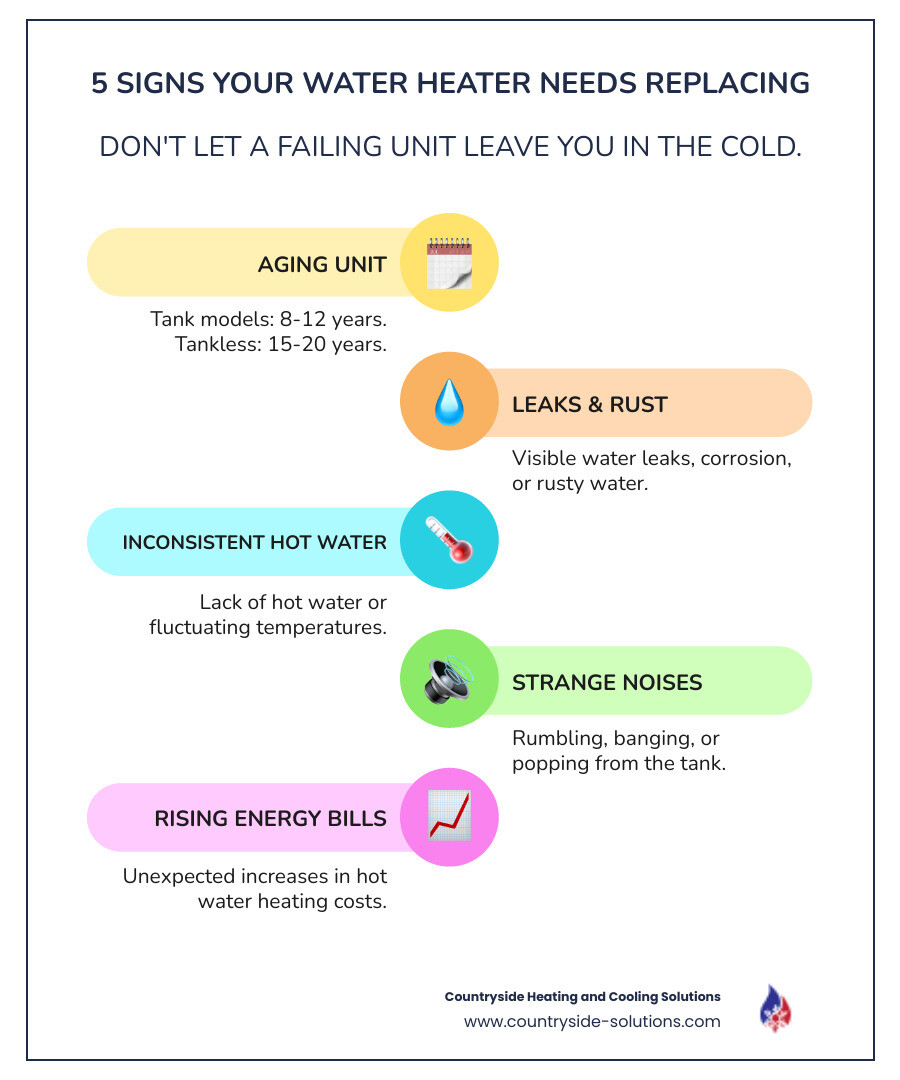
One of the most straightforward indicators is age. Conventional tank-style water heaters typically last between 8 to 12 years. If your unit is approaching or has passed this milestone, it's wise to start considering a replacement. While some high-efficiency models might last up to 15 years, their performance often declines with age. Tankless water heaters, on the other hand, can offer up to 20 years of service with proper maintenance, but they too will eventually reach their limit.
Beyond age, here are other critical signs that your water heater is waving the white flag:
- Inconsistent Temperatures or Lack of Hot Water: Are your showers starting hot and ending cold? Or perhaps you're not getting enough hot water for your daily needs? This could be due to a failing heating element, a broken thermostat, or significant sediment buildup inside the tank.
- Rising Energy Bills: An aging or inefficient water heater has to work harder to heat water, consuming more energy in the process. If you notice a sudden unexplained spike in your utility bills, your water heater might be the culprit, silently costing you more each month.
- Sediment Buildup: Over time, minerals in Wayzata's water supply can settle at the bottom of your water heater tank. This sediment not only reduces the tank's capacity but also insulates the heating element, forcing the unit to use more energy. It can also cause strange noises.
Sometimes, the signs are much more urgent, demanding immediate attention.
When to Call for Urgent Water Heater Service
Certain water heater issues require immediate professional intervention to prevent further damage or safety hazards. If you notice any of these, don't delay in calling for urgent service:
- Strange Noises (Rumbling, Banging, Popping): These sounds often indicate significant sediment buildup, which can damage the tank lining and reduce efficiency. While sometimes a simple flush can help, loud persistent noises suggest internal damage that may necessitate replacement.
- Discolored or Rusty Water: If the hot water coming from your taps appears rusty or discolored, it's a clear sign of corrosion inside your water heater's tank. This often means the tank is deteriorating from the inside out, and replacement is usually recommended over repair.
- Visible Leaks or Pooling Water: Any water pooling around the base of your water heater is a serious red flag. Leaks can originate from a rusted tank, loose connections, or a faulty temperature and pressure relief (T&P) valve. A rusted tank leak almost always means it's time for a new unit.
- Gas Smell: If you have a gas water heater and detect the smell of gas, evacuate your home immediately and contact your gas company and emergency services. Do not try to diagnose or fix this yourself.
- No Hot Water: While this might seem obvious, a complete lack of hot water can indicate a serious malfunction, from a failed heating element to a tripped breaker or a pilot light issue in gas units. We can quickly diagnose the problem and provide a solution.
Choosing Your Next Water Heater: A Guide for Wayzata Homeowners
When it's time for water heater replacement wayzata mn, you're not just replacing an old appliance; you're investing in your home's comfort, efficiency, and safety for years to come. With several types and features available, choosing the right model for your Wayzata home requires careful consideration.
Here are the key factors we consider with our Wayzata homeowners:
- Household Size and Hot Water Demand: This is crucial for proper sizing. A family of five will have vastly different hot water needs than a single individual. We'll help you calculate your peak hot water usage to ensure your new system can keep up.
- Energy Efficiency: Modern water heaters are significantly more efficient than older models. Look for ENERGY STAR certified models, which can lead to substantial savings on your utility bills.
- Fuel Type (Gas vs. Electric): Your home's existing infrastructure often dictates this, but it's worth exploring if a different fuel source could be more cost-effective or efficient for your needs.
- Available Space: Traditional tank models require a dedicated space, while tankless units can be wall-mounted, saving valuable floor space.
Conventional Tank vs. Tankless Water Heaters
The choice between a conventional tank water heater and a tankless model is one of the most significant decisions you'll make:
Conventional Tank Water Heaters: These are the most common type, storing and continuously heating a large volume of water in a tank.
- Pros: Lower upfront cost, reliable hot water storage, familiar technology.
- Cons: Standby heat loss (energy wasted heating water even when not in use), takes up significant space, limited hot water supply (once the tank is empty, you wait for it to refill and reheat).
- Lifespan: Typically 8-12 years.
Tankless Water Heaters (On-Demand): These units heat water directly as it flows through, providing hot water only when you need it.
- Pros: Endless hot water supply, significant energy savings (no standby heat loss), compact size (wall-mounted), longer lifespan.
- Cons: Higher upfront cost, can sometimes struggle with very high simultaneous hot water demands (e.g., multiple showers running at once unless properly sized), may require electrical upgrades for installation.
- Lifespan: Up to 20 years with proper maintenance.
For Wayzata homeowners seeking long-term savings and continuous hot water, tankless models are an excellent investment.
Exploring Advanced Options: Hybrid and Vented Models
Beyond the traditional tank versus tankless, there are other innovative water heating solutions that might be perfect for your Wayzata home:
Heat Pump (Hybrid) Water Heaters: These energy-efficient systems work by extracting heat from the surrounding air and transferring it to the water in the storage tank. They use electricity to move heat rather than generate it, making them highly efficient.
- How they work: They operate like a refrigerator in reverse, pulling heat from the ambient air.
- Suitability for Minnesota climate: Hybrid water heaters perform best in spaces with ambient temperatures typically above 40°F (like basements or utility rooms). For Wayzata's cold winters, they need to be installed in an appropriate space to maximize their efficiency benefits.
- Benefits: Significant energy savings compared to conventional electric water heaters, reduced carbon footprint.
Power Vent and Direct Vent Water Heaters: These are types of gas-fired water heaters that deal with exhaust gases differently.
- Power Vent Heaters: Use an electric fan to push exhaust gases out through a plastic pipe, allowing for more flexible venting options (e.g., through a side wall). This can be necessary when a traditional chimney or vertical vent isn't available or practical.
- Direct Vent Heaters: Draw combustion air from outside and vent exhaust gases directly outside through a sealed system, completely isolated from indoor air. This is ideal for tightly sealed homes or areas where indoor air quality is a concern.
- When they're necessary: These models are often required when replacing an older water heater that used a natural draft chimney, and the chimney is no longer suitable, or when the installation location doesn't allow for conventional venting. For gas-fired water heater replacements in Wayzata, a fresh air intake must be installed if not already existing, a requirement we always ensure compliance with.
The Professional Water Heater Replacement Wayzata MN Process
When it comes to water heater replacement wayzata mn, professional installation isn't just a convenience—it's a necessity for safety, efficiency, and longevity. Improper installation can lead to leaks, reduced performance, safety hazards, and even void your warranty.
Our NATE-certified technicians ensure that every installation adheres to the highest safety standards and local Wayzata codes, giving you peace of mind and protecting your investment.
Why Professional Water Heater Replacement in Wayzata MN is Crucial
- Safety Risks: Working with gas lines, electrical connections, and high-pressure water systems carries inherent risks. Our trained professionals understand these complexities and perform installations safely, minimizing hazards.
- Wayzata Plumbing Permits and Local Code Compliance: The City of Wayzata requires plumbing permits for all new plumbing and additions or alterations to existing plumbing systems, including the installation or replacement of a water heater. For gas-fired water heater replacements, a fresh air intake must be installed if not existing. We handle all necessary permits and ensure your installation meets all local regulations.
- Proper Venting: Incorrect venting for gas water heaters can lead to dangerous carbon monoxide buildup. We ensure proper ventilation systems are in place, particularly for power vent and direct vent models, to protect your household.
- Maximizing Efficiency: Proper sizing and installation are key to optimal performance and energy efficiency. We make sure your new unit operates at its peak, saving you money on utility bills.
Your Guide to Water Heater Replacement in Wayzata MN: The Step-by-Step Process
When you choose us for your water heater replacement wayzata mn, you can expect a comprehensive and seamless experience:
- Initial Consultation and Assessment: We begin with a thorough assessment of your current system, your household's hot water needs, and your budget. We'll discuss the pros and cons of different water heater types and help you make an informed decision.
- System Sizing and Recommendation: Based on our assessment, we'll recommend the ideal water heater size and type for your Wayzata home, ensuring it meets your hot water demands efficiently.
- Safe Removal of Old Unit: Our technicians will safely disconnect and remove your old water heater, ensuring proper disposal according to environmental guidelines.
- Professional Installation: We install your new water heater with precision, adhering to manufacturer specifications and all local Wayzata plumbing codes. This includes making all necessary plumbing, electrical, or gas line connections.
- Secure Connections and Venting: For gas units, we ensure all gas lines are secure and venting is properly installed and sealed to prevent leaks and ensure safe operation. We also install fresh air intakes where required.
- System Testing and Calibration: After installation, we rigorously test the new system to ensure it's functioning correctly, heating water to the desired temperature, and operating efficiently. We'll calibrate thermostats and check for any leaks.
- Post-Installation Support and Cleanup: We don't just install and leave. We'll walk you through the operation of your new water heater, answer any questions you may have, and clean up the work area thoroughly. We also provide guidance on post-installation maintenance to help you extend the life of your new unit.
Extending the Life of Your New Water Heater in Minnesota's Climate
Congratulations on your new water heater! Now, let’s talk about how to keep it running smoothly, especially given Wayzata's unique climate. Regular maintenance is key to preventing unexpected breakdowns, maintaining efficiency, and protecting your significant investment. In Minnesota, where cold temperatures mean your water heater works harder, proactive care is even more vital.
By following a consistent maintenance schedule, you can extend the life of your unit, ensure consistent hot water, and keep those energy bills in check.
Key Maintenance Tasks for Longevity
To maximize your water heater's lifespan and efficiency, we recommend these essential maintenance tasks:
- Annual Professional Tune-Up: Schedule an annual inspection and tune-up with our NATE-certified technicians. We'll check all components, connections, and safety features, identifying potential issues before they become major problems.
- Flushing the Tank (for Tank Models): Sediment buildup is a common enemy of tank water heaters. Flushing the tank annually helps remove mineral deposits, improving efficiency and preventing strange noises like rumbling or banging.
- Checking the Anode Rod (for Tank Models): Often called the "sacrificial rod," the anode rod corrodes to protect the steel tank from rust. We'll inspect and replace it as needed, typically every 3-5 years, to significantly extend your tank's life.
- Testing the T&P (Temperature and Pressure) Valve: This crucial safety device prevents excessive pressure buildup in the tank. We'll test it periodically to ensure it's functioning correctly.
- Inspecting for Leaks: Regularly check around the base of your water heater and connections for any signs of moisture or leaks. Early detection can prevent significant water damage.
Frequently Asked Questions about Water Heaters in Wayzata
We understand you might have questions, and we're here to provide clear answers to help you make the best decisions for your Wayzata home.
How long does a typical water heater last?
The lifespan of your water heater largely depends on its type and how well it's maintained.
- Conventional Tank Water Heaters: These typically last between 8 to 12 years. With good maintenance, some high-efficiency models might extend to 15 years.
- Tankless Water Heaters: These robust systems can offer a longer service life, often lasting 15 to 20 years, especially with consistent professional maintenance.
Regular maintenance, like flushing the tank and checking the anode rod, plays a crucial role in reaching the upper end of these estimates.
Should I repair or replace my water heater?
This is a common question, and the decision often boils down to several factors:
- Age of the Unit: If your tank water heater is over 10 years old, or your tankless unit is nearing 15-20 years, replacement often makes more financial sense than continuous repairs.
- Frequency of Repairs: If you're calling for repairs frequently, the cumulative cost can quickly outweigh the investment in a new unit.
- Unit Efficiency: Older models are less energy-efficient. A new, ENERGY STAR rated water heater can significantly reduce your monthly utility bills, making replacement a wise long-term investment.
- Repair vs. Replacement Cost: A good rule of thumb is that if the cost of a repair equals about 50% of a new water heater's price within 12 months, replacement is often recommended. If your tank is rusted or leaking from the tank itself, replacement is almost always the best option.
We can help you weigh these factors and provide an expert recommendation custom to your specific situation.
Do I need a permit for a water heater replacement in Wayzata, MN?
Yes, you do. The City of Wayzata requires plumbing permits for all new plumbing and additions or alterations to existing plumbing systems, which includes the installation or replacement of a water heater. For gas-fired water heater replacements, a fresh air intake must be installed if not existing.
As licensed professionals, we handle the entire permitting process for you, ensuring that your water heater replacement wayzata mn meets all local codes and passes inspection. This not only ensures your safety but also protects your home's value and compliance with local regulations.
Conclusion: Ensure Year-Round Comfort in Your Wayzata Home
Choosing to invest in water heater replacement wayzata mn is a significant decision that impacts your daily comfort and long-term energy costs. By understanding the signs of a failing unit, exploring the various types of water heaters available, and recognizing the importance of professional installation and ongoing maintenance, you're well-equipped to make the best choice for your home.
A reliable hot water system is not just an appliance; it's a cornerstone of your home's comfort, especially when facing those chilly Minnesota winters. Trusting the experts at Countryside Heating & Cooling Solutions ensures you receive top-tier service, from consultation to post-installation support. Our NATE-certified technicians are committed to delivering reliable, high-quality solutions that stand the test of time, keeping your Wayzata home warm and comfortable year-round.
Ready to upgrade your comfort? Learn more about our services and get started today: Your Guide to Water Heater Replacement in Wayzata, MN.
