.webp)

Facing the First Cold Night: When Your HVAC System Struggles to Switch Gears
You switch your thermostat to 'heat' for the first cold night of the season, expecting immediate warmth, but instead, you find yourself searching for home maintenance tips and troubleshooting advice because the system is making a rapid clicking noise. The temperature has just dropped, and your home feels unusually chilly. When you stand near the vents, you might notice a strange, lingering odor or realize that the air blowing out is entirely cold. At Countryside Heating & Cooling Solutions, our team sees this highly common and frustrating experience every year as autumn sets in across Maple Plain. After months of sitting dormant, your heating equipment is suddenly forced into action, while the cooling components that worked hard all summer are finally asked to rest.
The critical decision point: You must determine whether these initial startup smells and noises are just normal seasonal transitions or glaring indicators of underlying electrical hazards, such as failing relays. Ignoring a struggling system now can lead to catastrophic, full-system breakdowns when the deep winter weather arrives. Catching these warning signs early is the most effective way to protect your equipment and your household. To ensure your entire setup is ready for the transition, learning more about how your air conditioning systems operate can help you spot crossover electrical issues before the October first-freeze hits.
Recognizing Bad AC Relay Symptoms Before Winter Sets In
To understand why your heating system might struggle in the fall, you first have to look at the wear and tear your cooling system endured over the summer. At the heart of this transition is the relay—an electrically operated switch that controls high-voltage components like the compressor and the fan motors. Relays act as the bridge between the low-voltage signal sent by your thermostat and the high-voltage power required to run heavy machinery. By the time autumn rolls around, these components have been under immense stress.
The Problem: Hot, humid Minnesota summers force AC units to cycle on and off thousands of times. Every time that relay closes, a small electrical arc occurs. Over a long, demanding summer, this arcing causes the metal contacts inside the relay to become pitted, burned, and coated in carbon. By fall, the relay struggles to make a solid electrical connection.
The Cause: When a relay begins to fail, you will typically notice rapid clicking sounds originating from the outside unit, the system blowing warm air when it should be cooling, or the indoor fan running continuously while the outdoor compressor fails to start. Our team at Countryside Heating & Cooling Solutions recently helped a local homeowner who reached out this past fall when their AC unit stopped working unexpectedly just as the weather began to turn. Because they took immediate action, our technicians arrived to provide service on the same day, and the AC was repaired quickly and accurately.
The Solution: Do not let a struggling AC unit sit ignored just because the cooling season is ending. Late-season AC failures often mask broader electrical wear and tear that affects the entire shared HVAC system. If you notice these symptoms in Maple Plain area homes, it is highly recommended to schedule an AC repair appointment for prompt, same-day diagnostics to ensure the shared electrical pathways are safe before the weather turns fully cold.
The Clicking Warning Sign
A single, solid "click" when your system turns on is completely normal—that is simply the sound of the relay engaging and closing the circuit. However, rapid, repetitive clicking is a glaring warning sign. This rapid clicking occurs when the relay's magnetic coil is too weak to hold the contacts closed, or when the pitted contacts cannot establish a steady flow of electricity. The relay repeatedly tries and fails to close the circuit, creating a chattering noise that signals immediate electrical distress.
Electrical Crossover: How Summer Wear Impacts Fall Heating
Many homeowners assume that their air conditioner and their furnace are two completely separate entities that never interact. In reality, modern HVAC systems share critical electrical pathways, control boards, and often the main indoor blower motor. The electrical stress your system endures during the hottest days of summer has a direct and significant impact on its ability to perform during the winter.
When a component like an AC contactor or relay begins to fail, it forces other parts of the system to work harder to compensate. For instance, if a struggling relay causes power fluctuations, those voltage spikes can damage the shared control board. If the blower motor was overworked throughout August because of a failing capacitor, that same motor will struggle to push dense, heated air through your ductwork when the October first-freeze arrives.
In our experience, understanding the distinction between different electrical failures helps you communicate much more effectively with our service technicians. Knowing the difference between a bad contactor and a bad capacitor, for example, allows you to accurately describe the symptoms you are experiencing. Because these components are deeply intertwined, a thorough electrical inspection serves as a crucial bridge between the cooling and heating seasons, ensuring that summer wear does not translate into a winter emergency.
First Furnace Startup: Normal Dust Burn-Off vs. Electrical Hazards
One of the most common reasons homeowners panic during the fall transition is the unmistakable smell of burning that fills the house the first time the heat kicks on. While it is always wise to be cautious regarding strange odors, not all burning smells indicate a dangerous electrical failure.
During the long summer months of dormancy, a thin layer of household dust, pet dander, and airborne particles settles across the surface of your furnace's heat exchanger. When you ignite the burners for the first time in autumn, those settled particles are instantly incinerated. This produces a distinct "burning dust" odor that circulates through your vents. We constantly reassure our Maple Plain customers that this is a completely normal part of the seasonal transition.
Normal dust burn-off typically dissipates within 15 to 30 minutes of the first heating cycle. If the smell clears out and the air returns to normal, your system is functioning as expected. However, you must establish clear safety boundaries. If the odor smells sharply of melting plastic, acrid ozone, or burning electrical wires, you should immediately turn off the system at the thermostat and call a professional. These acrid smells indicate melting wire insulation, an overheating blower motor, or a failing high-voltage relay.
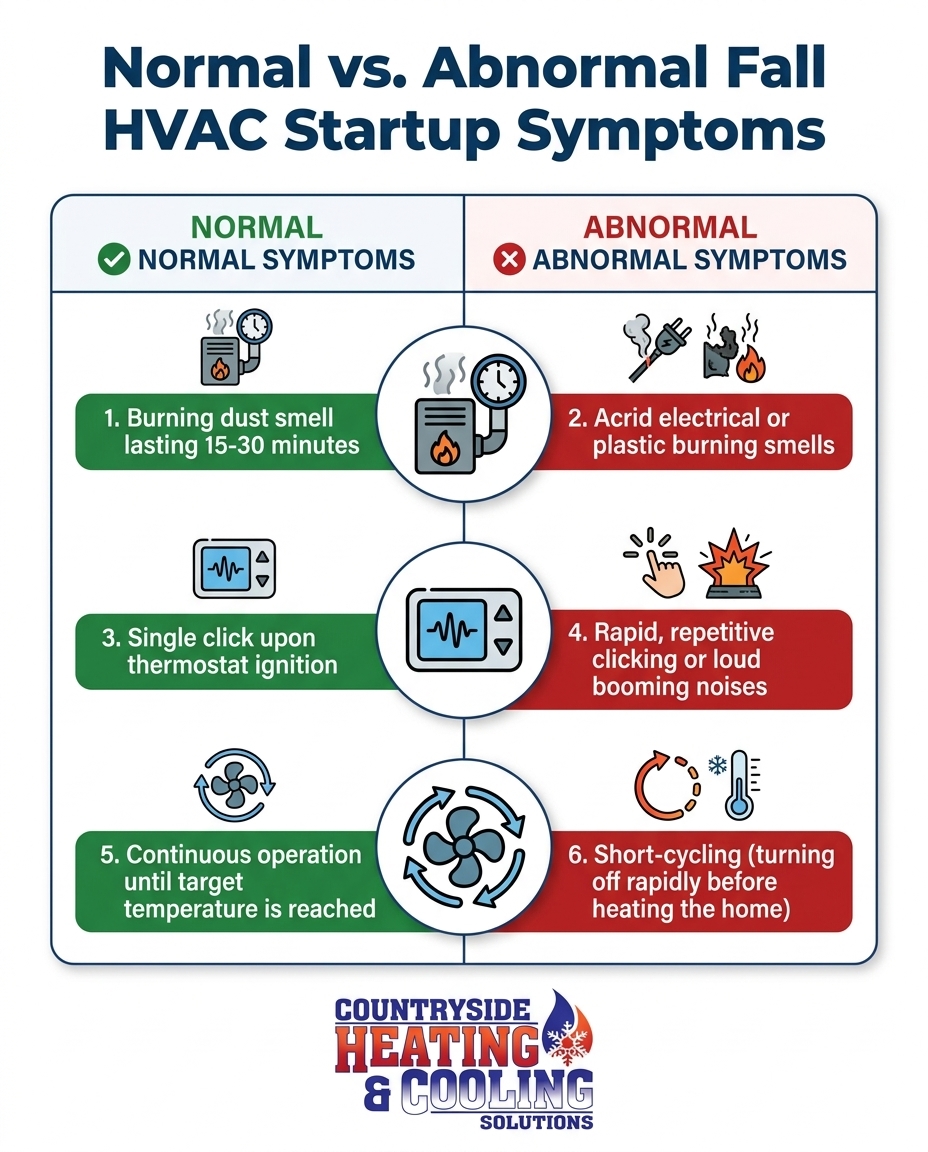
• Startup Odor — Normal Operation: Mild burning dust smell lasting 15 to 30 minutes. — Abnormal / Hazard (Call a Pro): Acrid smell of melting plastic, electrical wires, or ozone.
• Startup Sounds — Normal Operation: A single click, followed by the gentle whoosh of air and minor duct expansion pops. — Abnormal / Hazard (Call a Pro): Loud booming, rapid chattering, grinding, or intense squealing from the blower.
• Cycle Length — Normal Operation: System runs continuously until the thermostat's target temperature is reached. — Abnormal / Hazard (Call a Pro): System turns on and off rapidly every few minutes (short-cycling).
Short-Cycling and Strange Noises: When to Call for Backup
Beyond strange smells, the way your furnace physically operates during its first few cycles tells a detailed story about its internal health. One of the most detrimental issues a heating system can experience is short-cycling.
The Problem: Short-cycling occurs when the heating system turns on, runs for only a minute or two, and then abruptly shuts off before the home has reached the target temperature on the thermostat. It will then wait a few moments and repeat the rapid on-and-off process. This puts immense strain on the blower motor, the heat exchanger, and the electrical relays.
The Cause: The primary culprits behind short-cycling are severe airflow restrictions (such as a completely clogged air filter), a failing flame sensor that shuts down the gas valve as a safety precaution, or malfunctioning electrical relays that cannot maintain a closed circuit. Additionally, if you hear a loud booming noise on startup, it means gas is pooling in the combustion chamber before igniting—a serious issue known as delayed ignition. We recently responded to another customer who arrived home from a fall vacation to find their furnace completely broken and unresponsive. They contacted us immediately, and our team responded quickly to diagnose the short-cycling issue and get the heat restored before the house temperatures dropped dangerously low.
The Solution: Resolving these issues quickly is paramount. You must restore reliable heat before temperatures drop below freezing. If your system is short-cycling or booming, turn it off and request emergency troubleshooting before the October first-freeze hits.
Applying Home Maintenance Tips and Troubleshooting to Short-Cycling
If you notice short-cycling, the first and most vital home maintenance step you can take is checking your air filter. A dirty filter chokes the system of air, causing the internal temperature to skyrocket. When this happens, a safety device called the high-limit switch forces the system to shut down to prevent a fire. Simply replacing a filthy filter with a fresh one can often resolve a short-cycling issue instantly.
The High-Voltage Reality: Why DIY Electrical Repairs Are Dangerous
When you start researching strange HVAC noises online, you will inevitably find forums and videos suggesting quick, do-it-yourself fixes for electrical components. While changing your air filter is highly encouraged, opening the cabinet to tinker with the internal wiring is incredibly dangerous.
HVAC relays, capacitors, and control boards deal with high voltage that can cause severe, life-threatening injury. Even when the main power to the unit is switched off at the breaker, certain components—like the dual run capacitor—store massive amounts of lethal electrical energy that can discharge instantly if touched incorrectly.
Attempting to bypass a bad relay, splice wires, or replace electrical components without proper, professional-grade diagnostic tools can permanently damage the system. Crossing the wrong low-voltage wire can instantly fry the delicate main control board, turning a minor relay replacement into a massive, expensive overhaul. Furthermore, performing DIY electrical work on your HVAC system will almost certainly void your manufacturer warranties and violate local safety and building codes in the Maple Plain area homes we service.
As a homeowner, you should strictly limit your DIY maintenance to safe, accessible tasks. Change your air filters every 30 to 90 days, keep all supply and return vents unblocked by furniture, and ensure the area around your outdoor unit is clear of fallen leaves and debris. Leave the high-voltage testing to licensed professionals.
Honest Diagnostics: Securing Your System Before the Deep Freeze
Because the symptoms of a failing relay can mimic the symptoms of a failing blower motor or a bad control board, guessing at the problem is a recipe for wasted time and money. What you truly need is an honest, local authority like our crew at Countryside Heating & Cooling Solutions providing expert diagnostics to ensure you only replace the specific parts that are actually failing, rather than swapping out entire units unnecessarily.
The urgency of October diagnostics cannot be overstated. A mid-winter breakdown during a deep Minnesota freeze is not just an inconvenience; it is a severe safety emergency for your home and your family's well-being. A professional pre-winter inspection thoroughly stress-tests the system to prevent these catastrophic failures.
What a professional pre-winter electrical inspection entails:
1. Visual Inspection of Wiring: Technicians check for frayed wires, loose connections, and signs of scorching or melting near the relays and control board.
2. Testing Relays and Contactors: Using a multimeter, the technician measures the voltage drop across the relay contacts to ensure electricity is flowing smoothly without resistance.
3. Capacitor Microfarad Check: The technician tests the capacitors to ensure they are holding and delivering the correct amount of energy to start the motors.
4. Safety Switch Verification: All safety mechanisms, including high-limit switches and flame sensors, are tested to ensure they will properly shut the system down in an emergency.
5. Amp Draw Analysis: The technician measures how much electrical current the blower motor and inducer motor are pulling. High amp draws indicate a motor that is struggling and nearing failure.
This targeted approach prevents the unnecessary replacement of expensive parts and provides the peace of mind that comes from knowing the system has been thoroughly vetted by experts. Proactive scheduling before the October first-freeze is the best way to secure your comfort. Reach out for comprehensive HVAC services to get your system tested today.
Frequently Asked Questions About HVAC Startup and Relays
What are the most common bad AC relay symptoms?
The most common bad AC relay symptoms include rapid clicking noises from the outdoor unit, the system blowing warm air, or the indoor fan running while the outdoor compressor fails to start. These symptoms occur because the relay's internal contacts become pitted and burned over time, preventing a solid electrical connection. If you notice these signs, the relay is struggling to transfer high-voltage power to the cooling components.
How long should a furnace smell like burning dust?
A furnace should only smell like burning dust for about 15 to 30 minutes during its very first heating cycle of the season. This odor is caused by the incineration of household dust and dander that settled on the heat exchanger during the summer months. If the smell persists beyond the first few cycles, or if it smells sharply of melting plastic or ozone, turn the system off and contact a professional immediately.
Why is my furnace making a loud noise on startup?
A loud booming or banging noise on startup usually indicates delayed ignition, where gas pools in the combustion chamber before finally catching a spark. A rapid clicking or chattering noise points to a failing electrical relay or a weak ignition system. While minor popping from expanding ductwork is normal, booming and rapid clicking are severe warning signs that require immediate professional diagnostics in Maple Plain area homes.
What happens if my furnace short cycles?
If your furnace short cycles, it turns on and off rapidly without ever reaching the temperature set on your thermostat. This constant starting and stopping puts massive strain on the blower motor, wastes a significant amount of energy, and leaves your home feeling cold and uncomfortable. Short-cycling is typically triggered by a clogged air filter, a dirty flame sensor, or a malfunctioning electrical relay.
Can a bad HVAC relay cause a fire?
While modern HVAC systems have multiple built-in safety switches to prevent fires, a severely damaged relay can overheat, melt its plastic casing, and scorch surrounding wires. If the relay fuses closed, it can cause the compressor or motor to run continuously until it overheats and burns out. It is critical to replace a chattering or failing relay promptly to maintain the safety and integrity of the system.
How can I tell the difference between a bad relay and a bad motor?
Telling the difference between a bad relay and a bad motor requires testing the voltage at the components with a professional multimeter. If a relay is clicking rapidly but the motor is silent, the relay is likely failing to send power. If the relay engages with a solid click and sends the correct voltage, but the motor hums, overheats, or refuses to spin, the motor itself is likely the culprit.
Ensure a Warm, Safe Winter with Expert HVAC Support
In our years of providing HVAC support to the Maple Plain community, we've found that catching electrical symptoms early—whether it is a chattering AC relay hanging on from summer or a furnace that short-cycles on its first autumn run—is the key to protecting your heating system. When you pay attention to the noises, smells, and operational quirks of your equipment, you empower yourself to act before a minor electrical hiccup turns into a full-system breakdown in the dead of winter.
Peace of mind is the ultimate goal for the winter season. You deserve to sleep soundly knowing your heating equipment will operate safely and efficiently, no matter how far the temperature drops outside. By staying proactive with your home maintenance tips and troubleshooting, you can avoid the stress of unexpected failures. If you are experiencing any abnormal startup symptoms before the October first-freeze, do not hesitate to explore professional repair options and secure your home's comfort today.
