.webp)

The Hidden Complexity of a Pre-Winter Furnace Tune-Up
You know you need to get the heating system checked before the cold weather hits, but scheduling a visit often leaves homeowners wondering exactly what our technicians look for during a fall furnace safety inspection. In our years of serving Maple Plain and the surrounding communities, the concrete problem we see many homeowners face is uncertainty about what a professional tune-up actually entails beyond a simple filter change and a quick visual sweep with a flashlight. The decision point comes down to understanding the specific, non-DIY technical diagnostics our team at Countryside Heating & Cooling Solutions requires to ensure safe, reliable furnace operation before freezing temperatures arrive.
Before the deep freeze settles in, understanding the true scope of professional heating services can help you protect your home and your family.
There is a common misconception that furnace maintenance is just a matter of wiping down the cabinet and swapping out the air filter. While a clean filter is critical for airflow, it does nothing to verify the mechanical and electrical integrity of the system. The September pre-heating season transition is the critical window to address hidden component wear before our emergency service queues fill up. During this time, our licensed technicians use professional-grade tools—like digital multimeters, combustion analyzers, and manometers—to perform true safety diagnostics.
To understand the difference between a basic visual check and a comprehensive diagnostic inspection, consider the tools and targets involved:
• Homeowner Maintenance — Tools Used: Flashlight, new filter — Primary Focus: Airflow clearance, basic cleanliness — Outcome: Improved airflow, basic dust removal
• Professional Diagnostic — Tools Used: Multimeter, manometer, boroscope — Primary Focus: Electrical tolerances, gas pressure, metal integrity — Outcome: Prevention of component failure and safety hazards
Setting the stage for a transparent breakdown of these exact technical checks helps demystify the process. A true professional inspection by our team goes far beyond the surface, diving into the electrical, mechanical, and combustion systems that keep your home safe and warm.
Precision Electrical Testing: Beyond the Visual Once-Over
Modern furnaces rely heavily on complex electrical components to sequence the heating cycle, monitor safety limits, and distribute warm air. Because we operate in a region that experiences harsh, freezing Minnesota winters, our technicians know firsthand that the continuous, heavy load placed on heating equipment requires rigorous pre-season component stress-testing. A simple visual inspection cannot detect a motor that is drawing too much power or a capacitor that is slowly losing its ability to hold a charge. This is where precision voltage checks and gas pressure adjustments become critical preventative measures, rather than just reactive repairs.
Blower Motor Amp Draw
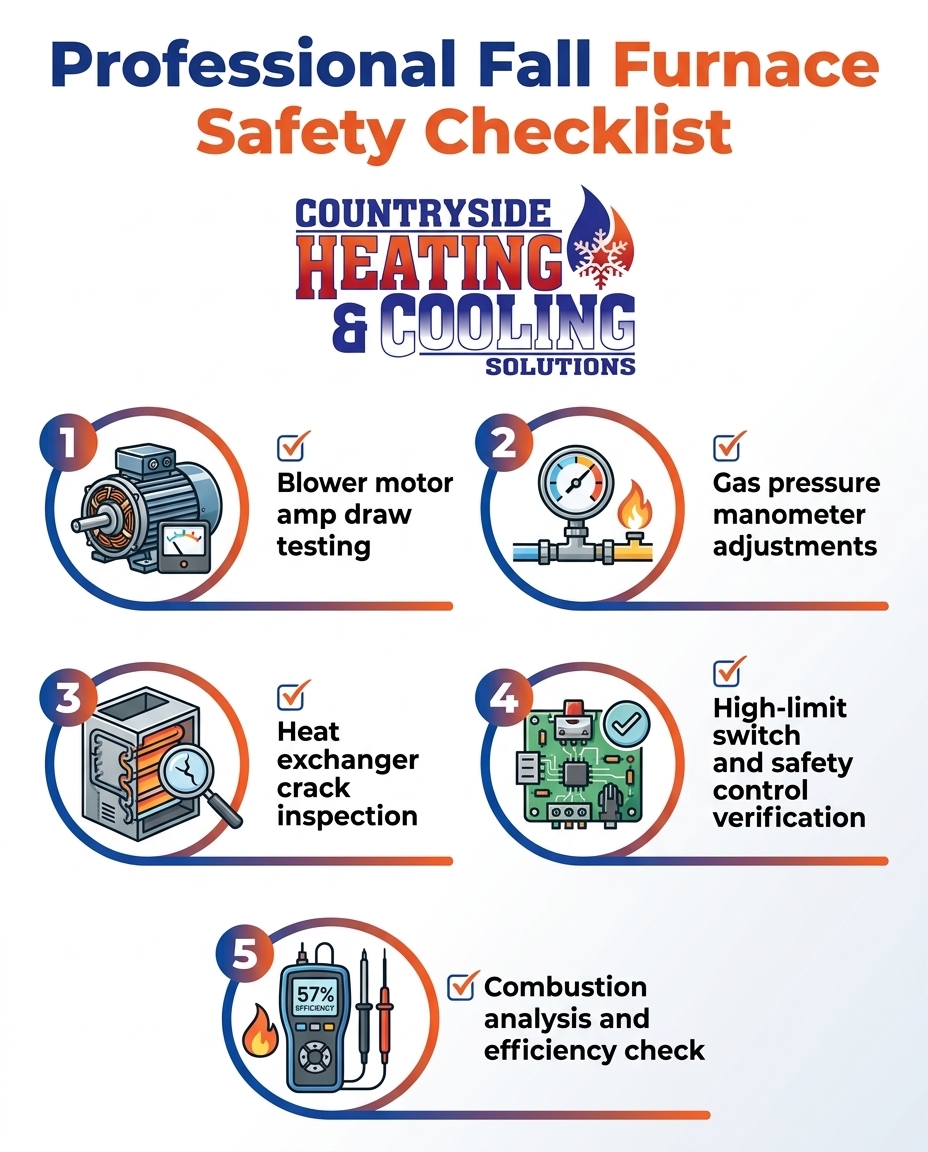
The Problem: A blower motor might sound perfectly normal while running, but internally, the windings could be deteriorating or the bearings could be failing due to friction. The Cause: Continuous operation, excessive static pressure from dirty filters, or general wear and tear cause the motor to work harder than designed. The Solution: Our technicians measure the blower motor's amp draw using a digital multimeter. By comparing the actual electrical current being pulled to the manufacturer's maximum rating, we can identify a motor that is overworking and at risk of imminent failure. This specific test routinely saves our Maple Plain homeowners from emergency mid-winter outages.
Control Board and Wiring Integrity
The Problem: Intermittent furnace shutdowns or erratic behavior that seems to resolve itself temporarily. The Cause: Over time, the micro-vibrations of the furnace operating can loosen electrical connections. Heat cycling also causes wire insulation to degrade, while moisture can lead to corrosion on the control board. The Solution: Our team inspects all wiring harnesses and the main control board for signs of heat damage, loose spade connectors, or oxidation. We test voltage drops across critical relays to ensure power is flowing cleanly. Additionally, we verify that the thermostat is communicating correctly with the control board, ensuring proper cycling rates so the system does not short-cycle and waste energy.
Verifying Safe Combustion and Gas Pressure
A gas furnace is essentially a controlled fire inside your home. Ensuring that this fire burns cleanly, efficiently, and safely is the most important aspect of a professional tune-up. Improper combustion not only wastes fuel but can also create severe health hazards. At Countryside Heating & Cooling Solutions, our technicians perform specific voltage checks and gas pressure adjustments to guarantee the system is operating within safe parameters.
1. Connecting the Manometer: Our technician attaches a digital manometer to the gas valve to measure the exact pressure of the gas entering the manifold. This measurement is taken in inches of water column (in. w.c.).
2. Adjusting to Manufacturer Specifications: If the gas pressure is too high, the furnace will over-fire, leading to excessive heat that can crack the heat exchanger. If the pressure is too low, the furnace may experience delayed ignition—a dangerous condition where gas pools before igniting with a small explosion. We adjust the valve to match the exact specifications listed on the unit's data plate.
3. Performing Combustion Analysis: Using a specialized analyzer, our team measures the exhaust gases to ensure the burner flame is the correct color (a steady blue with slight yellow tips) and consistency. A lazy, entirely yellow flame indicates incomplete combustion and soot buildup.
4. Protecting Indoor Air Quality: Improper combustion is directly connected to potential indoor air quality hazards. By verifying that the combustion process is clean and that the exhaust is properly drafting up the flue, we ensure that dangerous byproducts, including carbon monoxide, are safely vented outside rather than circulating through your living spaces.
The Heat Exchanger: The Heart of Furnace Safety
The heat exchanger is arguably the most critical component of your furnace. It acts as the physical barrier between the toxic combustion gases inside the burner chamber and the breathable air that gets blown through your ductwork. Because it expands and contracts every time the furnace cycles on and off, the metal is subjected to immense thermal stress over its lifespan. Taking action during the September pre-heating season transition ensures this vital barrier is intact before the heavy winter usage begins.
Microscopic cracks and severe risks: Over time, thermal fatigue can cause hairline cracks to develop in the heat exchanger's metal cells or clamshells. If a crack forms, carbon monoxide and other exhaust gases can leak into the supply air stream and be distributed throughout the home. Because carbon monoxide is odorless, colorless, and tasteless, a compromised heat exchanger represents a severe health risk.
Advanced inspection techniques: You cannot thoroughly inspect a heat exchanger just by looking into the burner compartment. Our professional technicians use specialized inspection cameras, known as boroscopes, to snake into the heat exchanger cells. This allows us to visually inspect the dark, hidden curves of the metal for rust, stress fractures, or structural failure.
Professional explanation: A thorough inspection is only valuable if the homeowner understands the results. During a routine system check, a member of our team, like our technician Nick Brose, carefully inspects the entire heating and cooling apparatus and walks the homeowner through exactly what was done, ensuring they understand the condition of critical components. Showing the homeowner the camera feed or explaining the visual findings provides absolute clarity on the system's safety status.
Stress-Testing Critical Safety Controls
Every modern furnace is equipped with a series of built-in fail-safes designed to shut the system down if something goes wrong. However, these safety controls are mechanical and electrical devices that can fail over time. A major part of understanding what happens during an HVAC tune-up is recognizing how our technicians purposefully stress-test these controls. Through precise voltage checks and gas pressure adjustments, we verify that the furnace will protect itself—and your home—in an emergency.
The High-Limit Switch
The Problem: The furnace continues to run even when airflow is restricted, causing the internal temperature to rise to dangerous levels. The Cause: A severely clogged air filter, blocked return vents, or a failing blower motor prevents heat from being pushed out of the cabinet. The Solution: The high-limit switch is a temperature sensor that automatically shuts off the gas valve if the furnace overheats. Our technician tests this switch by temporarily restricting airflow or measuring its resistance to ensure it trips at the correct temperature, preventing catastrophic system damage and fire risks.
Flame Sensor and Pressure Switch
The Problem: The furnace fails to ignite, or ignites and immediately shuts off. The Cause: A dirty flame sensor cannot detect the burner flame, or a faulty pressure switch fails to sense the draft inducer pulling exhaust gases out. The Solution: The flame sensor prevents raw gas from dumping into the home if the burners fail to light. We clean the sensor rod and use a multimeter to measure the microamps it generates, verifying its reliability. Next, we test the pressure switch, which confirms proper exhaust drafting before the furnace is allowed to ignite. If the pressure switch fails its diagnostic test, it indicates a blocked flue or a failing inducer motor, which must be addressed to ensure exhaust gases are safely venting outdoors.
The Transparency of a Professional Diagnostic Report
The true value of a professional inspection lies in the transparency of the findings. We believe homeowners should never be left in the dark about the condition of their equipment. Explicit diagnostic measurements—like precise voltage checks and gas pressure adjustments—prove the service's value over a simple visual once-over. This data-driven approach demonstrates our commitment to professional rigor and honesty.
Jargon-free breakdowns: At the conclusion of the inspection, you can expect a clear, jargon-free breakdown of all findings from our team. We review the specific voltage readings, amp draws, and pressure measurements, explaining what the numbers mean for the lifespan of your system.
Visual proof: One winter, a local homeowner dealing with an extremely dirty furnace and ductwork had their system thoroughly cleaned by our technician Adam, who provided before-and-after pictures to show exactly what was accomplished—leaving the system looking brand new. This level of visual proof and detailed reporting is how Countryside Heating & Cooling Solutions builds immense trust.
Urgent vs. long-term: A professional report from our team differentiates between urgent safety repairs (like a cracked heat exchanger or a failing limit switch) and long-term recommendations for efficiency (like upgrading to a better filter media next season, or exploring generally applicable utility incentive programs to upgrade an aging unit). This thorough, transparent inspection naturally leads to the peace of mind provided by our preventative maintenance plans, ensuring the system is continuously monitored year after year.
Frequently Asked Questions About What Our Technicians Look For During a Fall Furnace Safety Inspection
What is included in a professional furnace inspection?
A professional inspection by Countryside Heating & Cooling Solutions includes rigorous testing of the electrical, mechanical, and gas systems. Our technicians measure blower motor amp draw, verify the integrity of the heat exchanger using inspection cameras, test all safety limit switches, and analyze the combustion process. It goes far beyond a simple filter change, focusing on diagnostic data to prevent winter breakdowns.
Why do HVAC technicians check gas pressure?
We check gas pressure to ensure the furnace is not over-firing or under-firing. Using a digital manometer, our technicians adjust the gas valve to match manufacturer specifications. Incorrect gas pressure can lead to delayed ignition, excessive soot buildup, or dangerous overheating that can crack the heat exchanger.
How do technicians check a heat exchanger for cracks?
Our technicians check the heat exchanger using visual inspections and specialized boroscope cameras. These flexible cameras snake deep into the metal cells to look for hairline cracks, rust, or metal fatigue that cannot be seen from the outside. This is a critical step we take to prevent carbon monoxide from leaking into the home's air supply.
How often should a furnace be inspected in Minnesota?
We recommend a furnace be professionally inspected at least once a year, ideally during the September pre-heating season transition. Because Minnesota winters place a continuous, heavy load on heating equipment, annual stress-testing is necessary to ensure the system can handle months of sub-zero temperatures safely and reliably.
What is the difference between homeowner maintenance and a professional tune-up?
Homeowner maintenance typically involves replacing the air filter and keeping the area around the furnace clear of debris. A professional tune-up involves licensed technicians—like our team at Countryside—using specialized tools like multimeters and combustion analyzers to measure electrical tolerances, adjust gas pressure, and verify that safety fail-safes are functioning correctly.
Securing Your Home's Comfort for the Winter Ahead
A clear, transparent breakdown of technical checks validates the true value of professional maintenance. When you understand exactly how our technicians measure blower motor amp draws, test high-limit switches, and inspect heat exchangers, the peace of mind that follows is invaluable. You aren't just paying for a quick visual sweep; you are investing in the safety, efficiency, and longevity of your home's heating system with a local team you can trust.
Remember that the September pre-heating season transition is the ideal time to act. By having Countryside Heating & Cooling Solutions address minor wear and tear before the continuous heavy load of winter begins, you avoid the stress of emergency breakdowns. Don't wait until the first freezing night in Maple Plain to discover a problem. Take proactive steps today and schedule your fall furnace inspection to secure your home's comfort for the long winter ahead.
