.webp)

The Great Minnesota Heating Debate: Will You Freeze in January?
In our years of serving Maple Plain, the biggest myth in northern home comfort we encounter is that electric heating technology belongs down south, leaving many homeowners asking: can a cold-climate heat pump actually handle a Minnesota winter? The short answer is yes, but the complete reality requires a deeper look at how these systems are configured. If you rely on outdated information, you might assume that a heat pump will leave you shivering the moment the snow starts flying. However, modern engineering has completely changed the landscape of home heating. As our team at Countryside Heating & Cooling Solutions helps you tackle your September pre-heating preparation, making the right choice between a standalone electric setup and a hybrid system is critical for your winter comfort.
For decades, traditional heat pumps were notorious for losing their heating capacity as soon as the temperature dropped below freezing. This created a lasting skepticism among northern homeowners. Today, the technology has evolved dramatically, but the debate remains fierce: should you rely entirely on electricity to heat your home, or do you still need a traditional furnace as a backup? In our experience, the answer depends heavily on your home's insulation, your comfort preferences, and how your system is designed to handle extreme weather. Ready to upgrade your home's comfort? Learn more about modern heat pump systems and how they can transform your winter experience.
How Inverter-Driven Technology Defies Sub-Zero Temperatures
To understand how modern systems survive sub-zero temperatures, we always tell our customers to look under the hood at the compressor technology. Older heat pumps used single-stage compressors, meaning they were either running at 100% capacity or completely off. When the weather turned bitterly cold, these basic compressors simply could not extract enough heat from the outside air, leading to rapid cycling, massive energy spikes, and a chilly house.
Today's cold-climate models utilize variable-speed inverter compressors. Instead of just turning on and off, an inverter compressor can modulate its speed—much like the gas pedal in your car. This allows the system to ramp up its operation to extract ambient thermal energy even when the air feels freezing to the human touch. Believe it or not, even at zero degrees, there is still heat energy in the air. The specialized refrigerant inside a cold-climate heat pump has an extremely low boiling point, allowing it to absorb that trace heat, compress it to a higher temperature, and transfer it inside your home.
When we evaluate these systems for local homes, we focus on two major metrics: HSPF2 ratings and the Coefficient of Performance (COP). HSPF2 measures the overall seasonal heating efficiency, while COP measures real-time efficiency at specific temperatures. A COP of 3.0 means that for every one unit of electricity the system consumes, it produces three units of heat. Standard electric space heaters have a COP of exactly 1.0. Modern cold-climate heat pumps maintain a high COP well below freezing, and many are rated to provide active, efficient heating all the way down to -15°F.
The Reality of Deep Freezes in Maple Plain
While the laboratory specifications of a cold-climate heat pump are impressive, we know firsthand that the reality of a Maple Plain MN winter introduces unique environmental stresses. A prolonged January deep freeze tests the limits of any HVAC system. The primary challenge is the thermal load of your home. When the windchill pushes temperatures to 20 below zero, your home loses heat rapidly through the walls, windows, and roof. If your heating system cannot replace that heat faster than it escapes, your indoor temperature will plummet.
The Defrost Cycle Dilemma: One critical factor our technicians frequently explain is the defrost cycle. When a heat pump operates in freezing, humid conditions, frost builds up on the outdoor coil. To prevent turning into a block of ice, the system must periodically enter a defrost cycle. It temporarily reverses its operation, pulling heat from inside your home to melt the ice outside. During this brief window, the system can blow cool air through your vents. In a standalone setup, electric resistance backup strips kick on to offset this cool air. However, these electric strips draw a massive amount of power and can sometimes struggle to maintain perfectly consistent comfort during extreme cold.
Having reliable, fast-acting heat is non-negotiable when temperatures plummet. Our team at Countryside Heating & Cooling Solutions saw the importance of this rapid heating firsthand when we responded to a local homeowner whose standalone system failed during a winter cold snap with temperatures sitting at 10 below outside. Fortunately, our technician arrived within an hour to restore heat promptly, proving that when the weather turns dangerous, you need equipment—and a local service team—you can count on. Relying 100% on electric resistance strips as your only backup during these deep freezes can lead to high utility bills and uneven indoor temperatures.
Dual-Fuel Systems: The Ultimate Minnesota Safety Net
If standalone heat pumps face challenges during deep freezes, what is the solution? For northern climates facing sub-zero temperatures, our team consistently recommends a dual-fuel system. Also known as a hybrid heating system, this configuration pairs a high-efficiency cold-climate heat pump with a traditional gas furnace. It gives you the best of both worlds: the incredible efficiency of electric heating during moderate weather, and the raw, reliable power of gas heating during extreme cold.
Here is how a dual-fuel setup operates to maximize your comfort and efficiency:
1. Primary Electric Heating: During the fall, mild winter days, and spring, the heat pump handles 100% of the heating load. This is highly efficient and keeps your home perfectly comfortable without burning any fossil fuels.
2. The Economic Balance Point: This is the specific outdoor temperature where it becomes more expensive to run the heat pump than it is to burn natural gas. Your smart thermostat monitors local energy rates and outdoor temperatures, automatically switching to the gas furnace when it becomes the cheaper option.
3. The Thermal Balance Point: This is the temperature at which the heat pump can no longer physically meet the heat loss of your home. Even if electricity is cheap, the system will switch to the gas furnace to ensure your indoor temperature never drops.
4. Automated Switchover: You never have to manually flip a switch or guess which system should be running. The smart thermostat handles the transition seamlessly.
By utilizing this hybrid approach, you eliminate the need for expensive, inefficient electric resistance heat strips. If you are exploring different heating solutions for your home, understanding these balance points is the key to achieving year-round comfort without overpaying for utilities.
Side-by-Side Comparison: Heat-Pump-Only vs. Dual-Fuel
Choosing between a standalone system and a hybrid setup comes down to understanding exactly how they perform under pressure. While some manufacturers heavily push 100% electric setups, our award-winning local team at Countryside Heating & Cooling Solutions recognizes that dual-fuel is the safer bet for guaranteed comfort in our climate. Let's break down the differences to help you make an informed choice for your Maple Plain MN home.
Standalone Cold-Climate Heat Pumps
A standalone system relies entirely on electricity. When the heat pump can no longer keep up with the cold, it activates internal electric resistance heaters.
• Pros: 100% electric operation reduces fossil fuel dependence; requires only one utility connection; excellent for highly insulated, modern homes.
• Cons: Relies on very expensive electric heat strips for extreme cold backup; noticeable comfort drops during defrost cycles; higher strain on the electrical grid during peak winter events.
Dual-Fuel (Hybrid) Systems
A hybrid system uses the heat pump for moderate weather and seamlessly transitions to a gas furnace when temperatures plummet.
• Pros: Combines electric efficiency with unmatched gas heating power; eliminates cold air drafts during defrost cycles; provides total peace of mind during extreme freezes.
• Cons: Requires both gas and electric utility connections; slightly higher upfront installation complexity due to housing two distinct heating engines.
Performance Breakdown:
• Upfront Complexity — Standalone Heat Pump: Moderate (requires heavy electrical circuits) — Dual-Fuel System: Higher (requires both gas lines and electrical)
• Operating Costs (Mild Fall) — Standalone Heat Pump: Very Low — Dual-Fuel System: Very Low (operates exactly like a standalone)
• Operating Costs (Deep Winter) — Standalone Heat Pump: High (due to electric resistance strips) — Dual-Fuel System: Moderate (utilizes efficient gas combustion)
• Comfort Consistency — Standalone Heat Pump: Variable (cool drafts during defrost cycles) — Dual-Fuel System: Excellent (furnace masks defrost cycle drafts)
• Long-Term Reliability — Standalone Heat Pump: Good, but heavy wear during extreme cold — Dual-Fuel System: Excellent (workload is shared between two units)
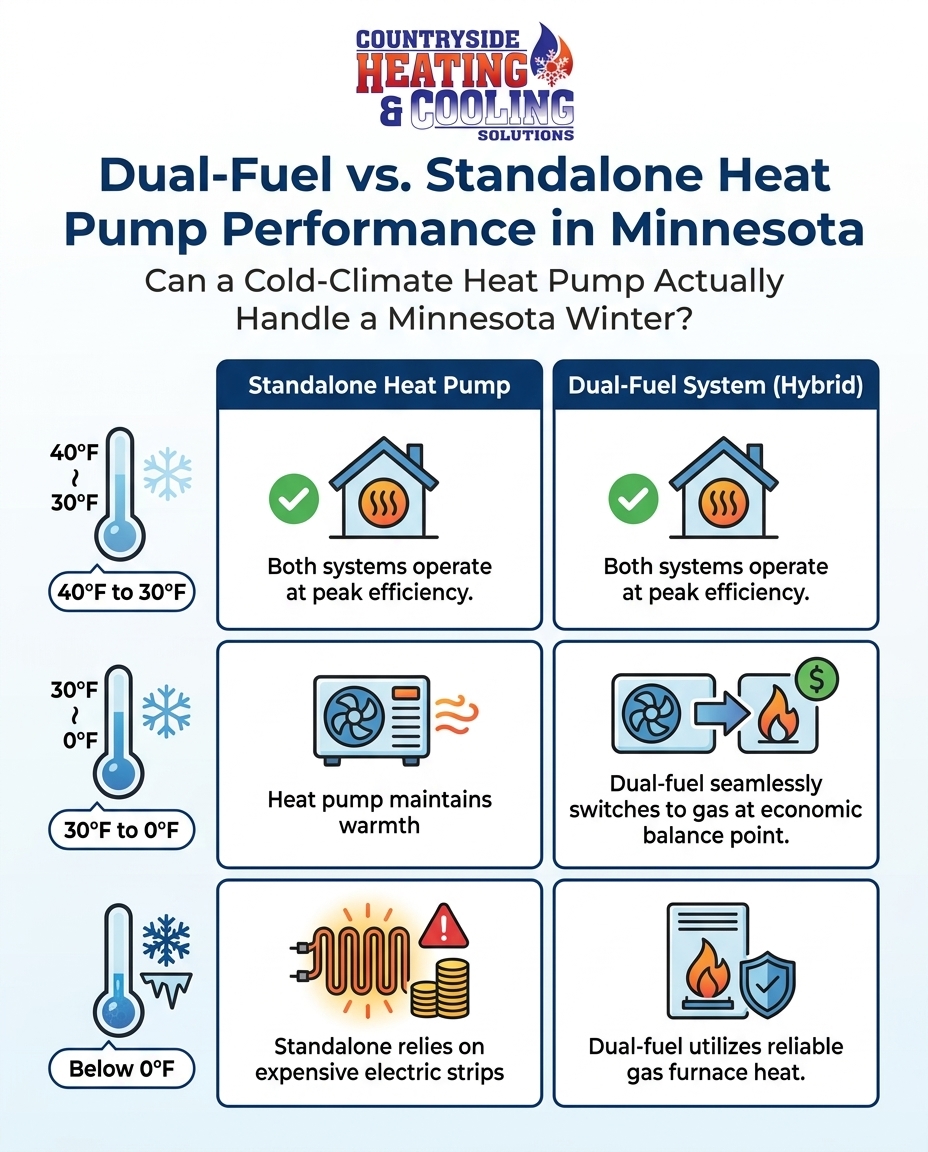
Having a clear understanding of these operational differences makes it much easier to compare heat pump options and select the exact configuration that matches your home's thermal needs.
Why September is the Critical Window for HVAC Upgrades
Timing is everything when it comes to major home improvements. We always warn our customers that waiting until your furnace completely fails in the middle of a November blizzard limits your options and often leads to rushed, stressful decisions. September pre-heating preparation is the ideal time to assess your equipment, explore new technology, and schedule an installation.
During the mild days of early fall, our technicians can install and thoroughly test a new dual-fuel system without leaving your family in the freezing cold. Testing the transition between the heat pump and the gas furnace requires careful calibration of the smart thermostat, which is best done before you are relying on the system for survival. Just last year, we helped an area customer who returned home from a fall vacation to find their furnace completely broken. Because they called us quickly during the autumn transition, our team came out immediately and provided great service at a good value before the severe cold set in. Being proactive prevents emergency service calls.
Additionally, upgrading now allows you to take advantage of generic federal tax credits and local utility rebates that may apply to qualifying high-efficiency installations. These incentive programs are designed to offset the initial costs of adopting greener technology, making a premium dual-fuel setup much more accessible. If you suspect your current system is on its last legs, scheduling a heat pump repair or replacement consultation with us now gives you the peace of mind that your home is fully optimized before the first major freeze.
Frequently Asked Questions About Minnesota Heat Pumps
Do heat pumps work in Minnesota winters?
Yes, modern cold-climate models are engineered specifically for northern states. They utilize variable-speed inverter compressors that can extract heat from the air even when temperatures drop well below freezing, unlike older models that struggled in the cold.
At what temperature does a heat pump become ineffective?
Most standard units lose efficiency around freezing, but cold-climate models actively heat down to -15°F. However, as the temperature drops, the system uses more electricity to extract heat, which is why we often recommend a backup heat source for sub-zero temperatures.
Do I need a backup furnace with a heat pump in MN?
While it is technically possible to rely on electric resistance strips for backup, our team highly recommends a gas furnace. A dual-fuel setup ensures that you have powerful, reliable heat during extreme cold snaps, without the massive electricity bills associated with emergency heat strips.
What is a dual fuel heat pump system?
A dual-fuel system pairs an electric heat pump with a high-efficiency gas furnace. The heat pump handles the heating during mild and moderate weather, and the system automatically switches to the gas furnace when temperatures drop below a designated balance point.
Are cold climate heat pumps worth it in Minnesota?
Absolutely, because they provide incredibly efficient heating during the mild fall and spring months. By handling the bulk of your heating needs before deep winter hits, they significantly reduce your reliance on fossil fuels and can lower your overall seasonal energy consumption.
How do heat pump defrost cycles affect indoor temperatures?
During a defrost cycle, the system temporarily reverses into cooling mode to melt ice off the outdoor unit. In a standalone system, this can cause a brief draft of cool air inside the home unless electric heat strips activate quickly; a dual-fuel system uses the gas furnace to mask this draft entirely, keeping you comfortable.
Ready to Winter-Proof Your Home's Comfort?
Cold-climate heat pumps are incredible tools that have revolutionized home heating, but in our experience, they work best in Maple Plain MN when paired with a reliable gas furnace. A dual-fuel system offers the perfect blend of cutting-edge electrical efficiency and undeniable gas-powered warmth. You do not have to guess which system is right for your square footage or insulation levels. Our experts at Countryside Heating & Cooling Solutions can help you calculate the exact thermal and economic balance points for your property, providing a clear, technically accurate explanation of your best options. Schedule a consultation today and secure your family's comfort before the deep winter hits.
