.webp)

How Pets Affect How Often You Change Your Filter — What Every Twin Cities Pet Owner Should Know
How pets affect how often you change your filter is simpler to understand than most people expect: pets dramatically shorten how long a filter lasts, often cutting its useful life in half or more compared to a pet-free home.
Here's a quick breakdown before we dive deeper:
| Household Type | Recommended Filter Change Frequency |
|---|---|
| No pets | Every 90 days |
| One small or light-shedding pet | Every 60 days |
| One large dog or multiple pets | Every 30–45 days |
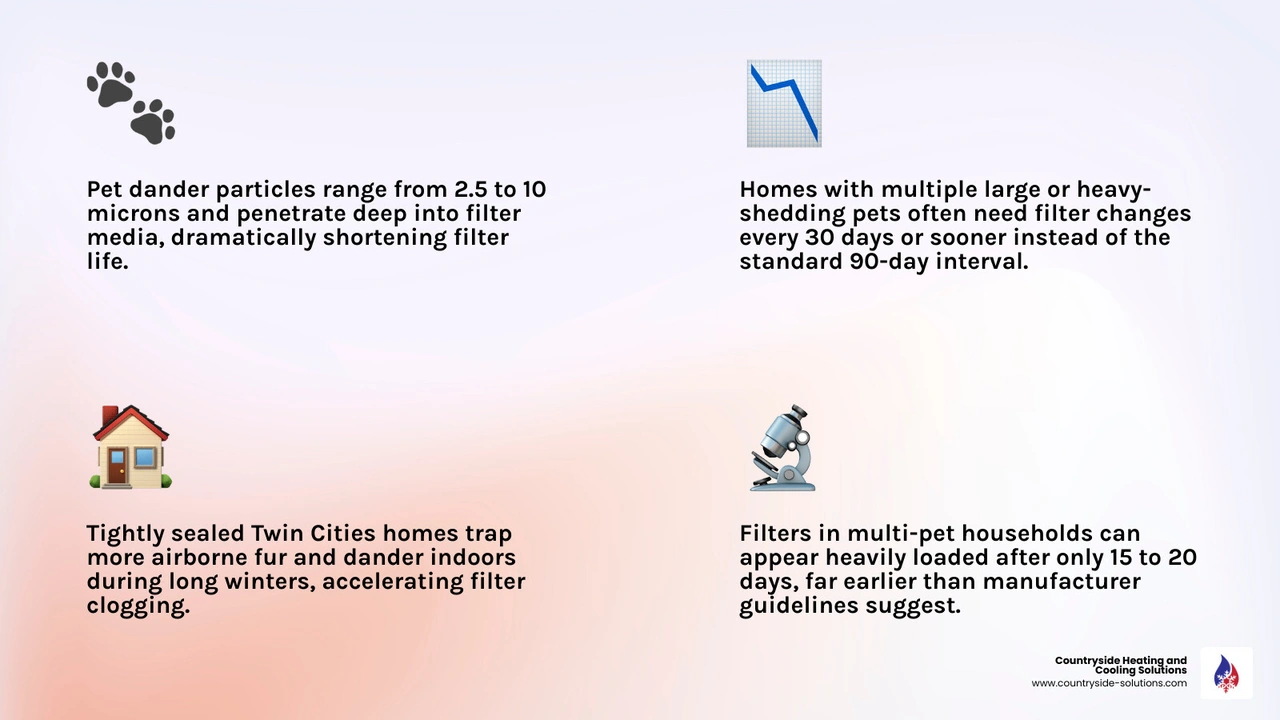
| Multiple large or heavy-shedding pets | Every 30 days or sooner |
| Pets + allergy sufferers | Every 20–30 days |
If you share your Minneapolis–Saint Paul area home with a dog, a cat, or several furry companions, your HVAC system is quietly working overtime. Every time your pets move, shake, or settle in for a nap, they release microscopic dander particles, airborne fur, and proteins into the air. Your HVAC filter is the first line of defense — and it fills up far faster than the 90-day guideline printed on the box was ever designed to handle.
In fact, field observations from homes with two or three dogs have shown filters appearing heavily loaded after just 15 to 20 days — a fraction of the standard replacement window. For homeowners in the Twin Cities metro, where homes stay tightly sealed through long winters and pets spend even more time indoors, that particle buildup happens even faster.
This guide walks you through everything you need to know: how to read the signs, which filters work best, what replacement schedule actually fits your household, and simple habits that help your filter — and your HVAC system — last longer.
Understanding how pets affect how often you change your filter
Pets shorten filter life because they add much more than visible fur to your home's air. Hair is the obvious part, but dander is the bigger issue. Pet dander is made up of tiny skin flakes and proteins that can stay airborne and work their way deep into the filter media. Research commonly places pet dander particles in the roughly 2.5 to 10 micron range, which is exactly the kind of debris a good pleated HVAC filter is trying to catch.
That means a pet household creates a heavier "particle load" than a pet-free one. Your filter is catching:
- Fur and loose hair
- Dander
- Dust tracked in on paws and coats
- Saliva proteins attached to fur and surfaces
- Litter dust, bedding particles, or feather dust depending on the pet
In a home without pets, a standard 1-inch filter may often make it close to the typical 90-day guideline. In a home with pets, that same filter may need replacement in 30 to 60 days, or even sooner with heavy shedders. In other words, pets can cut filter lifespan in half, and sometimes by more than half.
That matters because a dirty filter does not just look bad. It can reduce airflow, make your furnace or AC work harder, and increase energy use. A clogged filter can raise HVAC energy consumption by up to 15%, while replacing it can improve efficiency by about 5% to 15%. If you'd like a deeper look at why this matters, see why changing the furnace filter is important.
Here is a simple side-by-side comparison:
| Household | Typical 1-inch Filter Lifespan |
|---|---|
| Pet-free home | Up to 90 days |
| One pet | About 45 to 60 days |
| Multiple pets or heavy shedders | About 30 to 45 days |
| Multiple pets plus allergies | About 20 to 30 days |
How the number and size of pets impact filter lifespan
The more pets you have, the faster your filter loads up. It is not just a math problem, but math is definitely involved.
Each pet adds its own stream of hair, dander, and outdoor debris. In a multi-pet household, those sources overlap all day long. Two cats and a dog do not create "a little more" filter buildup. They can create dramatically more buildup because there are simply more animals moving through the house, more shedding, more disturbed dust, and more contaminated soft surfaces.
Size matters too:
- Larger dogs usually shed more total material than small dogs
- Bigger coats mean more loose fur in the air and on floors
- More body surface area often means more dander production
- Active pets stir up settled particles more often
So a home with one small, low-shed dog may do fine on a 60-day schedule, while a home with two large dogs may need 30-day changes. If those dogs love wrestling near the return vent, your filter definitely knows.
Breed-specific shedding and how pets affect how often you change your filter
Breed can be just as important as pet count. Some breeds are famous for coating furniture, clothing, and apparently the laws of physics in fur. Heavy shedders such as Huskies, German Shepherds, Golden Retrievers, and similar dense-coated breeds can overwhelm a filter much faster than lower-shed breeds.
A few important points:
- Heavy double coats usually mean more seasonal shedding
- Long-haired breeds can produce large amounts of visible fur
- Short-haired pets still produce dander, even if you do not see much hair
- "Hypoallergenic" breeds may shed less fur, but they still produce dander
That last point surprises many homeowners. Low-shed breeds are not no-dander breeds. Even if your dog barely leaves hair behind, skin flakes and proteins are still entering the air. So yes, even a tidy-looking pet household may still need more frequent filter checks.
Recommended replacement schedules for Twin Cities pet owners
For most Twin Cities pet owners, the best rule is simple: inspect monthly, replace based on condition, and assume you will need more frequent changes than the box says.
A practical starting schedule looks like this:
- No pets: every 90 days
- One pet: every 45 to 60 days
- One large dog or two pets: every 30 to 45 days
- Three or more pets, or heavy shedders: every 30 days or sooner
- Pets plus allergies or asthma: every 20 to 30 days
If you use a standard 1-inch filter, lean toward the shorter end of those ranges. If you have a thicker media filter, you may get a longer interval, but you should still check it regularly.
Twin Cities weather also matters. In our area, heating systems can run hard through long winters, and air conditioning works steadily through humid summer stretches. More runtime means more air moving through the filter, which means faster loading. For seasonal timing tips, see this spring air filter replacement guide. And if you need a refresher on the process itself, here is how to replace a furnace, AC, or heat pump filter.
Seasonal shedding patterns and how pets affect how often you change your filter
Spring and fall are often the sneaky seasons for pet hair. Many dogs and cats "blow" their coats as temperatures shift, which can create a sudden spike in fur and dander for a few weeks at a time.
Here is how the seasons usually affect your filter schedule in our area:
- Spring: shedding often increases, plus pollen adds another filter burden
- Summer: pets track in more outdoor dust and debris
- Fall: another coat transition can quickly load the filter
- Winter: homes stay closed up, pets spend more time indoors, and pollutants recirculate more
Winter is especially important in Minnesota-area homes because tighter indoor conditions leave less natural ventilation. When your furnace runs frequently and windows stay shut, pet dander has fewer ways to leave the home other than through filtration. This is one reason many pet owners find they need monthly changes in winter even if the rest of the year is less demanding.
If your home also deals with dust from dry seasonal conditions, this guide to the best air filter for homes in cold, dusty climates can help.
Signs your filter needs immediate replacement in May 2026
Do not wait only for the calendar. Pets make condition-based checks much more reliable.
Replace your filter sooner if you notice:
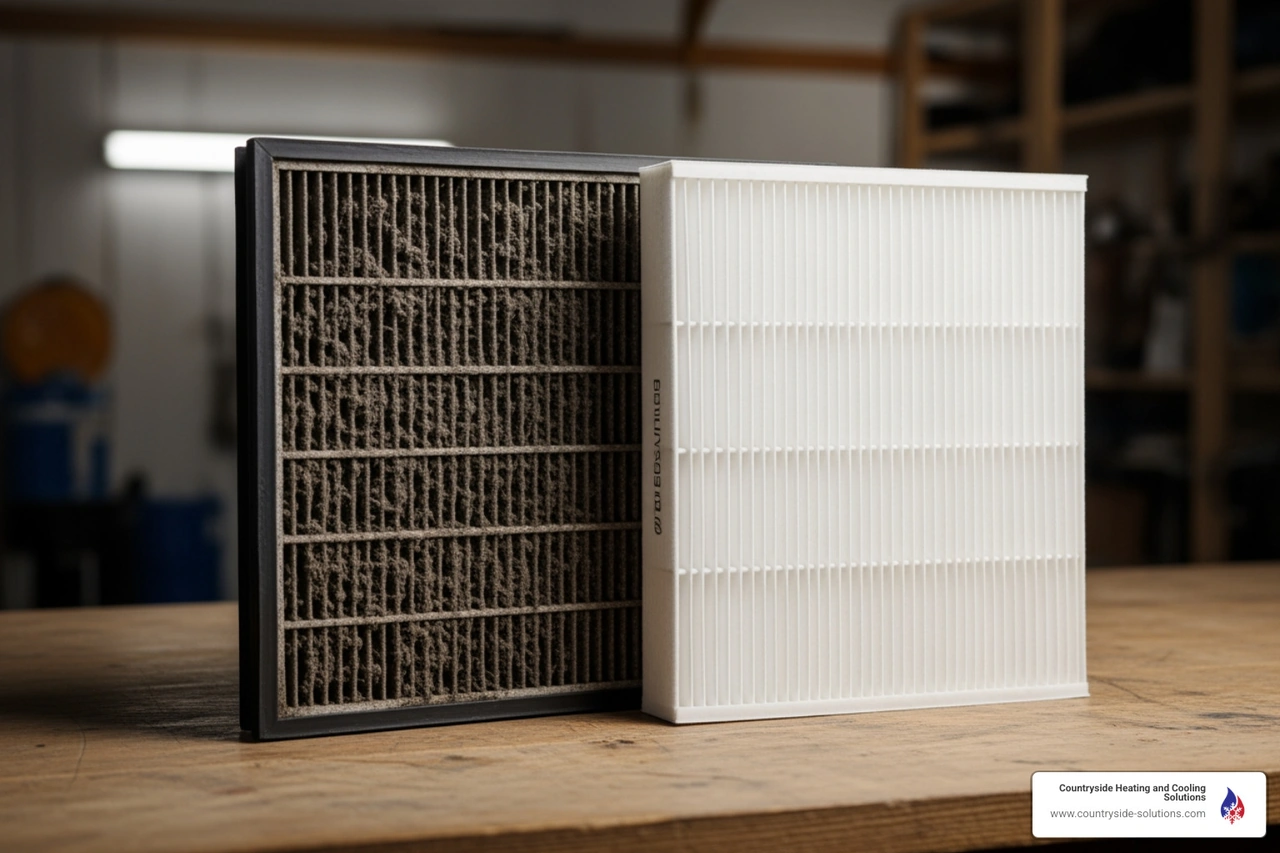
- The filter looks gray, dark, or visibly coated
- Pet hair is matted across the pleats
- You cannot see much light through the filter
- Airflow from vents feels weaker
- Dust seems to build up faster around the house
- Allergy symptoms are getting worse
- The system runs longer than usual
- You notice stale or musty odors when the HVAC starts
A quick light test works well: remove the filter and hold it up to a bright light. If very little light passes through, it is probably time for replacement. This simple check is especially useful for pet owners because filters can be overloaded before they look terrible from the outside.
Choosing the right MERV rating for a pet-friendly home
Once homeowners realize pets are tough on filters, the next question is usually, "Should I just buy the highest MERV filter I can find?"
Usually, no.
For most pet-friendly homes, the sweet spot is:
- MERV 8: basic starting point, catches larger dust and debris
- MERV 11: often the best balance for many homes with pets
- MERV 13: useful for heavier pet loads or allergy concerns, but only if the system can handle it
A higher MERV filter captures smaller particles, including more pet dander. That sounds great, and often it is. But higher filtration can also create more airflow resistance. If the system is not designed for that extra pressure drop, going too high can reduce airflow and stress the equipment.
For many homeowners with pets, MERV 11 is a strong middle ground. It improves dander capture over MERV 8 without the potential drawbacks that can come with jumping too high. Some homes can use MERV 13 successfully, especially when paired with a compatible system and proper maintenance. If you want help with whole-home filtration options, visit Whole House Air Filtration in Maple Plain, MN.
Balancing filtration efficiency with HVAC system health
This is the trade-off pet owners need to understand:
- Higher MERV = better small-particle capture
- Higher MERV can also = more resistance to airflow
- More resistance can mean more blower strain if the system is not designed for it
That does not mean high-MERV filters are bad. It means they need to match the equipment.
A clean MERV 11 often performs better in the real world than a clogged MERV 13 left in too long. And a dirty filter of any rating is bad news. If airflow is restricted, your system may:
- Run longer to heat or cool the house
- Use more energy
- Put extra stress on the blower motor
- Struggle to maintain comfort from room to room
The best filter is the highest-efficiency option your system can handle consistently and that you will replace on time.
The risks of neglecting filter changes with pets
Ignoring filter changes in a pet household can snowball faster than many people expect.
Short-term risks include:
- Reduced airflow
- More dust and dander circulating indoors
- Worsening allergy and respiratory symptoms
- Higher energy use
Longer-term risks can include:
- Blower motor strain
- Frozen evaporator coils during cooling season
- Furnace overheating during heating season
- Extra wear on major components
- Shorter overall system life
Because Americans spend about 90% of their time indoors, and indoor pollutant levels can run 2 to 5 times higher than outdoor levels, keeping the filter clean matters more than many homeowners realize. In a pet home, overdue filters can quickly turn into an indoor air quality issue, not just a maintenance issue.
Maintenance habits to extend your filter’s life
Good news: you cannot stop pets from being pets, but you can slow how fast they clog your filter.
The most helpful habits are source-control habits. In plain English, catch the fur and dander before it reaches the return vent.
We recommend:
- Brush pets 2 to 3 times per week
- Groom outdoors when possible
- If grooming indoors, do it away from return vents
- Vacuum frequently with a HEPA-equipped vacuum
- Wash pet bedding weekly
- Keep return grilles clear of pet hair and dust
- Wipe paws and coats after muddy or dusty outdoor time
- Avoid placing pet beds right next to return vents
Regular grooming can make a surprisingly big difference. Some real-world observations suggest homes with consistent grooming habits may get 30% to 50% longer filter life compared to similar homes that rarely groom. Brushing is especially effective because it removes loose fur before the HVAC system has a chance to collect it the hard way.
If your home still feels dusty despite regular filter changes, additional indoor air quality improvements may help. Our Indoor Air Quality Maple Plain MN page covers whole-home solutions for cleaner indoor air.
Effective reminder systems for busy pet owners
Filter changes are easy to forget because the filter is out of sight, life gets busy, and your dog is not going to text you about static pressure.
Simple reminder systems work best:
- Set a recurring phone reminder every 30 days
- Add filter checks to your family calendar
- Write the install date on the filter frame
- Keep spare filters near the furnace
- Link filter checks to another monthly habit, like paying utilities
- Use thermostat or smart home reminders if available
Our favorite low-tech system is habit stacking: every time you do a regular monthly home task, check the filter too. That way you are not relying on memory alone.
Frequently Asked Questions about pets and air filters
Can I vacuum a disposable filter to make it last longer?
No. Disposable filters are not designed to be vacuumed and reused.
Vacuuming can:
- Damage the filter fibers
- Open gaps in the media
- Reduce filtration performance
- Release trapped allergens back into the air
If a disposable filter is loaded with pet hair and dander, replacement is the right move. Trying to squeeze extra life out of it usually backfires.
Do thicker 4-inch filters last longer in homes with pets?
Often, yes. Thicker filters usually have more surface area and better dust-holding capacity than standard 1-inch filters. That means they can often go longer between replacements.
General expectations are:
- 1-inch filters: often 1 to 3 months
- 4-inch filters: often 6 to 9 months
- 5-inch filters: often 9 to 12 months
But pets still shorten those timelines. A 4-inch filter may last longer than a 1-inch filter in the same home, but it should still be checked regularly, especially during shedding seasons.
How does pet dander affect indoor air quality compared to fur?
Dander is usually the bigger indoor air quality issue.
Here is why:
- Fur is larger and tends to settle faster
- Dander is much smaller and stays airborne longer
- Dander is more likely to be inhaled
- Pet-related proteins attached to dander can trigger allergies
So when homeowners say, "I do not see much hair, so my filter must be fine," the filter often disagrees. The problem may be the microscopic material you cannot see.
Conclusion
Pets make a home warmer, happier, and a lot fuzzier. They also make filter maintenance more important.
If you remember just one thing from this guide, let it be this: in pet homes, do not trust the generic 90-day rule. Check your filter monthly, expect to replace it more often, and choose a filter that balances better dander capture with safe airflow for your system.
At Countryside Heating and Cooling Solutions, we help homeowners across Maple Plain and the Twin Cities metro find practical indoor air quality solutions that actually fit their homes, equipment, and daily life. If you want help choosing the right filter or improving whole-home air quality, explore our Indoor Air Quality Maple Plain MN solutions.
With experienced, NATE-certified technicians and guaranteed next-business-day service, we are here to help you keep your air cleaner, your system protected, and your pets blissfully unaware of how much work they create.
