.webp)

Why Finding the Best Air Filter for Homes in Cold Dusty Climates Matters More Than You Think
The best air filter for homes in cold dusty climates is a MERV 13 pleated filter for most furnaces, though homes with specific needs may benefit from MERV 11 (easier airflow) or MERV 14 (ultrafine and virus particle capture).
Quick Answer: Top Air Filter Options for Cold, Dusty Homes
• MERV 13 Pleated — MERV Rating: 13 — Best For: Dust, allergens, pet dander — Replace Every: 30-60 days (1-inch)
• MERV 14 Ultrafine — MERV Rating: 14 — Best For: Viruses, smoke, ultrafine particles — Replace Every: 60-90 days
• 5-Inch Media Filter — MERV Rating: 11-13 — Best For: Low restriction, high dust capacity — Replace Every: 6-12 months
• Electrostatic 3-in-1 — MERV Rating: 8-11 — Best For: General dust, large particles — Replace Every: 30-90 days
• HEPA Room Purifier — MERV Rating: N/A — Best For: Bedroom or supplemental use — Replace Every: Per manufacturer
Here is something worth knowing: Americans spend roughly 90% of their lives indoors. During a Minneapolis-Saint Paul winter, that number is even higher. Windows stay shut for months. Your furnace runs constantly. And the same air keeps circulating through your home — picking up dust, pet dander, mold spores, and whatever debris has been sitting in your ductwork since last spring.
Indoor pollutant concentrations can run two to five times higher than outdoor levels during winter, precisely because sealed homes have little to no fresh air exchange. For the roughly 81 million Americans who suffer from allergic rhinitis, winter often brings a frustrating surprise: allergy symptoms that don't stop just because pollen season is over. The culprits are indoor triggers — and your furnace filter is your first line of defense against them.
This guide breaks down the eight best air filtration solutions for cold, dusty homes in 2026, so you can breathe easier all winter long.

The Unique Challenges of Indoor Air in Cold, Dusty Regions
When the temperature drops in places like Maple Plain or Minnetonka, we naturally seal our homes tight to keep the warmth in. While this is great for your heating bill, it creates a "snow globe" effect for indoor air quality. Without fresh air exchange, pollutants like dust mites, pet dander, and even chemicals from cleaning products become trapped.
Research shows that indoor pollutant concentrations can be 2–5 times higher than outdoor levels during the winter. This is a significant concern for the 81 million Americans—about 1 in 4 adults—who suffer from seasonal allergic rhinitis. In our region, winter doesn't provide a break from allergies; it simply shifts the triggers from pollen to indoor dust and dander.
Furthermore, the act of turning on your furnace for the first time in the season often "activates" duct debris. Dust that has settled in your vents all summer is suddenly blasted into your living space. This is why many families notice an allergy spike in the first 2–3 weeks of the heating season. To combat this, Indoor Air Quality in Maple Plain Mn requires a proactive approach to filtration.
Dry winter air also plays a role. When air is dry, dust particles stay airborne longer rather than settling, making them easier to inhale. Finding the best air filter for homes in cold dusty climates isn't just about comfort; it's about managing a complex environment where sealed windows and high-speed furnace fans work against your respiratory health.
Choosing the Best Air Filter for Homes in Cold Dusty Climates
Selecting a filter isn't as simple as picking the one with the highest number on the box. You have to balance the ability to trap small particles with your HVAC system's ability to "breathe." This is where MERV ratings and ASHRAE 52.2 standards come into play.
MERV (Minimum Efficiency Reporting Value) measures how effectively a filter captures particles between 0.3 and 10 microns. For context, a human hair is about 100 microns wide, so we are talking about microscopic irritants. When looking for the Best Home Air Filtration in Minnetonka Mn, you should look at more than just the MERV number; consider the pleat count and dust-holding capacity as well. A filter with more pleats has more surface area, allowing it to trap more dust without immediately choking off your furnace's airflow.
Ideal MERV Ratings for the Best Air Filter for Homes in Cold Dusty Climates
For most residential systems in cold, dusty environments, MERV 11 to MERV 13 is the "sweet spot."
• MERV 11: Captures about 85% of particles in the 1.0–3.0 micron range. This is excellent for basic dust and pet dander control.
• MERV 13: This is our top recommendation for families with allergies. It captures 90% or more of allergens like dust mites and mold spores. It provides near-HEPA performance without the extreme airflow resistance that true HEPA filters often cause in standard furnaces.
Achieving the Best Home Air Filtration in Waconia Mn often means choosing a MERV 13 filter to ensure that even the smallest dust particles are removed from the recirculating air.
Why Airflow Matters When Selecting the Best Air Filter for Homes in Cold Dusty Climates
Every filter creates a "pressure drop," which is a fancy way of saying it resists the air trying to push through it. If a filter is too restrictive, your blower motor has to work much harder, which can lead to increased energy bills or even a system breakdown.
A common mistake is installing a high-MERV filter that is too thick or dense for the system's capacity. This leads to "bypass gaps" where air (and dust) leaks around the sides of the filter because it can't get through the middle. Ensuring a snug filter fit is just as important as the filter's rating. For those seeking Whole House Air Filtration in Chanhassen Mn, we always recommend checking that your system can handle the resistance of a higher-rated filter.
8 Top-Rated Filtration and Purification Solutions for 2026
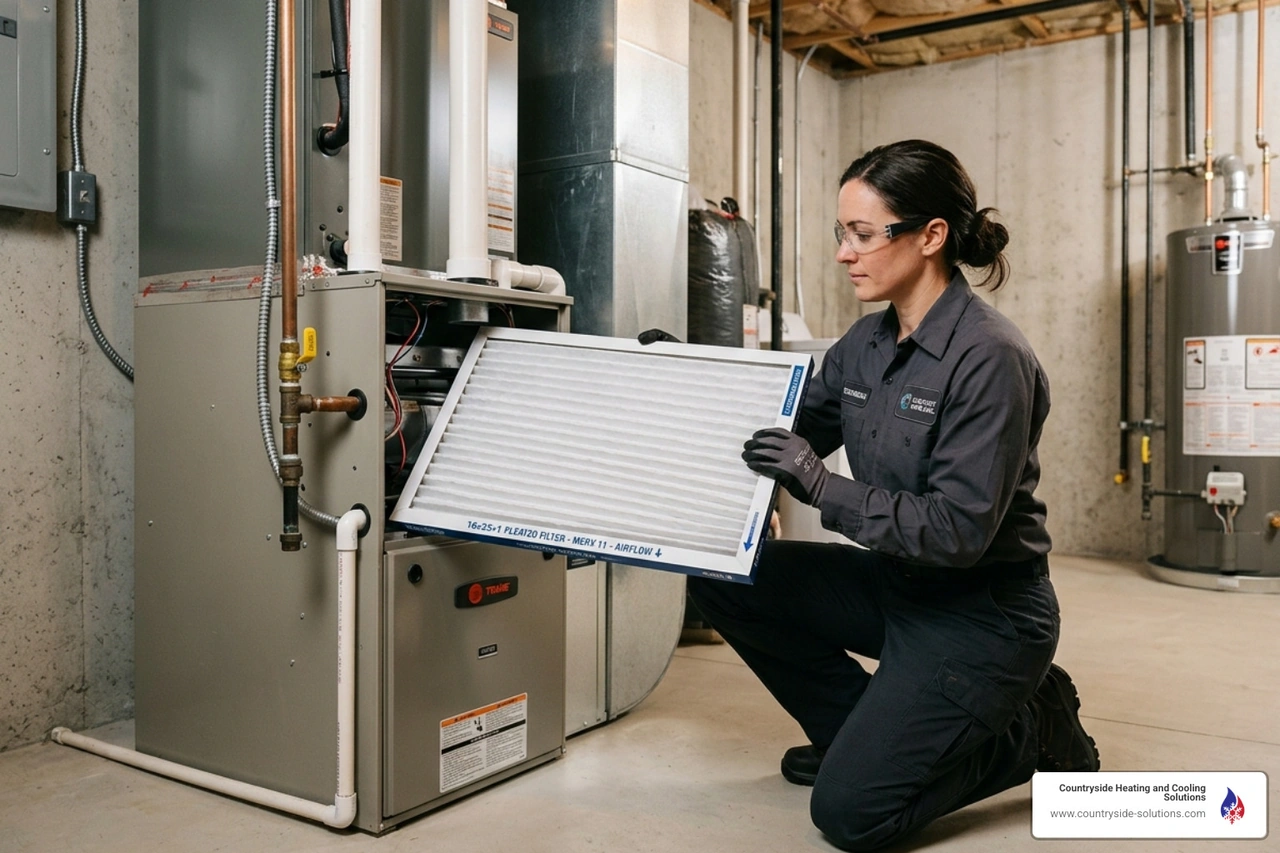
To help you navigate the options, we’ve rounded up the top eight solutions for 2026. Whether you need a whole-house solution or a portable unit for a specific room, these choices represent the gold standard for Best Home Air Filtration in Hopkins Mn.
1. High-Efficiency MERV 13 Pleated Filters
The standard 1-inch MERV 13 pleated filter is the workhorse of winter air quality. It offers a 90%+ particle capture rate, which is essential for smoke removal and heavy dust. Because it captures so much, it loads faster. In a dusty climate, you should check these every 30 days. This is a fantastic entry-point for Whole House Air Filtration in Independence Mn.
2. Ultrafine Particle Reduction Filters (MERV 14)
For those who want the highest level of protection available in a standard 1-inch slot, MERV 14 filters are the answer. They can capture up to 81% of small particles (0.3–1 micron) and are highly effective at trapping airborne virus particles. If you live in a particularly high-dust area like Delano Mn, this extra layer of protection can make a noticeable difference in your home's air freshness.
3. Deep-Pleat 5-Inch Media Filters
If your HVAC system is equipped with a wider cabinet, a 5-inch deep-pleat filter is superior to the 1-inch variety. These filters have a massive surface area, which means they offer very low airflow resistance while maintaining a high dust-holding capacity. They often only need replacement once or twice a year, making them a low-maintenance favorite for Whole House Air Filtration in Watertown Mn.
4. HEPA-Integrated Air Exchangers (HRV/ERV)
In modern, air-tight homes, an air exchanger is a game-changer. These systems (Heat Recovery Ventilators or Energy Recovery Ventilators) bring in fresh outdoor air while exhausting stale indoor air. By integrating HEPA filtration into these units, you get the benefit of fresh air without the outdoor dust. This is the ultimate solution for Best Home Air Filtration in Excelsior Mn, especially for managing winter humidity.
5. Large Room Smart Air Purifiers
Sometimes, the furnace filter needs a partner. Large room air purifiers covering 650+ sq ft are ideal for open-concept living areas. Look for models with H13 True HEPA filters and built-in AQI (Air Quality Index) monitors that automatically increase fan speed when they detect a spike in dust. These are highly effective for Whole House Air Filtration in Minnetrista Mn.
6. Quiet Bedroom HEPA Units
Sleep is when our bodies recover, but it’s also when we are most vulnerable to indoor allergens. Small, quiet HEPA units designed for bedrooms often feature a "sleep mode" that operates at a whisper-quiet 22dB. This provides dedicated nighttime dust control in Long Lake Mn without disrupting your rest.
7. High-CADR Hybrid/DIY Solutions
A newer trend for 2026 involves high-CADR (Clean Air Delivery Rate) units that use high-efficiency PC fan technology. These units are incredibly quiet but move a massive amount of air through MERV 13 filters. They are perfect for home offices or workshops in Loretto Mn where dust levels might be higher than average.
8. Electrostatic 3-in-1 Filters
Electrostatic filters use a self-charging fiber to act like a magnet for dust. While some are washable, the high-performance pleated versions are usually better for cold climates because they don't require the downtime of drying. They are excellent at capturing large particles like lint and household dust in Mound Mn.
Maintenance Strategies for Peak Winter Performance
Even the best air filter for homes in cold dusty climates will fail if it isn't maintained. In the winter, your furnace runs more frequently, meaning the filter is constantly "on the clock."
• Replacement Frequency: For 1-inch filters, we recommend a change every 30–60 days during peak winter. For 2-inch or 4-inch filters, every 60–90 days is usually sufficient.
• Humidity Control: Aim for a 30–50% indoor humidity range. This prevents dust from staying airborne and helps your mucous membranes stay hydrated, which is your body's natural defense against allergens.
• Smart Reminders: Use a smart app or a simple calendar alert to ensure you don't forget the monthly check. If you can't see light through the filter when holding it up to a lamp, it's time for a change.
• Complementary Steps: Regularly vacuuming your returns and using microfiber cloths for dusting will prevent large debris from reaching the filter in the first place, extending its life and improving your Indoor Air Quality in Maple Plain Mn.
Frequently Asked Questions
How often should I change my furnace filter in a dusty winter climate?
In a dusty climate, you should check your filter once a month. For standard 1-inch pleated filters, expect to replace them every 30 to 60 days. High-capacity 5-inch filters can last 6 to 12 months, but should still be inspected mid-season.
Can a high MERV filter damage my furnace?
If the MERV rating is too high for your specific blower motor, it can cause restricted airflow, leading to overheating and increased wear on the system. Most modern furnaces handle MERV 11–13 well, but it is always best to have a professional verify your system's static pressure.
Do I need both a furnace filter and a room air purifier?
While a high-quality furnace filter cleans the air throughout the whole house, a room air purifier provides an extra layer of protection in high-traffic areas or bedrooms. Using both is the most effective way to manage severe allergies or exceptionally dusty environments.
Conclusion
Creating a healthy home environment during a long Minnesota winter requires the right tools and a bit of consistency. By choosing the best air filter for homes in cold dusty climates—typically a MERV 11 to 13 pleated model—you can significantly reduce the pollutants that cause winter allergies and respiratory discomfort.
At Countryside Heating and Cooling Solutions, our NATE-certified experts are dedicated to helping families across the Minneapolis-Saint Paul metro area breathe easier. Whether you are in Maple Plain, Eden Prairie, or Waconia, we offer guaranteed next-business-day service to ensure your home remains a sanctuary of clean, warm air.
Optimize your home air quality today and let us help you find the perfect filtration solution for your unique home and lifestyle.
