.webp)

The Invisible Draft: Why Unsealed Basement Ducts Matter This Fall
Identifying and Sealing Return Air Leaks Before the Snow Flies is a critical priority for homeowners dealing with drafty, unfinished basements. You might notice that your furnace is running nonstop, yet the main living spaces still feel chilly and dusty. The culprit often hides out of sight: compromised return ductwork silently pulling unconditioned, dirty air into your home's primary heating system. Addressing these unseen drafts during September or early fall is essential before the furnace is forced into continuous operation.
Protect your home's efficiency by exploring our comprehensive Heating services and discovering how we improve indoor Air Quality.
Return leaks pose a dual threat to your household. First, they severely compromise your indoor air quality by introducing unfiltered basement air directly into the airstream. Second, they reduce overall heating efficiency, forcing your equipment to consume more energy just to maintain a baseline temperature. Most homeowners focus entirely on the supply vents—the registers that blow warm air into the rooms—while completely ignoring the return side of the system. This oversight allows invisible drafts to persist, undermining the performance of even the highest-rated heating equipment.
The health of your duct system is inseparable from your overall indoor air quality and effective heating performance. When return ducts are unsealed, your furnace is essentially trying to heat the outdoors while distributing basement dust throughout your bedrooms and living areas. Recognizing this hidden issue is the first step toward a warmer, cleaner home this winter.
Comparing Supply and Return Duct Issues
• Supply Ducts — Primary Function: Pushes heated, conditioned air into living spaces. — Sign of a Leak: Noticeable warm drafts in the basement; weak airflow at room registers. — Impact on the Home: Wasted heat in unoccupied areas; rooms take longer to warm up.
• Return Ducts — Primary Function: Pulls air from living spaces back to the furnace for heating. — Sign of a Leak: No obvious breeze; dark dust trails around metal seams. — Impact on the Home: Pulls cold, dusty basement air into the system; strains furnace.
How Return Ducts Work (and Why They Pull in Basement Air)
To understand why unfinished basements are so problematic for leaky ductwork, you have to look at the mechanics of air circulation. An HVAC system operates on a closed loop. Supply ducts push conditioned air into your rooms, while return ducts pull air back to the furnace to be filtered, heated, and recirculated. Because return ducts "suck" rather than "blow," homeowners often ignore them. You will never feel a breeze standing next to a leaking return duct, making the problem incredibly easy to overlook.
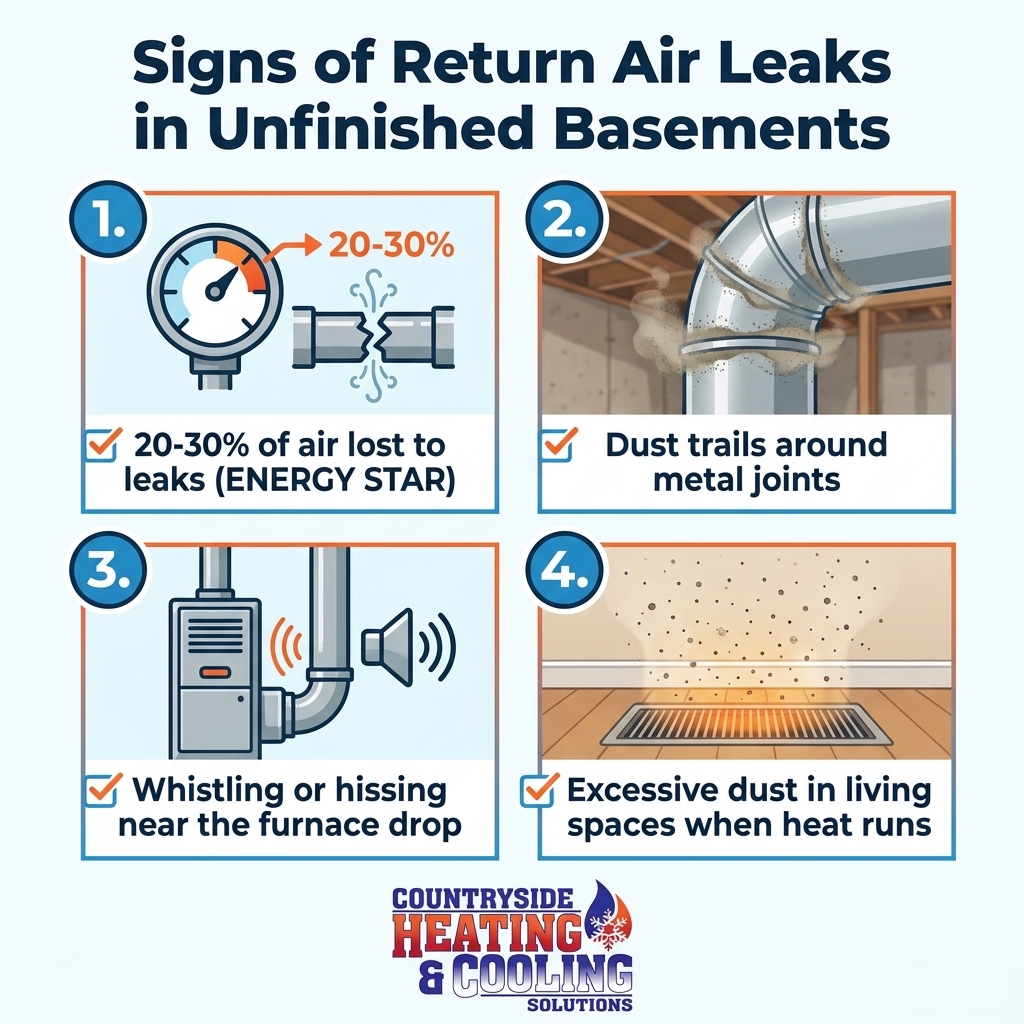
According to ENERGY STAR data, 20 to 30 percent of the air moving through a typical residential duct system is lost to leaks, holes, and poor connections. In our years serving Maple Plain MN homes with unfinished basements, the team at Countryside Heating & Cooling Solutions consistently sees a significant portion of this loss happening on the return side. An unconditioned basement experiences significant temperature drops during harsh winter months. When the return plenum has open seams, it acts like a giant vacuum cleaner, actively drawing in that freezing basement air.
Instead of pulling 68-degree air from your living room to reheat, the furnace suddenly finds itself pulling in 40-degree air from the basement rafters. This drastically drops the temperature of the air entering the heat exchanger, meaning the system has to burn significantly more fuel to reach your thermostat's set point.
The Hidden Strain on Your Furnace
The mechanical strain of heating frigid basement air cannot be overstated. A furnace is designed to raise the temperature of the air passing through it by a specific amount—usually around 40 to 60 degrees. If the air entering the furnace is already close to room temperature, the system easily achieves the desired output. However, when return leaks introduce near-freezing air into the mix, the furnace struggles to produce enough heat to warm the home.
This constant overcompensation leads to short-cycling or excessively long run times. The blower motor works harder, the heat exchanger is subjected to greater thermal stress, and the overall lifespan of the equipment is significantly shortened. What begins as a minor gap in the sheet metal eventually translates into premature wear and tear on the most expensive appliance in your home.
The Direct Link Between Unsealed Returns and Winter Dust
Beyond the mechanical strain, unfinished basement return leaks are directly tied to poor winter indoor air quality. An unconditioned basement is rarely a pristine environment. The space typically contains dust, mold spores, exposed fiberglass insulation fibers, and occasional pest dander. Because the basement air is relatively stagnant, these particulates settle on surfaces and joists.
When the furnace kicks on, the vacuum effect created by a leaky return duct actively pulls these basement particulates into the airstream. The blower motor draws the contaminated air through the open seams, bypassing the main return filter if the leak is located between the filter cabinet and the living space. From there, the furnace heats the contaminated air and distributes it directly into your bedrooms, kitchen, and living room.
This phenomenon explains a very common homeowner complaint: excessive dust settling on furniture immediately after the heat turns on for the season. If you find yourself dusting constantly during the winter months, your ductwork is likely pulling dirt from the lowest, most unfinished part of your house. For a deeper understanding of how aging infrastructure contributes to this problem, you can read about the hidden cost of leaky ductwork in older homes.
The Closed-Window Effect
• Trapped Allergens: During the winter, windows stay tightly closed, meaning any mold spores or dust pulled from the basement remain trapped in the living space.
• Dry Air Circulation: Unconditioned basement air is often exceedingly dry in the winter, which exacerbates respiratory irritation when mixed with dust.
• Continuous Cycling: Because the furnace runs frequently during cold snaps, the introduction of basement particulates is a continuous, daily cycle rather than a one-time event.
Long-term exposure to these circulated particulates heavily impacts respiratory comfort. Homeowners often blame the dry winter air for their coughing or congestion, not realizing that their unsealed return ducts are continuously pumping insulation fibers and basement dust into the air they breathe.
Visual Clues: How to Spot Return Air Leaks Safely
Before the heavy heating season begins this September, taking a few minutes to inspect your basement ductwork can save you from months of discomfort. The goal here is safe, visual identification. You do not need special tools, and you should never attempt to open, alter, or dismantle the metal trunk lines yourself.
Here is a safe, step-by-step method to identify return air leaks in an unfinished space:
1. Locate the Return Trunk: Identify the return ductwork. These are usually the larger, rectangular metal trunks that connect directly to the bottom or side of the furnace where the air filter is housed.
2. Inspect the Seams: Walk along the length of the metal trunk, paying close attention to the joints where two pieces of sheet metal connect.
3. Look for Dust Trails: The most obvious visual clue of a return leak is a "dust trail" or dark streak at a joint. Because the duct is sucking air inward, it acts like a makeshift filter, trapping dirt on the edges of the metal seam over time.
4. Perform a Safe Smoke Test: While the furnace blower is running, safely hold a smoke pencil or a stick of incense near suspected joints. If there is a leak, you will clearly see the trail of smoke being sucked into the metal seam.
5. Listen Closely: Stand near the furnace drop (the vertical duct leading into the unit) and listen. A significant leak will often produce a faint whistling or hissing sound as air is forced through a narrow gap.
Common Leak Locations in Unfinished Spaces
While leaks can happen anywhere along the duct run, there are three primary areas where return systems fail:
• Panned Joists: Many older homes use the space between wooden floor joists as a return air pathway, sealing the bottom with a piece of sheet metal. Wood expands and contracts, frequently causing these makeshift ducts to leak heavily.
• The Filter Cabinet Connection: The point where the metal return drop meets the furnace filter cabinet is notoriously leaky if not properly sealed with professional-grade materials.
• End Caps and Elbows: Any place where the metal trunk changes direction or terminates is a prime location for structural gaps and air infiltration.
Why Mastic and Foil Tape Require a Professional Touch
Once you have identified the visual clues of a return leak, the next step is professional remediation. It is highly tempting to grab a roll of standard cloth "duct tape" from the garage and cover the gaps, but this is a temporary fix that will inevitably fail. Standard cloth tape degrades rapidly when exposed to the thermal dynamics of an HVAC system. The adhesive dries out, becomes brittle, and eventually peels away, leaving you exactly where you started.
Professional HVAC technicians use specialized mastic sealant—a thick, paste-like substance that hardens into a flexible, airtight shell—or UL-listed foil tape designed specifically for ductwork. Extreme temperature swings in an unconditioned basement cause metal ducts to expand and contract continuously throughout the winter. Mastic sealant is engineered to flex with this movement without breaking the seal. One Maple Plain homeowner who relies on our Countryside Heating & Cooling Solutions technicians for routine fall maintenance for their furnace and AC systems has noted how this level of professional, durable work keeps their home comfortable and their equipment running flawlessly year after year.
Furthermore, properly cleaning and prepping the metal surface is mandatory before application. Decades of basement dust and oxidized metal will prevent even the best mastic from forming a permanent bond. A professional knows exactly how to prepare the surface to ensure the sealant adheres for the life of the ductwork. As an added benefit, upgrading your system's efficiency through professional sealing may qualify you for generally applicable energy rebates or utility incentive programs, so it is always wise to verify current offerings with your local utility provider.
Finally, there is a critical safety aspect to sealing return ducts. Our local HVAC experts at Countryside Heating & Cooling Solutions understand exactly how to prepare residential systems specifically for deep freezes while simultaneously protecting indoor air quality against winter dust. Altering the airflow of a return system can inadvertently create pressure imbalances in the basement. If the basement becomes depressurized, it can cause backdrafting—a dangerous situation where exhaust gases from gas water heaters or furnaces are pulled back into the home instead of venting up the chimney. Professional sealing ensures the system remains balanced and safe.
Catching Duct Issues During Routine Fall Maintenance
The most effective way to address unsealed return ductwork is proactively. Duct inspections are a natural extension of a comprehensive pre-season furnace tune-up. When you schedule a professional evaluation in September or early fall, you give technicians the opportunity to catch and resolve airflow issues long before the heavy heating season begins.
During a thorough maintenance visit, technicians do more than just change the filter and check the burners. They measure the static pressure of the entire HVAC system. Static pressure is the resistance to airflow within the ducts. If the static pressure readings are off, it immediately tells the technician whether the system is starved for air or pulling from the wrong places due to massive leaks. Just last fall, our team responded to a customer who returned home from a late-season vacation to find their furnace completely unresponsive due to a neglected system issue. A technician was dispatched quickly to assess and repair the unit, demonstrating exactly why we strongly advocate for proactive fall maintenance.
Addressing these hidden issues early provides incredible peace of mind. Knowing that your system is tightly sealed, highly efficient, and ready for continuous winter operation means you won't have to worry about sudden breakdowns during a January cold snap. To ensure your system is fully prepared, it is highly recommended to Schedule HVAC Service before the average lows drop below freezing.
A sealed duct system protects your equipment, lowers your energy waste, and drastically improves the air your family breathes. By identifying the problem early and relying on professional sealing techniques, you can lock out the cold basement air and enjoy a clean, comfortable home all winter long.
Frequently Asked Questions
How do I find a leak in my return air duct?
The safest method is to perform a visual inspection of the metal trunk lines in your basement. Look for dark streaks or "dust trails" along the seams where two pieces of sheet metal join. You can also safely hold a smoke pencil near the joints while the blower is running to see if the smoke is actively sucked into the ductwork.
What happens if a return duct is leaking in the basement?
A leaking return duct acts like a vacuum, pulling unconditioned, cold air into your heating system. This drastically drops the temperature of the air your furnace has to heat, forcing the equipment to work much harder and run longer. It also draws in basement dust, mold spores, and insulation fibers, distributing them throughout your home.
Why is my house so dusty when the heat turns on?
Excessive winter dust is often a direct result of unsealed return ducts located in unfinished spaces. Because the return system is under negative pressure, any gaps in the metal will suck in the surrounding dirty basement air. This bypasses your system's main filter if the leak is close to the furnace, blowing raw basement dust directly into your living areas.
Does sealing return ducts improve air quality?
Yes, sealing your return ducts is one of the most effective ways to improve winter indoor air quality. By closing the gaps, you stop the system from pulling in airborne contaminants, allergens, and fiberglass particles from the basement. This ensures that only the air from your living spaces is circulated and passed through your primary HVAC filter.
Can I just use standard duct tape to seal my basement returns?
Standard cloth duct tape should never be used on HVAC ductwork. The extreme temperature fluctuations of the metal will quickly dry out the adhesive, causing the tape to turn brittle and peel away within a matter of months. Professional-grade mastic sealant or specialized UL-listed foil tape is required to create a permanent, flexible bond that withstands winter expansion and contraction.
Taking the time to address your ductwork before the bitter cold arrives ensures a healthier, more efficient home environment. If you've spotted dust trails on your basement seams, don't wait for the deep freeze—reach out to a professional to evaluate and seal your system, guaranteeing clean air and reliable warmth all season long. Revisit our Air Quality solutions to see how we can help.
