.webp)

Navigating Heating Upgrades Without Compromising Architectural Integrity
Your outdated furnace is struggling to keep up with the dropping temperatures, but the thought of tearing open your beautiful walls to install bulky new ductwork is stopping you in your tracks. When researching high-velocity heating solutions for older Wayzata estates, our team at Countryside Heating & Cooling Solutions frequently sees homeowners facing a difficult choice between maintaining their home's original charm and achieving reliable winter warmth. Traditional ductwork retrofits threaten to destroy custom woodwork, intricate crown molding, and original plaster that simply cannot be replaced once damaged. Fortunately, small-duct high-velocity (SDHV) heating presents a viable, minimally invasive alternative that respects your property's legacy. By addressing this necessary upgrade during the September pre-heating season, you prevent rushed, emergency decisions later in the year when the deep freeze finally hits.
If you are looking to upgrade your home's comfort without sacrificing its character, exploring modern heating systems and ductless heating options is the perfect place to start.
In our years of serving Maple Plain and the surrounding communities, we have found that older properties were simply not built with modern forced-air systems in mind. Before the advent of central heating, homes relied on radiators, boilers, or localized fireplaces. As a result, the structural framing lacks the wide, open cavities required to hide conventional metal supply and return trunks. When contractors attempt to force standard equipment into these spaces, our technicians often witness immediate and highly visible compromises. Ceilings must be dropped, closets are consumed by bulky chases, and unsightly bulkheads are built across otherwise elegant rooms.
The true cost of conventional retrofits: Beyond the visual disruption, the sheer physical impact of cutting large holes into historic materials weakens the structural integrity of the house. Every time a saw blade cuts through a century-old floor joist or fragile wall, a piece of history is lost forever. SDHV technology was engineered specifically to solve this exact dilemma, allowing you to bring twenty-first-century comfort into a nineteenth-century layout.
The Vulnerability of Lath-and-Plaster Architecture
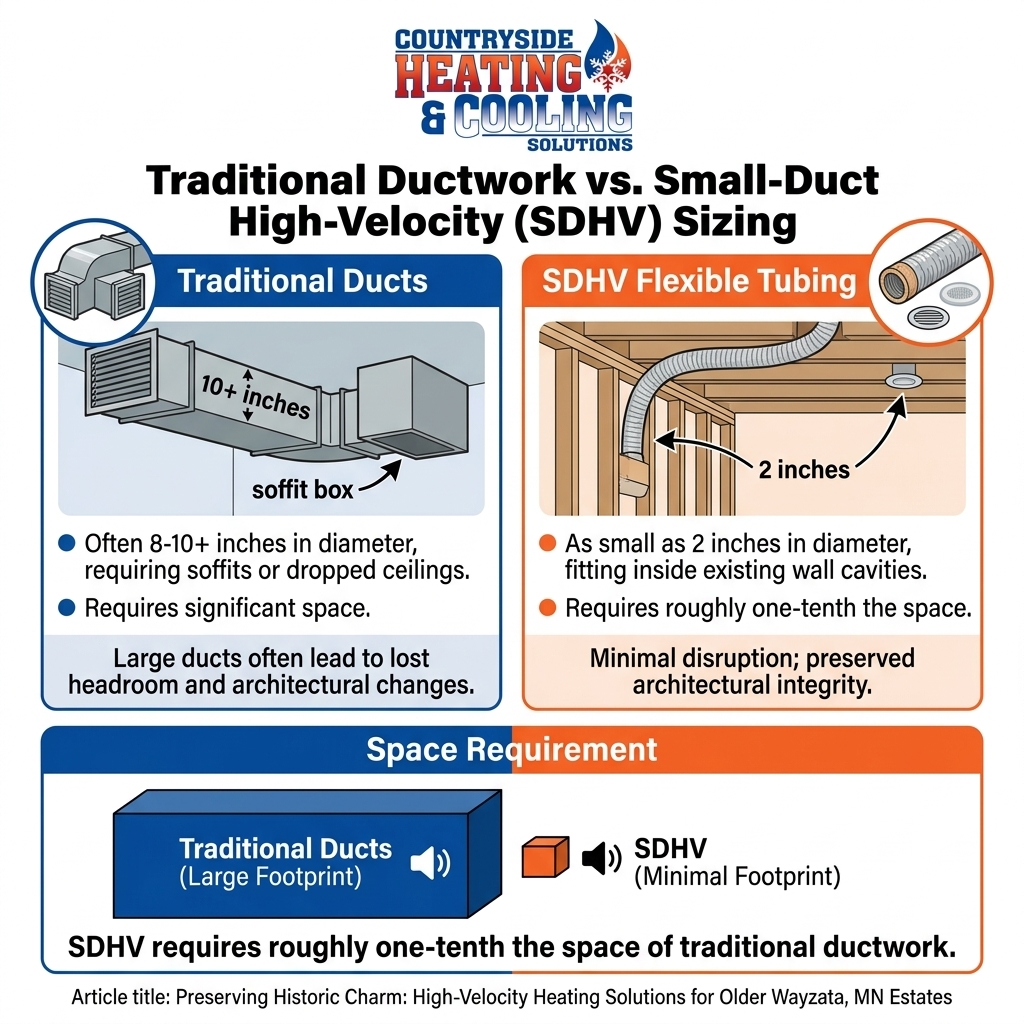
Many older properties in our region feature traditional balloon framing and fragile lath-and-plaster walls. While these materials offer excellent soundproofing and a unique, handcrafted texture, they are notoriously difficult to modify. Standard rigid ductwork requires large cavities—often measuring eight to ten inches in diameter or more—leading to dropped ceilings and the creation of unsightly bulkheads that ruin the flow of a room.
Our installers know firsthand that the structural vibration and aggressive cutting required to install traditional ducts frequently cause irreversible plaster cracking. Lath and plaster acts as a continuous, rigid shell. When you cut a large rectangular hole for a standard vent register, the surrounding plaster loses its structural keying. Over time, the everyday vibrations of a conventional blower motor can cause those cracks to spiderweb across the entire wall. Our team navigates this common hurdle frequently when retrofitting HVAC in historic Minnetonka homes, where preservation is just as important as climate control.
Preserving these unique architectural elements requires a specialized approach to air distribution. Rather than forcing the house to accommodate the HVAC system, the HVAC system must be flexible enough to accommodate the house.
• Space Required — Traditional Forced-Air Ductwork: Large chases, dropped ceilings, bulkheads — Small-Duct High-Velocity (SDHV): Fits inside existing 2x4 wall cavities
• Impact on Plaster — Traditional Forced-Air Ductwork: High risk of spiderweb cracking and structural loss — Small-Duct High-Velocity (SDHV): Minimal cutting; uses small circular outlets
• Visual Disruption — Traditional Forced-Air Ductwork: Large metal grilles that clash with historic trim — Small-Duct High-Velocity (SDHV): Small, custom-finished wooden or metal outlets
• Vibration Transfer — Traditional Forced-Air Ductwork: Rigid metal transfers rumble throughout the frame — Small-Duct High-Velocity (SDHV): Flexible, insulated tubing absorbs sound and vibration
For historic Wayzata estates, taking a heavy-handed approach to modernizing the heating infrastructure almost always results in regret. The goal is to make the system entirely invisible, allowing the original craftsmanship to remain the focal point of the home.
The Mechanics of Small-Duct High-Velocity Heating
To understand why this technology is so effective, we have to look at how it physically moves air. SDHV systems utilize flexible, insulated tubing as small as two inches in diameter. This micro-ductwork requires roughly one-tenth the space of traditional metal ducts. Because the tubes are flexible and narrow, our installation crews can thread them seamlessly through existing wall cavities, tuck them into the corners of closets, and route them between original floor joists without altering the home's framing.
The central air handler is also significantly more compact than a standard furnace or blower unit. It can be installed in tight attics, crawlspaces, or basements, acting as the hidden heart of the system. From there, a main trunk line feeds the smaller flexible branches that snake their way to individual rooms throughout your historic Wayzata estate.
How the pressure works: The system operates at a higher static pressure than a conventional setup. This allows the blower to push conditioned air efficiently through narrow spaces without losing momentum. The inner core of the tubing is wrapped in sound-deadening insulation, ensuring that despite the higher velocity of the air, the system operates whisper-quiet.
Understanding the Aspiration Principle
Instead of aggressively dumping hot air into a room and waiting for it to eventually reach the thermostat, SDHV uses the scientific principle of aspiration. As the high-velocity air enters the room through a small, circular outlet, it creates a gentle vacuum effect.
• Instant mixing: Aspiration draws the existing room air into the high-velocity stream, mixing it instantly.
• Draft elimination: By constantly circulating the air rather than blowing it directly onto occupants, the system eliminates uncomfortable drafts.
• Consistent profiles: This continuous mixing ensures a consistent temperature profile from the floor to the ceiling, regardless of the room's size or layout.
Combating Harsh Freezes with Even Thermal Distribution
A frequent misconception we hear from clients is that small-duct systems are primarily designed for summer air conditioning. While they do excel at removing humidity, SDHV systems are incredibly powerful winter heating solutions. Harsh, freezing Minnesota winters demand a level of reliable, even heating that many older properties simply cannot achieve with localized radiators or drafty fireplaces. Large historic rooms with high ceilings and original single-pane windows are particularly prone to severe temperature drops.
The aspiration effect we discussed earlier plays a massive role in winter comfort. In a standard forced-air system, hot air rises to the ceiling and stays there, leaving your feet cold and forcing the furnace to run longer to satisfy a thermostat located at chest height. SDHV systems reduce temperature stratification to as little as one to two degrees from floor to ceiling. This consistent thermal mixing eliminates the notorious cold spots commonly found in older, drafty homes.
Pairing for maximum winter performance: To combat the deep freeze, these systems are paired with robust heat sources.
1. Modern Hydro-Coils: Hot water from a high-efficiency boiler is circulated through a coil inside the SDHV air handler, providing dense, deeply comforting heat.
2. Cold-Climate Heat Pumps: Advanced heat pumps can extract heat from the outside air even at sub-zero temperatures, delivering it through the high-velocity tubing.
3. Hybrid Systems: Combining electric heat pumps with backup gas or hydronic heating ensures you have overlapping layers of protection against the most extreme winter weather.
Tackling this upgrade during the September pre-heating season ensures your property is fully equipped to handle whatever the northern winter delivers, providing wall-to-wall comfort without compromising the aesthetics of your living spaces.
Minimally Invasive Retrofitting for Custom Woodwork
Installing SDHV requires precise planning to route flexible tubing without compromising structural integrity. This is not a standard "out of the box" installation; it is a custom architectural integration. The small, discreet vent outlets—typically measuring around five inches across the outer plate—can be blended seamlessly into original wood floors, elegant plaster ceilings, or tall baseboards.
Partnering with our team at Countryside Heating & Cooling Solutions means relying on our firsthand local expertise in retrofitting historic Lake Minnetonka area homes. Our focus is always on specific care for custom woodwork and plaster preservation. We understand that in historic Wayzata estates, the original finishes are irreplaceable. Our technicians carefully map out the routing paths using existing chases, old chimney flues, and hidden closet corners to ensure the structural envelope remains intact.
Customizing the final look: One of the greatest advantages we highlight to homeowners is the aesthetic flexibility of the room outlets.
• Wood matching: Custom wood grilles can be stained on-site to match existing historic oak, maple, or cherry floors perfectly.
• Plaster blending: Paintable faceplates allow the outlets to disappear into the ceiling, matching the exact shade of your historic plasterwork.
• Strategic placement: Because aspiration mixes the air so effectively, outlets can be placed in discrete corners or behind doors rather than in the center of the room.
If you own a property in Wayzata and surrounding service areas, partnering with a team experienced in historic preservation ensures that your home's legacy remains untouched while its comfort is completely transformed.
Securing Reliable Warmth Before the Deep Freeze
Complex HVAC retrofits in older homes require careful assessment, custom planning, and meticulous execution. Initiating this process in early fall allows ample time to complete the installation before sub-freezing temperatures arrive. Waiting until your current heating system fails during a cold snap limits your options and often forces rushed, potentially invasive decisions that you might later regret.
Just last fall, our emergency crew responded to a local homeowner who experienced this exact urgency when their older furnace completely stopped working right as temperatures began to drop. They needed their heat back on quickly to protect the home and keep their family comfortable. Our technician was able to promptly identify the issue, service the equipment, and restore the heat. However, relying on emergency repairs for aging infrastructure in a historic home is a stressful gamble. Proactive upgrades ensure consistent, reliable heat the moment the first major freeze hits.
The timeline of a proper retrofit: During the September pre-heating season, an installation team has the time to properly evaluate your home's thermal envelope. We calculate the precise heating load required for each room, map out the least invasive routing paths for the micro-ducts, and carefully execute the installation without the pressure of an active winter storm outside. This methodical approach is what protects your home's historic integrity while securing its future comfort.
Efficiency Upgrades and Modern Integration
Beyond architectural preservation, upgrading to an SDHV system provides substantial leaps in energy efficiency. Traditional metal ductwork, especially when routed through unconditioned spaces like attics or crawlspaces, is notorious for thermal loss. Air leaks through poorly sealed joints, meaning you pay to heat air that never actually makes it into your living room.
SDHV systems feature tightly sealed, insulated continuous tubing, significantly reducing the thermal loss associated with traditional, leaky ducts. The air that leaves the handler is the exact same temperature when it arrives in your bedroom. Furthermore, these systems integrate seamlessly with modern, high-efficiency heat pumps designed specifically for cold climates.
Key efficiency benefits include:
Reduced energy consumption: Upgrading to an energy-efficient SDHV and heat pump combination can drastically lower seasonal energy usage. Zoned control: Many systems can be configured with zoning, allowing you to heat only the occupied areas of your large historic Wayzata estate. Financial incentives: Federal tax credits and local utility rebates may apply to qualifying high-efficiency installations, making the upgrade more accessible (always verify current programs with your utility provider or a tax professional).By bringing modern efficiency standards into a historic footprint, you are not only improving your daily comfort but also reducing the long-term operational impact of maintaining a large, older property.
Expert Guidance for Your Historic Home's Winter Prep
Understanding how SDHV technology protects your home's architecture is the first step toward a warmer, more comfortable winter. You do not have to choose between preserving your home's legacy and enjoying modern, reliable heating. The technology exists to give you the best of both worlds, right in time for the September pre-heating season.
Consult with our local experts at Countryside Heating & Cooling Solutions to evaluate your property's unique layout and discuss tailored heating solutions that respect your original woodwork and plaster. Our team will guide you through the process, ensuring every detail is handled with precision. Schedule an inspection today to ensure your historic Wayzata estate is fully prepared with high-velocity heating solutions for older Wayzata estates before the upcoming winter season arrives.
Frequently Asked Questions
Can you put high velocity HVAC in an old house?
Yes, high-velocity systems are specifically designed for older properties that lack the space for traditional ductwork. The flexible, two-inch tubing can be threaded through existing walls, floors, and ceilings without requiring major demolition. In our experience, this makes it the ideal choice for retrofitting historic homes where preserving original architecture is a priority.
How does high velocity heating work?
High-velocity heating works by pushing conditioned air through narrow, insulated tubes at a higher pressure than standard systems. When the air enters the room through a small outlet, it creates a vacuum effect known as aspiration. This instantly mixes the newly heated air with the existing room air, eliminating drafts and creating an even temperature throughout the space.
Is small duct HVAC worth it for historic homes?
For homeowners who want to preserve their property's original charm, small duct HVAC is absolutely worth the investment. It prevents the need to build ugly bulkheads, drop ceilings, or cut large holes into historic lath and plaster. The system provides modern, efficient comfort while remaining virtually invisible to guests.
How do you heat an old house without ductwork?
If your old house lacks existing ductwork, you have a few modern options, including ductless mini-splits or small-duct high-velocity (SDHV) systems. While mini-splits require mounting units on the walls of each room, an SDHV system hides the mechanics entirely, using small, unobtrusive floor or ceiling vents to distribute heat evenly.
Will a high-velocity system damage my original plaster walls?
No, a high-velocity system is designed to minimize any impact on your home's structure. Because the tubing is so small and flexible, our installers rarely need to cut into your original plaster walls to route the system. The vents themselves require only a tiny circular hole, preserving the structural integrity of your historic finishes.
Can small-duct systems handle freezing Minnesota winters?
Yes, when paired with the right heat source, small-duct systems provide exceptional winter warmth. They can be connected to high-efficiency boilers via hydro-coils or integrated with cold-climate heat pumps. The system's unique aspiration effect ensures that heat is distributed evenly from floor to ceiling, eliminating the cold spots common in drafty older homes.
