.webp)

Why Early Fall is the Time to Prepare for Winter Grid Failures
Before the first frost settles across the region, creating a winter power outage plan to keep your pipes from freezing is the most critical step you can take to protect your home. Waiting until a blizzard is already in the forecast means competing with hundreds of other homeowners for emergency supplies and professional help. September is the ideal window to assess your home's vulnerabilities. Taking action now ensures you are not caught off guard when severe weather strains the local power grid.
Your strategy requires a two-pronged approach: securing your plumbing and ensuring your heating equipment is fully optimized to retain core temperatures before an outage strikes. If you need professional assistance evaluating your system's readiness, exploring comprehensive heating services or taking a moment to schedule HVAC service during this September pre-heating-season prep window can make all the difference when extreme cold sets in.
The Reality of Winter Vulnerability: A home without power loses heat rapidly. While many homeowners focus entirely on stocking up on batteries and non-perishable food, the structural integrity of your plumbing is often overlooked until it is too late. A comprehensive survival plan goes far beyond basic tips—it requires understanding exactly how your home reacts to extreme temperature drops and putting safeguards in place long before the first snowflake falls.
The Anatomy of a Deep Freeze: Why Sub-Zero Temperatures Change Everything
Understanding the physics of severe cold is the foundation of any effective winter strategy. Generic winter advice often assumes a mild 32-degree frost. However, the reality of a Maple Plain, MN deep freeze is entirely different. When outside temperatures plummet to -20°F, the rate at which your home loses ambient heat accelerates dramatically.
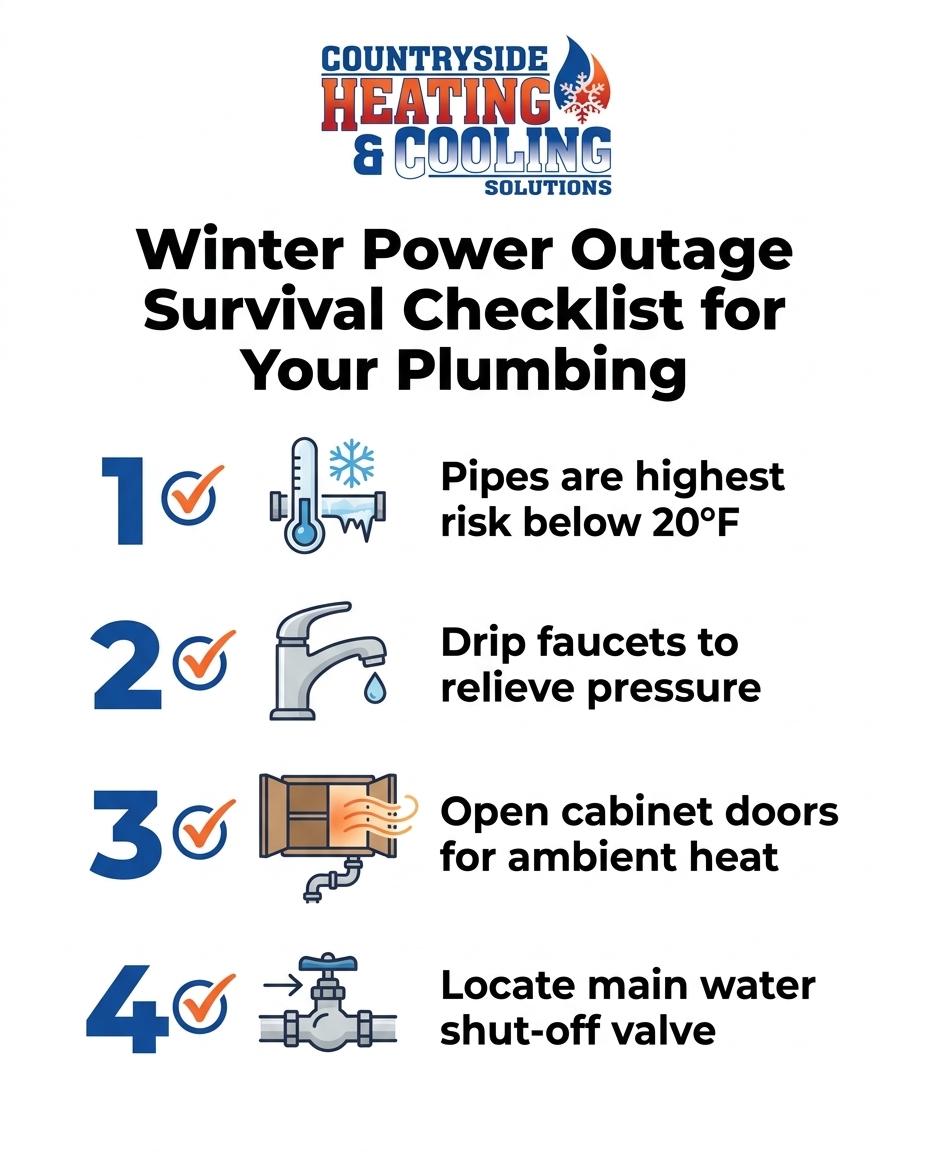
Pipes are most at risk when the outside temperature drops below 20 degrees Fahrenheit. At this critical threshold, uninsulated lines in exterior walls, crawl spaces, and attics begin to rapidly cool. A home that might stay relatively warm for a day during a mild frost can reach freezing internal temperatures in a matter of hours during a sub-zero deep freeze.
The Reality of Rapid Heat Loss
Heat always moves toward cold. During a grid failure, your home immediately begins transferring its stored warmth to the freezing air outside. Wind chill and structural drafts act like vacuums, pulling warm air out of your living spaces while forcing freezing air into the cavities where your plumbing resides.
Second-story plumbing and pipes routed through exterior walls usually freeze first. Because these areas lack the residual warmth of the home's foundation and are exposed to external winds, they cross the freezing threshold much faster than central plumbing lines.
• Mild Frost — Outside Temp: 30°F to 32°F — Home Heat Loss Rate (Without Power): Gradual (Typically 24+ hours to reach internal freezing) — Pipe Freezing Risk: Low to Moderate
• Standard Freeze — Outside Temp: 20°F to 29°F — Home Heat Loss Rate (Without Power): Moderate (12 to 24 hours to reach internal freezing) — Pipe Freezing Risk: High (Exterior walls vulnerable)
• Deep Freeze — Outside Temp: Below 0°F — Home Heat Loss Rate (Without Power): Rapid (Often under 12 hours to reach internal freezing) — Pipe Freezing Risk: Severe (Immediate action required)
Why Plumbing Fails Below 20°F
The actual bursting of a pipe is rarely caused by the ice expanding exactly where it freezes. Instead, it is a matter of hydraulic pressure. As standing water freezes, it expands. This ice blockage acts like a plug in the line.
The pressure buildup: As more water freezes and expands behind the ice blockage, it drastically increases the water pressure between the ice and the closed faucet. Eventually, this trapped pressure exceeds the structural limits of the copper, PEX, or PVC pipe, causing a violent rupture. Standard insulation slows this process down, but without an active heat source during an extended outage, it cannot prevent it entirely.
Your Pre-Season Checklist: Proactive Steps Before the Ground Freezes
Early fall is your opportunity to fortify your home's defenses. September pre-heating-season prep allows you to comfortably inspect your property, purchase necessary supplies, and make adjustments without the panic of an impending storm. Follow this checklist to secure your plumbing.
• Disconnect exterior hoses: Remove all garden hoses from outdoor spigots. Trapped water in a hose can freeze and push ice back into the home's interior plumbing.
• Install frost-proof covers: Place insulated foam covers over all exterior spigots to provide a buffer against the wind.
• Apply foam pipe insulation: Wrap exposed plumbing in unheated areas—such as basements, attics, and garages—with high-quality foam pipe sleeves.
• Seal visible drafts: Walk the perimeter of your home and use caulk or expanding foam to seal gaps where cold air penetrates near plumbing lines.
• Map your plumbing: Review your home's layout to identify the most vulnerable routes, making a physical note of where pipes run along exterior walls.
Inspecting Exposed Pipe Routes
Start your inspection in the lowest unheated zones of your home. Crawl spaces and unfinished basements are notorious for harboring exposed pipes. When selecting foam pipe sleeves, choose the highest R-value you can find. The thicker the insulation, the longer it takes for the cold to penetrate the pipe during an outage. Ensure you tape the seams of the insulation so no bare pipe is left exposed to the ambient air.
Sealing Drafts and Evaluating Insulation
Even the thickest pipe insulation will fail if a draft is blowing directly on it. Use weatherstripping around basement windows and exterior doors to block freezing air from entering the home. Additionally, evaluate your attic insulation. While attic insulation primarily keeps your home warm, a well-insulated attic retains whole-home heat significantly longer during a grid failure, indirectly protecting the plumbing below.
Immediate Actions to Take the Moment the Grid Fails
When the power goes out during a deep freeze, the clock starts ticking. Surviving the initial hours requires immediate, deliberate actions to conserve heat and keep water moving. Do not wait for the house to feel cold before executing these steps.
1. Turn on faucets to a slow drip: Open both the hot and cold valves slightly on faucets furthest from your main water line. Moving water is significantly harder to freeze, and the open valve relieves the dangerous pressure buildup if an ice blockage does form.
2. Open kitchen and bathroom cabinet doors: Expose the plumbing under your sinks to the room's ambient air. This allows whatever warmth remains in the house to circulate around these vulnerable pipes.
3. Isolate your family in a central room: Choose an interior room with few windows. Close all other interior doors to trap ambient and body heat in one localized area.
4. Keep exterior doors tightly closed: Minimize trips outside. Every time an exterior door opens, a massive amount of residual heat escapes, accelerating the timeline to freezing.
5. Monitor indoor temperatures: Keep a battery-powered indoor thermometer nearby. If the internal temperature of your home approaches 40°F, it is time to escalate your plan to shutting down the water system entirely.
The Science Behind Dripping Faucets
Many homeowners misunderstand the purpose of dripping a faucet. While moving water does resist freezing longer than stagnant water, the primary benefit is pressure relief. If a pipe in a Maple Plain, MN exterior wall does freeze during an outage, the open faucet provides an escape route for the expanding water pressure, often preventing the pipe from bursting even if it freezes solid.
Maximizing Ambient Circulation
Removing obstacles in front of your open cabinets is crucial. Move trash cans, cleaning supplies, and storage boxes out from under the sink so the ambient room heat has an unobstructed path to the pipes. If you have battery-operated fans, placing one on a low setting to blow room air directly into the cabinet can buy you valuable hours.
Mastering Your Main Water Shut-Off (and When to Use It)
If a power outage stretches into multiple days and your home's internal temperature drops dangerously close to freezing, the safest course of action is to shut off your water supply and drain the pipes. Locating your main water shut-off valve in September, long before an emergency requires fumbling in the dark with a flashlight, is a cornerstone of seasonal preparation.
This is especially critical if you travel during the colder months. A typical pattern we see is a homeowner returning from a late fall or winter vacation only to discover a broken furnace and flooded basement. One local customer reached out upon returning from vacation to find their furnace had stopped working entirely. Because they had prepared their home and knew exactly how to manage their water system, they avoided catastrophic plumbing damage while our technician came out quickly to service the furnace and restore heat.
Locating the Valve Before an Emergency
Your main water shut-off valve is typically located in the basement, crawl space, or utility room, near where the primary water line enters the foundation. During your September pre-heating-season prep, locate this valve. Tag it with bright tape or a brightly colored tag so anyone in the family can find it instantly. Test the valve gently to ensure it turns smoothly and hasn't seized up from years of inactivity.
Draining the System
Once the main valve is shut off, you must remove the remaining water from the pipes. Start at the highest floor of your home and open all the faucets, both hot and cold. Work your way down to the basement or lowest level, opening every tap along the way. Flush all the toilets to empty the tanks and bowls. Finally, ensure you understand the requirements for water heater protection, as secondary water systems also need to be isolated or drained safely to prevent internal tank damage when the power is out.
Why a Healthy HVAC System is Your First Line of Defense
Your plumbing's survival during a winter grid failure is directly tied to your heating system's performance before the outage occurs. A well-maintained furnace or heating system delays the critical freezing point by retaining a higher core temperature in the home's thermal mass—the walls, floors, and furniture. If your system is struggling, your home starts at a disadvantage the moment the grid fails.
Extreme cold is unforgiving. We frequently see the dangers of system neglect when severe weather hits. For instance, one Maple Plain area homeowner experienced a complete heating failure during an extremely cold weekend when temperatures dropped to 10 below zero outside. Our on-call technician arrived within an hour and restored the heat promptly, but surviving that hour required the homeowner to rely heavily on the ambient heat their system had managed to generate before failing.
Pre-Season Tune-Ups vs. Emergency Calls
At Countryside Heating & Cooling Solutions, our commitment to community safety drives us to encourage proactive pre-season assessments. Identifying failing components in September reduces the strain on emergency services during a blizzard. Whether you rely on traditional furnaces or modern heat pump systems, having a professional evaluate your equipment ensures it operates at peak efficiency, giving your home the maximum thermal buffer possible if the power cuts out.
If you utilize alternative fuel sources, understanding the nuances of your equipment is vital. For example, preparing propane furnaces for a deep freeze involves specific fuel level checks and regulator inspections that must be handled well before the snow flies.
The Limits of DIY Maintenance
While homeowners should absolutely take charge of insulating pipes and sealing drafts, internal HVAC repairs require a licensed professional. Opening a furnace panel to attempt electrical fixes or bypassing safety switches is incredibly dangerous. Modern heating systems contain high-voltage components and complex combustion chambers. Relying on licensed experts for true system resilience guarantees your equipment will operate safely and reliably when you need it most.
Secure Your Peace of Mind Before Winter Hits
Surviving a winter power outage without bursting pipes requires early preparation, not just reactive panic. By understanding the rapid heat loss associated with sub-zero temperatures, insulating your vulnerable plumbing, and knowing exactly how to execute an emergency shutdown, you protect your property from devastating water damage.
September is your action month. Do not wait until the ground freezes and the first major storm is on the radar. Take the time during this September pre-heating-season prep window to secure your plumbing, review your emergency plans, and schedule a professional assessment of your heating system. Proactive steps taken today will ensure your home remains a safe, resilient haven all winter long.
Frequently Asked Questions
How long does it take for pipes to freeze without power?
It depends entirely on the outside temperature and your home's insulation, but in sub-zero deep freezes, pipes can freeze in as little as 12 to 24 hours. Exterior wall plumbing and uninsulated pipes in crawl spaces will freeze much faster than interior lines. Monitoring your home's internal temperature is critical to knowing when to take emergency action.
Should I turn off my water if the power goes out in winter?
If the outage is expected to last multiple days and the internal temperature of your home is dropping toward 40°F, shutting off the water is the safest choice. Once you turn off the main valve, you must open all faucets to drain the remaining water from the system. This prevents pressure from building up and bursting the pipes as the house freezes.
At what temperature do pipes freeze?
Water freezes at 32°F, but pipes inside a home typically do not face severe freezing risks until the outside temperature drops to 20°F or lower. At this threshold, the ambient cold penetrates exterior walls and unheated spaces rapidly. Wind chill can accelerate this process by pulling heat out of the structure.
How do you keep a house warm during a winter power outage?
Conserve the heat you already have by closing all exterior doors, sealing drafts with rolled-up towels, and closing blinds or curtains. Gather your family in a single, central room with few windows and close the door to trap body and ambient heat. Do not use outdoor heating equipment like grills or unvented gas generators indoors, as they produce deadly carbon monoxide.
Can I use antifreeze in my plumbing lines to prevent freezing?
You should never use automotive antifreeze in your home's plumbing, as it is highly toxic and will contaminate your drinking water. There are specific, non-toxic plumbing antifreezes available for winterizing vacant homes or cabins, but these are typically poured into drain traps (like toilets and sink P-traps), not the pressurized supply lines.
Is it safe to use a camp stove indoors for heat during an outage?
No, it is never safe to use a camp stove, outdoor gas grill, or charcoal grill indoors for heat. These devices consume oxygen and produce high levels of carbon monoxide, which is odorless, colorless, and lethal. Always rely on safe, indoor-approved emergency heating methods like heavy blankets, sleeping bags, and trapping existing ambient heat.
