.webp)

The Hidden Threat to Your Air Conditioner in Late Summer
Your outdoor unit is running nonstop, but the house still feels warm—or worse, the system just completely shut down during the hottest part of the afternoon. If you are trying to figure out exactly why Maple Plain's cottonwood trees are wreaking havoc on your AC condenser, the answer lies in the thick, suffocating blanket of "summer snow" wrapping around your exterior equipment. Every August, our team at Countryside Heating & Cooling Solutions sees late-summer environmental debris create a massive barrier to airflow, mimicking the symptoms of a catastrophic mechanical failure and leaving homeowners sweltering.
Before you assume the worst about your compressor, it is critical to understand the difference between a dead system and an environmental blockage. For immediate assistance with your air conditioning system, you can schedule HVAC service to have a professional diagnose the exact cause of the shutdown.
The late-summer phenomenon: August late-summer cottonwood shedding creates a unique hazard for exterior HVAC units. The fluffy seeds drift through the air and are aggressively pulled into the condenser cabinet by the system's powerful exhaust fan. Over just a few weeks, we often see this debris weave itself into a dense, felt-like mat across the delicate aluminum fins of the coil. This immediate, concrete problem prevents the unit from "exhaling" the heat it removes from your home, forcing the entire system to work harder, run hotter, and eventually trigger emergency safety shutdowns just as you transition into back-to-school season and need reliable cooling the most.
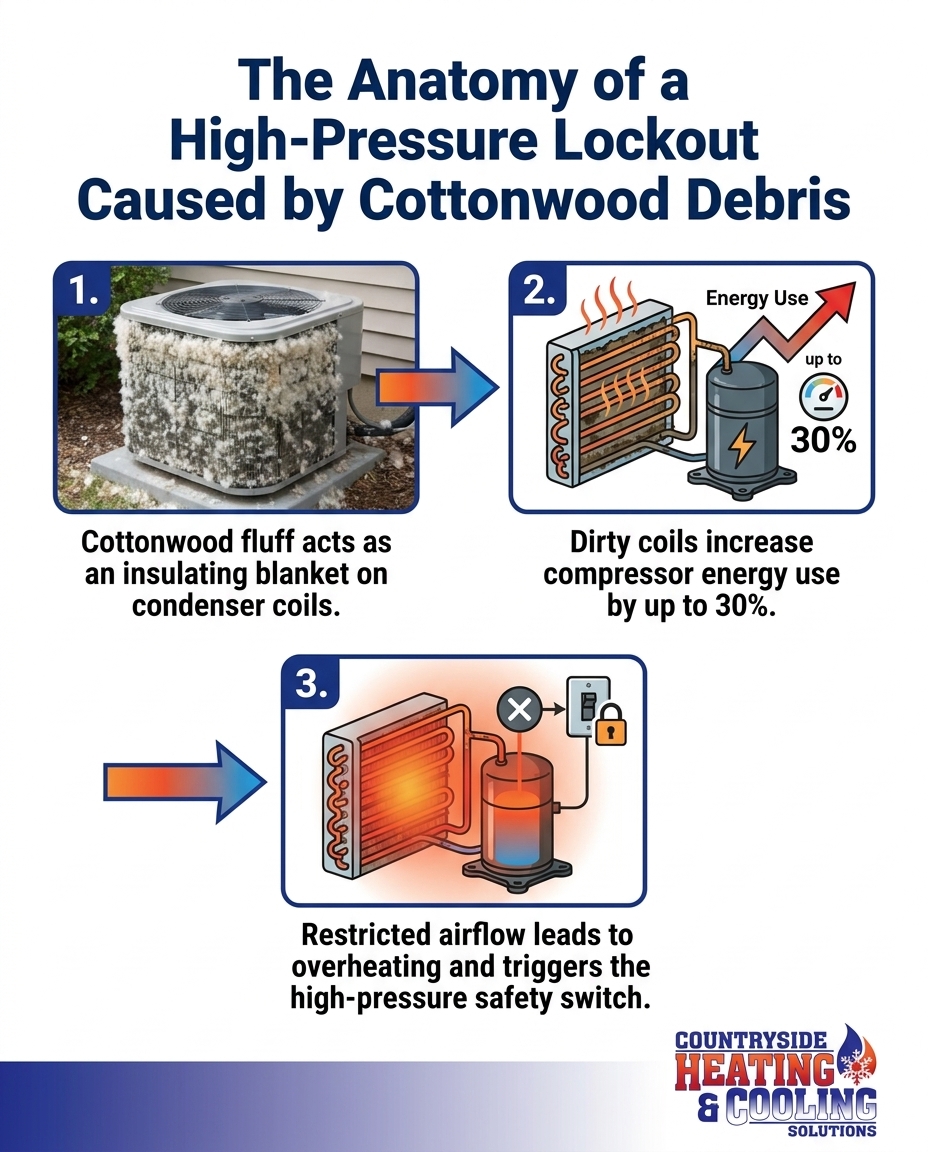
The Anatomy of a High-Pressure Lockout
To understand why a layer of fluff can bring a three-ton piece of machinery to a grinding halt, you have to look at how the condenser coil actually functions. The outdoor unit's primary job is to release the heat collected from inside your home into the outside air. It does this by pumping hot, pressurized refrigerant through a series of coils while a large fan pulls ambient air across them to carry the heat away.
When cottonwood fluff acts as an insulating blanket, it traps that heat inside the unit. The mechanical sequence of failure happens rapidly:
1. Restricted Airflow: The fan continues to spin, but the dense mat of seeds prevents fresh air from passing through the aluminum fins.
2. Heat Accumulation: Because the heat cannot escape, the temperature of the refrigerant inside the coils begins to skyrocket.
3. Pressure Spike: As the temperature of the refrigerant rises, its pressure increases dramatically, pushing the compressor to its absolute limits.
4. System Overload: According to data from the U.S. Department of Energy, dirty condenser coils can increase compressor energy consumption by up to 30%, forcing the motor to draw excessive electrical current.
How Safety Switches Protect Your Compressor
When the pressure inside the system reaches a critical danger zone, a built-in safety mechanism called the high-pressure switch trips, instantly cutting power to the compressor. This sudden shutdown is known as a high-pressure lockout. While it is frustrating to lose your cooling, this switch is actually saving your system from permanent, irreversible damage.
High-pressure system lockouts are a protective measure. When this happens, the indoor fan might still blow, but the air will be room temperature because the outdoor compressor has been disabled. Understanding the difference between a dirty coil and low refrigerant is crucial at this stage, as both can cause warm air to blow from your vents, but they require entirely different professional solutions.
Why Maple Plain's Flora Creates a Unique HVAC Hazard
The local environment plays a massive role in how your air conditioner performs. Maple Plain MN and the surrounding areas are home to a high population of Eastern Cottonwood trees. While beautiful, these trees produce prolific amounts of seed fluff that easily bypass standard exterior unit guards. In our years of servicing local neighborhoods, we've found that the seeds are incredibly fine, allowing them to slip through the protective louvers and stick directly to the condensation-covered coils.
This creates a hyper-local hazard that requires specific awareness from residents. The timing of the cottonwood shedding perfectly aligns with the peak cooling demand in August. Late-summer heat waves in August combine with this accumulated "summer snow" to create a double-threat. Just as the outdoor temperatures soar and your home requires maximum heat transfer to stay cool, the cottonwood blanket drastically reduces the system's ability to reject heat.
The local compounding effect:
• Wind patterns: Late summer breezes carry the lightweight fluff across yards, often depositing it directly into the draft created by the AC fan.
• Moisture adhesion: Condenser coils often have slight moisture or existing dust on them, giving the cottonwood seeds a perfect surface to cling to.
• Layering: Once the first layer of fluff sticks, it acts like a filter, catching grass clippings, dirt, and more seeds until it forms a solid, impenetrable mat.
Because this threat is so unique to the region's flora, standard maintenance schedules that only call for spring cleaning often fall short. By late August, our technicians routinely find condensers that were perfectly clean in May completely suffocated by this debris.
Signs Your System is Suffocating (Not Dying)
When an air conditioner stops working, the immediate fear is a dead compressor, which is one of the most expensive repairs a homeowner can face. However, if your system is suffering from a cottonwood blockage, the symptoms will point to a need for a thorough cleaning rather than an expensive replacement. Recognizing the signs of high-pressure system lockouts can save you significant stress.
We see this exact scenario frequently. Recently, a local homeowner reached out to our Countryside team when their AC unit stopped working unexpectedly during an unseasonably warm stretch. They assumed the unit was completely dead and needed same-day service to restore comfort. Upon arrival, our technician found the system had simply locked itself out due to a severe blockage. Once the debris was cleared and the system was serviced, the AC was repaired quickly and accurately, blowing ice-cold air again the same day.
Here is a checklist of indicators that your system is suffocating:
• Visual indicators: Look through the outer grates of your exterior unit. If you see a visible layer of white fuzz, gray dirt, or debris coating the delicate aluminum fins, airflow is severely restricted.
• Performance indicators: You may notice short cycling, where the unit turns on, runs for a few minutes, and then turns off rapidly before the house is cool. You might also experience sudden unexpected shutdowns during the hottest part of the day when the system is under the most stress.
• Comfort indicators: The indoor fan runs continuously, but the air coming out of the vents feels lukewarm or room temperature because the outdoor compressor has locked out.
• System Power — Mechanical Failure: Trips the main electrical breaker constantly. — Suffocating Coil (Cottonwood): Breaker remains on, but the outdoor unit stops running.
• Airflow Quality — Mechanical Failure: No air blowing from indoor vents at all. — Suffocating Coil (Cottonwood): Lukewarm air blowing from vents (compressor locked out).
• Visual Inspection — Mechanical Failure: Coils appear relatively clear of debris. — Suffocating Coil (Cottonwood): Thick blanket of white "summer snow" on the exterior fins.
The Dangers of DIY: Why Hosing Off Your Unit Isn't Enough
When homeowners spot a thick blanket of August late-summer cottonwood shedding on their AC unit, the immediate instinct is to grab a garden hose and blast it away. This is a dangerous false economy that our technicians see cause extensive, irreversible damage to equipment every season.
The concrete effect: Spraying high-pressure water directly onto a cottonwood-clogged coil does not wash the debris away. Instead, it forces the fine seeds, dirt, and organic matter deeper into the microscopic gaps between the aluminum fins. When this mixture of water, dirt, and seed fluff dries, it hardens into a dense, concrete-like blockage deep inside the coil where you can no longer see it. What started as a surface airflow issue becomes a permanent internal restriction.
Fragile aluminum fins: The fins on your condenser coil are incredibly thin—often thinner than a piece of paper. The water pressure from a standard garden hose nozzle is more than enough to bend and flatten these fins. Once the fins are flattened, they block airflow entirely, effectively ruining the heat transfer capability of that section of the unit.
Electrical hazards: Modern air conditioners house high-voltage electrical components, capacitors, and complex control boards. Mixing water with these components without proper training and specialized equipment poses a severe safety risk. Deep coil cleaning requires a licensed professional who understands how to isolate the electrical components, apply the correct chemical solutions, and safely extract the debris without damaging the unit.
What a Professional Deep Clean Actually Involves
Restoring a suffocated air conditioner requires much more than a quick rinse. A professional deep clean is a meticulous process designed to dissolve organic debris, restore optimal airflow, and ensure the system's internal safeties are functioning correctly.
When our technicians arrive for routine heating and cooling check-ups during the peak summer season, they perform a comprehensive evaluation. In one recent service call, our technician Nick Brose inspected a local system, thoroughly explained the necessary work to clear the environmental blockages, and ensured the homeowner was fully informed about the status of their equipment before proceeding.
Here is what a professional intervention for AC maintenance in Maple Plain actually involves:
1. Safe electrical isolation: The technician completely disconnects high-voltage power to the unit to ensure safe working conditions and protect the control boards from moisture.
2. Specialized chemical application: Instead of high-pressure water, technicians use specialized, non-acidic foaming coil cleaning solutions. This chemical foam is applied directly to the fins, where it expands and actively pushes the cottonwood debris and dirt outward from deep inside the coil.
3. Low-pressure extraction: Once the foam has lifted the organic matter, the technician uses a controlled, low-pressure rinse to safely wash the dissolved debris away without bending the fins.
4. Fin combing and straightening: If any fins were previously bent by hail, debris, or improper DIY cleaning attempts, the technician uses a specialized fin comb to carefully straighten them, restoring full airflow capacity.
5. System reset and verification: After the unit is clean and reassembled, the technician verifies the refrigerant pressures, checks the electrical draw on the compressor, and resets any high-pressure safety switches. This comprehensive inspection ensures that no underlying mechanical damage occurred during the lockout period.
Having a team with firsthand knowledge of how regional flora impacts HVAC efficiency means you get a service tailored to the exact challenges of Maple Plain MN. A technician who understands the local environment knows exactly what to look for and how to protect your system against the next wave of summer snow.
Frequently Asked Questions
Why is my AC compressor shutting off outside?
Your AC compressor is likely shutting off due to a triggered safety mechanism, such as a high-pressure switch. When the condenser coils are blocked by dirt or cottonwood fluff, the system cannot release heat, causing internal pressures to spike. The switch cuts power to the compressor to prevent the motor from burning out, even while the indoor fan continues to run.
Can cottonwood damage my AC unit?
Yes, excessive cottonwood fluff can cause significant indirect damage to your AC unit if left unaddressed. The fluff creates an insulating blanket over the coils, forcing the compressor to work much harder and run much hotter than designed. Over time, this excessive strain can lead to premature wear, increased energy consumption, and eventual mechanical failure.
What causes an AC high-pressure lockout?
An AC high-pressure lockout is caused by a severe restriction in airflow across the outdoor condenser coils. This restriction prevents the hot refrigerant from cooling down, leading to a rapid buildup of pressure inside the closed system. Common culprits include thick blankets of cottonwood seeds, heavy dirt accumulation, or a failing outdoor fan motor.
How often should Maple Plain homeowners clean their exterior AC units?
Homeowners in areas with heavy tree coverage should schedule professional maintenance at least once a year, typically in the spring. However, because of the heavy cottonwood shedding in late summer, a mid-season visual inspection is highly recommended. If you notice a thick white blanket forming on the coils in August, a secondary professional cleaning may be necessary to ensure the system survives the hottest weeks of the year.
Is a high-pressure lockout permanent or can it be reset?
A high-pressure lockout is a temporary safety measure, but it often requires a professional to reset safely. Some systems will attempt to reset automatically once the pressure drops, which leads to damaging short-cycling if the underlying blockage isn't cleared. A licensed technician must resolve the airflow issue—like removing the cottonwood blanket—and manually verify the system pressures before restoring normal operation.
When the late-summer heat bears down, the last thing you want is for environmental debris to force your cooling system into a sudden shutdown. By understanding how local flora impacts your equipment and recognizing the signs of a suffocating unit, you can act quickly to restore your home's comfort. Don't wait for a high-pressure lockout to leave you in the heat; schedule HVAC service today for a professional deep clean that ensures your system runs efficiently all season long.
