.webp)

Why Minnesota's Climate Is One of the Hardest on HVAC Systems in the Country
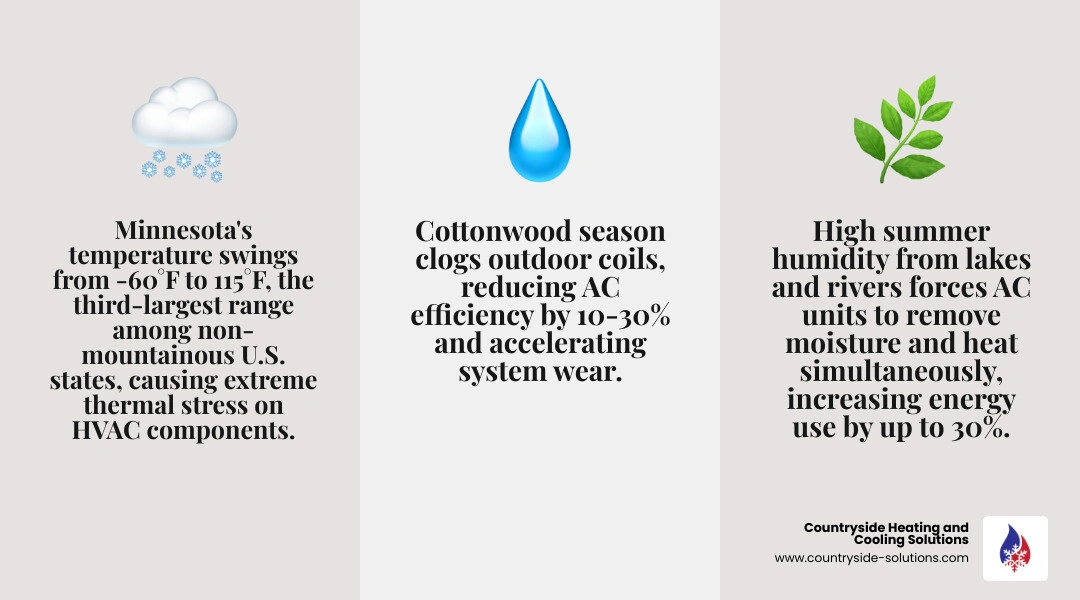
How Minnesota climate affects your HVAC system comes down to one core reality: no other non-mountainous state pushes heating and cooling equipment harder. The Twin Cities swing from brutal subzero winters to hot, sticky summers — a temperature range spanning from -60°F to 115°F, the third-largest among non-mountainous U.S. states. That's not just uncomfortable for you. It's punishing for your furnace, air conditioner, ductwork, and everything in between.
Here's a quick breakdown of the main ways Minnesota's climate stresses your HVAC system:
• Extreme winter cold forces furnaces to run longer and harder, accelerating wear on heat exchangers, blower motors, and burners
• Subzero temperatures can freeze exhaust vents, triggering safety shutdowns and leaving your home without heat
• High summer humidity — driven by Minnesota's many lakes and rivers — forces AC systems to work double duty removing moisture and heat at the same time
• Cottonwood season clogs outdoor AC coils, cutting efficiency by 10–30%
• Seasonal transitions require your system to switch rapidly between heating and cooling modes, adding mechanical stress
• Tightly sealed winter homes trap stale air, moisture, and allergens without proper ventilation
• Dust and debris accumulate faster in systems running nearly year-round, reducing airflow and indoor air quality
If you live in the Minneapolis–Saint Paul metro, your HVAC system isn't just a comfort appliance — it's a survival tool that operates under near-constant demand. Understanding what it's up against is the first step to protecting it.
How Minnesota Climate Affects Your HVAC System Performance
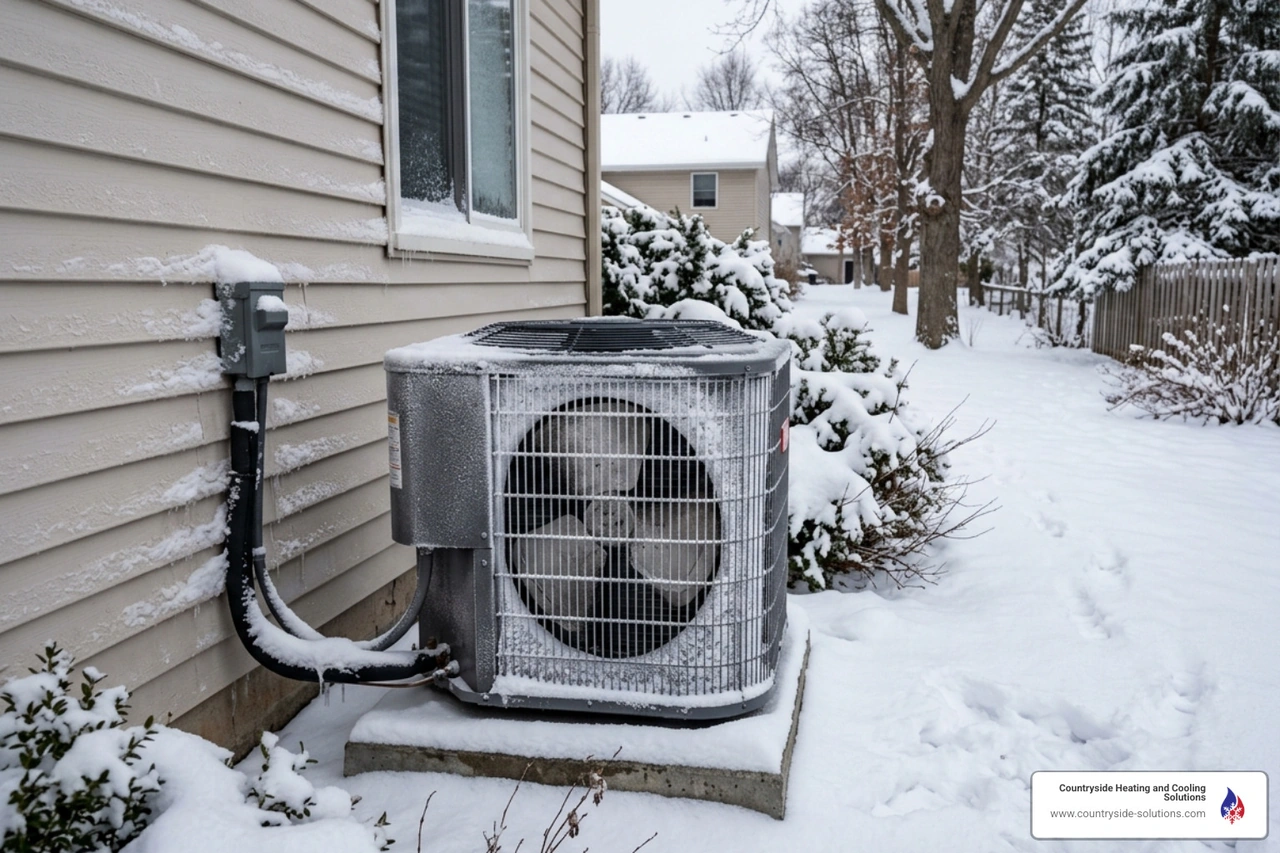
When we talk about how Minnesota climate affects your HVAC system, we are really talking about "mechanical endurance." In milder states, an HVAC system might take a "nap" during the spring and fall. In places like Maple Plain, Minnetonka, or Wayzata, our systems are often running 24/7, 365 days a year.
This creates immense mechanical strain. Metals expand and contract rapidly as they heat up to combat a -20°F morning and then cool down. This thermal stress can lead to hairline fractures in heat exchangers or brittle seals in refrigerant lines. Because we live in Climate Zone 6, our equipment faces a workload that would cause a system in Florida or Texas to give up the ghost within a few years.
To give you an idea of the sheer scale of the demand, look at how we compare to warmer regions:
• Furnace Sizing (2,000 sq. ft. home) — Minnesota (Climate Zone 6): 90,000 – 120,000 BTUs — Texas (Climate Zone 2): 40,000 – 60,000 BTUs
• Heating Season Duration — Minnesota (Climate Zone 6): 6 – 7 Months — Texas (Climate Zone 2): 2 – 3 Months
• Primary HVAC Stressor — Minnesota (Climate Zone 6): Subzero cold & High Humidity — Texas (Climate Zone 2): Extreme Heat
• Ideal Furnace Efficiency — Minnesota (Climate Zone 6): 96% – 98% AFUE — Texas (Climate Zone 2): 80% AFUE
Because of these high demands, our hvac services are specifically designed to handle "North Country" problems. We aren't just looking for basic functionality; we’re looking for the kind of reliability that keeps your family safe when the wind chill hits dangerous levels.
Winter Extremes: Furnaces and Frozen Vents
In April 2026, we’ve already seen how unpredictable our winters can be. When the mercury drops, your heating system becomes the most important machine in your home. In Minnesota, proper furnace sizing is a matter of safety. A 2,000 sq. ft. home in our area typically requires a furnace capable of producing 90,000 to 120,000 BTUs. If your system is undersized, it will run continuously without ever reaching the set temperature, leading to a premature blower motor failure.
One of the most common "silent killers" of furnace performance during a cold snap is the pressure switch. High-efficiency furnaces use plastic pipes to vent exhaust. If these vents aren't sloped correctly or if they become obstructed, moisture can freeze inside them. This creates a blockage that triggers the pressure switch, which tells the furnace to shut down immediately for safety. It’s a great safety feature, but it’s the last thing you want to happen at 2:00 AM on a Friday night.
Preventing Frozen Coils and Vents in the Minnesota Climate
Ice is the enemy of airflow. During our harsh winters, we often see "frozen exhaust traps." This happens when the warm, moist air exiting your high-efficiency furnace hits the frigid outdoor air and instantly crystallizes into ice at the vent opening.
To prevent this, we recommend:
1. Visual Inspections: After a heavy snowfall or a sustained cold snap, put on your boots and walk around the side of your house. Ensure your intake and exhaust pipes are clear of snowdrifts and icicles.
2. Combustion Safety: Never "patch" a cracked vent pipe with duct tape. The extreme cold makes the tape fail, and you risk carbon monoxide entering your home.
3. Check the FAQ: If your furnace stops suddenly, check our Hvac FAQ for troubleshooting steps before panic sets in.
Summer Humidity and the Cottonwood Trap
Just when you think your Air Conditioning system is safe because winter is over, Minnesota summer arrives. Our state’s 10,000+ lakes contribute to a "latent heat" problem—otherwise known as thick, sticky humidity.
Your AC has two jobs: lowering the temperature and removing moisture. In high humidity, the evaporator coil has to work overtime to wring water out of the air. If the humidity is too high, the system may struggle to keep up, leading to "short cycling," where the AC turns on and off rapidly. This doesn't just make you feel clammy; it spikes your electricity bill.
Then there’s the "Cottonwood Trap." In the Twin Cities, cottonwood seeds usually stop falling around the Fourth of July. These fluffy white seeds act like a blanket for your outdoor condenser unit. They get sucked into the fins, trapping heat inside the machine. A system battling cottonwood blockage can consume 10-30% more electricity just to achieve the same cooling effect. If left uncleaned, the compressor will eventually overheat and fail.
Managing High Humidity and Indoor Air Quality in the Minnesota Climate
High humidity isn't just a comfort issue; it's a structural one. When moisture levels in your home stay above 60%, you run the risk of mold and mildew growth inside your ductwork. Because Minnesota homes are built so tightly to keep the heat in during winter, they often lack the "breathability" needed to shed moisture in the summer.
This is why we emphasize the Importance Of Proper Ventilation. Without a way to exchange stale, humid indoor air for fresh air, your home becomes a greenhouse for allergens and dust mites. Seasonal debris like pollen and those pesky cottonwood seeds can also find their way into your system, further degrading your indoor air quality.
Climate-Adapted Solutions for Year-Round Comfort
So, how do we fight back against a climate that is trying to destroy our machinery? We use technology adapted for the North.
One of the best solutions for modern Minnesota homes is an Energy Recovery Ventilator (ERV) or a Heat Recovery Ventilator (HRV). These systems allow you to bring in fresh outdoor air without losing your expensive heated or cooled air. In the winter, an HRV takes the heat from the outgoing stale air and applies it to the incoming fresh air. It’s like opening a window without the 20-below breeze.
In our Hvac Blog, we often discuss the importance of whole-home humidifiers. During a Minnesota winter, indoor humidity can drop to 10%—drier than the Sahara Desert! This leads to static shocks, bloody noses, and cracked wood furniture. We recommend keeping your winter humidity between 30-40%. Any higher, and you’ll see frost forming on your windows; any lower, and you’ll be reaching for the lotion every five minutes.
For those looking to upgrade, cold-climate heat pumps and dual-fuel systems are the gold standard. A dual-fuel system uses an electric heat pump for moderate days and switches to a gas furnace when temperatures plummet. This setup is incredibly efficient and can often qualify for Blog/Minnesota Energy Rebates For Hvac Upgrades.
The Critical Role of Maintenance in the North
In a milder climate, you might get away with skipping a tune-up. In the Twin Cities, a neglected HVAC system is a ticking time bomb. A well-maintained furnace can last 15 to 20 years, but a neglected one might require a full replacement after just 10 to 12 years due to the extreme stress of our winters.
Our Annual Hvac Maintenance Complete Guide highlights how regular service can lower your energy consumption by 5% to 15%. During a maintenance visit, our NATE-certified technicians do more than just change a filter. We check for heat exchanger cracks, clean the flame sensors, lubricate blower motors, and ensure your refrigerant levels are perfect for the upcoming humidity.
If you’re wondering How Do You Extend Your Hvac Life, the answer is simple: preventative care. Catching a worn belt or a failing capacitor in October is much easier (and cheaper) than dealing with a total system failure during a January blizzard.
Conclusion
Living in the Twin Cities means we have to be tougher than the weather, and our HVAC systems do too. From the cottonwood-filled summers of Maple Grove to the subzero nights in Independence and Medina, your comfort depends on a system that is sized correctly and maintained meticulously.
At Countryside Heating and Cooling Solutions, we’ve spent years serving our neighbors in Maple Plain, Wayzata, Minnetonka, and across the metro. We understand the unique ways the Minnesota climate tries to wear down your equipment. That’s why we offer NATE-certified expertise and guaranteed next-business-day service to ensure you’re never left out in the cold (or the heat).
For more tips on keeping your home running smoothly, check out our guide on hvac-maintenance-tips-for-minnesota-homeowners.
Why is my Minnesota AC struggling in high humidity?
In Minnesota, the "heat index" is often much higher than the actual temperature because of moisture from our lakes. When humidity is high, your AC prioritizes moisture removal over cooling the air. If your system is oversized, it might cool the house too quickly and shut off before it has a chance to dehumidify, leaving you feeling "cool but clammy." Proper sizing and a clean evaporator coil are essential for handling our sticky summers.
What are the signs that Minnesota’s climate is damaging my HVAC?
Keep an eye out for these red flags:
• Uneven temperatures: Some rooms are freezing while others are sweltering.
• Rising utility bills: A 20% spike without a change in weather usually means inefficiency.
• Unusual noises: Grinding or banging often points to thermal stress on moving parts.
• Frequent cycling: The system turns on and off every few minutes.
• Frozen components: Ice on your AC coils in summer or your furnace vents in winter.
How does furnace sizing differ in Minnesota compared to warmer states?
Because we are in Climate Zone 6, we require significantly more heating power per square foot than states like Texas (Zone 2). While a home in the South might only need 30-40 BTUs per square foot, a Minnesota home needs 50-60 BTUs per square foot. We also have to factor in our high-performance insulation and use Manual J calculations to ensure the system can handle a -20°F night without breaking a sweat.
