.webp)

Why Minnesota Homeowners Can't Afford to Skip HVAC Maintenance
HVAC maintenance tips for Minnesota homeowners are essential reading if you want to stay warm through a polar vortex, keep cool during a humid July, and avoid a costly emergency breakdown in between. Minnesota's climate is genuinely one of the most demanding in the country for home comfort systems — with heating seasons stretching six to seven months and design temperatures that can plunge to -16°F in the Twin Cities.
Here are the core HVAC maintenance steps every Minnesota homeowner should follow:
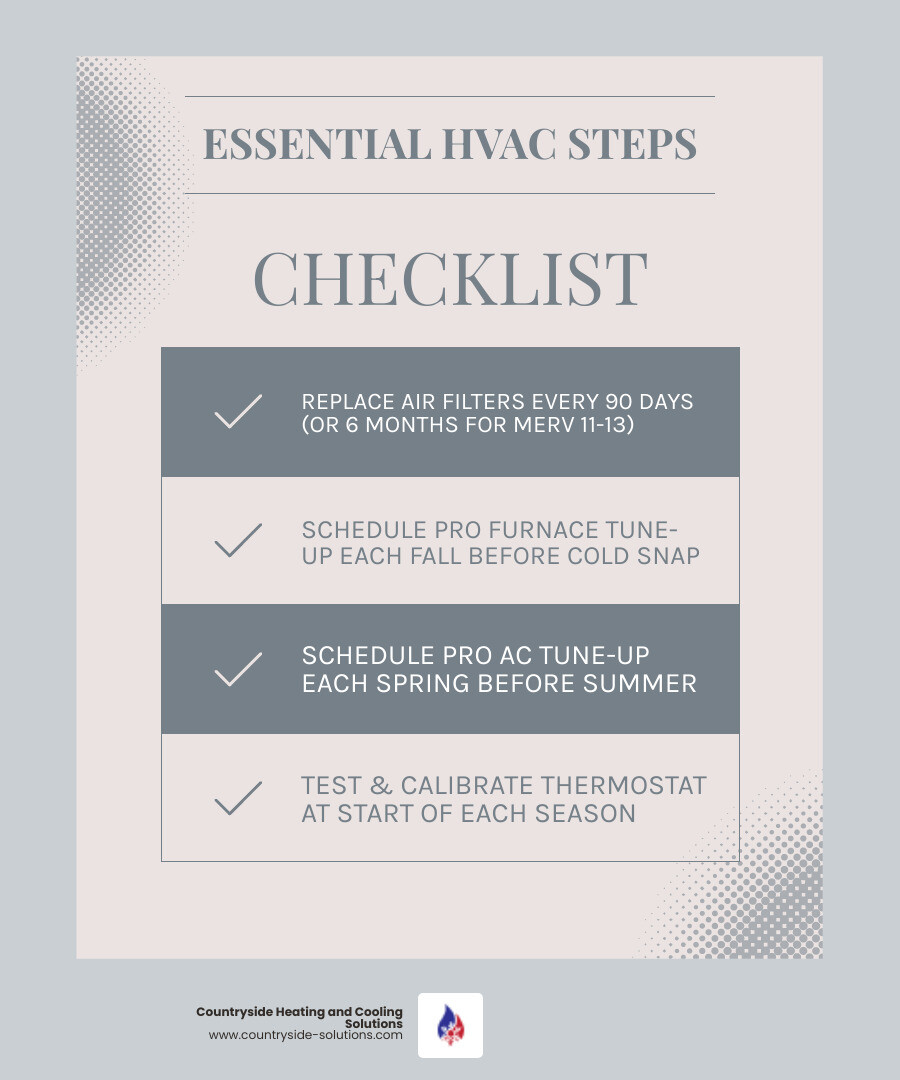
1. Replace air filters every 90 days (or up to 6 months for MERV 11-13 filters)
2. Schedule a professional furnace tune-up each fall before the first cold snap
3. Schedule a professional AC tune-up each spring before summer heat arrives
4. Test and calibrate your thermostat at the start of each season
5. Clear at least two feet of space around your outdoor AC or heat pump unit
6. Inspect and seal ductwork to prevent energy loss (leaky ducts can waste up to 30% of heating and cooling energy)
7. Test carbon monoxide detectors annually — required in Minnesota homes under Statute §299F.50
8. Keep your home above 55°F even when away to protect pipes from freezing
9. Maintain indoor humidity at 30-40% during winter with a whole-home humidifier
Heating and cooling account for more than half of the average household's energy use. In Minnesota, that number hits hard — because your furnace isn't taking a long winter nap, it's working almost constantly from October through April. About three-quarters of no-heat emergency calls in winter come down to one thing: lack of maintenance. Small, consistent actions throughout the year are what separate a reliable system from an expensive headache.
This guide walks you through exactly what to do, season by season, so your home stays comfortable, your energy bills stay manageable, and your HVAC system lasts as long as possible.
Why HVAC Maintenance is Essential for Minnesota’s Extreme Climate
In places like Maple Grove or Eden Prairie, we don't just have seasons; we have climate extremes. Our heating systems often run for nearly seven months of the year. When the design temperatures hit -16°F in the Twin Cities metro, your furnace isn't just a luxury—it is a critical safety system.
This sustained stress causes mechanical wear that homeowners in milder climates never have to worry about. Without regular care, components like the blower motor or the heat exchanger work harder than they were designed to, leading to a steady decline in efficiency. This means you pay more for less warmth. Even worse, ignoring maintenance is the primary cause of mid-winter "no-heat" calls. When the wind is howling at 2:00 AM in January, the last thing you want is a furnace that decides it’s had enough.
Proactive maintenance also protects your long-term investment. Most furnaces should last 15 to 20 years, but in Minnesota, that lifespan can be cut short by a decade if the system is choked by dust and neglected. By keeping the internal components clean and lubricated, we ensure your system lives a full, productive life. For more information on keeping your home warm, explore our heating services.
Seasonal HVAC Maintenance Tips for Minnesota Homeowners
Because our weather shifts so dramatically, your maintenance should follow a specific calendar. We break this down into four phases: pre-heating, active heating, pre-cooling, and active cooling.
Pre-Winter HVAC Maintenance Tips for Minnesota Homeowners
Before the first frost hits Wayzata or Minnetonka, your heating system needs a thorough "physical." A professional furnace inspection is the best insurance policy you can buy for your home. During this visit, we focus on the heat exchanger. A cracked heat exchanger is a serious safety hazard that can leak carbon monoxide into your living space.
Speaking of safety, Minnesota Statute §299F.50 requires carbon monoxide detectors in all dwellings. We recommend testing these monthly and replacing the batteries annually. If your detectors are more than seven to ten years old, it’s time for new ones.
Don't forget the thermostat. A thermostat that is off by even one degree can cause your system to cycle too frequently or not enough. We recommend testing yours by placing a separate glass thermometer next to it for 15 minutes to verify accuracy. If it’s time for an upgrade, a smart thermostat can pay for itself in energy savings within a year.
Spring and Summer HVAC Maintenance Tips for Minnesota Homeowners
When the snow finally melts in Chanhassen, it’s time to shift focus to cooling. Your outdoor AC condenser has likely spent months under a cover or buried in snow. Once the weather clears, ensure there is at least a two-foot clearance around the unit. Trim back any shrubs, hostas, or tall grass that might block airflow.
Inside, we check the evaporator coils and condensate drains. In Minnesota’s humid summers, a clogged drain line can quickly lead to water damage or mold growth. We also look at refrigerant levels; if they are low, it usually indicates a leak that needs professional repair rather than just a "top-off."
If you are currently using an older unit, pay attention to the SEER2 (Seasonal Energy Efficiency Ratio 2) rating. Modern units are significantly more efficient than those built even a decade ago. To learn more about staying cool, check out our air conditioning services.
DIY Steps to Maximize Efficiency and Indoor Comfort
While professional tune-ups are non-negotiable, there are several hvac maintenance tips for minnesota homeowners you can handle yourself to keep things running smoothly.
• The Filter Rule: This is the single most important DIY task. A dirty filter restricts airflow, forcing the motor to work overtime and potentially causing the system to overheat. Standard 1-inch filters should be checked every 30 days and replaced at least every 90 days. If you use high-efficiency MERV 11-13 filters, they can sometimes last up to 6 months, but homes with pets or allergies should stick to a tighter schedule.
• Clear the Vents: Take a walk through your home in Edina or Hopkins. Ensure that no supply registers or return grilles are blocked by furniture, rugs, or long curtains. Your system needs to "breathe" to maintain a balanced temperature.
• Seal the Envelope: Your HVAC system shouldn't have to heat the outdoors. Use weatherstripping and caulk to seal gaps around windows and doors. Stopping drafts can cut your heating bills by up to 10%.
• Check the Ducts: If you have exposed ductwork in your basement, look for loose joints or small holes. Use mastic sealant or metal foil tape—not standard cloth duct tape, which dries out and fails—to seal these leaks. Leaky ducts can waste up to 30% of your energy.
For those concerned about the air they breathe, our indoor air quality services can help you find the right filtration and purification solutions for your specific home.
Protecting Your Home Beyond the HVAC System
In Minnesota, HVAC care is closely tied to plumbing safety. When the temperature drops during a polar vortex, the risk of burst pipes skyrockets. A single burst pipe can cause thousands of dollars in damage in mere minutes.
To prevent this, never set your thermostat below 55°F, even if you are heading south for the winter. On particularly cold nights, open the cabinet doors under your kitchen and bathroom sinks to allow warm air to circulate around the plumbing. Always disconnect garden hoses and shut off exterior spigots before the first freeze.
Indoor air quality is another winter challenge. Cold air holds less moisture, leading to dry skin, static shocks, and even damage to wood flooring and furniture. We recommend maintaining a relative humidity of 30-40% using a whole-home humidifier. This makes the air feel warmer, allowing you to keep the thermostat a few degrees lower without losing comfort.
Comparing Cooling and Heating Options
As you plan for the future, it’s helpful to understand the different technologies available for Minnesota homes.
• Primary Function — Traditional Central AC: Cooling only — Cold-Climate Heat Pump: Heating and Cooling
• Energy Source — Traditional Central AC: Electricity — Cold-Climate Heat Pump: Electricity
• Efficiency — Traditional Central AC: High (SEER2 rated) — Cold-Climate Heat Pump: Ultra-High (moves heat vs. creating it)
• Winter Performance — Traditional Central AC: N/A — Cold-Climate Heat Pump: Operates down to -13°F to -22°F
• Best For — Traditional Central AC: Homes with a reliable furnace — Cold-Climate Heat Pump: Homes looking to reduce carbon footprint
Frequently Asked Questions about Minnesota HVAC Care
When should I consider replacing my furnace or AC?
If your furnace is between 15 and 20 years old, or your AC is over 15 years old, you are entering the "replacement zone." If you find yourself calling for repairs more than once every two years, or if your energy bills are rising despite regular maintenance, it’s time to look at high-efficiency upgrades. Modern cold-climate heat pumps are an excellent option for our region, as they can provide efficient heating even when temperatures drop to -22°F.
What are the signs that I need professional HVAC repair?
Don't ignore the "symptoms" of a failing system. Common red flags include:
• Strange Noises: Banging, squealing, or rattling often points to loose belts or failing motors.
• Short Cycling: If your furnace turns on and off every few minutes, it could be overheating or have a faulty sensor.
• Uneven Temperatures: If the living room is a sauna but the bedroom is an icebox, you likely have ductwork or airflow issues.
• Unusual Odors: A dusty smell at the start of the season is normal, but a metallic or burning smell requires an immediate shutdown and a professional call.
How do I prevent my pipes from freezing during a polar vortex?
Beyond keeping your thermostat at 55°F or higher, ensure that any pipes in unheated areas (like crawlspaces or attics) are properly insulated. If you have a room that stays particularly cold, keep the door open to encourage airflow. For ultimate peace of mind, consider installing a smart leak detection system that can alert your phone if it senses a drop in temperature or the presence of water.
Conclusion
Taking care of your home in the Minneapolis-Saint Paul metro area means staying one step ahead of the weather. By following these hvac maintenance tips for minnesota homeowners, you aren't just saving money on your monthly utility bills—you are protecting your family’s comfort and your home’s value.
At Countryside Heating and Cooling Solutions, we understand the unique pressures Minnesota winters put on your equipment. Our NATE-certified technicians are experts in forced-air furnaces, hydronic boilers, and the latest in cold-climate heat pump technology. Based in Maple Plain, we are proud to serve our neighbors from Minnetonka to Waconia and everywhere in between.
Whether you need a quick spring tune-up or a complete system replacement, we guarantee next-business-day service to keep your home running at its best. Don't wait for an emergency to find out if your system is ready for the next deep freeze.
Protect your home with a professional service plan today and enjoy the peace of mind that comes with knowing your HVAC system is in expert hands.
