.webp)

Why How HVAC Condition Affects Home Appraisals Could Cost You Thousands This Year
How hvac condition affects home appraisals is simple: appraisers evaluate your heating and cooling system's age, functionality, efficiency, and remaining useful life — and a failing or outdated system can reduce your home's appraised value by thousands of dollars.
Here is a quick summary of the key impacts:
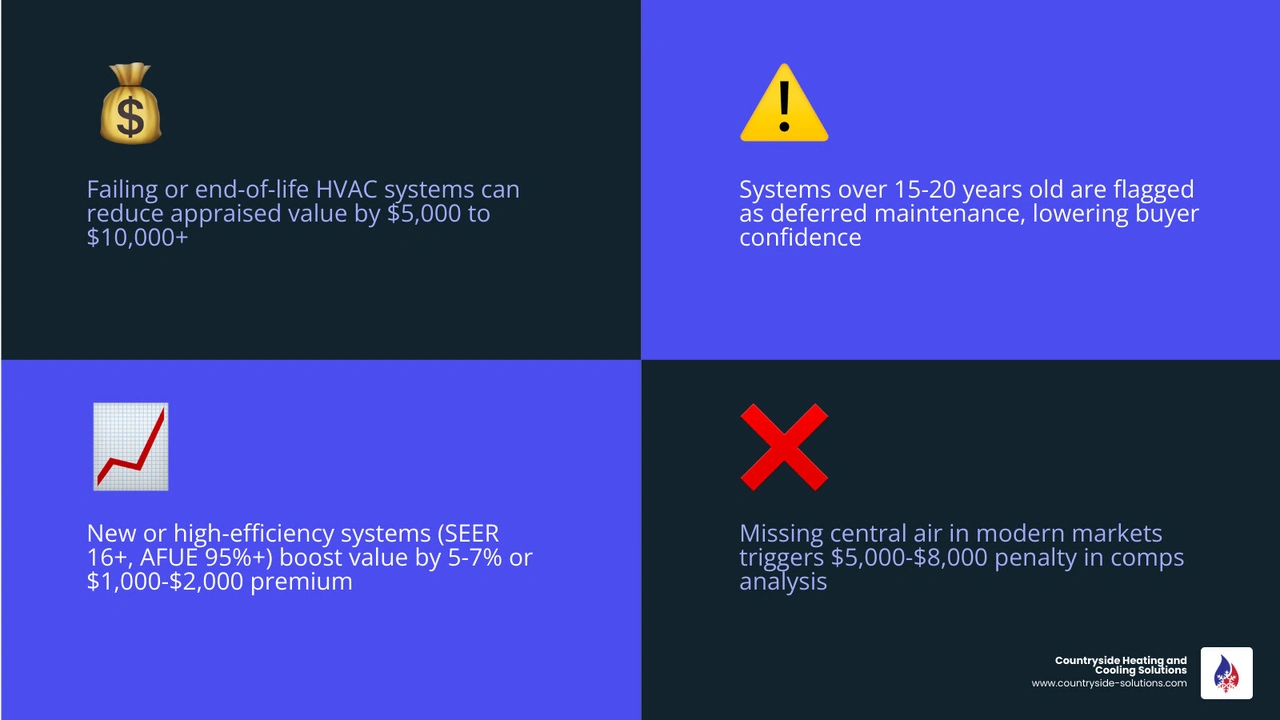
- Failing or end-of-life HVAC system: Can lower your appraised value by $5,000 to $10,000 or more
- System over 15-20 years old: Often flagged as deferred maintenance, reducing buyer confidence and appraised value
- New or recently upgraded system: Can increase appraised value by 5% to 7%
- High-efficiency system (SEER 16+, AFUE 95%+): May add a modest premium of $1,000 to $2,000 above standard replacement value
- Missing central air where it is expected: Can trigger a $5,000 to $8,000 competitive penalty in comparable-sales analysis
- Documented HVAC upgrades with permits and warranties: Help appraisers credit improvements accurately, protecting your equity
Most homeowners preparing to sell or refinance think first about kitchen countertops or curb appeal. But in the Minneapolis–Saint Paul area, where furnaces work hard through brutal winters and rarely get a second glance until something goes wrong, your heating and cooling system may quietly be the biggest financial wildcard in your appraisal.
Appraisers treat HVAC as a core mechanical system — on par with your roof, plumbing, and electrical — not an optional upgrade. When they walk through your home, they are making a judgment call about remaining useful life, deferred maintenance, and whether your system meets the standards buyers in your neighborhood expect. A 28-year-old furnace rattling in the utility room tells a very different story than a clean, high-efficiency unit installed within the last five years.
The difference between those two stories can easily translate into thousands of dollars off your appraised value, reduced equity for a HELOC, or a financing complication that stalls a sale entirely.
How HVAC Condition Affects Home Appraisals: The Appraiser’s Perspective
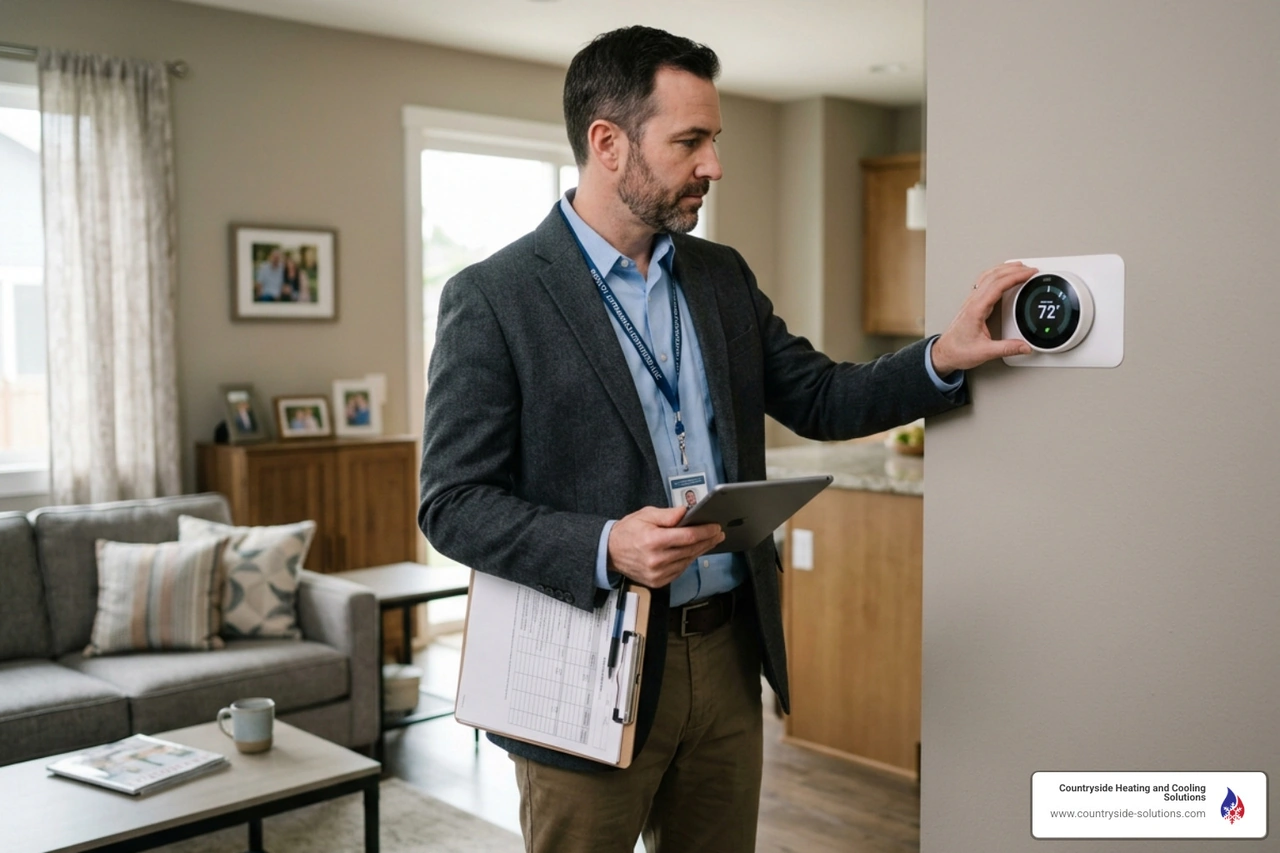
When an appraiser enters your home in Wayzata or Minnetonka, they aren't there to perform a deep-dive mechanical audit. However, they are highly trained to spot the difference between a functional asset and a looming liability. How hvac condition affects home appraisals begins with a visual assessment of the system's "functional utility."
Appraisers categorize HVAC under the "physical condition" section of their report, alongside high-ticket items like the roof and foundation. They are looking for three main things: age, condition, and market standard. If your neighborhood typically features modern central air and high-efficiency heating, but your home relies on an aging boiler or window units, you may face a "functional obsolescence" penalty. This is essentially a deduction because your home's mechanical systems don't match the modern expectations of the local market.
We often see homeowners overlook the "visual" part of this. A furnace covered in dust with a rusted drain pan signals "deferred maintenance" to an appraiser. This suggests that if the HVAC hasn't been cared for, other invisible parts of the home might be neglected too. To avoid these red flags, it is vital to Know the Signs When to Replace Your Old HVAC System before the appraiser rings your doorbell.
Technical Inspection vs. Appraisal Evaluation
It is a common misconception that an appraiser does the same job as a home inspector. A technical inspection involves testing the heat exchanger, checking refrigerant levels, and measuring airflow. An appraiser’s evaluation is broader. They will turn the system on to ensure it generates heat or cool air, but they are primarily focused on how the system compares to "comparables" (similar homes sold recently in areas like Eden Prairie or Maple Grove).
If the "comps" all have new systems and yours is 22 years old, the appraiser will likely make a downward adjustment. They consider the remaining useful life of the unit. If the system is in its final third of life, it transitions from a property asset to a valuation liability. We recommend homeowners understand How Often Should You Service Your HVAC in Minnesota to ensure that when an appraiser does their walk-through, the system looks and performs like a well-oiled machine.
Identifying Functional Obsolescence in Older Systems
Functional obsolescence is a fancy term for "outdated and less useful." In the context of how hvac condition affects home appraisals, this often relates to technology. For example, systems using R-22 refrigerant (which has been phased out) are major red flags. Because R-22 is no longer produced, any leak or repair becomes incredibly expensive, making the system a liability in the eyes of an appraiser.
Additionally, the lack of central air in a market where it is the standard—such as newer developments in Plymouth or Waconia—can lead to a significant value deduction. Even if the furnace works perfectly, the absence of a modern cooling component can trigger a penalty of $5,000 to $8,000. Knowing How Long Does a Bryant HVAC Last can help you determine if your system is reaching that obsolescence cliff.
Measuring the ROI of HVAC Upgrades on Property Value
One of the most frequent questions we hear at Countryside Heating and Cooling Solutions is whether a new system actually pays for itself. The answer is nuanced: a new HVAC system is less about "creating" new value and more about "protecting" existing value. Think of it as an equity buffer.
While a kitchen remodel might feel more exciting, a new HVAC system provides a high Return on Investment (ROI) because it removes the "risk" for the buyer and the lender. Research shows that HVAC upgrades typically recoup about 40% to 60% of their cost at resale, but in some competitive markets, a high-efficiency system can offer a return of 50% to 80%.
| System Status | Estimated Appraisal Impact | Buyer Perception |
|---|---|---|
| Brand New (High-Efficiency) | +5% to +7% Value Increase | "Move-in ready, low bills" |
| Mid-Life (Well-Maintained) | Baseline Value (No Adjustment) | "Reliable, no immediate cost" |
| End-of-Life (15+ Years) | -$5,000 to -$10,000 Adjustment | "Negotiation lever, high risk" |
| Non-Functional | Appraisal Contingency/Major Drop | "Deal-breaker, financing risk" |
Investing in your system's health is the best way to ensure you don't lose money at the closing table. Learning How Do You Extend Your HVAC Life can help you maintain that baseline value for years longer.
How HVAC Condition Affects Home Appraisals Through Energy Efficiency Ratings
In May 2026, energy efficiency isn't just a buzzword; it’s a metric appraisers use to justify higher valuations. Ratings like SEER2 (for cooling) and AFUE (for heating) are now standard data points in appraisal reports. A furnace with a 96% AFUE rating means 96 cents of every dollar spent on fuel goes directly into heating your home, with only 4% lost.
Appraisers also look for ENERGY STAR certifications. These systems can cut monthly utility bills by 10% to 30%, a fact that makes a home more "marketable." In extreme climates like ours, having a system that passes an HVAC Maintenance Checklist for Extreme Cold Climates ensures the appraiser that the home is efficient and prepared for Minnesota's sub-zero stretches.
Modern Add-ons: Smart Thermostats and Air Scrubbers
While the "box" in the basement does the heavy lifting, modern upgrades like smart thermostats, zoning systems, and air scrubbers provide a measurable boost to perceived value. Smart thermostats are relatively low-cost but signal to an appraiser that the home is tech-savvy and energy-conscious.
Zoning systems, which allow for different temperatures in different parts of the house, solve the "upstairs is a sauna, basement is an icebox" problem that often plagues larger homes in Minnetonka or Edina. When an appraiser feels consistent airflow throughout the home, it reinforces the "functional utility" of the property. Often, homeowners only realize the value of these additions when they see What Happens When You Get Your Furnace Serviced and discover how much these small tech upgrades improve overall system performance.
Strategic Documentation to Maximize Your Home Equity
If you want the appraiser to give you full credit for your HVAC system, you cannot leave it to guesswork. You need to provide a "Homeowner’s Value Package." This is a folder containing every piece of evidence that proves your system is an asset.
When an appraiser sees a well-documented maintenance history, they are much less likely to apply a "condition penalty." Documentation should include:
- Professional installation permits (proving the work was done to code).
- Transferable warranties (a huge selling point for buyers).
- A log of regular tune-ups.
- Specification sheets showing SEER2 and AFUE ratings.
Many our customers find that asking Is an HVAC Maintenance Plan Worth It? pays off exactly at this moment. A maintenance plan provides a digital or paper trail of professional care that is worth its weight in gold during a valuation.
Impact on HELOC and Refinancing Appraisals
How hvac condition affects home appraisals is just as critical when you aren't selling. If you are applying for a Home Equity Line of Credit (HELOC) or refinancing your mortgage in Buffalo or Delano, the appraisal determines how much cash you can access.
Lenders are risk-averse. If an appraiser flags a 20-year-old furnace as a "deferred maintenance" item, the lender may view the home as having a higher risk of a major emergency repair. This can lead to a lower appraised value, which in turn lowers your loan-to-value (LTV) ratio and reduces the equity available to you. To keep your equity high, we recommend staying on top of How Often Should You Get Your Bryant HVAC System Serviced so your system is always in "refi-ready" condition.
Regional Climate Factors and Safety Violations
In the Twin Cities, our HVAC systems are survival equipment. An appraiser in Minnesota gives much more weight to a furnace than an appraiser in a mild climate would. They are looking for "reliability" above all else. A system that hasn't been serviced to handle extreme cold is a liability. Following an HVAC Maintenance Frequency Guide Minnesota ensures your system meets these local reliability standards.
Safety is the other major factor. There are several common HVAC-related code violations that can completely derail an appraisal or a loan approval:
- Improper Venting: Carbon monoxide risks from poorly installed furnace flues.
- Lack of Sediment Traps: Missing "drip legs" on gas lines are a frequent code violation.
- Unpermitted Work: If you replaced your AC without a permit in Maple Plain or Medina, the appraiser may not be able to include that value in the report.
- Fire Hazards: Proximity of combustible materials to the furnace or water heater.
Frequently Asked Questions about HVAC and Appraisals
At what age does an HVAC system become a valuation liability?
Systems typically transition from being a property asset to a valuation liability between 10 and 15 years of age. While a 12-year-old system might still run perfectly, an appraiser knows it is in the "back half" of its life. Once a system crosses the 20-year mark, it is almost universally flagged as "deferred maintenance," which can trigger a $5,000 to $10,000 deduction compared to homes with newer units.
Is it better to replace a system before an appraisal or offer a repair credit?
It is almost always more financially strategic to replace a failing or end-of-life system before the appraisal. If you wait and offer a credit, the "low" appraisal is already on the record. A low appraisal can scare away lenders or force you to lower your asking price by more than the cost of the new unit. By replacing it beforehand, you remove the negative "condition flag" entirely and protect your home's total valuation.
What are the most common HVAC-related code violations that derail appraisals?
The most common issues include improper furnace venting (which is a major safety hazard), the lack of sediment traps on gas lines, and unpermitted installations. Additionally, the presence of phased-out R-22 refrigerant can cause an appraiser to flag the system for replacement. Ensuring your system is installed by NATE-certified technicians is the best way to avoid these "deal-killer" violations.
Conclusion
Your HVAC system is the heartbeat of your home’s mechanical health. Whether you are in Long Lake, Orono, or Saint Bonifacius, how hvac condition affects home appraisals can be the difference between a successful financial move and a costly surprise.
At Countryside Heating and Cooling Solutions, we’ve spent decades helping Twin Cities homeowners protect their comfort and their property value. Our NATE-certified technicians understand the unique demands of Minnesota's climate and the high standards required to keep your home’s value at its peak. Don't wait for an appraiser to point out your system's flaws—be proactive.
Schedule your professional HVAC evaluation to protect your home value and ensure your heating and cooling systems are working for you, not against you.
