.webp)

Is a Higher Efficiency Rating Worth the Extra Cost? Here's What Twin Cities Homeowners Need to Know
Is a higher efficiency rating worth the extra cost? For most Minneapolis–Saint Paul homeowners, the answer is yes — but only when the math lines up with your specific situation.
Here's a quick breakdown:
| Your Situation | Is High Efficiency Worth It? |
|---|---|
| Cold climate (Minnesota), staying 7+ years | Yes — strong payback, typically 5–10 years |
| High monthly heating bills ($150+/month) | Yes — savings add up fast |
| Planning to sell within 1–2 years | Probably not |
| Mild winters or low energy use | Payback period may exceed equipment life |
| Eligible for rebates or tax credits | Yes — incentives can cut payback by 30–50% |
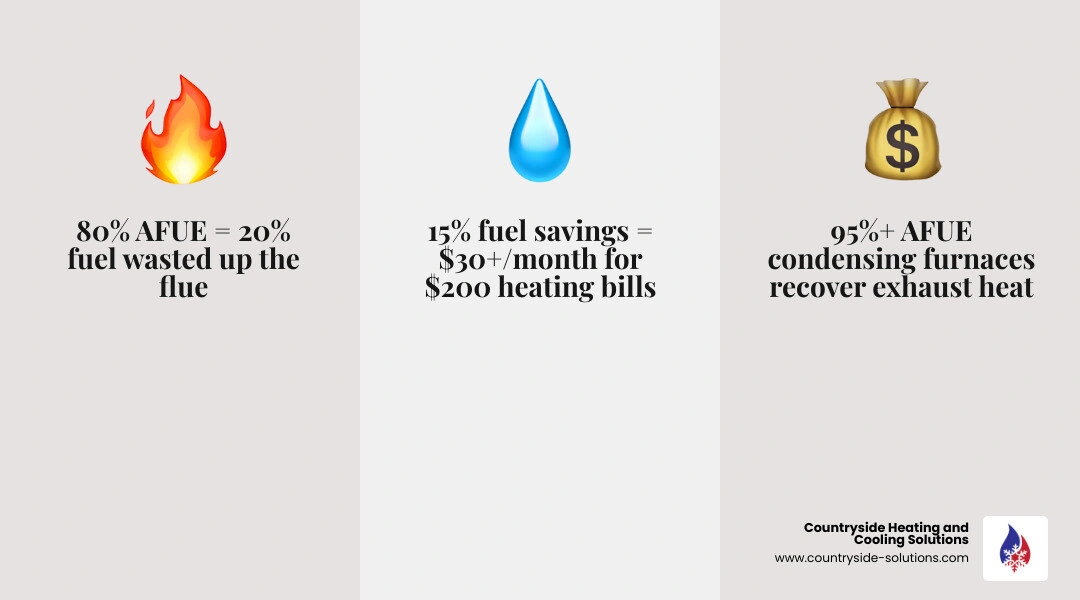
Minnesota winters are no joke. With heating costs making up roughly 45% of the average utility bill, the gap between an 80% efficient furnace and a 95%+ model isn't just a number on a label — it's real money leaving your home every single month through the flue. Upgrading from an 80% AFUE furnace to a 95% model, for example, can cut your fuel consumption by around 15%. For a household spending $200 a month on heat, that's $30 back in your pocket every month.
But efficiency ratings don't tell the whole story. The upfront cost difference, your home's ductwork, how long you plan to stay, and even how the unit is installed all determine whether a high-efficiency system is a smart investment — or just an expensive one.
This guide walks you through everything you need to evaluate the decision clearly, so you can stop guessing and start saving.
Understanding AFUE and SEER2: What Do the Numbers Mean?
When we talk about HVAC efficiency in May 2026, we primarily use two acronyms: AFUE and SEER2. Understanding these is the first step in deciding if is a higher efficiency rating worth the extra cost for your specific home in Medina or Minnetonka.
AFUE (Annual Fuel Utilization Efficiency) is the standard for furnaces. Think of it like a "cents-per-dollar" ratio. If your furnace has an 80% AFUE rating, 80 cents of every dollar you spend on gas turns into heat for your home, while 20 cents is lost through the exhaust. High-efficiency condensing furnaces now reach 95% to 98% AFUE. These units use a secondary heat exchanger to capture heat from exhaust gases that would otherwise be wasted.
SEER2 (Seasonal Energy Efficiency Ratio 2) measures cooling efficiency. The "2" indicates updated testing standards that more accurately reflect real-world ductwork conditions. A higher SEER2 rating means the unit uses less electricity to remove heat from your home. While standard units might hover around 13.4 to 14.3 SEER2, premium models can soar past 20.
To get a better sense of how these fit into your home, it helps to understand what are the most common types of HVAC systems available today. If you are specifically focused on summer comfort, you might want to look into what is the most energy efficient type of air conditioner for our specific humid Minnesota summers.
The role of variable-speed blowers and staging
Beyond the raw efficiency number, the technology inside the cabinet matters just as much. Standard-efficiency systems are often "single-stage," meaning they are either 100% on or 100% off. This is like driving a car that only has one speed: floor it or stop.
High-efficiency systems often feature two-stage or modulating gas valves and variable-speed blower motors. A two-stage furnace can run at a lower, more efficient setting about 80% of the time, only kicking into "high" on those brutal sub-zero nights in Wayzata. Modulating valves go even further, adjusting in tiny increments to keep your temperature within half a degree of your setting.
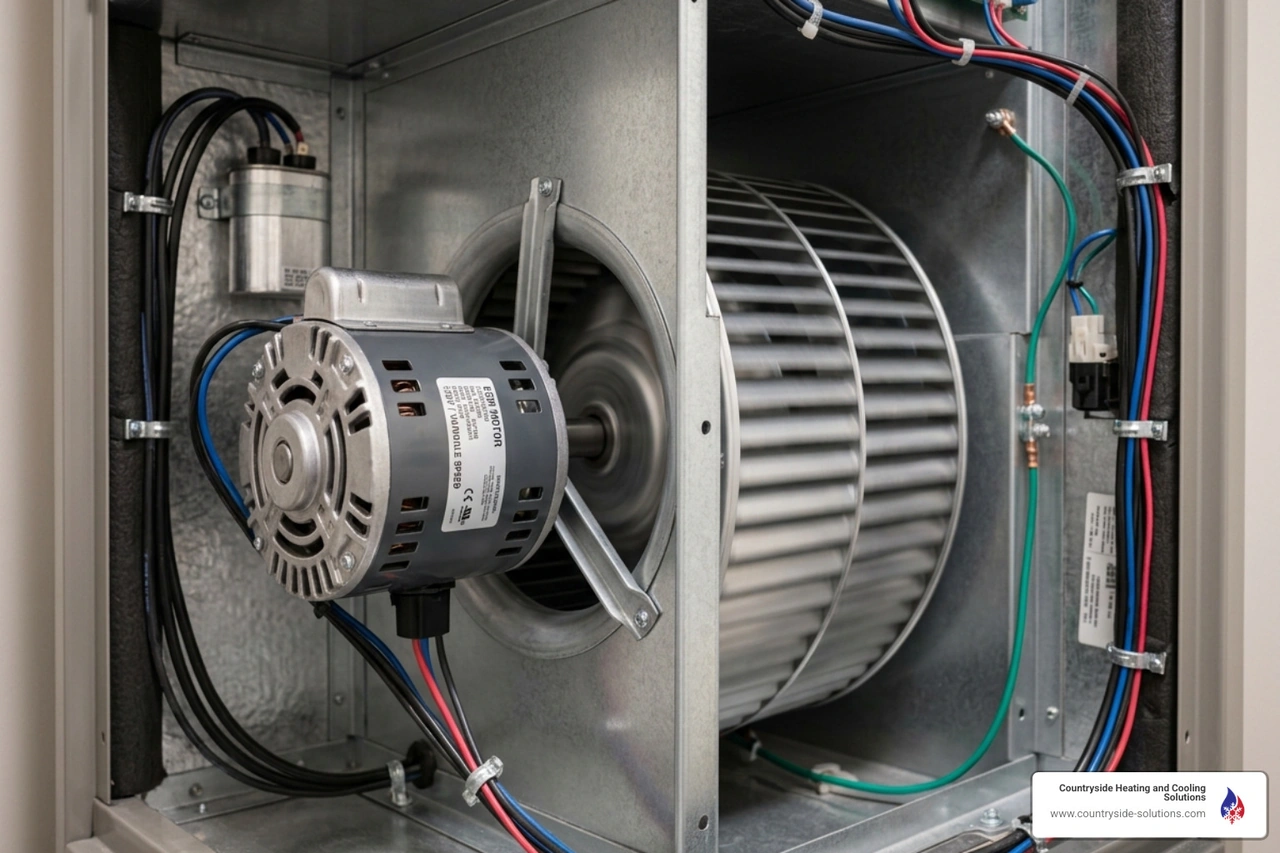
Variable-speed blowers (ECM motors) use significantly less electricity than standard motors — sometimes 60% to 80% less. They also provide more consistent airflow, which eliminates the "blast of hot air" followed by a cold chill. There are at least 8 types of air conditioners choose the best for your home, and many of the highest-rated ones rely on this variable technology.
How installation requirements impact your decision
You cannot simply "drop in" a 96% AFUE furnace where an 80% unit used to be. High-efficiency furnaces are condensing units, meaning they produce acidic water as a byproduct of extracting so much heat. This requires a dedicated condensate drainage system or a pump.
Furthermore, because the exhaust is so cool, it cannot go up a traditional metal chimney; it must be vented through PVC pipes out the side of your house. If your basement is finished, running these new vents can add complexity to the project.
Ductwork integrity is also vital. A high-efficiency unit installed on leaky or undersized ducts is like putting a Ferrari engine in a lawnmower — you won't get the performance you paid for. Before choosing a system, you must determine what size AC do you need through a proper Manual J load calculation to ensure the system matches your home's specific needs.
Determining if a higher efficiency rating is worth the extra cost for your home
Deciding whether to spend more upfront requires a look at the "Total Cost of Ownership." While the initial investment for a high-efficiency system is higher, the monthly operational savings and available incentives often bridge the gap.
| Feature | Standard Efficiency (80% AFUE / 14 SEER2) | High Efficiency (95%+ AFUE / 17+ SEER2) |
|---|---|---|
| Venting | Metal chimney / Atmospheric | PVC pipe / Sealed combustion |
| Blower | Single-speed (PSC) | Variable-speed (ECM) |
| Comfort | On/Off cycles, temperature swings | Consistent temp, better humidity control |
| Annual Savings | Baseline | 15% - 30% reduction in fuel/electric |
| Payback Period | N/A | 5 to 10 years (avg. in MN) |
When learning how to choose the best air conditioner for your home, consider your "tenure" in the house. If you plan to live in your Excelsior home for another decade, the high-efficiency system is almost always the better financial move. If you are moving in 24 months, you likely won't see the return on investment through energy savings alone.
Don't forget that Minnesota energy rebates for HVAC upgrades can significantly lower your effective cost. Utility companies like Xcel Energy and CenterPoint Energy often offer hundreds of dollars in rebates for high-efficiency equipment.
Evaluating the "Payback Cliff" in Minnesota
In milder states, high-efficiency systems are a luxury. In Minnesota, they are a practical tool. Because our heating season lasts six months or more, the "payback cliff" — the point where the savings cover the extra upfront cost — happens much sooner here.
In a typical 2,000-square-foot home in the Twin Cities, upgrading from a mid-efficiency furnace to a high-efficiency model can save approximately $170 to $200 per year in fuel costs. Over the 15-to-20-year life of the system, that is thousands of dollars in savings. However, these savings only persist if the system is running at peak performance, which is why knowing how often should you service your HVAC in Minnesota is critical for protecting your investment.
Leveraging tax credits and utility incentives
As of May 2026, federal tax credits through the Inflation Reduction Act (specifically the 25C credit) remain a powerful motivator. Homeowners can often claim up to $600 for high-efficiency central AC or up to $2,000 for qualified heat pumps.
When you combine these federal credits with local utility rebates, the price gap between a standard and a high-efficiency system can shrink by 30% to 50%. This makes the "worth it" calculation much easier. To stay eligible for these incentives, many programs require proof of professional installation and regular maintenance. Reviewing an HVAC maintenance frequency guide for Minnesota can help you stay on top of these requirements.
Beyond Energy Bills: The Hidden Benefits of High-Efficiency Systems
While the math focuses on dollars, the "hidden" benefits of high-efficiency equipment often provide the most satisfaction for homeowners in places like Orono or Maple Grove.
- Humidity Control: High-efficiency air conditioners with variable-speed fans run longer, lower-intensity cycles. This allows them to remove up to twice as much moisture from the air as a standard unit, which makes "the dog days of August" much more bearable.
- Noise Reduction: Because these systems often run at lower speeds, they are significantly quieter. You won't have to turn up the TV every time the furnace kicks on.
- Indoor Air Quality: Constant, low-speed fan operation means your air is being filtered more frequently, reducing dust and allergens.
- System Longevity: By avoiding the frequent "hard starts" of a single-stage system, high-efficiency components often experience less wear and tear.
If you're wondering how long does a Bryant HVAC last, the answer often depends on the technology level and maintenance. We have seen that how a maintenance plan extends equipment life is even more pronounced with high-efficiency systems, as their sensors and electronics benefit from regular calibration.
Environmental impact and future-proofing
Choosing a high-efficiency system is one of the most significant ways a homeowner can reduce their carbon footprint. A 95% AFUE furnace can reduce CO2 emissions by 1.5 to 2 tons per year compared to an older, inefficient model.
There is also the matter of "future-proofing." New federal regulations are moving toward 95% AFUE as a minimum standard for furnaces by 2028. Additionally, the industry is transitioning to more environmentally friendly refrigerants like R-454B. By investing in a high-efficiency system now, you are ensuring your home meets future standards, which can be a selling point later.
Frequently Asked Questions
Is a higher efficiency rating worth the extra cost if I plan to sell my home soon?
Generally, no. If you plan to sell within the next two years, you won't recoup the extra cost through energy savings. However, a high-efficiency system with a transferable warranty can be a powerful "value-add" in a competitive Twin Cities real estate market, potentially leading to a faster sale or a better inspection report.
Is a higher efficiency rating worth the extra cost for Minnesota winters?
Absolutely. In our climate, the heating system works harder and longer than almost anywhere else in the country. The 15% to 20% fuel savings from a secondary heat exchanger adds up much faster in Maple Plain than it would in a southern state.
When does a standard-efficiency system make more sense?
A standard 80% AFUE furnace might be the better choice if:
- You are on a very tight upfront budget.
- Your home's structure makes installing PVC venting or condensate drains prohibitively expensive (e.g., a finished basement with no easy exterior wall access).
- The property is a rental where the landlord pays for the equipment but the tenant pays the utility bills (though we always encourage efficiency for the environment!).
- You live in a very small space with minimal heating needs.
Conclusion
At Countryside Heating & Cooling Solutions, we’ve spent over 50 years helping our neighbors in the western suburbs and the greater Twin Cities area navigate these choices. We know that every home in Loretto, Mound, or Saint Bonifacius is unique.
Whether is a higher efficiency rating worth the extra cost for you depends on your budget, your long-term plans, and your desire for a more comfortable home. Our NATE-certified technicians are here to provide the expert, honest assessments you need to make the right call. We pride ourselves on quality workmanship and a commitment to keeping your family comfortable, no matter what the Minnesota sky throws at us.
If you're ready to see the numbers for your own home, compare high-efficiency furnace options today or give us a call to schedule a consultation. We’re here to help you spend a little more now so you can save a lot more for years to come.
