.webp)

Why Extreme Cold in Minnesota Kills Your Air Filter Faster Than You Think
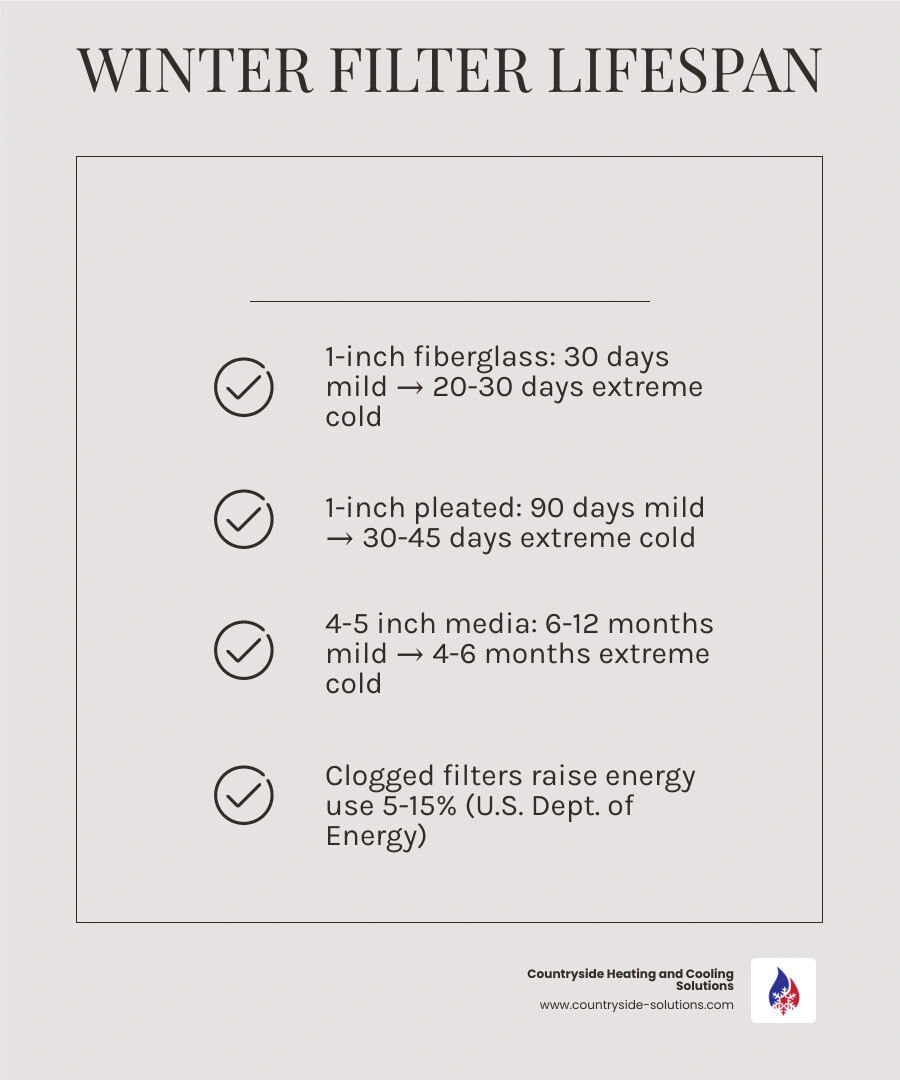
How extreme cold affects filter replacement frequency is straightforward: when outdoor temperatures plunge below freezing, your furnace runs almost continuously to keep your home warm — and that constant airflow pulls far more dust, dander, and debris through your filter in a fraction of the normal time. Filters that might last 90 days in mild weather can clog in as little as 30 days during a brutal Twin Cities winter.
Here's a quick summary of what that means for your home:
| Filter Type | Mild Season Lifespan | Extreme Cold Lifespan |
|---|---|---|
| 1-inch fiberglass | 30 days | 20-30 days or less |
| 1-inch pleated | 90 days | 30-45 days |
| 4-5 inch media filter | 6-12 months | 4-6 months |
Key reasons cold weather shortens filter life:
- Furnaces run nearly nonstop, cycling far more air through the filter
- Homes are sealed tight, trapping indoor dust, pet dander, and cooking particles
- Higher occupancy during cold months means more pollutants in the air
- Dry winter air keeps particles suspended longer, increasing what the filter captures
Most HVAC professionals — and ENERGY STAR — recommend checking your filter every month during heavy winter use. During a genuine Minnesota cold snap, a filter replaced just 30 days ago can already be completely packed with debris.
A dirty filter doesn't just hurt your air quality. According to the U.S. Department of Energy, a clogged filter can increase your home's energy consumption by 5% to 15%, and it forces your furnace to work harder under conditions when it's already running at maximum demand.
For Minneapolis–Saint Paul homeowners, this isn't a minor inconvenience. It's a real risk to your furnace, your energy bills, and your family's health — especially when temperatures drop into the negatives and you need your heating system to perform flawlessly.
Why Your Furnace Works Overtime During a Minnesota Winter
In places like Maple Plain or Wayzata, we don’t just have "chilly" days; we have weeks where the mercury refuses to climb above zero. During these periods, your furnace isn't just a convenience—it’s a life-support system. Because the temperature difference between the sub-zero outdoors and your cozy 70-degree living room is so vast, heat escapes your home at an accelerated rate.
To compensate, your furnace blower runs almost continuously. This is the primary reason why filters clog two to three times faster than in the spring or fall. Think of your air filter like a net. If you pull that net through a dusty room once an hour, it stays clean for a long time. If you pull it through that same room 24/7 without stopping, it’s going to be full of "gunk" in no time.
Furthermore, we tend to spend more time indoors during May 2026 winters. Between kids playing inside, pets shedding their winter coats, and the dust generated by daily life, the volume of indoor pollutants spikes. Why Is It Important to Change the Furnace Filter? It isn't just about clean air; it’s about ensuring that the massive volume of air your furnace requires can actually get into the system.
How Extreme Cold Affects Filter Replacement Frequency
When we discuss how extreme cold affects filter replacement frequency, we have to look at the physics of airflow. As a filter captures particles, the spaces between the fibers become smaller. In extreme cold, your system is desperate for airflow to prevent the heat exchanger from overheating. If the filter is even partially clogged, the furnace has to work significantly harder to pull air through those tiny remaining gaps.
In the Twin Cities metro area, a "Polar Vortex" event can turn a perfectly good filter into a "brick wall" of dust in just a few weeks. This restriction doesn't just stop dust; it stops the heat from moving through your home. You might notice that the rooms furthest from the furnace, like upstairs bedrooms in Minnetonka or Minnetrista, start feeling significantly colder because the blower can't push air past the debris trapped in the filter.
Factors that influence how extreme cold affects filter replacement frequency
Not every home in the Minneapolis-Saint Paul area will have the same experience. Several variables can accelerate the clogging process during a cold snap:
- Home Size vs. Filter Size: Smaller homes often have smaller HVAC units with smaller filters. Because these filters have less surface area, they can reach "capacity" much faster than a large 5-inch media filter in a sprawling estate.
- Pet Ownership: In winter, pets stay inside more. Dander and fur are heavy particles that settle deep into pleated filters, cutting their lifespan by 30% or more during peak heating months.
- Indoor Air Quality: Activities like cooking holiday meals or using a wood-burning fireplace add fine particulates to the air that your furnace must then scrub out.
- Occupancy: More people in the house means more skin cells, lint from clothing, and general movement that keeps dust suspended in the air.
| Condition | Recommended Check Frequency | Expected Replacement |
|---|---|---|
| Single occupant, no pets | Every 45 days | 60-90 days |
| Family with pets | Every 20 days | 30 days |
| Sub-zero "Polar Vortex" | Every 14 days | 21-30 days |
Recommended schedules based on how extreme cold affects filter replacement frequency
Understanding the type of filter you have is crucial for setting a winter maintenance schedule. The Causes of Your Furnace Filter Getting Dirty So Fast often boil down to using the wrong filter for your household's needs during high-demand months.
- 1-inch Fiberglass Filters: These are the "blue" filters you can see through. They are designed to protect the equipment, not your lungs. In a Minnesota winter, these should be checked every 20 days and replaced at least every 30 days.
- 1-inch Pleated Filters: These provide better filtration but clog faster because they catch smaller particles. During extreme cold, plan on a 30-to-45-day replacement cycle.
- 4-inch to 5-inch Media Filters: These are high-capacity filters often found in Bryant systems. While they can last a year in some climates, our "intensive demand" winters usually mean they need a fresh swap every 4 to 6 months. How Often Do You Change the Filter in a Bryant Furnace? can vary, but checking them in December and again in February is a safe bet for local homeowners.
The Risks of Neglecting Filter Maintenance in Sub-Zero Weather
Neglecting your filter when it's -20°F outside is a recipe for a "mid-season breakdown." When airflow is restricted, the temperature inside the furnace cabinet rises to dangerous levels. This can trigger the "high-limit switch," a safety device that shuts the furnace down to prevent the heat exchanger from cracking.
A cracked heat exchanger is more than just a repair bill; it’s a major safety hazard that can leak carbon monoxide into your home. Furthermore, the Department of Energy notes that dirty filters can increase energy consumption by 5% to 15%. When your heating bill is already at its seasonal peak, that’s money literally flying out the chimney.
Common risks include:
- Short-Cycling: The furnace turns on and off rapidly, never truly warming the house.
- Blower Motor Failure: The motor has to work harder to pull air through a "wall" of dust, leading to premature burnout.
- Reduced Comfort: You'll notice hot and cold spots throughout your home in Buffalo or Eden Prairie.
To stay ahead of these issues, we recommend following a comprehensive HVAC Maintenance Checklist for Extreme Cold Climates.
Beyond HVAC: Cold Weather Impacts on Automotive and Oil Filtration
While we primarily focus on your home's comfort, it's worth noting that how extreme cold affects filter replacement frequency extends to your driveway as well. In Minnesota, "cold starts" are brutal on vehicle engines.
When temperatures drop to -20°F, engine oil becomes thick, like molasses. This creates massive pressure spikes—sometimes exceeding 150 PSI—inside the oil filter. Most oil filters have a "bypass valve" designed to let unfiltered oil through if the pressure gets too high, preventing the filter from bursting. However, in extreme cold, standard rubber seals can harden and leak, and the bypass valve may stay open longer than intended, allowing contaminants to circulate through your engine.
Similarly, fuel filters can suffer when water vapor in the fuel lines freezes into tiny ice crystals. These crystals can clog the filter media or even cause micro-cracks in the filter housing. While you might not change your car's oil every month, a particularly brutal winter might mean you should check your vehicle's filtration systems sooner than the manufacturer's standard interval.
Best Practices for Winter Filter Care in the Twin Cities
The best way to manage your HVAC system during a May 2026 cold snap is through visual inspection. We always tell our neighbors in Excelsior and Long Lake to use the "Light Test."
The Light Test: Hold your air filter up to a bright light or a window. If the light cannot pass through the filter media, it is clogged with dust and needs to be replaced immediately, regardless of how many days it has been in use.
For optimal performance, we generally recommend filters with a MERV rating between 8 and 13. MERV 8 is great for general dust, while MERV 11-13 is better for families with allergies or pets. However, be careful—high-MERV 1-inch filters can be very restrictive. If your furnace seems to be struggling to keep up, switching to a slightly less restrictive filter during the coldest weeks can actually improve your home’s warmth by allowing more air to circulate. HVAC Maintenance Tips for Minnesota Homeowners often emphasize this balance between air purity and system performance.
Proactive steps to manage how extreme cold affects filter replacement frequency
You can actually help your filter last longer by managing the environment inside your home:
- Vacuum Regularly: Keeping your floors swept and vacuumed (especially if you have pets) reduces the amount of dust the furnace has to suck up.
- Manage Humidity: Dry winter air makes dust more "flighty." Using a whole-home humidifier can help particles settle so they can be vacuumed up rather than ending up in your filter.
- Avoid Extreme Setbacks: Don't drop your thermostat 15 degrees when you leave for work. The "recovery" period forces the furnace to run at full blast for hours, which accelerates filter clogging.
- Check Monthly: Set a calendar reminder on your phone for the first of every month from November through March.
For more detailed timing, consult our HVAC Maintenance Frequency Guide Minnesota.
Frequently Asked Questions about Winter Filter Care
Should I remove my filter in extreme cold for better airflow?
Absolutely not. We’ve heard this "old wives' tale" in places like Mound and Orono, but it’s dangerous advice. Running your furnace without a filter, even for a few days, allows dust and hair to coat the blower wheel and the sensitive coils inside your system. This debris creates a permanent loss of efficiency and can lead to a total system failure that is much more expensive than a $20 filter.
Do high-efficiency MERV filters work differently in the cold?
High-efficiency filters (MERV 11-13) have denser pleats to catch smaller particles. In extreme cold, because the furnace is running so often, these filters can become "loaded" very quickly. If you use high-MERV filters, you must be even more diligent about monthly checks, as they can trigger your furnace's high-limit safety switch faster than a basic fiberglass filter.
How do I know if my filter needs immediate replacement?
Keep an eye out for these "winter warning signs":
- Dusty Surfaces: If you find yourself dusting your furniture in Maple Grove every two days, your filter isn't doing its job.
- Musty Odors: A "burning dust" smell when the furnace kicks on is a sign of restricted airflow.
- Rising Bills: If your energy bill jumps significantly higher than last year (accounting for weather), a clogged filter is the likely culprit.
- Ice on AC Coils: If you have a heat pump system, a dirty filter can cause the indoor coils to freeze over, even in winter.
Conclusion
Managing how extreme cold affects filter replacement frequency is one of the simplest things you can do to protect your home and your wallet this winter. Whether you’re in Medina, Loretto, or Saint Bonifacius, a fresh filter ensures your furnace can breathe, your air stays clean, and your family stays warm.
At Countryside Heating and Cooling Solutions, we’ve been helping our neighbors across the Twin Cities stay comfortable since 1974. Our NATE-certified technicians understand the "intensive demands" of a Minnesota winter and are always ready to help with a professional tune-up or air quality assessment. If your furnace is struggling to keep up with the cold, don't wait for a total breakdown. Improve your indoor air quality today and ensure your home is ready for whatever the May 2026 winter throws our way.
