.webp)

Why Spring AC Preparation After a Long Winter Matters for Minneapolis-Saint Paul Homeowners
Spring AC preparation after a long winter is the process of inspecting, cleaning, and testing your cooling system before the summer heat arrives — and in the Minneapolis-Saint Paul area, it's one of the most important things you can do for your home.
Here's a quick overview of the key steps:
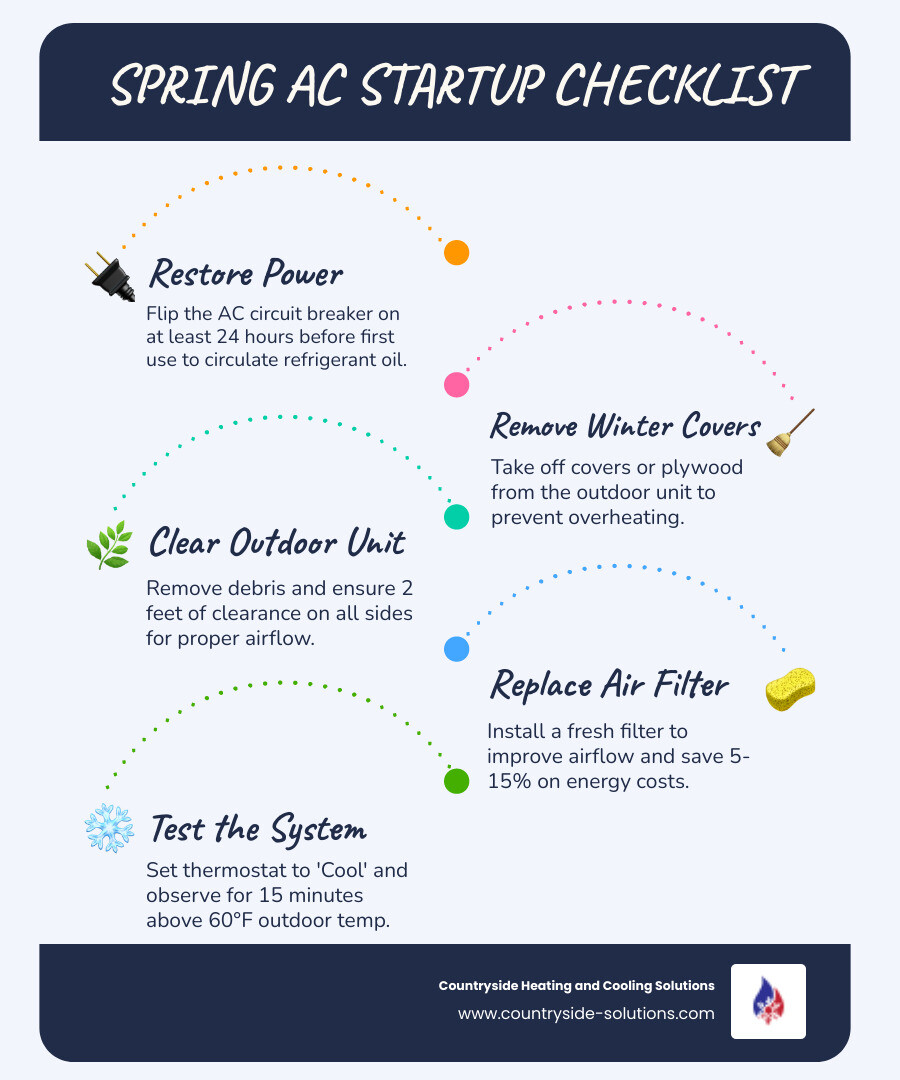
- Restore power — Flip the AC circuit breaker on at least 24 hours before your first run
- Remove winter covers — Take off any covers or plywood placed over the outdoor unit
- Clear the outdoor unit — Remove debris and ensure 2 feet of clearance on all sides
- Rinse condenser coils — Use a gentle garden hose spray to remove dirt and pollen
- Replace the air filter — Swap in a fresh filter before the first cycle
- Check vents and ductwork — Make sure registers are open and unobstructed
- Test the system — Set the thermostat to "Cool" and observe for 15 minutes
- Schedule a professional tune-up — Have a certified technician verify refrigerant levels, electrical connections, and more
After months of sitting completely idle through a Minnesota winter, your AC system needs more than just a flip of the switch. Dust, debris, pests, and dormant components can all quietly cause problems that only show up on the first sweltering day of summer — the worst possible time to discover something is wrong.
The good news? A little attention in April goes a long way. Routine maintenance can cut cooling costs by as much as 5% to 15% and add years to your system's life. Skipping it, on the other hand, can mean sluggish performance, higher energy bills, or a breakdown right when you need cool air most.
When is the Best Time for Spring AC Preparation After a Long Winter?
As we move through April 2026, the temptation to crank up the cooling starts the moment we see a sunny afternoon. However, timing is everything. In our neck of the woods—from Wayzata to Medina—we often deal with "weather whiplash." One day we’re wearing parkas, and forty-eight hours later, we’re looking for the shorts we stashed in the attic.
The golden rule for testing your system is the 60°F threshold. You should never run your air conditioner if the outdoor temperature is below 60 degrees Fahrenheit. Doing so can cause the evaporator coils to freeze or, worse, damage the compressor because the lubricant inside isn't warm enough to flow properly.
We recommend starting your spring ac preparation after a long winter in mid-to-late April. By performing early testing on a day when it hits 65 or 70 degrees, you ensure system reliability before the "Big Squeeze" of June. If you find a problem now, you’ve got weeks to fix it. If you wait until the first 90-degree day, you’ll be competing with every other homeowner in the Twin Cities for a service appointment. To get ahead of the game, check out The Path to a Refreshing Summer: AC Upkeep Tips and Tricks for more seasonal insights.
Step-by-Step Guide to Preparing Your Outdoor Condenser
The outdoor unit (the condenser) has the toughest job in your HVAC system. It’s been buried under snow, pelted by ice, and likely used as a luxury apartment by local rodents for the last five months.
First, let’s talk about the 2-foot clearance rule. Your AC needs to "breathe" to dump heat from your home into the outside air. Over the winter, dead leaves, twigs, and wind-blown trash likely piled up against the base. Use a rake or your hands to clear everything away. If you have shrubs or perennial gardens nearby, prune them back so there is at least 24 inches of open space on all sides of the unit.
Next, it’s time for a gentle bath. Throughout the fall and spring, the metal fins on your condenser collect a "sticky blanket" of dust and pollen. This prevents the unit from releasing heat efficiently.
- Do: Use a standard garden hose with a spray nozzle on a medium setting.
- Don't: Use a pressure washer. The high-pressure stream can bend the delicate aluminum fins, which can lead to airflow restrictions.
While you’re out there, keep an eye out for pest damage. The National Pest Management Association notes that rodents cause roughly $1 billion in property damage annually in the U.S., and they love chewing on HVAC wiring. If you see frayed wires or nest material inside the unit, don't turn it on—call us first. Understanding What Causes the Outside Unit Fan of My Air Conditioner to Stop Working can help you identify if a critter has made a meal of your components.
Reversing Winterization and Powering Up
If you covered your unit with a tarp or a specialized AC cover, remove it now! This is a common spring service call: a homeowner forgets the cover is on, turns on the AC, and the unit overheats and shuts down within minutes. Even a simple piece of plywood used for protection against falling icicles needs to be cleared away.
Once the unit is clear, check your circuit breaker. We often recommend flipping the AC breaker back to the "ON" position at least 24 hours before you actually intend to use the system. Why? Most modern units have a crankcase heater designed to warm up the refrigerant oil. This ensures that the compressor—the "heart" of your system—starts smoothly without unnecessary strain. For our neighbors in the west metro, scheduling AC Maintenance Maple Grove MN is the best way to ensure this power-up process goes off without a hitch.
Inspecting Indoor Components and Airflow Quality
Now, let's head inside. Your indoor unit (usually located in the basement or a utility closet) has its own set of needs after a long winter dormancy.
Start by checking the evaporator coil. While this is often tucked away, if you can see it, look for signs of dust or "ice" (though ice shouldn't be there if the unit has been off). A dirty coil can waste a massive amount of energy. Also, take a look at the condensate drain line—the PVC pipe that carries moisture away. Algae and mold love to grow in the standing water left over from last year. A simple DIY trick is to flush the line with a cup of vinegar followed by a gallon of water to keep things flowing freely.
If you’re in Eden Prairie, you can find more specific local tips at AC Maintenance Eden Prairie MN.
DIY vs. Professional Indoor Tasks
| Task | DIY Friendly? | Why It Matters |
|---|---|---|
| Replace Air Filter | Yes! | Improves airflow and lowers bills by 5-15%. |
| Clean Vents/Registers | Yes | Removes winter dust and pet dander. |
| Flush Drain Line | Yes | Prevents water damage to your floors. |
| Inspect Electrical Connections | No | High voltage risk; requires professional tools. |
| Check Refrigerant Levels | No | Requires EPA certification to handle chemicals. |
| Lubricate Blower Motor | No | Over-lubricating can damage the motor. |
Why Air Filter Replacement is Vital for Spring AC Preparation After a Long Winter
If you only do one thing for your AC this spring, make it this: Change the air filter.
During the winter, your furnace filter worked overtime to trap dust while your heater was running. By the time spring rolls around, that filter is likely clogged. A dirty filter forces your AC blower fan to work under extreme pressure, which can lead to a premature motor failure.
According to the U.S. Department of Energy, replacing a clogged filter with a clean one can lower your AC's energy consumption by 5% to 15%. We recommend using a filter with a MERV rating between 8 and 13. This provides a great balance between high-quality filtration (trapping those pesky Minnesota spring pollens) and maintaining proper airflow. Check it every month, especially if you have pets or live near a construction site. For more tips on saving, see 5 Ways to Reduce Your Cooling Costs This Summer.
Optimizing Vents and Ductwork for the Cooling Season
Walk through your home—from the kitchen to the bedrooms—and check every supply register and return grille. It’s a common myth that closing vents in unused rooms saves money. In reality, it increases the pressure inside your ductwork and makes the blower work harder.
As a general rule, keep at least 80% of your supply vents open at all times. Ensure that rugs, furniture, or heavy drapes aren't blocking the airflow. If you have exposed ductwork in your basement (common in older homes in Rockford or Independence), look for gaps or loose seams. The EPA estimates that the average home loses 20% to 30% of conditioned air through duct leaks. You can use aluminum foil tape (not standard "duct" tape, ironically) to seal small visible gaps. For professional help with your airflow, visit AC Maintenance Rockford MN.
Performing a Safe System Test and Troubleshooting Issues
You’ve cleaned the outside, changed the filter inside, and waited 24 hours for the oil to warm up. Now comes the moment of truth.
- Check the Thermostat: If your thermostat uses batteries, spring is the perfect time to swap in fresh ones.
- Set the Mode: Switch the setting from "Heat" to "Cool."
- Set the Temp: Lower the target temperature to about 3-5 degrees below the current room temperature.
- The 15-Minute Observation: Don't just turn it on and walk away. Stay near the indoor unit for a few minutes to listen to the blower. Then, head outside to the condenser. The fan should be spinning smoothly, and you shouldn't hear any loud clanging or screeching.
After about 10 to 15 minutes, feel the air coming out of the vents. It should be noticeably chilly. If it's just "room temperature" air, something is wrong. For residents in Wayzata, a quick AC Tune Up Wayzata MN can pinpoint exactly why your system isn't hitting those cool notes.
Recognizing Red Flags During Your Spring AC Preparation After a Long Winter
Sometimes, the "Big Wake-Up" reveals some grogginess in your system. If you notice any of the following, turn the system off at the thermostat and give us a call:
- Strange Noises: Buzzing usually indicates an electrical issue or a loose part. Grinding or shrieking often points to a failing motor bearing.
- Musty Odors: This often signifies mold or "dirty sock syndrome" in your evaporator coils or ductwork.
- Burning Smells: This is an immediate red flag for an electrical short or an overheating motor.
- Warm Air: If the air doesn't get cold after 15 minutes, you might have a refrigerant leak or a failed compressor.
- Frequent Tripping: If the AC causes your circuit breaker to trip repeatedly, do not keep flipping it back on. There is a high-voltage problem that needs professional attention.
If you're in the south metro, AC Tune Up Eden Prairie MN is your best resource for catching these red flags early.
Frequently Asked Questions about Spring AC Startup
How long does it take for the house to cool down the first time?
It shouldn't take long to feel cold air at the vents—usually within 3 to 5 minutes. However, cooling the entire house the first time can take several hours, especially if the indoor humidity is high. Don't drop the thermostat to 60°F thinking it will cool faster; it won't! It just keeps the system running longer, which can cause strain.
Should I close vents in unused rooms to save energy?
No! We can't stress this enough. Your HVAC system was designed for a specific amount of "static pressure." Closing vents throws off that balance, which can actually lead to the evaporator coil freezing up or the blower motor burning out. Keep at least 80% of your vents open.
Why should I turn on the breaker 24 hours before the AC?
This is all about the compressor's health. The refrigerant and oil inside the outdoor unit can mix or settle when it's cold. The 24-hour "warm-up" period allows the crankcase heater to separate the refrigerant from the oil, ensuring the compressor is properly lubricated the moment it starts spinning. It's like letting your car idle for a minute on a sub-zero Minnesota morning—it just makes everything run smoother.
Conclusion
Taking the time for thorough spring ac preparation after a long winter is the smartest move a Twin Cities homeowner can make. Not only does it protect your investment and extend the life of your equipment, but it also ensures your family stays comfortable when the humidity inevitably spikes.
At Countryside Heating and Cooling Solutions, we’ve been serving our neighbors in Maple Plain, Minnetonka, and across the metro for years. Our NATE-certified technicians are experts at spotting the tiny issues that DIY inspections might miss—like slightly low refrigerant levels or a capacitor that’s about to give up the ghost.
Whether you need a quick check-up or a comprehensive performance audit, we’re here to help. Don't wait for the first heatwave to find out your system is struggling. Check out our Essential AC Maintenance Plans for Optimal Performance to see how we can keep your home a sanctuary all summer long.
Ready to get on the calendar? You can Schedule HVAC Service online or learn more about our Comprehensive AC Maintenance Plans. Let’s make the summer of 2026 your coolest one yet!
