.webp)

Why Fresh Air Exchange Is the Foundation of Healthy Indoor Air
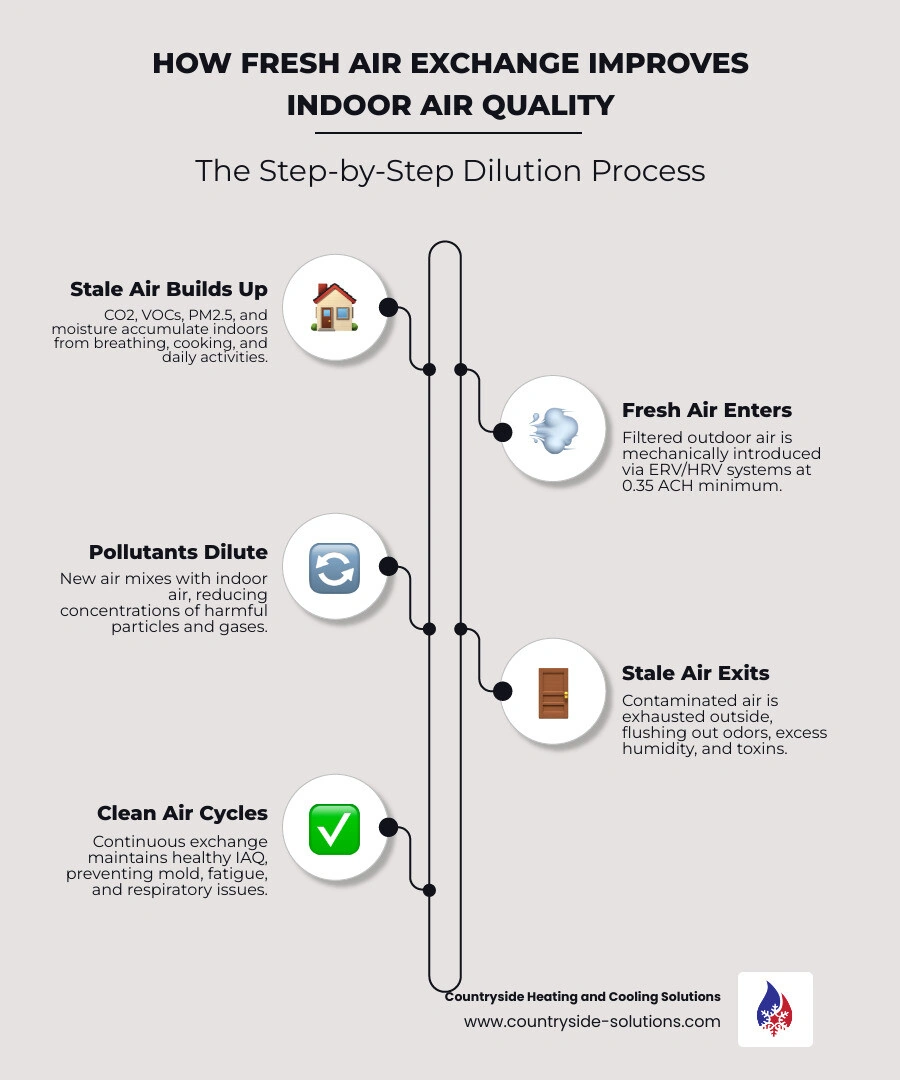
How fresh air exchange improves indoor air quality comes down to one simple idea: bringing clean outdoor air inside dilutes and flushes out the pollutants that build up when your home is sealed. The result is air that's safer, fresher, and healthier to breathe — every single day.
Here's a quick summary:
• Fresh outdoor air dilutes indoor pollutants like VOCs, CO2, and PM2.5
• Regular air exchange reduces moisture, preventing mold and condensation
• The standard minimum is 0.35 air changes per hour (ACH), or 15 CFM per person (ASHRAE 62.2-2016)
• Mechanical systems like ERVs and HRVs exchange air without wasting energy
• Poor ventilation is linked to respiratory issues, fatigue, and worsened allergies
Think about this: you take roughly 23,000 breaths every day — consuming around 3,000 gallons of air. And most of that air is breathed indoors. Yet indoor air can be two to five times more polluted than the air outside.
In the Minneapolis–Saint Paul area, this problem gets worse every winter. Homes seal tight against the cold, windows stay shut for months, and stale air — loaded with cooking fumes, cleaning chemicals, pet dander, and excess moisture — just circulates over and over. There's no escape route for those pollutants unless your home has a proper fresh air exchange strategy in place.
As of April 2026, most modern airtight homes need mechanical ventilation to meet even the minimum standards for healthy indoor air. Opening a window is not enough. A well-designed system that continuously brings in filtered outdoor air and exhausts stale indoor air is what actually moves the needle on your family's health and comfort.
Understanding How Fresh Air Exchange Improves Indoor Air Quality
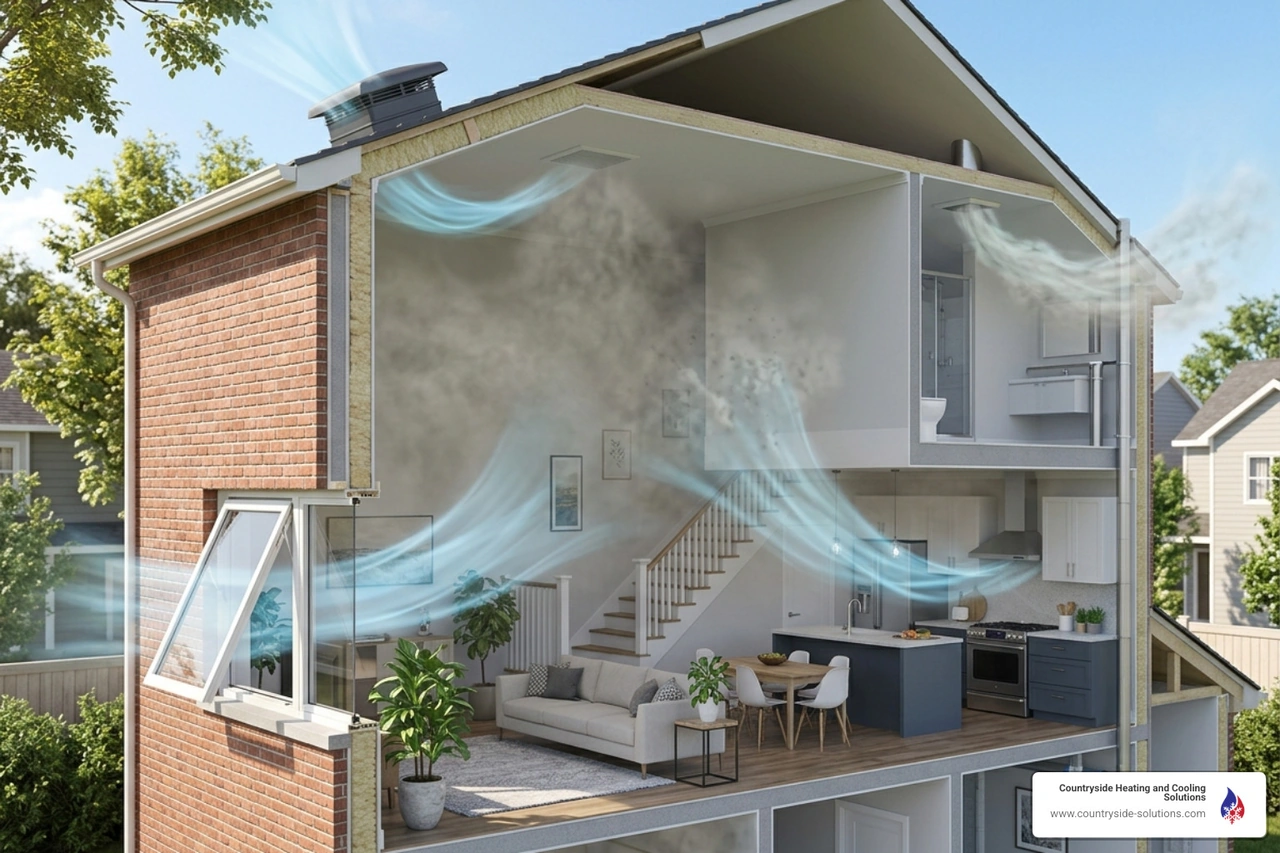
The primary secret behind how fresh air exchange improves indoor air quality is a principle we like to call "dilution is the solution to pollution." When we trap ourselves inside our homes in places like Independence or Minnetrista, we are essentially living inside a giant plastic bag. Every time you cook, spray hairspray, or even just breathe, you are adding "stuff" to that bag.
The Dilution Principle and Pollutant Reduction
When fresh outdoor air is introduced, it doesn't just push the old air around; it dilutes the concentration of harmful particles. The average human inhales over 220 million particulates under the size of 2.5 micrometers (PM2.5) per day. These tiny particles are small enough to enter the bloodstream through the lungs. By constantly cycling in fresh air, we lower the "density" of these particles, giving your lungs a much-needed break.
Tackling VOCs, CO2, and Radon
Volatile Organic Compounds (VOCs) are gases emitted from carpets, furniture, and cleaning products. Without exchange, these gases build up to toxic levels. Similarly, Carbon Dioxide (CO2) from our own breath can lead to "sick building syndrome," causing headaches and drowsiness.
In many parts of Minnesota, radon is also a major concern. This naturally occurring radioactive gas can seep into basements. While Indoor Air Quality Independence MN is a top priority for us, fresh air exchange is one of the most effective ways to ensure these gases don't linger long enough to become a health hazard.
Moisture and Mold Control
We’ve all seen it: that fuzzy black spots in the corner of a bathroom or the frost on the inside of a window during a Chanhassen January. That is the result of trapped moisture. Fresh air exchange helps regulate humidity. By exhausting the moist, "wet" air from showers and cooking and replacing it with drier outdoor air, we prevent the damp conditions that mold and dust mites love.
Measuring Success: Air Exchange Rates and ASHRAE Standards
How do we know if a home is "breathing" enough? We use a metric called Air Changes per Hour (ACH). This is simply the number of times the total volume of air in a room is replaced by fresh air in sixty minutes.
• Control — Natural Infiltration: Random (depends on wind/cracks) — Mechanical Ventilation: Precise (set by the homeowner)
• Consistency — Natural Infiltration: Poor (leaks too much or too little) — Mechanical Ventilation: High (runs on a schedule)
• Energy Impact — Natural Infiltration: High (loses heated/cooled air) — Mechanical Ventilation: Low (recovers energy with ERV/HRV)
• Air Quality — Natural Infiltration: Unfiltered (pollen and dust enter) — Mechanical Ventilation: Filtered (removes outdoor pollutants)
According to the ASHRAE 62.2-2016 standard, the minimum ventilation rate for a healthy home is 0.35 ACH, but not less than 15 cubic feet per minute (CFM) per person. If your home falls below this, the air becomes stagnant. If you're unsure where your home stands, Household Air Quality Testing Lake Minnetonka MN can provide the hard data needed to see if your lungs are getting what they need.
Calculating How Fresh Air Exchange Improves Indoor Air Quality in Your Home
Calculating the ideal exchange rate isn't just about square footage; it's about the "life" happening inside. We look at:
1. Home Volume: The total cubic feet of space.
2. Occupancy: More people (and pets!) mean more CO2 and moisture.
3. Activities: Do you cook frequently? Do you have a home gym?
Our team uses professional Air to Air Exchanger Services to measure actual airflow. Sometimes we even use a "tracer gas technique" where we release a harmless gas and measure how quickly it disappears to find the exact ACH of your unique space.
Mechanical Solutions: ERV, HRV, and AAHX Systems
In the old days, "ventilation" just meant opening a window. But in April 2026, we know that's not efficient. If it's -10°F in Eden Prairie, opening a window is just throwing money into the snow. That’s where mechanical systems come in.
Heat Recovery Ventilators (HRV)
An HRV is designed to bring in fresh air while "stealing" the heat from the air it's exhausting. Imagine two pipes passing each other: the warm, stale indoor air gives its heat to the cold, fresh outdoor air without the two streams ever touching. This allows you to get fresh air without your furnace having to work overtime.
Energy Recovery Ventilators (ERV)
An ERV goes one step further. It transfers both heat and moisture (latent energy). This is crucial for maintaining a comfortable balance. If you struggle with high humidity in the summer, Whole House Dehumidification Maple Grove MN can be paired with an ERV to keep things crisp.
Air-to-Air Heat Exchangers (AAHX)
For those who want the absolute cleanest air possible, AAHX systems are the gold standard. They are designed for zero cross-contamination. This means there is a 0% chance that the "bad" air being pushed out could leak back into the "good" air coming in. It’s the same technology used in hospitals and cleanrooms, now available for your home.
Choosing the Right System for the Minnesota Climate
Minnesota falls into Climate Zones 6 and 7, which means our winters are long and our summers can be surprisingly humid.
• HRVs are often preferred for northern Minnesota or homes with high indoor moisture (like those with lots of indoor plants or large families) because they help shed excess humidity in the winter.
• ERVs are great for homes that get too dry in the winter. They help keep that precious humidity inside so you don't wake up with a scratchy throat. If you're in a spot like Minnetrista, pairing an ERV with Whole Home Humidifiers Minnetrista MN creates the ultimate year-round comfort zone.
The Role of Advanced Filtration and Maintenance
Ventilation brings the air in, but filtration makes sure that air is actually clean. Think of fresh air exchange as the "lungs" and filtration as the "mask" that protects those lungs.
MERV-13 and HEPA Standards
Not all filters are created equal. A standard 1-inch filter is really only designed to keep large dust bunnies from breaking your furnace. To truly improve IAQ, you need a higher MERV (Minimum Efficiency Reporting Value) rating. A MERV-13 filter can capture up to 93% of microscopic particles.
For the gold standard, we recommend Whole House Air Filtration Delano MN. If you have severe allergies, you might even consider the Secure Aire Whole Home Air Purification System, which uses advanced technology to kill pathogens. HEPA filters are even more intense, removing 99.97% of particles as small as 0.3 micrometers.
To tackle the stuff filters can't catch—like bacteria and viruses—many of our neighbors in the Twin Cities add UV Light Air Purification Systems. These lights sit inside your ductwork and zap organic pollutants as they pass by.
Maintaining Your System for Peak Performance
A ventilation system is only as good as its last tune-up. Because these systems run almost constantly, they need a little TLC.
• Filter Replacement: Check them every 3 months. In "high-pollen" seasons in Orono or Wayzata, you might need to change them more often.
• Core Cleaning: The heat exchange core in an HRV or ERV needs to be vacuumed or rinsed (depending on the model) annually to keep the energy transfer efficient.
• Ductwork Integrity: If your ducts are leaky, you're ventilating your attic instead of your living room.
• Sensor Calibration: Modern systems use CO2 or humidity sensors to know when to "ramp up." These need to be checked to ensure they are reading accurately.
We offer Professional Ventilator Installation Services to ensure everything is balanced from day one, and we always remind our clients that HVAC Air Filters Work Best when they are part of a consistent maintenance schedule.
Frequently Asked Questions about Air Exchange
When should I avoid increasing outdoor ventilation?
While we love fresh air, there are times when the "fresh" air isn't so fresh. If there are active wildfires (even hundreds of miles away), high smog alerts, or if the pollen count is through the roof, you should switch your system to "recirculation" mode. Smart sensors can actually do this for you automatically, overriding the exchange to protect your indoor environment from outdoor spikes in PM2.5.
Does my standard HVAC system provide fresh air?
This is a common myth! Most standard residential forced-air furnaces and AC units just recirculate the same air over and over. They pull air from your rooms, heat or cool it, and push it back. They do not typically pull air from outside unless a specific fresh-air intake was installed. This is why Whole House Air Purification Hopkins MN often involves adding a dedicated ventilator to a modern, airtight home.
How does fresh air exchange improve indoor air quality during winter?
In Minnesota, we enter "lockdown mode" in November. We seal the windows and plastic the drafty doors. This is great for your heating bill but terrible for your lungs. Fresh air exchange allows you to remove the "stale" air—the smells from last night’s fish dinner, the moisture from the morning showers, and the CO2 from the family movie night—and replace it with crisp air that has been pre-warmed by your HRV. It prevents that "heavy" feeling in the air and stops condensation from rotting your window sills. If you want to Improve Home Indoor Air Quality, a winter-ready ventilation strategy is the first place to start.
Conclusion
At Countryside Heating and Cooling Solutions, we believe that the air you breathe inside your home should be just as refreshing as a spring morning in Waconia or a crisp autumn day in Excelsior. Understanding how fresh air exchange improves indoor air quality is the first step toward a healthier home, but the next step is taking action.
Whether you are in Maple Grove, Minnetonka, or anywhere in the Minneapolis–Saint Paul metro area, our NATE-certified technicians are ready to help. We pride ourselves on guaranteed next-business-day service because we know that when it comes to the air your family breathes, there’s no time to waste.
Don't let your home become a "sealed bag" of pollutants. From ERV installations to advanced HEPA filtration, we have the expertise to make your indoor air the best it can be.
Schedule your IAQ assessment today and give your lungs the fresh air they deserve!
