.webp)

Is Your AC Going Bad? Here's How to Spot the Warning Signs Early
Knowing how to know if your ac is going bad can save you from a miserable, sweltering Minnesota summer — and a much bigger repair bill down the road. Air conditioners rarely fail all at once. They usually send warning signals weeks or even months before a total breakdown. The problem is that most homeowners don't know what to look for until the house is already uncomfortably warm.
Here are the most common signs your AC is going bad:
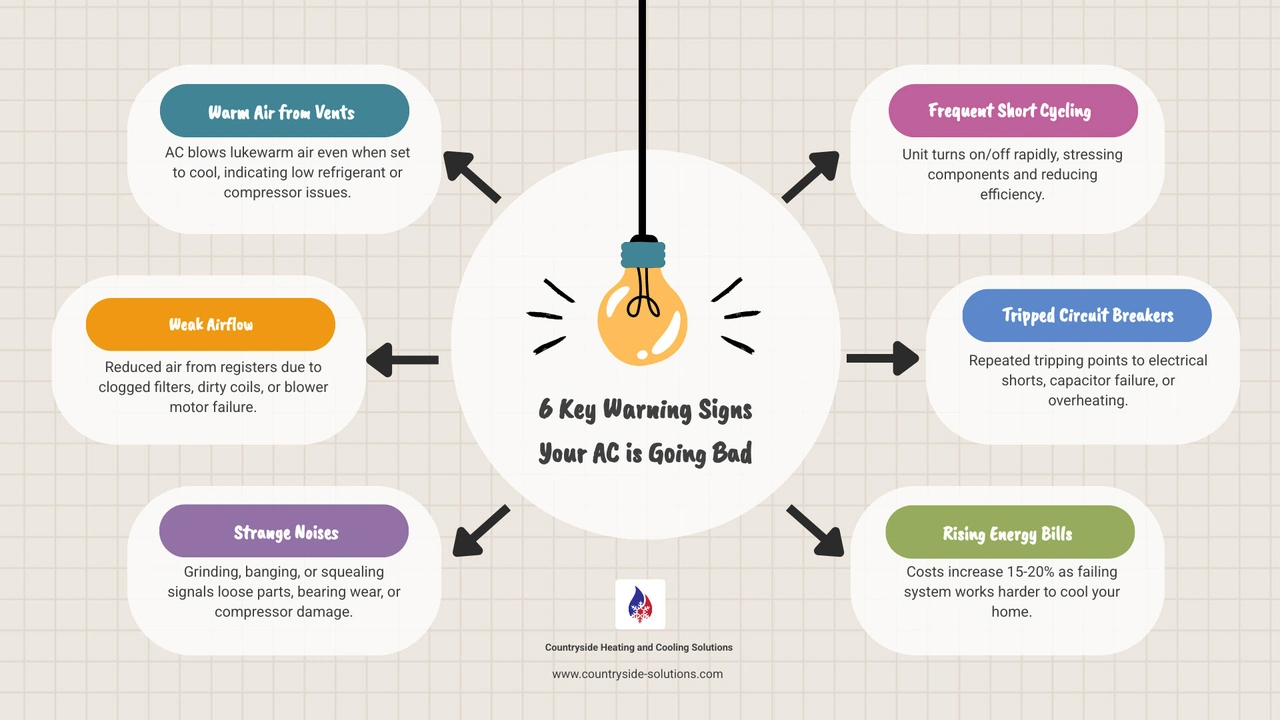
- Warm or lukewarm air blowing from vents — even when the thermostat is set to cool
- Weak airflow — barely any air coming through the registers
- Strange noises — grinding, banging, squealing, or rattling from the unit
- Frequent short cycling — the system turns on and off too quickly
- Tripped circuit breakers — the AC keeps tripping the electrical panel
- Unusual odors — musty, burning, or "dirty sock" smells from the vents
- Rising energy bills — costs climbing without any change in usage habits
- Water leaks or ice buildup — around the indoor unit or on refrigerant lines
- Uneven cooling — some rooms stay warm while others feel fine
- System age over 10–15 years — older units are far more prone to failure
Most AC systems are built to last between 10 and 15 years with proper maintenance. If your unit is approaching or past that range — especially here in the Twin Cities, where systems work hard through both humid summers and brutal winters — even small symptoms deserve a closer look.
The good news: catching these signs early almost always means a simpler, less expensive fix. Ignoring them? That's usually how a minor repair turns into a full system replacement.
How to Know if Your AC is Going Bad: The Top Warning Signs
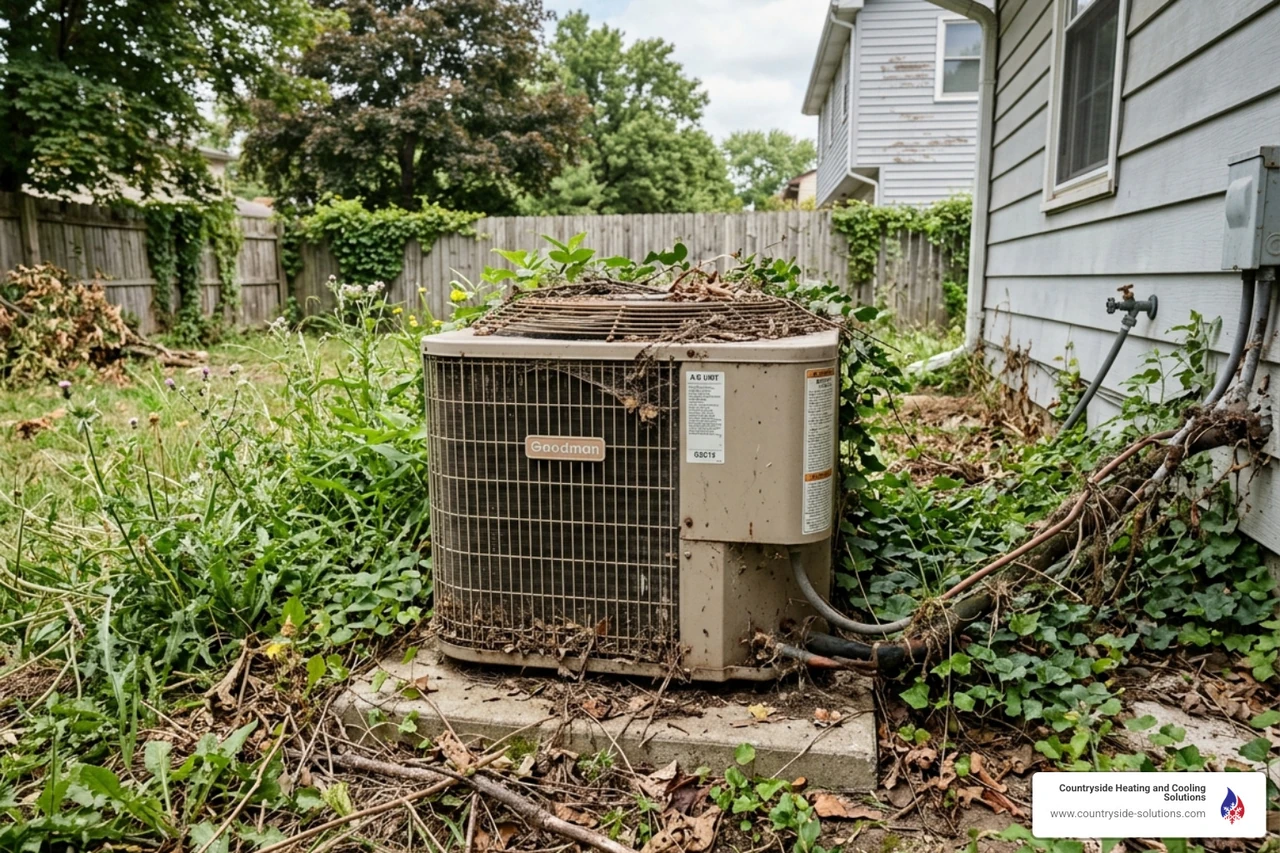
When we talk to our neighbors in Maple Plain or Wayzata, the most frequent complaint is that the home just doesn't feel right. Maybe the air is "heavy" or the unit seems to be running non-stop without making a dent in the temperature. These aren't just quirks of an older system; they are often the first indicators of mechanical distress.
One of the most frustrating signs is when your air conditioner is not putting out cold air. You might stand under a vent and feel a lukewarm breeze that does nothing to combat the July humidity. This lack of cooling is a primary symptom of a system in decline.
Another major red flag is when you notice your air conditioner won't turn off. A healthy AC should cycle on, reach the desired temperature, and then shut down. If it runs for hours on end, it's struggling to keep up, which places immense strain on every component. Conversely, you might experience the opposite problem: short cycling. This occurs when the unit turns on and off every few minutes, never completing a full cooling cycle. This is incredibly hard on the compressor and can lead to a premature death for your unit.
Why is my air conditioner blowing warm air?
If your vents are putting out heat instead of cold, don't panic yet. First, check your thermostat. It’s surprisingly common for a family member to accidentally switch the setting from "Cool" to "Heat" or leave the fan on "On" instead of "Auto." If the fan is set to "On," it will blow air continuously, even when the cooling mechanism isn't running.
However, if the settings are correct, you likely have a more serious issue. Low refrigerant levels are a common culprit; since refrigerant isn't "used up" like gas in a car, low levels always mean you have a leak. Dirty evaporator coils can also prevent heat exchange, while a failing compressor—the "heart" of your system—can stop the cooling process entirely.
How to know if your ac is going bad due to poor airflow
Weak airflow is often the result of the system working too hard against an obstruction. Think of it like trying to breathe through a straw. Common causes include:
- Clogged Air Filters: This is the #1 cause of AC issues. Experts suggest replacing your filter every 90 days, though homes with pets or smokers in areas like Minnetonka may need to change them every 30 days.
- Failing Blower Motor: If the fan inside your air handler is dying, it won't be able to push air through your ductwork.
- Leaky Ductwork: Holes or disconnected segments in your ducts can allow cooled air to escape into your attic or crawlspace before it ever reaches your living room.
- Restricted Vents: Ensure your furniture and curtains aren't blocking the supply or return registers.
"Why is my air conditioner making loud noises?" Identifying mechanical red flags in Twin Cities homes
Your air conditioner should operate with a steady, predictable hum. If it starts sounding like a blender full of rocks or a jet engine taking off, it’s trying to tell you something. In our decades of experience serving the Twin Cities metro, we've learned that specific sounds correlate to specific mechanical failures.
Grinding noises usually indicate that the bearings in the motor are shot. Squealing often points to a slipped or worn-out belt or high internal pressure. Banging or clanking is particularly concerning, as it often means a component has come loose inside the compressor. If you hear these sounds, it's best to shut the system down immediately to prevent a "domino effect" of damage. You should also watch for signs of a failing AC compressor relay, such as a clicking sound when the unit tries to start.
Identifying a failing AC compressor
The compressor is the most expensive part of your AC. If it fails, you’re often looking at a full system replacement. Watch for "hard starting," where the unit shudders or hesitates when it tries to kick on. You might also notice the outdoor unit vibrating excessively or emitting a loud buzzing or humming sound. Because the compressor is responsible for pressurizing refrigerant to move heat, a failure here means your home will stay warm no matter how low you set the thermostat.
Why does my AC trip the circuit breaker frequently?
An AC that trips the breaker is a safety hazard. This usually happens because the unit is drawing too much electricity. This could be due to:
- A Grounded Compressor: An internal electrical fault where the motor windings hit the side of the compressor.
- Capacitor Failure: The capacitor provides the "jolt" needed to start the motor; if it’s weak, the motor will pull too many amps trying to start.
- Overheating: If the outdoor coils are caked in dirt or cottonwood fluff, the system will overheat and trip the breaker to prevent a fire.
"Is my AC cooling properly?" How to test your system's efficiency
You don't need a degree in engineering to perform a basic health check on your system. A simple way to fix your air conditioner that is not cooling is to first verify that it is actually performing as intended using the "15-degree rule."
To do this, measure the temperature of the air entering your return vent and compare it to the air coming out of the supply register. If your AC is working correctly, the air leaving the supply register should be at least 15 to 20 degrees Fahrenheit cooler than the air entering the system. If the "delta" is only 5 or 10 degrees, your system is inefficient and likely "going bad." This inefficiency often shows up in your mailbox first—sudden, unexplained spikes in your energy bills are a classic sign of common AC problems.
How to know if your ac is going bad based on system age
As of May 2026, if your air conditioner was installed before 2011, it is likely reaching the end of its reliable lifespan. Technology has moved incredibly fast in the last 15 years. Modern units now use SEER2 ratings to measure efficiency, and many older units still rely on R-22 (Freon), a refrigerant that has been phased out and is now extremely expensive to service.
Newer systems are transitioning to R-454B refrigerant, which is more environmentally friendly. If your unit is over 12 years old and requires a major repair, it’s time to ask yourself: do you need a new AC unit? Often, the energy savings from a new, high-efficiency system can help pay for the upgrade over time.
What to check first if your AC is not cooling
Before you call for a professional, run through this DIY checklist:
- Thermostat: Are the batteries fresh? Is it set to "Cool"?
- Air Filter: Is it grey and covered in dust? Replace it.
- Outdoor Unit: Is it buried in tall grass or leaves? Clear a 2-3 foot perimeter around it.
- Circuit Breaker: Has it flipped to the "Off" position?
"Should I repair or replace my unit?" Making the right choice for your Maple Plain home
Deciding whether to repair or replace your air conditioner is a big financial decision. A good rule of thumb is the "$5,000 Rule." Multiply the age of your unit by the cost of the repair. If the total is more than $5,000, a replacement is generally the smarter investment. For example, a $500 repair on a 12-year-old unit ($6,000) suggests it's time for a new one.
If you have an AC with a refrigerant leak, the decision becomes even more critical. If your system still uses the old R-22 Freon, the cost of the refrigerant alone can be staggering. In these cases, we almost always recommend a replacement to a modern, efficient system.
Water leaks and unusual odors
You should never see water pooling around your indoor furnace or air handler. This often indicates AC dripping water inside the home due to a clogged condensate drain line or a cracked drain pan. If left unaddressed, this can lead to significant water damage and mold growth. You can often fix your AC leaking problems by clearing the drain line, but persistent leaks need professional attention.
Odors are another major clue. A musty smell often points to mold in the ductwork or "Dirty Sock Syndrome," which is bacterial growth on the evaporator coils. A burning plastic smell, however, is an emergency—it indicates overheating wires or a failing motor. If you smell burning, shut the system off at the breaker immediately.
The financial impact of declining efficiency
A failing AC is a hungry AC. If your utility bills have jumped by 15-20% compared to May of last year, and your usage hasn't changed, your system is losing its fight against the heat. While a repair might get it through the season, the long-term savings of a "matched system"—where the indoor and outdoor units are designed to work together—can significantly lower your monthly overhead.
Frequently Asked Questions about AC Failure
How long should a modern air conditioner last?
In the Minnesota climate, a well-maintained central AC unit typically lasts 10-15 years. While units can last up to 20 years in some cases, the extreme temperature swings in the Twin Cities metro put significant wear and tear on mechanical parts. Annual professional maintenance is the single best way to reach that 15-year mark.
Why is my AC blowing warm air instead of cold?
The most common reasons include a thermostat set to "Heat" or "Fan Only," a refrigerant leak, extremely dirty coils that can't release heat, or a failed compressor relay. If you've checked your thermostat and filter, it's time for a professional diagnostic.
What do strange noises from my AC unit indicate?
- Grinding: Failing motor bearings.
- Squealing: Belt issues or high pressure.
- Banging: Loose parts inside the compressor.
- Clicking: Electrical relay or capacitor issues.
Conclusion
Your home should be a sanctuary from the sticky Minnesota heat. By catching the signs of a failing air conditioner early, you can avoid the stress of an emergency breakdown during a July heatwave. Whether it's a strange noise, a spike in your energy bill, or just a feeling that the air isn't as crisp as it used to be, trust your instincts.
At Countryside Heating and Cooling Solutions, we’ve been keeping our neighbors comfortable since 1974. As a family-owned business, we take pride in our NATE-certified technicians and our commitment to quality workmanship across the Minneapolis–Saint Paul metro. From Maple Plain to Minnetonka, we are here to ensure your cooling system is ready for whatever the summer brings.
Don't wait for your AC to have a "total meltdown." Schedule your professional air conditioning service today and let us bring the cool back to your home!
