.webp)

Why HVAC Condensation Creates a Serious Mold Risk in Minnesota Homes
Mold risk from hvac condensation in minnesota homes is higher than most homeowners realize — and it's one of the most overlooked threats to indoor air quality in the Twin Cities metro area.
Here's a quick summary of what you need to know:
- Mold can begin growing within 24 to 48 hours on any damp surface inside your HVAC system when indoor humidity exceeds 60%
- Minnesota's climate creates a two-season problem — humid summers overload cooling systems with condensation, while cold winters produce moisture inside high-efficiency furnaces and ductwork
- The most vulnerable spots are evaporator coils, drain pans, fiberglass duct insulation, and air handler cabinets
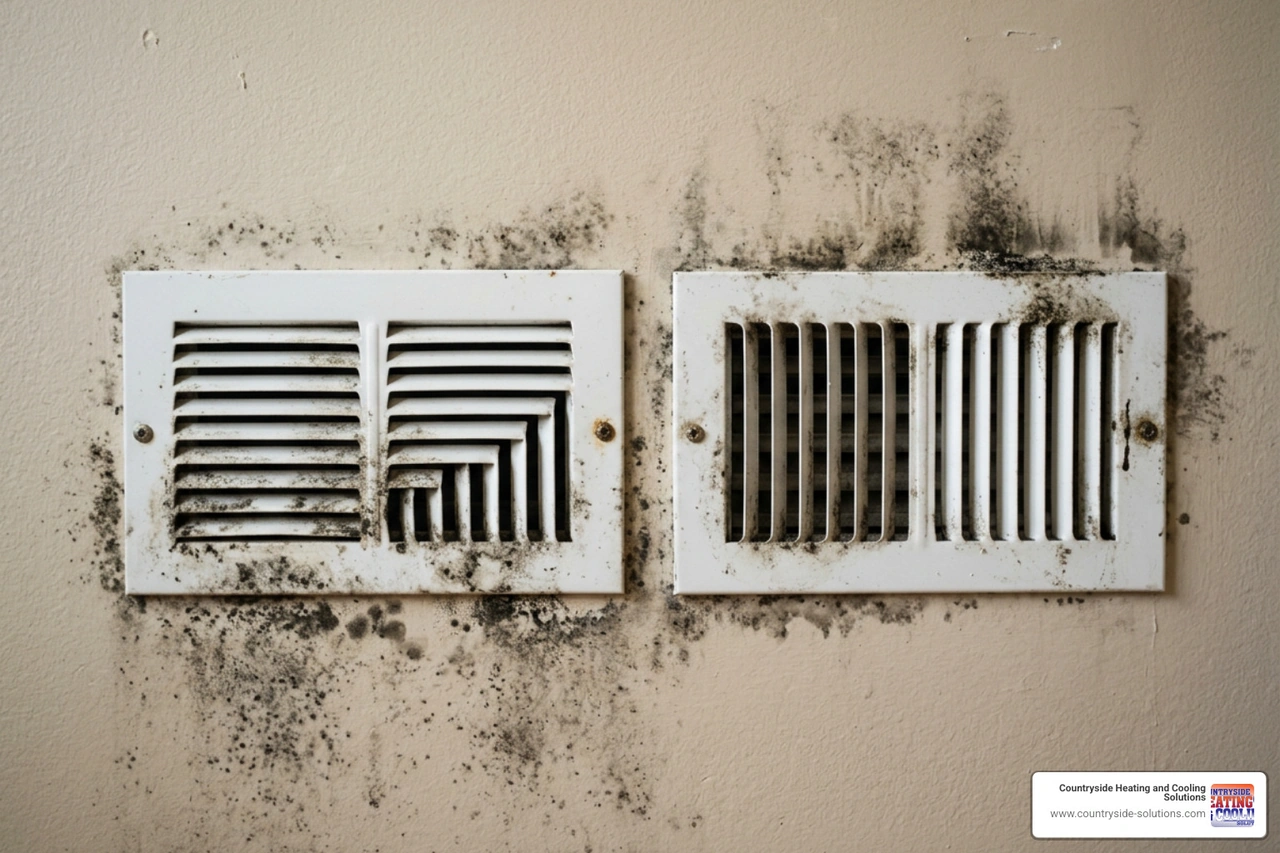
- Warning signs include musty odors when the system runs, unexplained allergy symptoms, and visible discoloration around supply vents
- Prevention centers on moisture control — keeping indoor humidity between 30% and 50% year-round and maintaining your system regularly
Minnesota homes face a unique challenge. Winters here are long and brutally cold, which means homes are sealed tight for months. Then summer arrives with dew points that regularly climb above 60°F across the metro. That back-and-forth between extreme dryness and heavy humidity creates the exact conditions that allow mold colonies to take hold inside forced-air heating and cooling systems — often hidden from view until the problem is significant.
According to the Minnesota Department of Health, maintaining indoor relative humidity between 20% and 40% in winter and below 60% the rest of the year is one of the most effective ways to stop mold before it starts. For HVAC systems, that guidance is especially relevant, because the system itself can become both the source of moisture and the delivery mechanism that spreads mold spores throughout every room in your home.
Understanding the Mold Risk from HVAC Condensation in Minnesota Homes
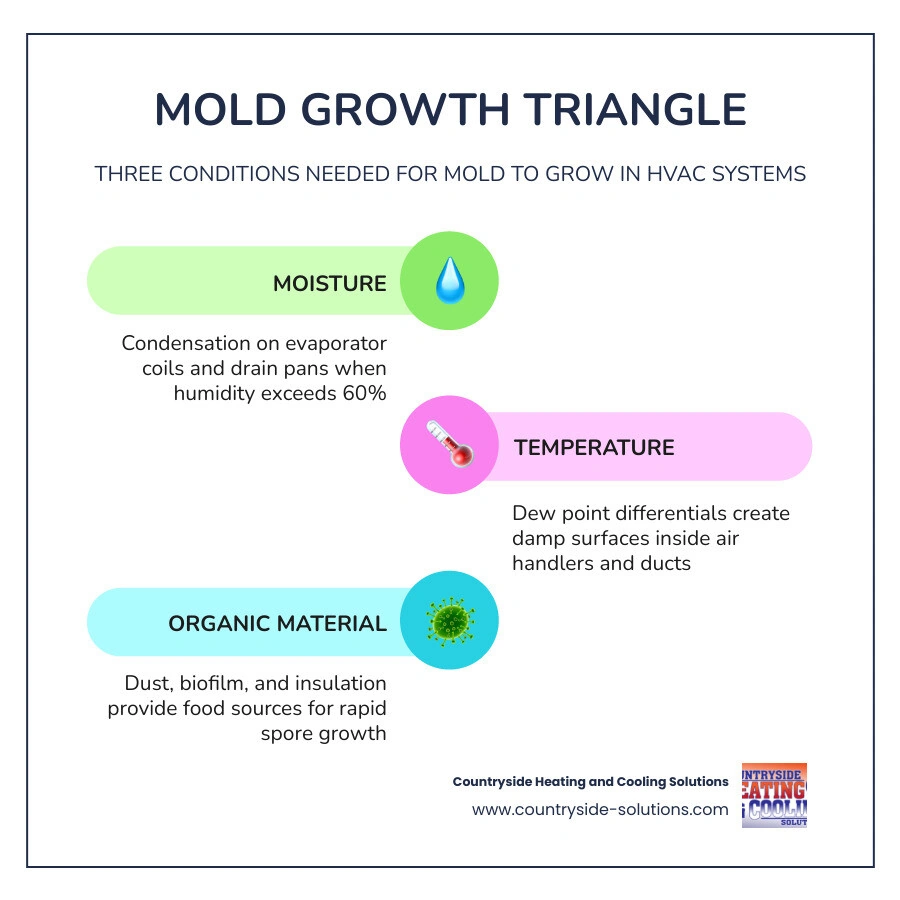
To understand why your heating and cooling system is vulnerable, we have to look at the physics of how modern air conditioners and furnaces interact with our local climate. The primary driver of mold growth inside any HVAC system is condensation, which is governed by the dew point—the temperature at which air becomes saturated with water vapor and begins to liquefy.
During a typical summer in Maple Plain, Minnetonka, or Eden Prairie, outdoor humidity levels can soar. When your air conditioner runs, its indoor evaporator coil becomes extremely cold (usually between 40°F and 45°F). As warm, humid air from your home is pulled across this cold coil, it rapidly cools below its dew point. This causes water to condense directly onto the coil’s metal fins.
This process is completely normal; in fact, a properly operating central AC system can extract between 10 and 12 gallons of water from your indoor air every single day. However, if that water does not drain away immediately, or if the system is plagued by "duct sweating," you have a recipe for microbial growth.
Duct sweating occurs due to thermal bridging and severe temperature differentials. When cold air travels through ductwork running through unconditioned spaces—such as a hot attic in Edina or a damp crawl space in Orono—the temperature difference causes the outer surface of the metal duct to drop below the dew point of the surrounding air. Moisture condenses on the outside of the duct, eventually dripping onto drywall, ceiling joists, or fiberglass insulation.
To illustrate how these dynamics shift throughout the year in the Twin Cities, let's compare the seasonal moisture behaviors of our home comfort systems:
| HVAC Component / Dynamic | Summer Cooling Season | Winter Heating Season |
|---|---|---|
| Primary Moisture Source | Atmospheric humidity condensing on cold evaporator coils | Combustion exhaust, humidifiers, and indoor activities (cooking, breathing) |
| Ductwork Behavior | "Duct sweating" on the exterior of cold supply ducts in warm spaces | Condensation inside cold duct runs (e.g., near exterior walls or in attics) |
| Average Water Production | 10 to 12 gallons per day (via AC condensation) | Varies; high-efficiency condensing furnaces produce gallons of acidic condensate daily |
| Ideal Relative Humidity | Keep under 50% to prevent spore germination | Keep between 20% and 40% to prevent window and wall condensation |
| Common Mold Hotspots | Drain pans, wet blower compartments, evaporator coils | Frozen condensate lines backing up, uninsulated duct runs, humidifiers |
Why Minnesota's Climate Accelerates HVAC Moisture Problems
Our local climate in the North Star State is famously extreme. We experience polar winter cold snaps where temperatures plummet well below zero, followed by summer heat waves where the relative humidity easily climbs past 70%. This dramatic swing forces our home comfort systems to work incredibly hard, but it also creates unique moisture traps inside our homes.
Because of our harsh winters, homes in communities like Chanhassen, Plymouth, and Maple Grove are built to be exceptionally airtight. Modern energy codes mandate tight building envelopes to prevent heat loss. While this is fantastic for your utility bills, it means that natural air infiltration is significantly reduced.
Without regular fresh air exchange, moisture generated inside the home from daily activities—such as cooking, showering, breathing, and using humidifiers—gets trapped. A family of four releases an average of 0.44 pints of moisture per hour just through respiration and perspiration. If your home has a finished basement, the risk is even higher; statistics show that 43% of basements tested in residential properties across humid climates show mold growth, and roughly 47% of all U.S. homes have some form of mold problem.
When this trapped, moisture-laden indoor air meets your HVAC system, it quickly finds cold surfaces to condense on. If your home is struggling to manage this balance, you might notice persistent window condensation or damp closets. To learn more about identifying these warning signs, read our guide on Signs Your Home Needs Better Ventilation.
Summer Humidity and Mold Risk from HVAC Condensation in Minnesota Homes
In the summer, the mold risk from hvac condensation in minnesota homes peaks. When warm air blows across the cold evaporator coil, the resulting moisture should run down the coil, collect in the condensate drain pan, and flow out of your home through a dedicated PVC drain line.
However, if your air conditioner is oversized—a common issue in suburban homes—it will suffer from short cycling. This means the system turns on, cools the house down rapidly, and shuts off before it has run long enough to properly dehumidify the air. This leaves high levels of humidity in the air and leaves the evaporator coil dripping wet for extended periods.
Over time, dust, pet dander, and skin cells pass through your air filter and settle on the wet coil. This organic debris combines with the constant moisture to form a biological film, or biofilm. Biofilm acts as an insulating blanket on your coils, reducing heat transfer, spiking your energy bills by up to 25%, and serving as an active breeding ground for mold. If you live in the western suburbs and want to ensure your home's air remains clean, check out our services for Indoor Air Quality Minnetonka MN.
Winter Condensation and Mold Risk from HVAC Condensation in Minnesota Homes
In the winter, the moisture dynamics flip, but the mold risk remains. High-efficiency condensing furnaces (those with ratings of 90% AFUE or higher) are designed to extract extra heat from combustion gases. This cooling process causes water vapor in the exhaust to condense into an acidic liquid inside the furnace's secondary heat exchanger.
This acidic condensate must be drained out of the home. However, during extreme Minnesota cold snaps, the external portion of these drain lines can freeze. When a drain line freezes, the water backs up into the furnace cabinet, saturating the internal insulation and blower compartments.
Furthermore, if your home’s indoor relative humidity is kept too high during the winter (above 40%), that moist air will migrate into wall cavities, attics, and unconditioned crawl spaces through tiny air leaks. When it hits cold structural elements or uninsulated ductwork, it condenses instantly, encouraging hidden mold growth. To combat this issue, many local homeowners benefit from active ventilation systems; read about The Need for an Air Exchanger in Your Home to see how these systems protect your indoor environment.
Vulnerable Areas: Where Mold Grows in Your Heating and Cooling System
Mold is a highly resourceful fungus. It only requires three basic ingredients to thrive: moderate temperatures (70°F to 90°F is its sweet spot), an organic food source (such as dust, dander, or paper backing), and moisture. Your HVAC system can easily provide all three if it isn't properly maintained.
The most common areas where we discover mold growth during our inspections include:
- Evaporator Coils: The continuous presence of condensation combined with microscopic dust particles makes this a prime target for mold.
- Condensate Drain Pans: If the pan is not pitched correctly, or if the drain line is partially clogged, standing water will sit in the pan, allowing mold to colonize.
- Fiberglass Insulation: Many older air handlers and duct runs are lined with internal fiberglass insulation for sound dampening and thermal efficiency. Once this porous material gets wet, it is almost impossible to clean and must be replaced.
- Ductwork Joints and Boots: Air leaks at the connections of your ductwork allow humid air to enter, leading to localized condensation and mold growth near supply registers.
Mold in Air Handlers and Wet Insulation
Inside your air handler, the blower motor circulates air across the damp evaporator coil. If the condensate pan overflows due to a blockage, water will seep into the bottom of the cabinet, soaking the internal fiberglass insulation.
Porous fiberglass insulation is incredibly vulnerable to mold species like Cladosporium and Aspergillus. These molds can grow silently inside the dark cabinet, completely hidden from view. Because fiberglass is fibrous, mold roots (hyphae) anchor deep within the material.
One clear warning sign of a historic or active leak inside your air handler is the presence of rust stains on the metal casing or wet patches on the surrounding floorboards. Modern, high-quality HVAC designs avoid this issue by utilizing double-walled cabinets with fully enclosed, non-porous insulation that prevents moisture from ever contacting the insulating material.
Leaky and Dirty Ductwork
Your air ducts act as the respiratory system of your home. Over the years, they naturally collect a layer of household dust, which is primarily composed of organic matter like skin cells, pet dander, and pollen.
If your ductwork has air leaks or lacks a proper exterior vapor barrier (especially in unconditioned areas like attics or crawl spaces), humid air will seep in. When this moisture mixes with the accumulated dust inside the ducts, it creates a thick, damp "dust sludge." This sludge is the ultimate buffet for mold spores.
Once mold takes root in this sludge, every time your furnace or air conditioner kicks on, it can distribute spores throughout your living spaces. To keep your air clean and free of these microscopic irritants, consider upgrading your home's filtration system; learn more about our solutions for Whole House Air Filtration Waconia MN.
Health Risks and Warning Signs of HVAC Mold Contamination
Breathing in air from a contaminated HVAC system is more than just unpleasant—it can pose real health risks to your family. Mold reproduces by releasing thousands of microscopic spores into the air. When these spores are distributed by your ductwork, they are easily inhaled.
Many mold species produce mycotoxins—toxic chemical compounds present on the surface of mold spores. In addition, growing mold releases microbial Volatile Organic Compounds (mVOCs) as part of its metabolic process. These mVOCs are responsible for the classic, musty "dirty sock" smell that often alerts homeowners to a hidden moisture problem.
Physical Symptoms of Mold Exposure
For individuals with allergies, asthma, or compromised immune systems, exposure to airborne mold spores can trigger immediate respiratory irritation. Common symptoms include:
- Frequent sneezing and nasal congestion
- Persistent coughing, wheezing, or shortness of breath
- Itchy, watery, or red eyes
- Chronic sinus headaches and throat irritation
- Unexplained fatigue or skin rashes that improve when leaving the home
If you notice that your family's allergy symptoms seem to flare up specifically when the heating or air conditioning is running, or if you feel significantly better when you are away at the office, it is highly likely that your HVAC system is harboring mold. To explore ways to clean and refresh your living space, read our expert tips on how to Improve Home Indoor Air Quality.
How to Detect Hidden Moisture and Mold
Because your HVAC system is largely sealed and hidden behind walls or in utility closets, detecting mold early requires a bit of detective work. Here are the most effective ways to spot a problem before it escalates:
- Use a Hygrometer: Monitor your indoor relative humidity. If it consistently climbs above 50% in the summer or 40% in the winter, your home is at risk.
- Perform a Smell Test: Pay close attention to the air coming directly out of your supply registers. A damp, musty odor is a primary indicator of mold in the ducts or air handler.
- Inspect Your Registers: Remove a few vent covers and look inside with a flashlight. Look for dark spots, powdery substances, or damp clumps of dust.
- Check the Condensate Pan: Locate your indoor AC cabinet (usually sitting on top of your furnace) and inspect the drain pan for standing water or slimy, dark buildup.
For homes that feel chronically stuffy or damp, increasing the rate of fresh air exchange can make a world of difference. Discover how modern systems achieve this by reading How Fresh Air Exchange Improves Indoor Air Quality.
Actionable Prevention and Maintenance Strategies for Twin Cities Homeowners
The good news is that mold growth is entirely preventable. Because mold cannot grow without moisture, your primary goal is to control condensation and maintain clean, dry surfaces inside your heating and cooling equipment.
By establishing a few simple maintenance habits, you can protect both your physical health and the lifespan of your mechanical systems:
- Replace Air Filters Regularly: Change standard 1-inch filters every 30 to 90 days. A dirty filter restricts airflow, which causes the temperature of your evaporator coil to drop, leading to frozen coils and major water leaks when they thaw.
- Flush Your Condensate Drain: Once a month during the cooling season, pour a cup of warm water and white vinegar down your condensate drain line to prevent algae and mold from clogging the pipe.
- Keep Outdoor Units Clear: Ensure there are at least two feet of clearance around your outdoor AC condenser. Clear away grass clippings, leaves, and cottonwood seeds to maintain optimal airflow.
Maintaining Proper Indoor Humidity
The most effective barrier against mold is keeping your home's relative humidity strictly controlled. While portable dehumidifiers can help in a single room, they are rarely enough to manage an entire house.
A whole-house dehumidifier is installed directly into your ductwork. It monitors the humidity of the air returning from your home and removes excess moisture before distributing the dry, comfortable air back to your rooms. Keeping your humidity between 30% and 50% ensures that mold spores remain dormant and cannot germinate. To see how whole-home ventilation systems can assist in this balance, read about Enhancing IAQ with Ventilators.
Professional Ventilation and System Design
When it comes to long-term prevention, the physical design of your HVAC system is critical. Modern, energy-efficient homes benefit immensely from Energy Recovery Ventilators (ERVs). These systems continuously exhaust stale, humid indoor air while bringing in fresh outdoor air, pre-conditioning the incoming air so your heating and cooling systems don't have to work harder.
Additionally, choosing rigid metal ductwork over flexible, corrugated plastic ductwork is highly recommended. Rigid ducts have smooth interior surfaces that do not catch dust easily, making them far less hospitable to mold. They are also much easier to professionally clean and seal.
To explore professional upgrades for your home, learn about our Professional Ventilator Installation Services and understand the overall Importance of Proper Ventilation in cold climates.
Frequently Asked Questions about HVAC Mold in Minnesota
How quickly can mold grow in my HVAC system?
Under peak summer conditions—especially when indoor relative humidity exceeds 60% and temperatures are between 70°F and 90°F—mold spores can germinate and begin growing on damp surfaces within 24 to 48 hours. A full, visible colony can establish itself inside your ductwork or on your evaporator coils in as little as two weeks if left unaddressed.
Can a dirty air filter cause mold in my AC?
Yes, absolutely. A dirty, clogged air filter restricts the volume of air flowing across your evaporator coil. Without sufficient warm air passing over it, the refrigerant inside the coil drops below freezing, causing the condensation on the coil to freeze solid. When the system eventually shuts off, this block of ice melts rapidly, often overflowing the condensate drain pan and saturating the surrounding insulation, drywall, and blower cabinet—creating the perfect environment for mold.
When should I call a professional for HVAC mold remediation?
You should call a professional immediately if you discover visible mold growth covering more than 10 square feet, if you smell a persistent musty odor that doesn't go away after changing your filter, or if family members are experiencing unexplained respiratory symptoms. Cleaning mold from delicate components like evaporator coils or internal duct insulation requires specialized tools, negative-pressure vacuums, and EPA-approved antimicrobials to prevent spreading the spores throughout your home. To understand how professional air exchange systems maintain a clean environment, read about the Air to Air Exchanger Indoor Environment.
Conclusion
Managing the mold risk from hvac condensation in minnesota homes requires a proactive approach to moisture control and regular professional maintenance. With our extreme seasonal swings in the Twin Cities, keeping your heating, cooling, and ventilation systems clean and dry is essential for protecting your family's health and your home's structural integrity.
At Countryside Heating & Cooling Solutions, our family-owned business has been keeping western Twin Cities families comfortable since 1974. Our licensed, NATE-certified technicians have decades of experience diagnosing hidden moisture issues, cleaning delicate HVAC components, and installing advanced indoor air quality systems. Based in Maple Plain, MN, we proudly serve homeowners in Minnetonka, Waconia, Chanhassen, and the surrounding suburbs with guaranteed next-business-day service.
Don't let hidden moisture compromise the air your family breathes. Protect your home's air quality with professional solutions and schedule an indoor air quality assessment with our team today!
