.webp)

Why Four-Season Climates Make Mold Prevention a Year-Round HVAC Job
Understanding how your HVAC prevents mold in four season climates is one of the most important things a Minneapolis-Saint Paul homeowner can do to protect their family's health and their home. Minnesota doesn't give you just one mold risk — it gives you four. Steamy July humidity pushes indoor moisture levels toward the danger zone. Then a frigid January furnace run strips all that moisture out. Each seasonal swing creates a different set of conditions where mold can quietly take hold, often before you ever notice a smell or see a spot.
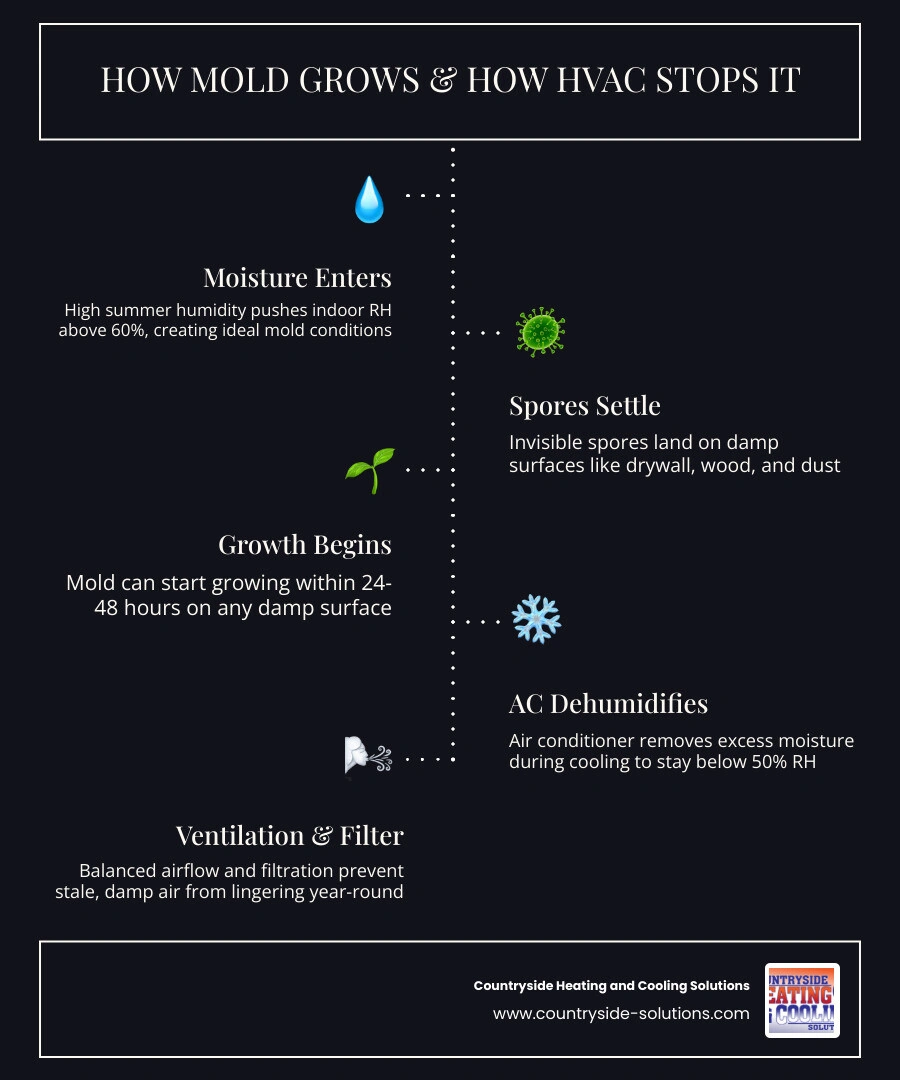
Mold spores are always present in the air around us — they're invisible to the naked eye and completely normal outdoors. The problem starts when they land on a damp surface indoors. Research shows mold can begin growing within just 24 to 48 hours once humidity climbs above 60%. Your HVAC system is your home's primary tool for keeping that from happening, working in every season to manage moisture, move air, and filter out spores before they settle.
Here's a quick summary of how your HVAC system prevents mold across all four seasons:
| Season | Main Mold Risk | How Your HVAC Helps |
|---|---|---|
| Summer | High indoor humidity from heat and moisture | Air conditioner removes moisture (dehumidifies) while cooling |
| Fall | Temperature swings cause condensation | Balanced airflow prevents moisture from settling |
| Winter | Dry furnace air can cause over-humidification when poorly controlled | Whole-home humidifiers keep RH in the safe 30–50% range |
| Spring | Rising temps reactivate dormant moisture in walls and ducts | Fresh ventilation and filtration flush out stale, damp air |
The EPA recommends keeping indoor relative humidity between 30% and 50% — low enough to stop mold from thriving, high enough to stay comfortable. Your HVAC system, when properly sized, maintained, and equipped, is what makes that target achievable all year long.
The Science of Humidity: How Your HVAC Prevents Mold in Four Season Climates
To understand how your heating and cooling equipment acts as a shield against fungal growth, we have to look at the science of indoor air. Mold is not particularly picky. If it has oxygen, a food source (like drywall paper, wood, or dust), and moisture, it will set up shop. While you cannot realistically remove oxygen or building materials from your home, you can absolutely control the moisture. That is where your HVAC system steps in as the ultimate moisture manager.
When we talk about moisture in the air, we are talking about relative humidity (RH)—the amount of water vapor present in the air expressed as a percentage of the amount needed for saturation at that same temperature. When relative humidity crosses the 60% threshold, mold spores find the perfect environment to settle, multiply, and spread.
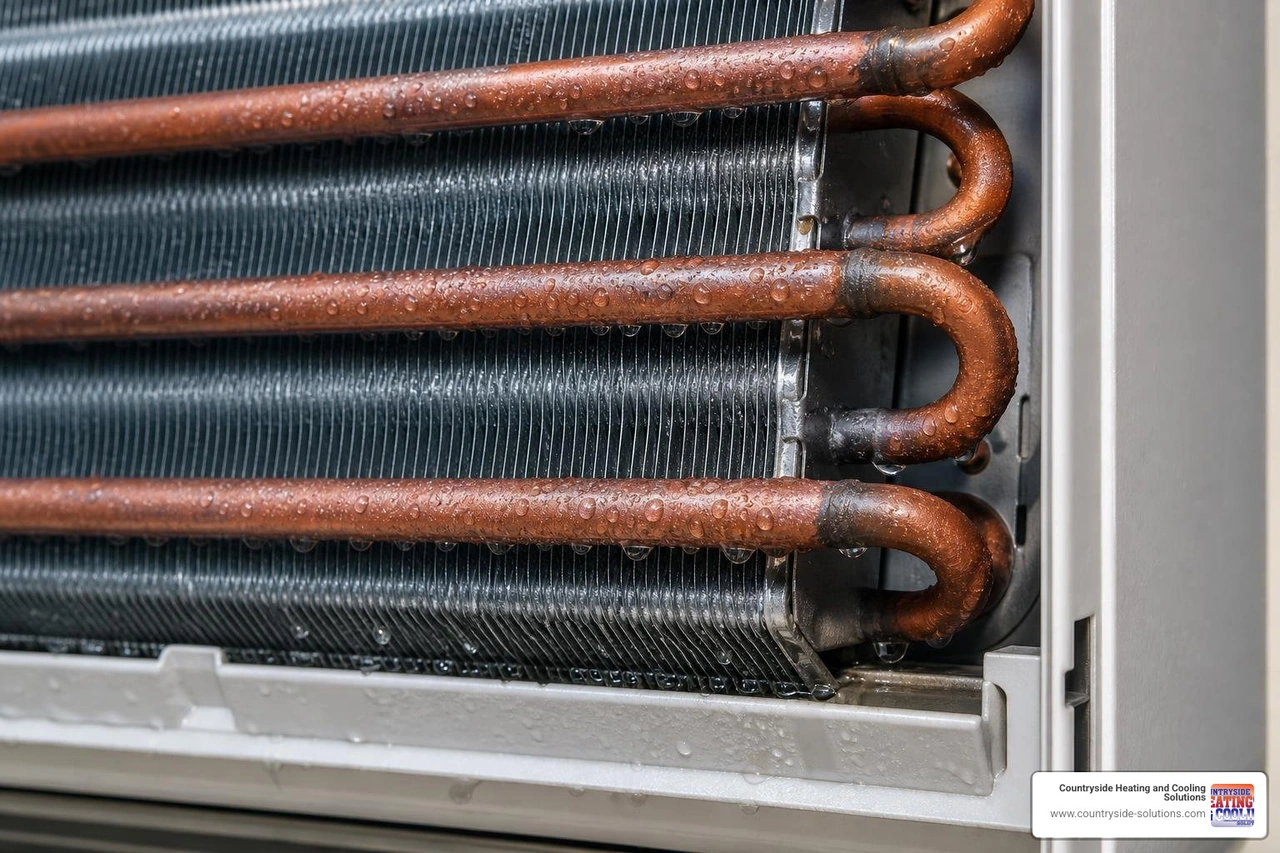
Your air conditioner plays a massive role in stopping this cycle. Inside your indoor AC unit sits the evaporator coil. As warm, humid air from your home is pulled across these cold coils, the moisture in the air condenses onto the metal surfaces—very similar to how water droplets form on a cold glass of lemonade on a hot July afternoon in Edina. This condensation collects in a drain pan and flows safely out of your home through a condensate line. By pulling this water out of circulation, your system lowers the indoor relative humidity back into the ideal 30-50% range, making your home a hostile environment for mold.
Understanding How Your HVAC Prevents Mold in Four Season Climates Year-Round
In a true four-season climate like ours in the Twin Cities, dramatic outdoor temperature fluctuations directly affect how indoor air behaves. As the outdoor temperature swings from hot and humid to freezing cold, the dew point—the temperature at which air must be cooled to become saturated with water vapor—shifts constantly.
Without active moisture control, these rapid shifts can cause condensation to form in hidden areas, such as behind drywall, in crawl spaces, or inside your ductwork. For example, if you run your air conditioner on a humid summer day, the cold air traveling through your ducts can cause the exterior of the metal ducts to sweat if they pass through an unconditioned attic or wall cavity. If this condensation isn't managed, it creates a damp breeding ground.
By utilizing comprehensive Indoor Air Quality Services, you can ensure your entire home's air profile remains balanced. Modern HVAC systems use advanced sensors and smart thermostats to monitor the relationship between temperature and humidity, adjusting run times and airflow to keep the dew point within a safe range so condensation never has the chance to form.
Seasonal Shifts: Managing Moisture from Humid Summers to Dry Winters
Living in western suburbs like Minnetonka or Wayzata means preparing your home for two completely different atmospheric extremes. Our hot, humid summers demand heavy-duty moisture removal, while our notoriously cold, dry winters require us to introduce moisture back into the living space.
During the summer, high outdoor humidity infiltrates our homes through open doors, window gaps, and natural ventilation. If your air conditioner is running properly, it serves as your primary defense. However, in modern, tightly sealed homes, standard cooling cycles might not be enough to manage the high latent load (the moisture content of the air) without overcooling the house. This is where installing a system for Whole House Dehumidification becomes incredibly valuable, pulling pints of water out of the air independently of your cooling needs.
Conversely, winter brings a completely different challenge. Freezing outdoor air holds very little moisture. When that cold air leaks into your home and is heated by your furnace, its relative humidity plummets—often dropping below 15%. While dry air stops mold in its tracks, it causes a host of other issues, including static electricity, dry skin, and cracking wood floors or trim.
To stay comfortable, homeowners often add moisture back into the air. However, if you use cheap portable humidifiers, you risk creating localized pockets of high humidity—like damp walls near the humidifier—which can trigger localized mold growth. Integrating Whole Home Humidifiers directly into your ductwork allows for even, controlled moisture distribution that keeps the entire house at a safe, uniform humidity level.
Summer Dehumidification vs. Winter Humidification
Did you know that the very first modern air conditioner was not actually invented to cool people down? In 1902, Willis Carrier designed a cooling system for a Brooklyn printing plant. Its sole purpose was to control humidity so that the paper wouldn't warp and the ink would dry cleanly without smudging. Cooling the air was simply a happy side effect!
In the summer, your AC handles the "latent load" (moisture) alongside the "sensible load" (temperature). If your system is running correctly, it balances both. But when winter rolls around, your furnace takes center stage.
As the heating system runs continuously during a freezing January stretch in Maple Grove, the indoor air can become dry enough to cause static shocks and woodwork cracking. Homeowners naturally want to raise the humidity. The key is finding the sweet spot:
- Summer Target: Keep indoor humidity below 50% using your AC and whole-home dehumidifier to prevent mold.
- Winter Target: Keep indoor humidity between 30% and 40% using a whole-home humidifier. Keeping it in this range prevents dry skin and static while ensuring moisture does not condense on freezing-cold window panes, which is a major cause of winter mold around window frames.
Critical Components: Airflow, Ventilation, and Filtration
If mold had a dating profile, it would say: "I like long walks on damp drywall, steamy summers, and your poorly balanced ventilation system."
Mold absolutely loves stagnant air. In corners of rooms, closets, basements, or behind furniture where air doesn't circulate, moisture can settle and remain damp for days. Maintaining proper airflow throughout your home is essential because moving air encourages evaporation, preventing moisture from pooling on surfaces.
Your HVAC system relies on bathroom and kitchen exhaust fans to remove localized moisture at its source before it can migrate to other rooms. But beyond spot ventilation, your central system must continuously circulate and clean the air.
Using a Whole House Air Filtration system helps trap airborne mold spores, preventing them from settling in your living spaces or inside your heating and cooling equipment. Additionally, keeping your ductwork clean is vital. You can learn more about how dust and debris inside your ventilation system can act as food for spores in our guide on How Clean Ducts Reduce Mold Risk.
HRV vs. ERV: Balanced Ventilation for Twin Cities Homes
Because modern homes in suburbs like Eden Prairie and Waconia are built to be highly energy-efficient and airtight, they often struggle with stale air and trapped moisture. To solve this, builders and HVAC professionals install air exchangers. There are two primary types: Heat Recovery Ventilators (HRVs) and Energy Recovery Ventilators (ERVs).
- Heat Recovery Ventilators (HRVs): These systems exchange heat between the incoming fresh air and outgoing stale air, but they do not transfer moisture. They are excellent for cold-dry climates because they help flush out excess indoor moisture during the winter.
- Energy Recovery Ventilators (ERVs): These systems transfer both heat and moisture. In the summer, an ERV takes the humidity from the incoming outdoor air and transfers it to the dry exhaust air leaving the home, reducing the moisture load on your AC. In the winter, it keeps some of your indoor moisture from escaping, preventing your home from getting too dry.
For many homes in our four-season climate, an ERV is an outstanding year-round compromise because it helps control humidity in both summer and winter. If you want to explore how these systems can transform your home's air quality, check out our articles on:
- Enhancing IAQ with Ventilators
- The Need for an Air Exchanger in Your Home
- Air to Air Exchanger Services
- Air to Air Exchanger Indoor Environment
- Professional Ventilator Installation Services
Common HVAC-Related Causes of Mold and How to Avoid Them
While a properly functioning HVAC system is your best ally against mold, a neglected or poorly designed system can actually become the source of the problem.
Here are the most common HVAC-related causes of mold growth in four-season climates:
- Clogged Condensate Drain Lines: The moisture your AC pulls from the air has to go somewhere. If the drain line becomes clogged with dust, algae, or biofilm (often called "slime"), the water will back up and overflow the drain pan. This standing water creates an instant mold breeding ground right next to your blower fan, which can then distribute spores throughout your entire home.
- Leaky Air Ducts: If your ductwork has gaps or cracks, it can pull warm, humid air from attics or crawl spaces into your air stream. When that humid air hits the cold surfaces inside your AC, it condenses, causing mold to grow inside the dark, hard-to-reach areas of your ducts.
- Dirty Air Filters: Air filters should be changed every 30 to 90 days. When a filter is left in place too long, it becomes clogged with dust and organic matter. If the filter becomes damp from high humidity, that dust serves as food, allowing mold to grow directly on the filter media and enter your air stream.
- Improper AC Sizing: Bigger is not always better. If your air conditioner is oversized for your home, it will quickly cool the air and shut off. This is known as "short cycling." Because the system doesn't run long enough, it fails to pull moisture out of the air, leaving your home cold but incredibly damp and humid.
Upgrades That Show How Your HVAC Prevents Mold in Four Season Climates
If you want to take your home's mold defenses to the next level, there are several highly effective upgrades you can integrate into your central system:
- UV-C Light Systems: Installing specialized germicidal lights over your indoor evaporator coil is an incredibly powerful upgrade. These lights emit a specific wavelength of ultraviolet light that penetrates the cell walls of microorganisms, disrupting their DNA and rendering them unable to reproduce. You can read more about this technology in our guide on UV Light Air Purification Systems.
- High-Efficiency MERV Filters: Upgrading to a MERV 11 or MERV 13 pleated filter allows your system to trap much smaller particles, including microscopic mold spores, before they can settle in your home.
- Variable-Speed Blower Motors: Unlike traditional single-stage blowers that are either 100% on or completely off, variable-speed blowers run continuously at lower, whisper-quiet speeds. This constant, gentle air movement prevents stagnant air pockets and allows your AC to dehumidify your home much more effectively during hot summer months.
Warning Signs: When to Call a Professional for HVAC Mold Issues
Because mold often grows in hidden spaces like ductwork or behind utility closet walls, you need to know what warning signs to look out for.
- Musty Odors: If you notice a damp, earthy smell—often referred to as "Dirty Sock Syndrome"—whenever your air conditioner or furnace kicks on, there is a high probability that mold or bacteria is growing on your coils or inside your ducts.
- Visible Spotting Near Vents: Keep an eye on your supply registers. If you notice black dust, fuzzy spots, or dark discoloration forming on or around the vents, mold spores may be clustering where cold air meets warm drywall.
- Worsening Allergy or Asthma Symptoms: If family members experience unexplained sneezing, coughing, watery eyes, or respiratory irritation that seems to improve when they leave the house, your indoor air quality may be compromised.
- Water Pooling Around the Unit: If you see standing water near your furnace or indoor AC cabinet, your condensate line is likely backed up or leaking, which requires immediate attention before mold takes hold.
If you notice any of these signs, it is time to call in the professionals. Attempting to spray household cleaners or bleach into your vents can damage your equipment and fail to address the root cause of the moisture.
Regular professional maintenance is the easiest way to prevent these issues from ever starting. To learn more about what goes into keeping your system running safely and efficiently, explore our detailed resources:
- Annual HVAC Maintenance Complete Guide
- HVAC Maintenance Visit Complete Guide
- How HVAC Maintenance Extends Equipment Life
- What Does an HVAC Maintenance Plan Include
Frequently Asked Questions about HVAC Mold Prevention
How quickly can mold grow in a damp home?
Mold is incredibly fast-acting. Under the right conditions—specifically when indoor relative humidity exceeds 60% and temperatures are warm—mold spores can germinate and begin to grow on damp surfaces within 24 to 48 hours. Once growth begins, spores can multiply rapidly, which is why addressing water leaks, high humidity, or condensation immediately is so critical.
What is the ideal indoor relative humidity range?
The EPA recommends keeping your indoor relative humidity between 30% and 50%. This range is the "Goldilocks zone" for homes: it is dry enough to prevent mold spores from growing and dust mites from thriving, but humid enough to prevent dry skin, throat irritation, static electricity, and damage to wood furnishings.
Can dirty air filters cause mold in my HVAC system?
Yes, absolutely. When an air filter is not changed every 30 to 90 days, it accumulates a thick layer of dust, pet dander, and other organic particles. If your indoor humidity rises, this dirty filter can trap moisture. The combination of trapped moisture and organic dust creates a perfect food source for mold, allowing it to grow directly on the filter and blow spores into your living spaces.
Conclusion
When it comes to keeping your home healthy, understanding how your HVAC prevents mold in four season climates is your best defense against indoor air quality issues. From the humid peaks of summer to the freezing depths of winter, your heating, cooling, and ventilation systems work tirelessly behind the scenes to keep moisture levels balanced and your family comfortable.
At Countryside Heating and Cooling Solutions, we have been helping our neighbors across the western Twin Cities suburbs—including Minnetonka, Edina, Wayzata, and Maple Plain—maintain safe, comfortable, and mold-free homes since 1974. Our team of fully licensed, NATE-certified technicians has the local expertise and specialized tools to design, install, and maintain the perfect indoor air quality setup for your specific home. Plus, with our guaranteed next-business-day service, you never have to worry about waiting around when you need help.
Are you concerned about the air quality in your house? Can anyone recommend advanced air purification services in Wayzata or surrounding areas? We are here to help you breathe easier. Contact us today to schedule your comprehensive indoor air quality evaluation!
Ready to take control of your home's air quality? Explore our full range of solutions on the Countryside Heating & Cooling Solutions Air Quality Services page.
