.webp)

Why Your Airtight Home Needs Better Ventilation (And What to Do About It)
Why your airtight home needs better ventilation is one of the most important — and most overlooked — questions in modern home comfort. The short answer: sealing your home tightly to save energy also seals in the pollutants, moisture, and CO2 that your family generates every single day. Without a mechanical system to exchange that stale air for fresh air, those contaminants have nowhere to go.
Here's why airtight homes need mechanical ventilation:
- CO2 builds up fast. Studies show that over 90% of bedrooms in airtight homes without mechanical ventilation regularly exceed 1,500 ppm CO2 overnight — a level linked to fatigue, headaches, and reduced focus.
- VOCs and formaldehyde concentrate indoors. As a home gets tighter, formaldehyde levels can rise by 77% to 169% compared to a leaky older home. Indoor VOC levels commonly run 2–5 times higher than outdoor air.
- Moisture gets trapped. Normal daily activities — cooking, showering, breathing — generate significant water vapor. With no controlled exhaust path, that moisture leads to condensation and mold risk.
- Natural infiltration disappears. Pre-1980 homes leaked air at a rate of 1.5–3.0 air changes per hour naturally. Modern tight construction drops that to just 0.2–0.5 ACH, eliminating the accidental ventilation older homes relied on.
- Energy codes mandate tighter envelopes but don't always require compensating ventilation. This creates a gap between how tight your home is built and how much fresh air is actually getting in.
The good news: a properly designed mechanical ventilation system — like a heat recovery ventilator (HRV) or energy recovery ventilator (ERV) — solves all of this without throwing away the energy savings you worked so hard to achieve.
Minneapolis–Saint Paul homeowners face this challenge head-on. Our cold winters push us to seal homes tightly for warmth and efficiency. But without the right ventilation strategy, that same tight envelope quietly degrades the air your family breathes every hour of every day.
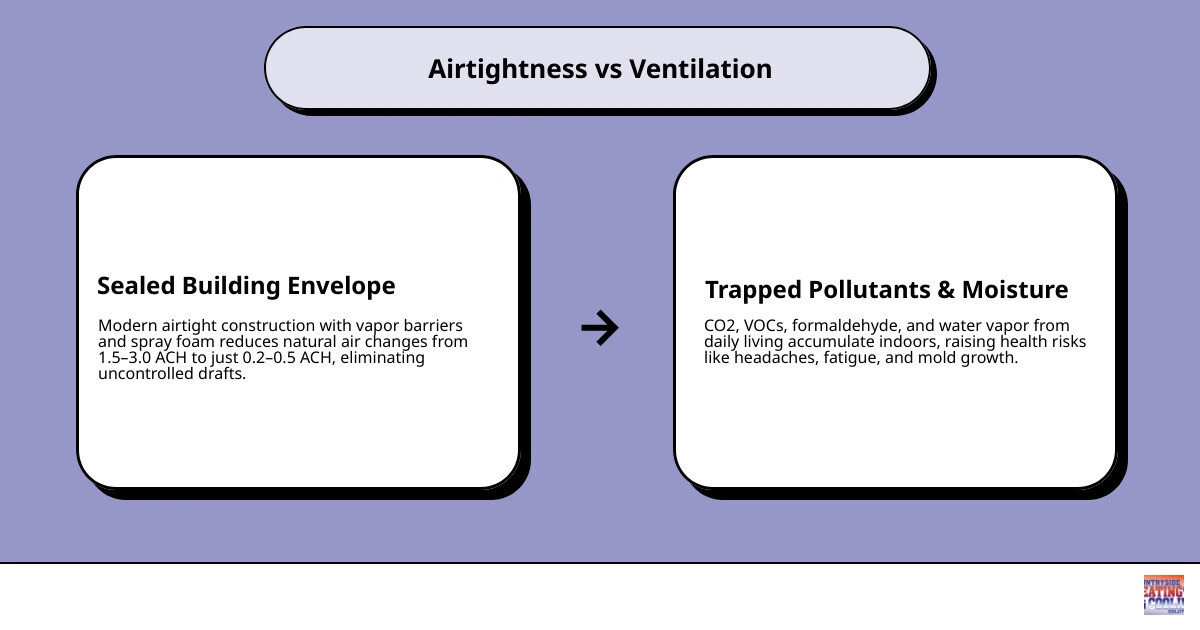
The Paradox of Energy Efficiency: Why Your Airtight Home Needs Better Ventilation
In the construction world, we have achieved incredible feats of engineering over the last few decades. Modern homes are built like high-performance thermoses. We use advanced vapor barriers, spray foam, and high-tech weatherization products to seal up every crack, seam, and joint.
By wrapping our homes in this continuous, tight building envelope, we prevent warm air from escaping during our freezing Minnesota winters and keep humid summer air at bay. This has led to a massive 50% to 70% reduction in heating and cooling energy use compared to homes built in the 1970s.
However, this tight construction has created an unintended indoor air quality crisis. To eliminate drafts, we accidentally eliminated the natural infiltration that once kept our indoor air fresh. Older homes "breathed" through gaps around windows, doors, floorboards, and chimneys. While those drafts made the home cold and expensive to heat, they also provided a constant, passive supply of fresh outdoor air.
Today, a home built to modern standards is so sealed that natural air changes per hour (ACH) have plummeted. This makes understanding the Importance of Proper Ventilation absolutely vital for anyone living in a modern or recently retrofitted property.
Understanding Airtightness vs. Ventilation
A common point of confusion for homeowners is the difference between airtightness and ventilation. Many believe that if a home is airtight, it shouldn't have any ventilation at all, or conversely, that a ventilated home cannot be energy efficient.
To clear this up, we like to say: Build tight, ventilate right.
- Airtightness is the control of uncontrolled air leakage through the building envelope. We want to stop random drafts, wind-driven infiltration, and the escape of heated air through structural gaps.
- Ventilation is the controlled introduction of fresh air and the exhaust of stale air.
Think of it like a submarine or a modern spacecraft. It must be 100% airtight to survive, but it absolutely requires a highly sophisticated, controlled ventilation system to keep the occupants alive.
To measure how tight a home is, home performance experts perform a blower door test. This test uses a powerful fan mounted to an exterior door frame to depressurize the house, pulling air through any remaining cracks. The resulting measurement, known as ACH50 (Air Changes per Hour at 50 Pascals of pressure), tells us exactly how leaky or tight a home is.
Older, pre-1980 homes often score 10 to 15 ACH50 or higher. Modern energy-efficient homes routinely score below 3.0 ACH50, and high-performance builds can achieve scores under 1.0 or even 0.6 ACH50. Once a home crosses below the 3.0 to 5.0 ACH50 threshold, mechanical ventilation is no longer a luxury—it is an absolute safety requirement.
How Energy Codes Unintentionally Impact Indoor Air Quality
Building codes have evolved rapidly to meet climate and energy goals. In Minnesota, energy codes mandate strict airtightness targets for new construction and major renovations. While these regulations are fantastic for lowering carbon footprints and reducing monthly utility bills, they have historically suffered from a major structural gap: mandating tight envelopes without always enforcing the installation of balanced, continuous mechanical ventilation systems.
When homeowners embark on aggressive weatherization projects—such as sealing rim joists, blowing dense-pack cellulose into attics, and replacing old windows—they often cross the threshold from a "leaky" house to a "tight" house overnight. Without planning for how the house will breathe after these upgrades, the indoor environment quickly becomes stagnant.
This is why we highly recommend pairing weatherization projects with advanced filtration and air purification systems, such as Whole House Air Filtration Wayzata MN, to ensure that the air circulating through your sealed home remains clean and free of fine particles.
The Hidden Dangers of Sealed Spaces
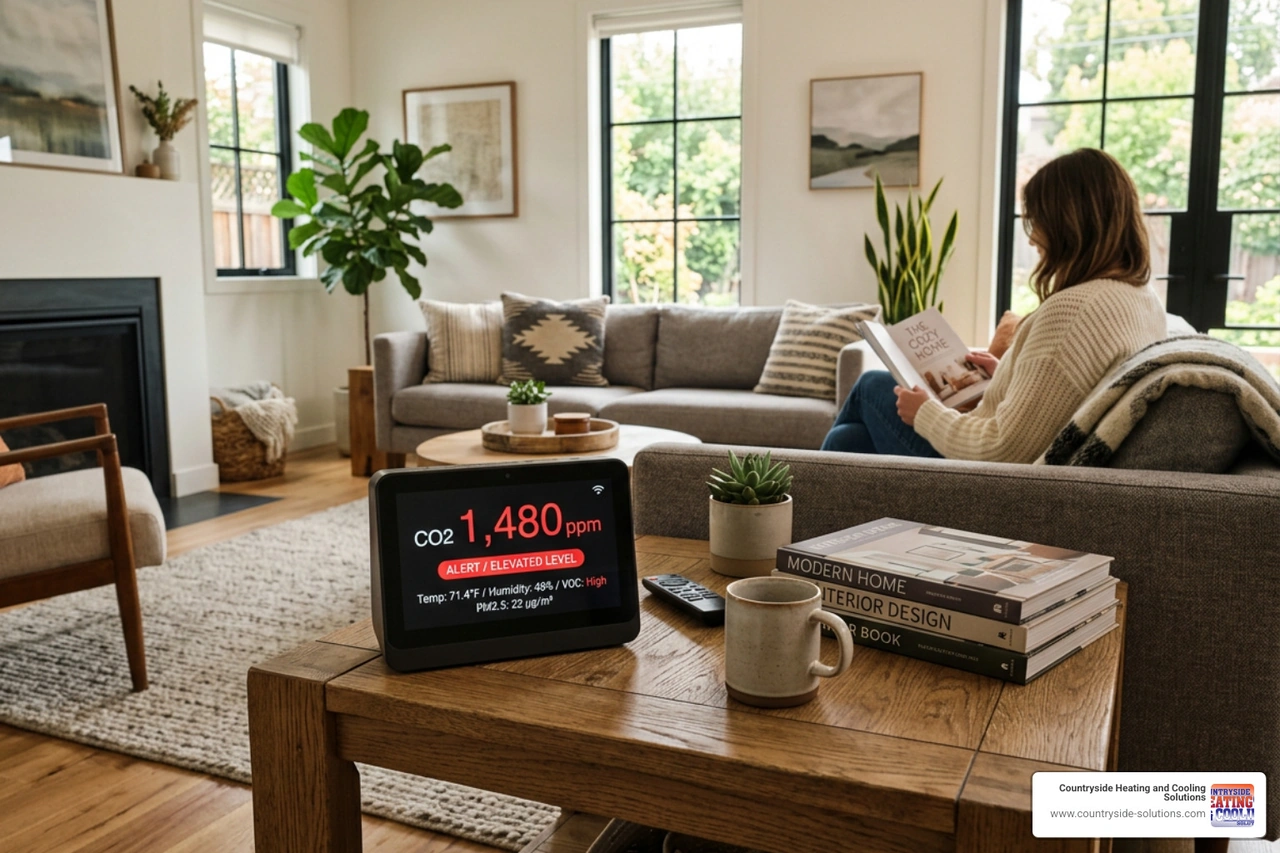
When we spend up to 90% of our lives indoors, the quality of the air we breathe inside our homes has a profound impact on our health. In an airtight home without proper airflow, we are essentially living inside a sealed plastic bag. The air recirculates constantly through our heating and cooling systems, picking up a cocktail of biological and chemical contaminants along the way.
This stagnation can trigger Sick Building Syndrome (SBS), a condition where occupants experience acute health and comfort effects—such as headaches, eye irritation, dry coughs, dizziness, and fatigue—that seem directly linked to time spent inside a specific building.
Additionally, tight homes are vulnerable to the accumulation of fine particulate matter (PM2.5). These tiny particles, which are 30 times smaller than a human hair, can bypass our respiratory system's natural filters and enter deep into our lungs and bloodstream. While airtight homes do a great job of blocking outdoor PM2.5 (such as highway dust or seasonal wildfire smoke) from sneaking in through cracks, any PM2.5 generated inside the home (from cooking, burning candles, or vacuuming) becomes permanently trapped without mechanical exhaust.
To protect your family from these invisible threats, proactive management of your home's breathing cycle is essential. You can explore tailored solutions for your property by looking into Indoor Air Quality Wayzata MN.
Why Your Airtight Home Needs Better Ventilation to Control CO2 and VOCs
Two of the most common and dangerous indoor pollutants in sealed homes are carbon dioxide (CO2) and Volatile Organic Compounds (VOCs).
Every time we breathe, we exhale carbon dioxide. In an old, drafty house, that CO2 naturally diffuses outdoors. But in a modern, airtight home, CO2 levels can skyrocket, especially in closed bedrooms overnight. While outdoor CO2 levels hover around a clean 400 to 450 ppm, unventilated bedrooms in tight homes regularly exceed 1,500 ppm, and can even spike past 2,000 or 2,500 ppm by morning. At these levels, you aren't just breathing stale air—you are actively experiencing cognitive decline, morning headaches, and poor sleep quality.
Simultaneously, our modern building materials, furniture, carpets, and household cleaners constantly release VOCs through a process called chemical off-gassing. One of the most notorious VOCs is formaldehyde, a known human carcinogen found in pressed-wood products, adhesives, and subflooring.
Research has shown a direct, alarming relationship between airtightness and formaldehyde concentrations:
- When a home's airtightness is tightened from a leaky 11 ACH50 down to 1.5 ACH50, indoor formaldehyde concentrations rise by 77% under closed-window conditions.
- If the home is tightened further to a highly efficient 0.75 ACH50, formaldehyde concentrations surge by an incredible 169%.
The simple truth is that filtration alone cannot remove these gases. HEPA filters and standard media filters are designed to capture solid particles, not gas molecules. The only way to lower CO2 and VOC levels is through dilution—replacing the polluted indoor air with fresh, outdoor oxygen. To understand how this process works dynamically, read about How Fresh Air Exchange Improves Indoor Air Quality.
Moisture Trapping and the Threat of Mold Growth
Humans are incredibly efficient moisture generators. Through breathing, sweating, showering, washing dishes, and cooking, a typical two-person household releases 8 to 12 liters of water vapor into the air every single day.
In a leaky home, this moisture escapes through structural gaps. In an airtight home, it is blocked by vapor barriers and high-performance insulation. If this moisture isn't actively managed, the relative humidity inside the home will climb to dangerous levels.
When warm, humid indoor air comes into contact with cooler surfaces—such as window glass, exterior wall corners, or cold spots in closets—it reaches its dew point and condenses into liquid water. This chronic condensation creates the perfect breeding ground for mold, mildew, and structural rot behind drywall and inside wall cavities.
While we often discuss the need to add humidity during our dry Minnesota winters, managing excess humidity in a tightly sealed home is just as critical to prevent mold. For a deeper look at balancing your home's moisture levels throughout the changing seasons, check out our guide on Do I Need Humidification.
Mechanical Solutions: HRVs vs. ERVs
Because we cannot rely on natural drafts to ventilate a modern tight home, we must turn to balanced mechanical ventilation. These systems use dedicated fans to simultaneously exhaust stale indoor air and introduce fresh outdoor air, maintaining a perfect pressure balance inside the home.
The gold standard for balanced ventilation is mechanical ventilation with heat recovery. Instead of simply blowing conditioned indoor air outside and pulling raw, freezing winter air inside, these systems use a specialized heat exchanger core to transfer energy between the two air streams.
To understand how these systems compare, look at the primary differences between the two main types of air exchangers:
| Feature | Heat Recovery Ventilator (HRV) | Energy Recovery Ventilator (ERV) |
|---|---|---|
| Primary Function | Transfers sensible heat (temperature) between air streams. | Transfers both sensible heat (temperature) and latent heat (moisture). |
| Moisture Control | Does not transfer moisture; expels indoor humidity outdoors. | Recovers and transfers moisture to keep indoor humidity balanced. |
| Best Climate Fit | Ideal for extremely cold, dry winters where indoor humidity is high. | Ideal for humid summers and moderately cold winters. |
| Core Material | Typically made of aluminum or plastic plates. | Made of a specialized, vapor-permeable membrane. |
| Winter Operation | Prevents high indoor humidity but can dry out the air if run continuously. | Retains indoor humidity to prevent the home from becoming overly dry. |
Both systems are highly effective at restoring a healthy breathing cycle to your home. To learn more about selecting and installing these advanced systems, take a look at our article on Enhancing IAQ with Ventilators.
Why Your Airtight Home Needs Better Ventilation via Balanced Air Exchangers
A balanced air exchanger is essentially the "lungs" of a modern home. It ensures that the volume of fresh air brought into the house exactly matches the volume of stale air pushed out.
If you rely solely on exhaust fans (like bathroom fans or kitchen hoods) without a dedicated supply of fresh air, you create negative pressure inside your home. In an airtight build, this negative pressure will try to pull make-up air from anywhere it can find—which often means backdrafting dangerous combustion gases down water heater flues, pulling radon gas up from the soil through sump pumps, or drawing dusty air out of crawlspaces and attics.
A balanced system eliminates this danger by establishing dedicated, engineered pathways for air exchange. Stale, humid air is continuously drawn from moisture-producing rooms (kitchens, bathrooms, and laundry rooms) and passed through the ventilator core. Simultaneously, fresh outdoor air is drawn in, filtered, pre-conditioned by the core, and delivered directly to living spaces and bedrooms.
To see how this continuous cycle transforms your home's comfort, read more about the Air to Air Exchanger Indoor Environment.
Comparing Heat Recovery and Energy Recovery Systems
Choosing between an HRV and an ERV comes down to how you need to manage moisture in your specific climate.
An HRV only transfers sensible heat—the actual temperature of the air. In a freezing Minnesota January, the warm, stale air leaving your home passes through the HRV core and warms up the incoming freezing outdoor air, recovering up to 90% of the heat. The moisture in the exhaust air is drained away. This is highly beneficial if your tight home has high indoor humidity from daily activities, as it helps dry out the air and prevent window condensation.
An ERV transfers both sensible heat and latent heat (moisture). The specialized membrane inside an ERV core allows water vapor molecules to pass from the humid air stream to the dry air stream without letting the actual air mix. In the winter, this means the dry incoming outdoor air is pre-warmed and pre-humidified by the moisture in your exhaust air, preventing your home from feeling like a desert. In our muggy Minnesota summers, the process reverses: the ERV strips moisture from the incoming humid outdoor air and transfers it to the cool exhaust air, keeping your home dry and comfortable.
For a comprehensive breakdown of which system is the perfect match for your home's layout and your family's lifestyle, read our guide on The Need for an Air Exchanger in Your Home.
Practical Steps for Homeowners in the Twin Cities Metro
If you live in Minneapolis suburbs like Minnetonka, Wayzata, Eden Prairie, or Maple Plain, managing your home's air quality is a year-round job. From sub-zero winter nights to humid summer afternoons, our local climate puts our HVAC systems to the test.
If you suspect your airtight home has a ventilation problem, here are the practical steps you should take:
- Schedule a Blower Door and IAQ Assessment: Before installing new equipment, it is critical to know exactly how tight your home is. A professional assessment will determine your home's ACH50 rating and identify any critical air quality issues.
- Practice Source Control: Ventilation works best when it doesn't have to work as hard. When remodeling or buying new furniture, choose low-VOC materials, formaldehyde-free engineered wood, and water-based adhesives.
- Upgrade Bathroom and Kitchen Exhausts: Ensure your kitchen hood vents directly to the outdoors (avoid recirculating hoods) and that your bathroom fans are rated for continuous, quiet operation.
- Install a Balanced HRV or ERV System: Work with a trusted professional to integrate a heat or energy recovery ventilator into your existing ductwork or install a dedicated duct system for whole-house fresh air.
Frequently Asked Questions About Home Ventilation
How much fresh air exchange does a modern airtight home actually need?
According to the ASHRAE 62.2 standard (the national benchmark for residential ventilation), a home requires a continuous supply of fresh air based on its total floor area and the number of bedrooms.
A standard simplified formula to estimate your home's continuous ventilation requirement is:
$$\text{CFM} = (\text{Floor Area} \times 0.01) + [(\text{Number of Bedrooms} + 1) \times 7.5]$$
For example, a 2,000-square-foot home with 3 bedrooms would require approximately 50 CFM (Cubic Feet per Minute) of continuous, balanced fresh air flow to maintain healthy oxygen and pollutant-dilution levels.
What are the warning signs of poor ventilation or high CO2 levels?
Your home will usually tell you when it is struggling to breathe. Watch out for these common warning signs:
- Foggy Windows: Frequent condensation or frost building up on the inside of your window glass during winter.
- Persistent Stuffiness: A noticeable "stale" or lingering odor when you walk into the home after being outside.
- Physical Symptoms: Waking up with morning headaches, feeling unusually fatigued or "foggy" during the day, or experiencing persistent dry throat and eye irritation that improves when you leave the house.
- Lingering Odors: Cooking smells from dinner that remain noticeable the next morning.
Why aren't trickle vents and natural drafts enough for airtight builds?
Trickle vents (small slots built into window frames) and passive air bricks rely entirely on natural pressure differences to move air. These pressure differences are driven by wind and temperature variations between the inside and outside of the home.
On a calm, mild spring day when the indoor and outdoor temperatures are identical, passive vents will experience zero airflow. Conversely, on a windy, freezing winter day, they can let in far too much cold air, creating uncomfortable drafts and driving up your heating bills. Only mechanical ventilation guarantees a consistent, measured, and pre-conditioned flow of fresh air regardless of the weather outside.
Conclusion
Building an airtight home is a fantastic achievement for comfort, noise reduction, and energy efficiency. But a tight home is only half of the equation. To truly enjoy a healthy, comfortable, and durable home, you must build tight and ventilate right.
At Countryside Heating & Cooling Solutions, we have been helping homeowners across the greater Minneapolis–Saint Paul metro area achieve the perfect balance of energy efficiency and pristine indoor air quality since 1974. Our family-owned business relies on highly trained, NATE-certified technicians to design, install, and maintain the perfect ventilation and filtration systems for your unique home. From our base in Maple Plain to our neighbors in Wayzata, Minnetonka, and beyond, we are committed to keeping your indoor air as clean and fresh as the great Minnesota outdoors.
Don't let your high-performance home trap stale air and pollutants. Schedule an Indoor Air Quality Consultation with us today, and let's make sure your home is breathing as easily as you do!
