.webp)

Why an HVAC Maintenance Checklist for Extreme Cold Climates Can Save Your Winter
A solid HVAC maintenance checklist for extreme cold climates includes these key steps:
1. Schedule a professional furnace inspection before temperatures drop
2. Replace or inspect air filters every 30–60 days during peak heating season
3. Test your thermostat and carbon monoxide detectors
4. Clear outdoor units of snow, ice, and debris
5. Inspect and seal ductwork for leaks or damage
6. Check clearance zones around your furnace and heating equipment
7. Balance indoor humidity levels between 30–40%
8. Know the warning signs of system failure before a breakdown hits
When it's -20°F outside and your furnace stops working, every minute counts. In the Minneapolis-Saint Paul area, extreme cold isn't a rare event — it's a seasonal reality that puts enormous stress on home heating systems. Heating and cooling already account for roughly 52% of a household's annual energy use, and that number climbs sharply when temperatures plunge well below zero for days at a time.
The problem is that most HVAC systems only reveal their weaknesses when demand is at its peak. Small issues — a clogged filter, a loose electrical connection, a cracked heat exchanger — that go unnoticed in mild weather can trigger a full system failure on the coldest night of the year. Emergency repair calls spike by roughly 300% during extreme cold snaps, and technicians book up fast.
The good news? Most of those failures are preventable. A simple, consistent maintenance routine can keep your system running safely and efficiently all winter long — and protect your family from the health and safety risks that come with a heating outage in sub-zero conditions.
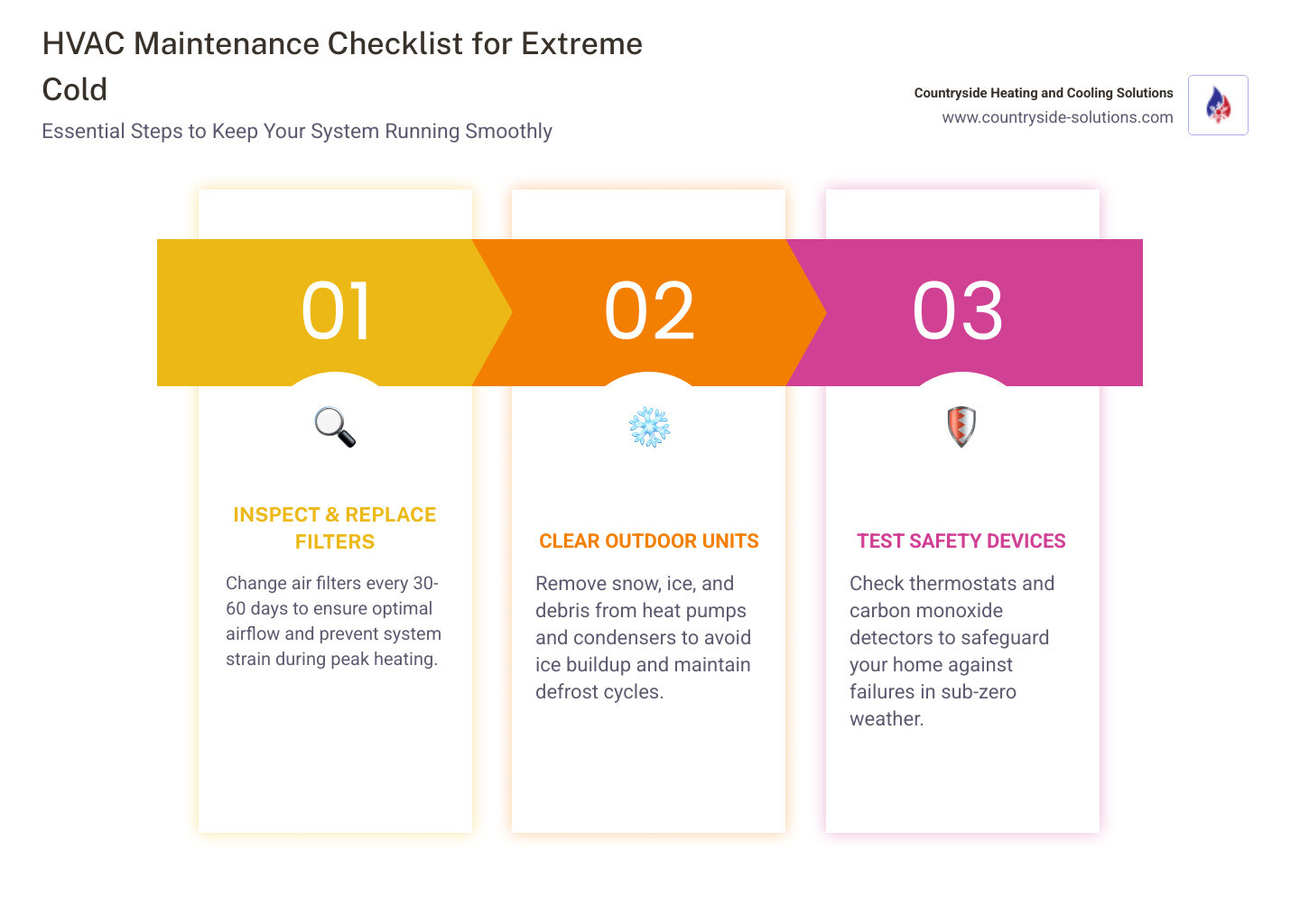
Essential HVAC Maintenance Checklist for Extreme Cold Climates
Preparing for a Minnesota winter in April 2026 requires more than just digging out the heavy parkas; it requires a deep dive into your home’s mechanical heart. The most critical step is pre-season testing. We always recommend turning on your heating system several weeks before the first frost. This "test drive" allows you to identify unusual smells or sounds while the weather is still manageable.
A comprehensive Furnace Tune-Up Wayzata MN is the foundation of winter reliability. During a professional visit, a technician doesn't just look at the unit; they analyze the entire system cycling process. They check electrical connections for "embrittlement"—a condition where cold and age make wires brittle and prone to snapping—and ensure that all safety controls are responsive.
Tightening electrical connections is vital because loose wiring can cause system failures or even pose fire hazards when the furnace is running at maximum capacity. Furthermore, an HVAC Tune-Up Excelsior MN includes essential component lubrication. Moving parts like fans and motors face increased friction in extreme cold. Proper lubrication minimizes wear and tear, helping your equipment last the 15 to 20 years it was designed for. We also pay close attention to blower motor health and the ignition assembly to ensure your furnace doesn't just start, but stays running through a week-long polar vortex.
Prioritizing Air Filtration and Duct Integrity
If there is one DIY task that reigns supreme, it is managing your air filters. We cannot stress enough Why is it Important to Change the Furnace Filter during a deep freeze. When a filter is clogged with dust and pet dander, it creates airflow restriction. This forces your blower motor to work twice as hard to push air through the house, which can lead to overheating and "short-cycling"—where the furnace turns on and off rapidly without ever truly warming the home.
Replacing a dirty filter can cut energy consumption by 5% to 15%. For most homes in Edina or Minnetonka, we recommend filters with MERV ratings between 8 and 13. While a higher MERV rating catches more pollutants, it also requires more power to move air, so it’s essential to find the balance that fits your specific system. Regular HVAC Maintenance Edina MN also involves a look at your ductwork.
Leaky ducts can waste 20% to 30% of conditioned air before it ever reaches your living room. In an extreme cold climate, that’s like throwing money directly into the snow. Sealing duct joints with metallic foil tape (never standard "duct" tape, ironically) prevents heat loss and keeps indoor pollutant levels low. Americans spend 90% of their time indoors, and indoor air can be 2 to 5 times more polluted than outdoor air. Keeping your ducts sealed and filters fresh is the best way to breathe easy while you're hunkered down.
Safeguarding Your Home Against Carbon Monoxide and Fire Hazards
Safety is the non-negotiable part of any hvac maintenance checklist for extreme cold climates. Because we seal our homes so tightly in the winter to keep the heat in, we also trap any potential gases. Carbon monoxide (CO) is a colorless, odorless "silent killer" that can leak from a cracked heat exchanger or a blocked flue.
Every homeowner should test their CO and smoke detectors monthly and replace batteries at the start of every season. If you have an older system, following Oil Furnace Maintenance Tips Wayzata MN is especially important for ensuring clean combustion. We also look for "clearance zones." You should keep at least three feet of clear space around your furnace. Avoid stacking holiday decorations, cleaning supplies, or flammable materials nearby.
A professional inspection will also verify the integrity of the flue and the heat exchanger. If a flue is blocked by a bird's nest or ice buildup, combustion gases can back up into your home. Ensuring proper ventilation and combustion air flow is the only way to guarantee that your cozy night by the fire stays safe.
Protecting Outdoor Units from Snow and Ice
For those with heat pumps, the outdoor unit is just as important as the indoor one. Unlike traditional AC condensers that sit dormant in winter, a heat pump works year-round. To keep it running, you must maintain strict clearance requirements. Trim vegetation at least two feet away and ensure there is at least 18 inches of clearance on all sides for proper airflow.
Snow and ice are the primary enemies here. While heat pumps have built-in defrost cycles to melt away frost, heavy snow can physically block the intake. If your unit is encased in ice, do not attempt to chip it away with a hammer or shovel—you could easily puncture the delicate refrigerant fins. Instead, use warm water or wait for the defrost cycle to do its job.
Effective Heat Pump Maintenance Eden Prairie MN includes ensuring that the drainage path beneath the unit is clear. When the ice melts during a defrost cycle, the water needs somewhere to go. If it pools and refreezes, it can eventually damage the fan blades. Our HVAC Maintenance Wayzata MN Guide suggests checking the outdoor unit after every major blizzard to ensure it isn't buried. If the outdoor unit fails, your system will switch to "emergency heat" (auxiliary heat), which is significantly more expensive to run. Keeping the outdoor unit clear keeps your bills manageable.
Optimizing Efficiency with Thermostats and Humidity Control
Thermostat management is an art form in extreme cold. While it’s tempting to crank the heat to 80°F when you feel a chill, this actually stresses the system. A better strategy is to maintain a steady, reasonable temperature.
• Daytime (Home) — Recommended Setting: 68°F - 70°F — Benefit: Optimal balance of comfort and cost
• Nighttime (Asleep) — Recommended Setting: 62°F - 64°F — Benefit: Saves ~10% on annual heating bills
• Away (Work/Travel) — Recommended Setting: 55°F - 58°F — Benefit: Prevents frozen pipes without wasting energy
Smart thermostats are excellent tools for Heating Maintenance Minnetrista MN, as they can alert you via your phone if the temperature in your house drops unexpectedly—a lifesaver if a system fails while you're at work.
Beyond temperature, you must consider indoor humidity. Cold air holds very little moisture, and running a furnace all day dries it out even further. This leads to itchy skin, static electricity, and even cracks in your wood furniture or flooring. We recommend keeping humidity between 30% and 40%. Whole-home humidifiers integrated into your HVAC system can automatically maintain these levels, making 68°F feel much warmer and more comfortable than dry air at the same temperature.
Maximizing Comfort with an HVAC Maintenance Checklist for Extreme Cold Climates
A high-performance HVAC system is only as good as the "envelope" it lives in. To ensure consistent temperatures and heat retention, you need to look beyond the furnace. Furnace Maintenance Medina MN often involves identifying where heat is escaping.
Check for drafts around windows and doors. Replacing worn weatherstripping or applying fresh caulk can prevent "cold spots" that force your furnace to run longer. If your attic insulation is below recommended R-values, the heat you’re paying for is simply rising out through the roof. This can also lead to ice dams—where melting snow refreezes at the gutters and backs up under your shingles.
Don't forget about pipe protection. In unheated areas like basements or crawlspaces, wrap exposed pipes in foam insulation. If the furnace fails during a sub-zero stretch, that insulation might buy you the extra time needed to get a technician on-site before a pipe bursts.
Recognizing Signs of HVAC Failure in Sub-Zero Weather
Knowing when your system is struggling can prevent a total lockout. One of the first signs is unusual noises. Banging, whistling, or grinding sounds often indicate a mechanical part is near failure. If you notice uneven heat—where the kitchen is toasty but the bedroom is an icebox—you likely have a ductwork or airflow issue.
If you are in need of Furnace Service Long Lake MN, watch for short-cycling. If the furnace turns on for three minutes, shuts off, and turns back on five minutes later, it’s struggling to maintain the load. Another red flag is the color of your burner flames; they should be a steady, crisp blue. Yellow or flickering flames suggest improper combustion and a potential carbon monoxide risk. Finally, keep an eye on your energy bills. A sudden, unexplained spike in usage often means a component is failing and drawing more power to compensate.
When to Call a Professional for Your HVAC Maintenance Checklist for Extreme Cold Climates
Some tasks are perfect for a Saturday morning DIY session, but extreme cold requires diagnostic expertise that only a NATE-certified technician can provide. For example, high-efficiency furnaces produce condensation. In extreme cold, condensate lines can freeze, causing the system to shut down entirely as a safety precaution. A professional knows how to insulate these lines or install heat tape to prevent this.
Refrigerant leaks, cracked heat exchangers, and complex electrical repairs should never be attempted by a homeowner. Calling for professional help at the first sign of trouble ensures system longevity and, more importantly, peace of mind. Our technicians are trained to find the small hairline fractures or worn bearings that the untrained eye misses, ensuring you aren't left in the dark when the wind starts to howl.
Frequently Asked Questions about Extreme Cold HVAC Care
How often should I change my filter during a Minnesota cold snap?
During a high-demand period like a January cold snap, you should inspect your filter every 30 days. Because the furnace is running almost constantly, it pulls more dust and debris through the system than it does in the spring or fall. If the filter looks grey or you can't see light through it, swap it out immediately to maintain airflow.
Can I use a plastic cover on my outdoor unit during a blizzard?
We generally advise against using airtight plastic covers. Plastic traps moisture inside the unit, which can lead to rust and corrosion on sensitive electrical components. It also creates a cozy, shielded environment for pests to build nests. If you must cover your unit, use a breathable cover designed for HVAC equipment or a simple piece of plywood weighted down on the top to protect against falling icicles, while leaving the sides open for airflow.
What is the safest indoor humidity level when it's -20°F outside?
While 40% is great for your skin, it might be too high when it's -20°F outside. If you see significant condensation or frost forming on the inside of your windows, lower the humidifier setting. That moisture can drip down and rot your window sills or encourage mold growth. In extreme cold, dropping to 30% humidity is often the "sweet spot" to protect your health without damaging your home's structure.
Conclusion
Surviving a Minnesota winter isn't about luck; it's about preparation. By following this hvac maintenance checklist for extreme cold climates, you can ensure your home remains a warm sanctuary regardless of what the thermometer says. From the suburbs of Wayzata to the heart of Edina, Countryside Heating and Cooling Solutions is here to help you navigate the 2026 winter season with confidence.
Our NATE-certified technicians are experts in the unique demands of the Twin Cities metro area. We understand that a furnace failure in sub-zero weather is an emergency, which is why we offer a guaranteed next-business-day service to get your home back to a safe temperature quickly. Don't wait for the first arctic blast to find out if your system is up to the task. Protect your home with a comprehensive seasonal service plan and enjoy the peace of mind that comes with professional care. Stay warm, stay safe, and let us handle the heavy lifting this winter.
