.webp)

Does a New HVAC Help Sell Your Home Faster?
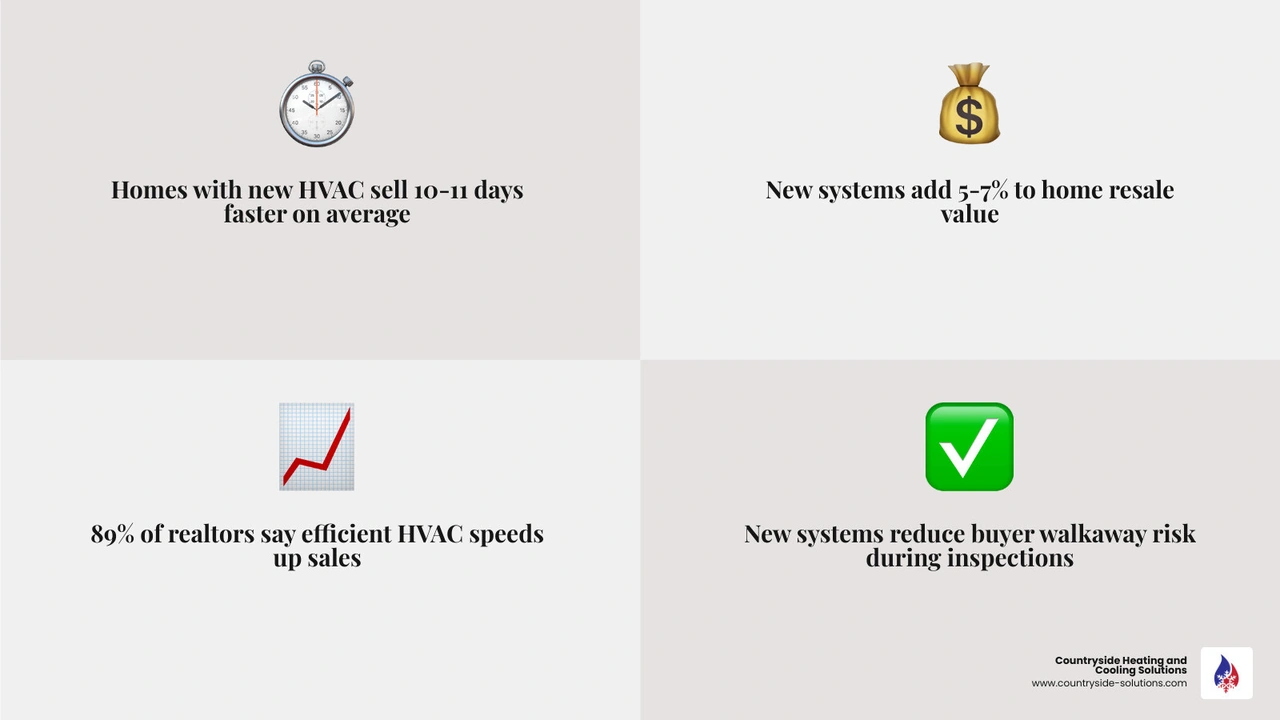
Does a new HVAC help sell your home faster? Yes — and the numbers back it up clearly:
| What Changes | What the Data Shows |
|---|---|
| Days on market | Homes with new HVAC sell 10 to 11 days faster on average |
| Sale price impact | New systems add 5% to 7% to a home's resale value |
| Buyer appeal | 89% of realtors say an efficient HVAC system speeds up sales |
| Offer strength | Efficient systems can increase offers by 2% to 5% |
| ROI at resale | Homeowners typically see 30% to 71% return on the investment |
| Inspection risk | New systems reduce renegotiations and buyer walkaway risk |
When you're preparing to list your home in the Minneapolis–Saint Paul area, it's easy to focus on fresh paint, updated kitchens, or curb appeal. But one of the most practical upgrades you can make often gets overlooked entirely: your heating and cooling system.
Minnesota winters are serious. So are humid summers. Buyers in this market know what a failing furnace or an aging central air unit will cost them — and they factor that into every offer they make. A system that's 15 years old or older doesn't just raise eyebrows during showings. It can trigger inspection flags, invite aggressive price negotiations, or even stall financing approval altogether.
The good news is that a well-timed HVAC upgrade can flip that story completely. Instead of being a liability, your system becomes a selling point — one that signals the home has been well cared for and is genuinely move-in ready.
In many cases, yes. A new HVAC system helps a home sell faster because it removes one of the biggest hidden worries buyers have: "What major thing am I going to have to replace right after I move in?"
That question matters even more in our part of Minnesota. Around Maple Plain, Minnetonka, Eden Prairie, Wayzata, Chanhassen, and the surrounding western suburbs, buyers expect dependable heating in winter and reliable cooling in summer. If they see an old furnace, noisy AC, or inconsistent temperatures during a showing, they start doing math in their head immediately. Usually, that math is not in the seller's favor.
A new system creates turnkey appeal. It tells buyers the home is ready now, not "ready after one expensive mechanical surprise."
Why does a new HVAC help sell your home faster in many markets?
There are a few reasons this upgrade has such a strong effect on marketability:
- It makes the home feel move-in ready.
- It removes a major near-term expense from the buyer's to-do list.
- It reduces fear of breakdowns during the first winter or summer.
- It supports lower utility bills, which buyers increasingly care about.
- It helps the home compare better against similar listings.
Buyers may gush over countertops, but they worry about furnaces. That's just how home shopping works.
A new HVAC system also improves comfort during showings. If the home feels evenly heated, properly cooled, and not overly humid or dusty, buyers notice that experience even if they do not immediately say, "Wow, nice blower motor." Comfort is subtle, but it sells.
How does a new HVAC help during showings, inspections, and appraisal?
A newer system can help in three big moments of the sales process:
Showings
Buyers see a recent install date, clean equipment, updated thermostat, and solid maintenance records. That lowers resistance right away.Inspections
Older HVAC systems often lead to comments about age, deferred maintenance, leaks, rust, weak airflow, or likely end-of-life concerns. A new system lowers the chance of repair requests or credits.Appraisal and lending
Appraisers look at major systems as part of overall condition and effective age. A documented upgrade may support value better than an old, tired system. And if a system is not functioning properly, it can become a lending issue for some buyers.
If you do upgrade, keep the paperwork. Buyers love proof, and appraisers do too.

How Much Value and ROI Can a New HVAC Add Before You Sell?
The headline numbers from the research are strong: a new HVAC system may add about 5% to 7% to resale value in many situations, with ROI often falling in the 30% to 71% range depending on the system, efficiency, market conditions, and what problems the upgrade prevents.
That said, HVAC value is not always a simple one-to-one equation. A new system does not usually return every dollar spent directly in sale price alone. What it often does is improve contributory value, strengthen buyer confidence, reduce concessions, and help the home sell faster.
That combination can be just as important as the sticker number.
Average resale value increase from a new HVAC system
Many industry sources put the average value lift from a new HVAC system around 5% to 7%, with some situations stretching closer to 10% when the old system was clearly hurting the home's appeal.
In practical terms, the boost depends on:
- The home's price range
- The age and condition of the old system
- Whether the neighborhood standard includes central AC and efficient heating
- The local climate
- The efficiency and quality of the new system
- Whether buyers view the upgrade as expected or exceptional
In the Twin Cities metro, functioning heating is not optional, and central cooling matters more than ever during humid summers. That means HVAC carries more weight here than it might in a milder climate.
Typical ROI homeowners can expect at resale
Most sellers should think of HVAC ROI in two buckets:
- Direct ROI: the amount reflected in sale price or appraised value
- Indirect ROI: money saved by avoiding buyer credits, failed deals, extended days on market, and utility waste before the sale
Research commonly places direct resale ROI around 30% to 50%, with some reports showing returns up to 71% for the right upgrade in the right market. That range exists because not all projects are equal. A properly sized, energy-efficient system installed before listing tends to perform better than a rushed replacement after an inspection surprise.
Why avoiding price cuts can matter as much as added value
Sometimes the smartest reason to replace HVAC before selling is not to boost your price. It is to stop your price from dropping.
An older system often leads buyers to ask for:
- Repair credits
- Closing-cost concessions
- Price reductions
- Home warranty requests
- Extra inspections or contractor evaluations
If the unit is old enough to scare buyers, they may assume the worst and negotiate accordingly. Even when the system still runs, they often discount their offer because they expect replacement soon.
That is why "avoided loss" matters. If a new system keeps you from taking a large concession, it may have done its job beautifully.
What Factors Influence Whether HVAC Replacement Pays Off?
Not every home needs a full replacement before listing. The payoff depends on several factors, especially in western suburbs of Minneapolis-Saint Paul where buyers expect year-round comfort.
Climate, location, and system type matter more than many sellers expect
In our area, HVAC value is shaped heavily by local weather. We have long, cold winters and warm, humid summers. A reliable furnace and central AC are not luxury items here. They are core home systems.
That means different upgrades matter in different ways:
- High-efficiency furnaces are especially important for winter confidence.
- Central AC matters for summer comfort and buyer expectations.
- Heat pumps are increasingly attractive because they offer efficiency and year-round versatility.
If you are comparing options, these local service pages may help:
- HVAC Installation Chanhassen MN
- HVAC Installation Eden Prairie MN
- HVAC Installation Wayzata MN
- Furnace Installation Minnetonka MN
- Heat Pump Installation Wayzata MN
A replacement usually pays off more when the current setup is below neighborhood expectations. For example, if comparable homes have dependable central air and your home has an aging, unreliable system, buyers will notice the gap.
Efficiency ratings, smart features, and warranties that buyers notice
Buyers do not always know technical terms, but they understand the benefits behind them.
Features that often improve interest include:
- ENERGY STAR equipment
- Strong SEER2 ratings for cooling efficiency
- High AFUE ratings for furnace efficiency
- Smart thermostats
- Quiet operation
- Zoned comfort
- Transferable warranty coverage
These features matter because they suggest lower operating costs, better comfort, and fewer headaches. Research also shows buyers are paying closer attention to utility bills than in the past. An efficient system can be more persuasive than another coat of greige paint. No offense to greige.
When an older but working system may still hurt marketability
This is a big one. A system can still run and still hurt your sale.
A working but older HVAC system may reduce buyer confidence if it has any of these issues:
- It is around 15 years old or more
- It needs frequent repairs
- Temperatures vary from room to room
- Energy bills seem high
- It uses outdated refrigerant
- It has poor maintenance history
- It is noisy, rusty, or visibly worn
To buyers, "still working" often means "still working for now." That is not the same as peace of mind.
Signs Your Current HVAC Is Hurting Your Home Sale
If you are unsure whether your system is a real problem, start by looking for the same red flags a buyer or inspector will notice.
Does a new HVAC help sell your home faster if your current system still runs?
Often, yes. Age alone can change buyer behavior, even when the system appears operational.
Buyers tend to view an old HVAC system as deferred expense. They may wonder:
- How many winters does the furnace have left?
- Will the AC fail in July?
- Are the utility bills going to be painful?
- If this system was neglected, what else was?
That last question is important. Old mechanicals sometimes send a "maintenance signal" that affects how buyers judge the entire house.
Inspection and buyer red flags that can reduce offers
Here are the HVAC warning signs buyers notice first:
- Loud startup or shutdown noises
- Short cycling
- Uneven heating or cooling
- Weak airflow at vents
- Visible rust or corrosion
- Water around equipment
- Dirty filter or dusty vents
- Musty smells
- Old thermostat
- Missing maintenance records
- Cracked or damaged insulation on lines
- Signs of refrigerant or condensate issues
A home inspector may also flag advanced age, poor upkeep, or safety concerns for further evaluation. Once that happens, the buyer has leverage.
Alternatives when full replacement may not be necessary
Not every home needs a full system replacement before listing. If your HVAC is newer or fundamentally sound, smaller improvements may still help:
- Professional tune-up
- Filter replacement
- Duct sealing
- Thermostat upgrade
- Coil cleaning
- Minor repairs
- Organizing maintenance records
These steps can improve comfort and presentation without a full replacement.
For local upkeep and pre-listing service, see:
- HVAC Maintenance Eden Prairie MN
- HVAC Maintenance Wayzata MN
- Furnace Installation Wayzata MN
When Should You Replace HVAC Before Listing Your Home?
Timing matters. Replacing too late can create stress, scheduling pressure, and listing delays. Replacing at the right time gives you a chance to market the upgrade properly.
Best timing based on age, repairs, and listing date
As a general rule, replacement deserves strong consideration when:
- The furnace is in the 10 to 15+ year range and declining
- The AC or heat pump is aging and unreliable
- Repairs have become frequent
- The system struggles to maintain comfort
- The equipment uses obsolete refrigerant
- You plan to list soon and want strong inspection results
If replacement is needed, it is usually better to do it before photos, showings, and open houses. That way, "new HVAC" becomes a feature of the listing rather than a late-stage scramble.
Shoulder seasons can also be strategic for planning because they may offer more scheduling flexibility before peak weather hits.
Best upgrade choices for Twin Cities area homes
The best system for resale depends on the house, existing ductwork, buyer expectations, and your long-term plans. In our area, the most common resale-relevant options are high-efficiency furnaces, central AC, and heat pumps.
| System type | Resale advantage | Best fit for many local homes |
|---|---|---|
| High-efficiency furnace | Strong winter confidence and lower heating costs | Homes with aging gas furnaces |
| Central AC | Better summer comfort and buyer expectation match | Homes where central cooling is standard |
| Heat pump | High efficiency, all-in-one comfort, possible incentive eligibility | Homes seeking modern efficiency upgrades |
If you want to learn more about local replacement options, these pages are useful:
- Air Conditioner Installation Maple Grove MN
- HVAC Installation Wayzata MN
- Heat Pump Installation Wayzata MN
Paperwork that helps buyers say yes faster
Documentation helps turn an upgrade into real resale value.
Keep a folder with:
- Installation invoice
- Permit information
- Model and serial numbers
- Warranty documents
- Maintenance records
- Efficiency information
- Any matched-system documentation from the installer
This paperwork reassures buyers, helps answer inspection questions, and supports appraisal discussions when needed.
Frequently Asked Questions About Does a New HVAC Help Sell Your Home Faster
Does replacing HVAC increase resale value even if I will not recover the full project amount?
Usually, yes. Even when you do not recoup the full amount directly in the final sale price, a replacement can still improve your outcome by increasing buyer trust, reducing concessions, supporting a cleaner inspection, and helping the home sell faster. In many cases, the better question is not "Will I get every dollar back?" but "How much will an old system cost me if I keep it?"
Are there tax credits, rebates, or financing options that can improve the return?
Potentially, yes. In 2026, federal tax credits may still be available for qualifying energy-efficient HVAC upgrades, especially certain heat pump installations. Utility rebates may also apply depending on the equipment and program rules in your area. These incentives can improve the overall return on an upgrade, even if your main goal is resale. Because programs change, it is smart to verify current eligibility before moving forward.
What if my HVAC is newer and I am not replacing it before listing?
If the system is already relatively new, replacement may not be necessary. In that case, focus on presentation and proof:
- Schedule a professional tune-up
- Replace filters
- Clean around the equipment
- Gather service records
- Highlight efficiency features in your listing
- Make sure the thermostat works properly
A clean, well-documented system can still be a strong selling point even if it is not brand new.
Conclusion
So, does a new HVAC help sell your home faster? In many Minneapolis-Saint Paul area sales, absolutely. A newer system can reduce buyer hesitation, improve inspection results, support value, and shorten time on market. It is one of those upgrades buyers may not rave about at the kitchen island, but they definitely notice when it is missing.
If your current system is older, unreliable, or sending the wrong signals during showings, it may be worth addressing before you list. And if your equipment is still in good shape, maintenance and documentation can still go a long way.
At Countryside Heating and Cooling Solutions, we have helped homeowners across the western Twin Cities area with dependable comfort solutions since 1974. Our licensed, NATE-certified technicians focus on quality workmanship, practical guidance, and guaranteed next-business-day service.
If you are deciding whether to repair, maintain, or replace before selling, start here:
A smart HVAC decision can make your home easier to sell, easier to inspect, and a lot easier for buyers to say yes to.
