.webp)

Why Knowing How Often to Change Your HVAC Air Filter Saves You Money and Headaches
How often should you change your HVAC air filter is one of the most common questions homeowners in the Minneapolis–Saint Paul area ask — and for good reason. The answer directly affects your energy bills, your indoor air quality, and the lifespan of your heating and cooling system.
Here is a quick answer based on filter type:
| Filter Type | Thickness | Recommended Replacement Frequency |
|---|---|---|
| Fiberglass | 1 inch | Every 30 days |
| Basic pleated | 1 inch | Every 30–90 days |
| Deep pleated / media | 4 inch | Every 6 months |
| High-capacity media | 5 inch | Every 12 months |
| Washable / reusable | Varies | Clean monthly |
Most households land somewhere in the 30-to-90-day range, but the right schedule for your home depends on several factors — including pets, allergies, home size, and how hard your system is working through Minnesota's demanding heating and cooling seasons.
A dirty, clogged filter does more than just circulate dusty air. According to the U.S. Department of Energy, replacing a clogged filter can improve your system's efficiency by 5 to 15 percent. Left unchecked, a neglected filter can lead to higher energy bills, reduced airflow, and even serious equipment damage over time.
The good news? Staying on top of filter changes is one of the simplest and most affordable things you can do to protect your HVAC investment.
How Often Should You Change Your HVAC Air Filter?
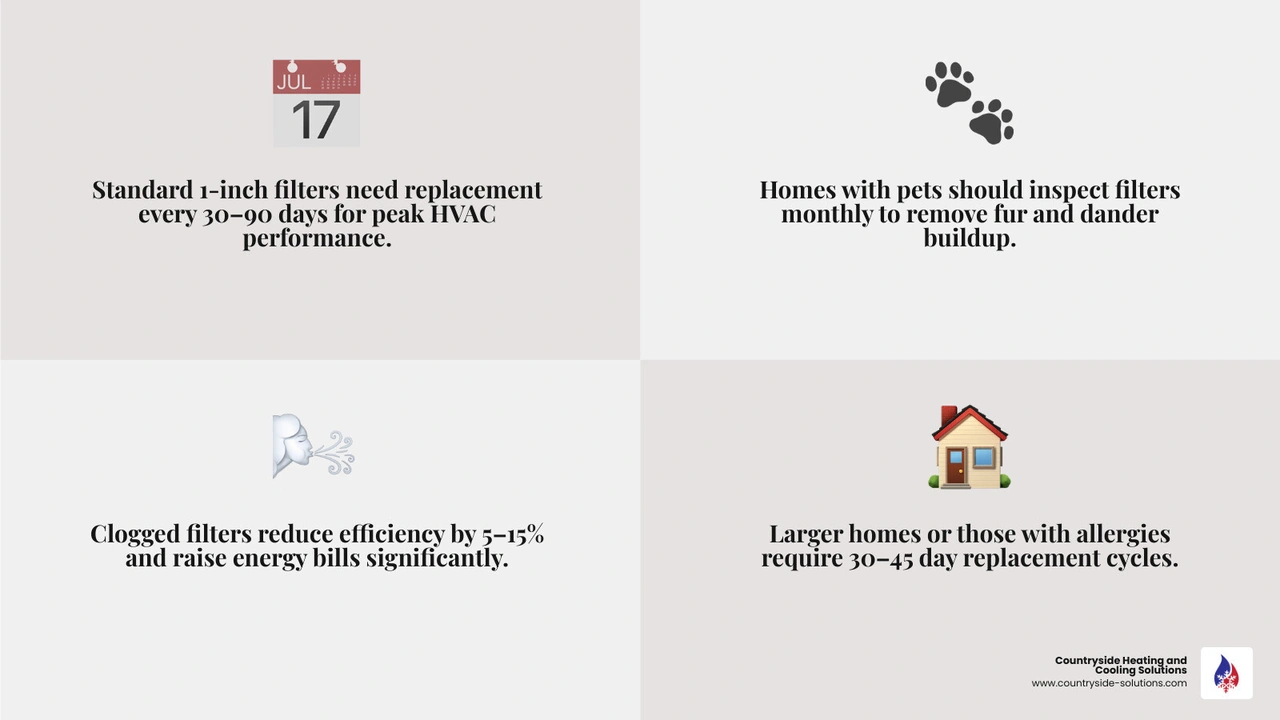
For most homes, the best answer is: check your filter every month and replace it when it is dirty, or follow the time range that fits your filter type.
A simple rule of thumb looks like this:
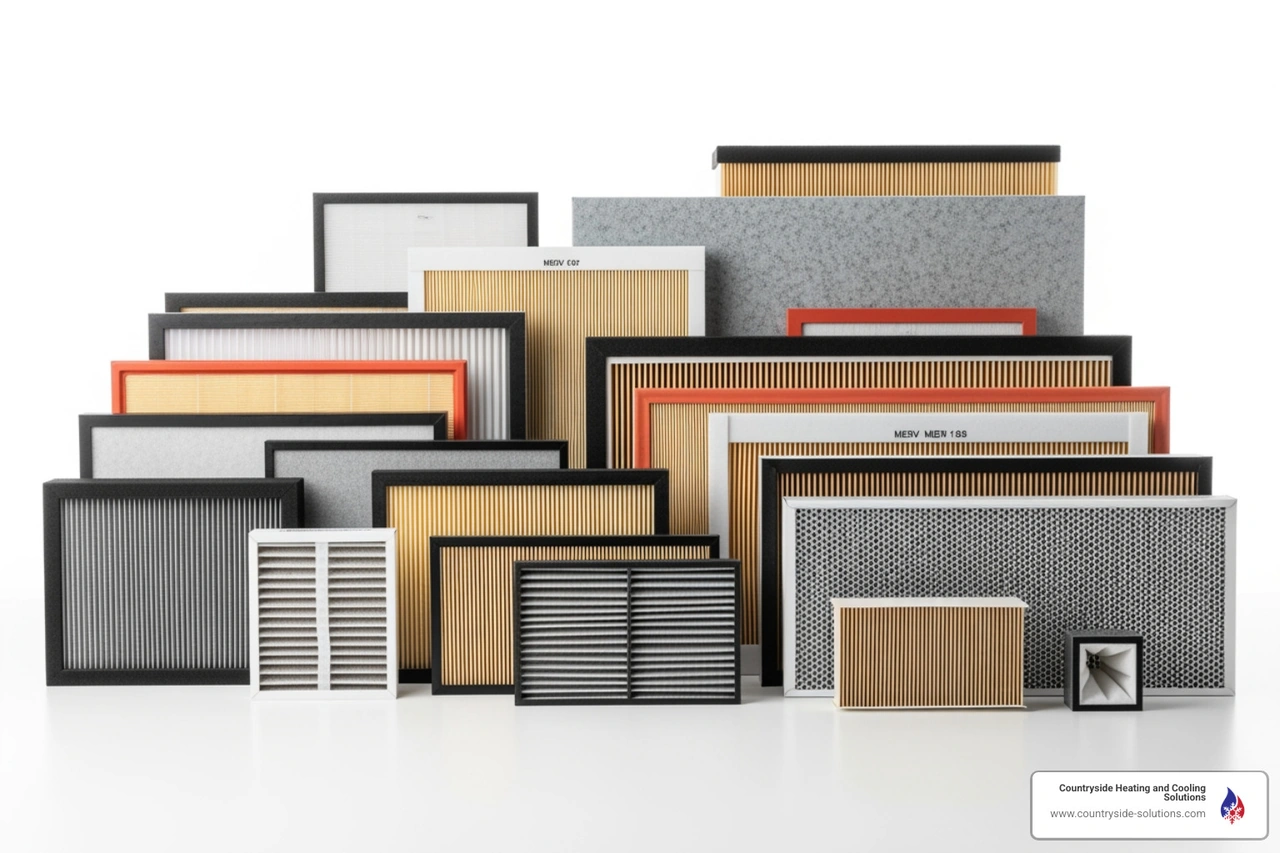
| Filter Thickness | Typical Filter Type | Recommended Replacement Interval |
|---|---|---|
| 1 inch | Fiberglass | About every 30 days |
| 1 inch | Pleated | Every 30 to 90 days |
| 4 inch | Media filter | Around every 6 months |
| 5 inch | High-capacity media | Around every 12 months |
That said, there is no magic date that works for every home. A 1-inch filter in a busy household with pets may clog much faster than the same filter in a quieter home with no pets and mild indoor air quality concerns.
If you want help with the hands-on part, our guide on how to replace a furnace, AC, or heat pump filter walks through the process step by step.
Standard 1-Inch Filter Lifespan
Standard 1-inch filters are the most common type we see in homes. They are also the ones most likely to be forgotten until the system starts acting grumpy.
There are two common versions:
- Fiberglass 1-inch filters
- Pleated 1-inch filters
Fiberglass filters are the most basic option. They mainly catch larger particles like lint and dust and usually need to be changed every 30 days or less. They do not hold much debris, so they clog relatively quickly.
Pleated 1-inch filters usually last longer because they have more surface area. In many homes, they can make it 60 to 90 days. Even so, 90 days is really the upper limit for many households, not a guarantee.
As a practical schedule:
- Change fiberglass filters every 30 days
- Check 1-inch pleated filters monthly
- Replace pleated filters sooner if they look gray, clogged, or dust-coated
- During heavy heating or cooling use, expect shorter filter life
Deep Pleated and Media Filter Longevity
If your system uses a 4-inch or 5-inch media filter, you can usually go much longer between replacements.
These thicker filters hold more dust and debris before airflow is restricted. In general:
- 4-inch media filters often last about 6 months
- 5-inch high-capacity filters may last up to 12 months
- Washable filters should be cleaned monthly, not ignored for months at a time
Research consistently shows that thicker filters tend to last longer than thinner ones. Some 5-inch filters are specifically designed for annual replacement, while many 1-inch filters need attention much sooner.
Still, thickness is not the only factor. A deep media filter can still get dirty faster than expected if you have shedding pets, lots of occupants, remodeling dust, or poor outdoor air quality. If your filter seems to load up quickly, our article on why your furnace filter gets dirty so fast can help you pinpoint the cause.
Factors Affecting Filter Replacement Frequency
Filter type matters, but your household conditions matter just as much. Two homes on the same street in Maple Plain or Minnetonka can have completely different filter replacement schedules.
The biggest factors include:
- Pets
- Allergies or asthma
- Number of people in the home
- Home size
- How often the HVAC system runs
- Whether the thermostat fan is set to Auto or On
- Outdoor air quality, including smoky or dusty conditions
- Construction, remodeling, or other indoor dust sources
In the western Twin Cities suburbs, we also see seasonal swings that matter. Long heating seasons, summer cooling, and shoulder-season fan use can all change how quickly filters load up. Our HVAC maintenance tips for Minnesota homeowners cover several other simple ways to keep your system performing well year-round.
How Often Should You Change Your HVAC Air Filter with Pets?
If you have pets, your filter almost always needs more attention.
Pet hair and dander add to the debris load moving through your return air system. Even if your dog or cat does not seem especially fluffy, your HVAC filter may disagree.
A good baseline for pet households is:
- Inspect the filter every 30 days
- Replace 1-inch filters every 30 to 60 days in most pet homes
- Check even more often during shedding seasons
- In homes with multiple pets, expect more frequent changes
If you have two or more pets, or one pet that sheds like it is trying to build a second dog, monthly checks are a must. Multi-pet households often clog filters faster than homeowners expect.
Extra dust on furniture, pet odor that lingers, or weaker airflow can all be signs your filter is loading up faster because of pet dander and fur.
Impact of Allergies and Respiratory Health
If someone in your home has allergies, asthma, or other respiratory sensitivities, air filter maintenance becomes even more important.
Pleated filters with higher efficiency can help capture smaller particles such as:
- Pollen
- Mold spores
- Fine dust
- Pet dander
Many homes do well with MERV 8 to 11 filters because they balance filtration and airflow. For homes with stronger allergy concerns, some systems can support higher-efficiency options in the MERV 12 to 16 range, but the right choice depends on your equipment. A filter that is too restrictive for your system can hurt airflow instead of helping.
For allergy-sensitive households, a smart approach is:
- Check filters monthly
- Replace sooner, often around every 45 days for 1-inch filters
- Consider better media filtration if your system is designed for it
- Pair filter changes with routine professional maintenance
If indoor air quality is a bigger concern in your home, our annual HVAC maintenance complete guide explains how regular service supports both comfort and cleaner air.
Signs Your Filter Needs Immediate Replacement
Sometimes the calendar says your filter should still be fine, but the filter itself says otherwise.
Here are the most common signs it is time to replace it right away:
- The filter looks gray, dark, or visibly packed with dust
- Airflow from vents feels weaker than usual
- Your home seems dustier than normal
- You notice musty or stale smells
- Energy bills rise without another obvious reason
- Your heating or cooling system runs longer than usual
- The filter fails the light test
The light test is one of the easiest ways to check a filter. Remove it and hold it up to a light source. If very little light passes through, it is likely too dirty to keep using.
Visual inspection is more useful than blindly following a date on the calendar. Some filters really do last the full recommended interval. Others do not even come close.
If your system seems off even after you changed the filter, it may be time for a broader HVAC checkup. Our article on how often you should service your HVAC in Minnesota explains when professional maintenance should be part of the plan too.
Why Regular Filter Changes Matter for Your System
Changing an HVAC filter is a small task, but it has a big impact.
When a filter gets clogged, airflow drops. That forces your system to work harder to move air through the ductwork. Over time, that extra strain can affect several parts of the system.
Regular filter changes help with:
- Better energy efficiency
- Stronger airflow
- Cleaner indoor air
- Less stress on the blower motor
- Lower risk of frozen evaporator coils in cooling season
- Reduced chance of overheating during heating season
- Longer equipment life
The U.S. Department of Energy reports that replacing a dirty, clogged filter can improve HVAC efficiency by 5 to 15 percent. That is a meaningful difference for something that takes only a few minutes.
Neglecting filter changes can lead to issues like:
- Hot and cold spots around the house
- Longer run times
- Short cycling
- Excess wear on motors and components
- Frozen coils
- Nuisance breakdowns
In short, a clean filter helps your system breathe. And just like the rest of us, your HVAC system gets cranky when it cannot.
Routine maintenance matters too. During a professional tune-up, we can often spot airflow problems, filter issues, and other concerns before they turn into repairs. Our HVAC maintenance visit complete guide explains what homeowners can expect from a proper service visit.
Frequently Asked Questions About Air Filters
How often should you change your HVAC air filter during peak seasons?
During peak heating and cooling seasons, check your filter every month.
In the Minneapolis-Saint Paul metro area, that usually means more frequent attention during:
- Summer when the AC runs heavily
- Winter when the furnace runs for long stretches
- Any period when the fan is set to On instead of Auto
Even if your normal replacement schedule is every 60 to 90 days, heavy system use can shorten that window. In May 2026, as we head into warmer weather, this is a great time to check your current filter before summer cooling demand ramps up.
A good seasonal rule:
- 1-inch filters: inspect monthly and often replace monthly during peak use
- 4-inch filters: inspect monthly even if replacement is less frequent
- Homes with pets, allergies, or continuous fan use: expect shorter intervals
Can I wash and reuse a disposable air filter?
No. If the filter is disposable, do not wash it and put it back in.
Washing a disposable filter can:
- Damage the filter media
- Reduce filtering ability
- Change airflow resistance
- Increase the risk of mold if it goes back in damp
Only reusable filters labeled as washable should be cleaned and reused. Even then, they need regular cleaning, usually about once a month, and they must be completely dry before reinstalling.
A good rule is simple:
- Disposable filter = replace it
- Washable filter = clean it as directed by the manufacturer
Does a larger home require more frequent changes?
Often, yes.
Larger homes usually circulate more total air, and many have:
- More occupants
- More return vents
- Longer HVAC run times
- More square footage collecting dust
That can mean the filter loads up faster. In bigger homes, a 30- to 45-day inspection schedule is often smart, especially if the system runs a lot or the home has pets.
It is not just square footage by itself. It is really about how much air your system moves and how much debris that air carries back to the filter.
Conclusion
For most homeowners, how often should you change your HVAC air filter comes down to this: check it monthly, then replace it based on the filter type and what is happening inside your home.
A quick recap:
- 1-inch fiberglass filters: about every 30 days
- 1-inch pleated filters: every 30 to 90 days
- 4-inch media filters: around every 6 months
- 5-inch high-capacity filters: around every 12 months
- Homes with pets, allergies, large families, or heavy HVAC use: check more often
At Countryside Heating & Cooling Solutions, we help homeowners across Maple Plain and the western Twin Cities suburbs keep their systems clean, efficient, and reliable through every season. If you are unsure which filter your system needs, how often to replace it, or whether poor airflow points to a larger issue, our NATE-certified technicians are here to help.
For more ways to improve your home's comfort and cleaner indoor air, explore our air quality services.
