.webp)

Why Knowing the Signs Your Air Filter Needs Changing Could Save Your HVAC System
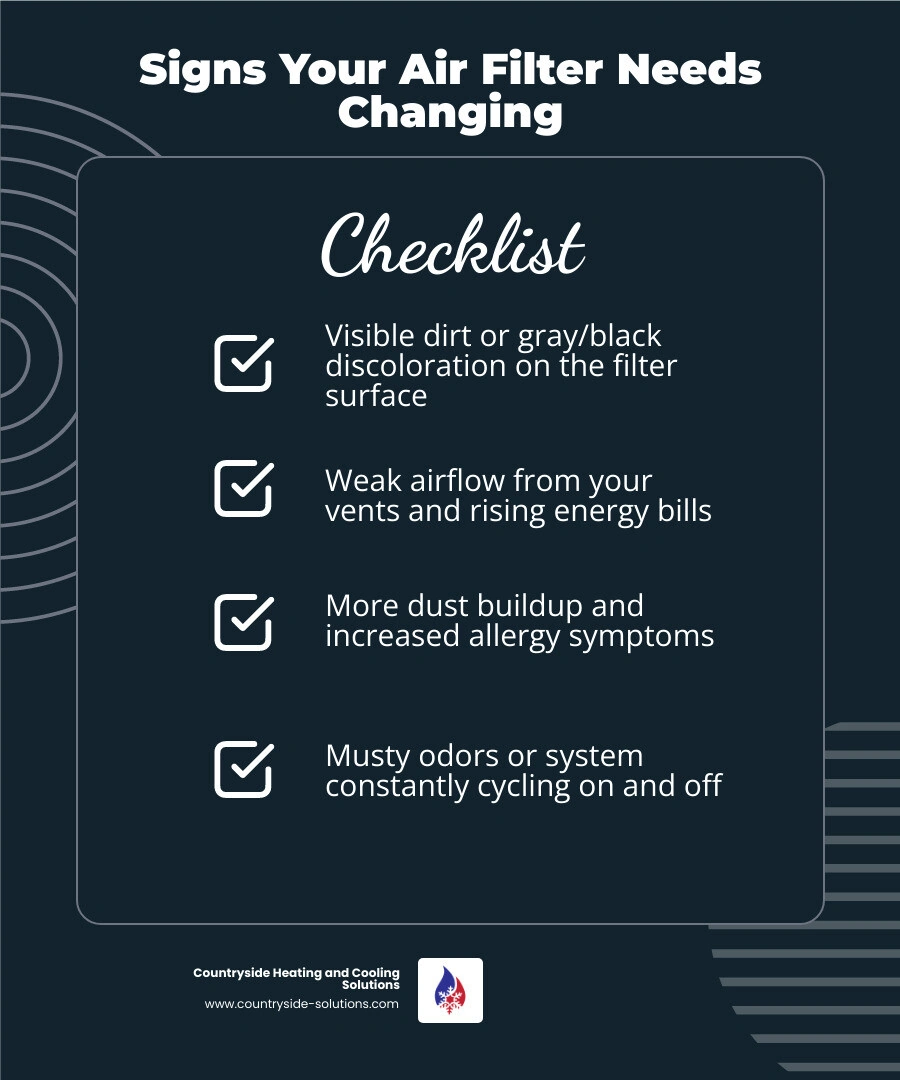
The most common signs your air filter needs changing are easy to spot once you know what to look for:
- Visible dirt or gray/black discoloration on the filter surface
- Weak airflow from your vents
- Rising energy bills without a clear explanation
- More dust building up on surfaces around your home
- Increased allergy or respiratory symptoms in your household
- Musty or stale odors when the system runs
- The system runs constantly or cycles on and off more than usual
Most homeowners in the Minneapolis–Saint Paul area don't think about their HVAC air filter until something goes wrong. But a clogged filter doesn't just hurt your air quality — it forces your system to work harder, drives up your energy bills, and can lead to expensive repairs down the road. According to the U.S. Department of Energy, a dirty filter can increase your system's energy use by as much as 15%. And indoor air can be two to five times more polluted than outdoor air when filters are neglected. In Minnesota's climate, where your HVAC runs hard through both freezing winters and humid summers, staying on top of filter maintenance matters more than most people realize.
Simple guide to signs your air filter needs changing terms:
- best air filter for homes in cold dusty climates
- how extreme cold affects filter replacement frequency
Understanding the Role of Air Filters: Home HVAC vs. Automotive
To understand why keeping a fresh filter is so critical, it helps to understand how these filters work. While both home heating, ventilation, and air conditioning (HVAC) systems and automotive engines rely on air filters, they serve different primary functions. However, both operate on the same fundamental principle: trapping harmful airborne particles while allowing clean air to flow freely.
How Your Home HVAC Filter Works
Your home HVAC filter is designed to protect your heating and cooling equipment from dust and airborne debris while simultaneously cleaning your indoor air. When your furnace or air conditioner runs, it pulls air from your living spaces through return grilles, passes it through the filter, heats or cools it, and pushes it back into your rooms.
The filter acts as a barrier, capturing dust, pet dander, pollen, mold spores, and fibers. This keeps these particles from coating sensitive internal components like the blower motor, heat exchanger, and evaporator coils. Keeping these components clean is essential for maintaining proper system airflow and heat exchange. If you want to dive deeper into the mechanics of this process, you can read more about Why Is It Important to Change the Furnace Filter to see how clean filters protect your home investment.
To choose the right level of filtration, homeowners look at MERV (Minimum Efficiency Reporting Value) ratings, which scale from 1 to 16 for residential systems. A higher MERV rating means the filter can trap smaller particles. However, filters with extremely high ratings can also restrict airflow in older HVAC systems if the system's fan speed isn't calibrated for the resistance. Balancing filtration power with system compatibility is key, especially if you are searching for the Best Air Filter for Homes in Cold Dusty Climates.
How Your Car's Engine Air Filter Works
In contrast, an automotive engine air filter is entirely focused on combustion science. Internal combustion engines require three things to run: fuel, an ignition source, and oxygen. To burn one single liter of fuel, your car's engine requires approximately 10,000 liters of air!
A standard 2.0-liter gasoline engine demands roughly 25 cubic feet of clean air every single minute just while idling. The engine air filter sits inside an airbox under the hood, trapping road dust, sand, insects, and leaves before they can enter the engine cylinders. If these abrasive particles bypass the filter, they can score the cylinder walls, damage the pistons, and contaminate your engine oil, leading to catastrophic engine wear.
| Feature | Home HVAC Air Filter | Automotive Engine Air Filter |
|---|---|---|
| Primary Purpose | Protects HVAC equipment and cleans indoor air | Protects engine cylinders from dust and road debris |
| How It Works | Traps airborne particles as air circulates through return vents | Filters incoming ambient air before it mixes with fuel |
| Standard Lifespan | 1 to 3 months (for standard 1" filters) | 12,000 to 15,000 miles (or once a year) |
| Key Performance Indicator | MERV Rating (1 to 16+) | Airflow rate per engine displacement |
| Signs of Failure | Weak airflow, high energy bills, indoor dust, allergy flare-ups | Engine misfiring, reduced fuel economy, black smoke |
Signs Your Air Filter Needs Changing: 7 Key Indicators for Your Home HVAC
When your home HVAC filter is clogged, it acts like a wall, choking off the airflow your system needs to breathe. Let’s look at the seven most common signs that indicate your home’s air filter is overdue for a change.
1. Weak Airflow from Your Vents
If you walk by a supply register and notice that the air coming out feels like a faint whisper rather than a strong breeze, your filter is likely clogged. When a filter is loaded with dust, the blower motor has to work twice as hard to push air through the dense layer of trapped debris. This restriction leaves certain rooms feeling drafty, stuffy, or unable to reach the temperature set on your thermostat.
2. Rapid Dust Buildup Around Your Home
Do you find yourself dusting your coffee table, shelves, and TV screen only to see a thin gray layer return 24 hours later? When an air filter is completely saturated, it can no longer hold any more particles. In some cases, the air pressure will force dirty air to bypass the filter edges entirely, circulating dust, pet hair, and dander right back into your living spaces.
3. Flaring Allergy or Respiratory Symptoms
Your home should be a safe haven from outdoor allergens. However, if you or your family members are sneezing more, feeling stuffy, or experiencing dry throats and itchy eyes indoors, your filter is no longer doing its job.
Consider this real-world example: a homeowner tracked their indoor comfort and reported a massive 70% reduction in sneezing and allergy symptoms simply by switching from a 90-day filter replacement schedule to a 60-day schedule. Regularly replacing your filter removes pollen, mold spores, and pet dander from circulation, keeping your indoor air clean and breathable.
4. A Sudden Spike in Your Energy Bills
If your heating or cooling habits haven't changed but your monthly utility bills are creeping upward, a dirty filter is a likely culprit. Because a clogged filter restricts airflow, your HVAC system has to run for much longer cycles to heat or cool your home. This extra runtime translates directly into higher electricity or gas consumption. According to the U.S. Department of Energy, simply replacing a dirty, clogged filter with a clean one can reduce your air conditioner's energy consumption by 5% to 15%.
5. Short Cycling or Constant System Operation
A healthy HVAC system cycles on and off a few times per hour. If your system runs continuously without ever reaching your thermostat's target temperature, or if it turns on and off rapidly every few minutes (a phenomenon known as "short cycling"), the system is under extreme stress. Restricted airflow prevents the heat exchanger or evaporator coils from operating within safe temperature limits, triggering safety switches that force the system to shut down prematurely to prevent overheating.
6. Musty, Stale, or Dusty Odors
When your furnace or air conditioner kicks on, do you notice a stale, dusty smell lingering in the air? Over time, the organic material trapped in your filter—such as skin flakes, pet dander, and food particles—can absorb moisture from the air. This damp, dark environment becomes a breeding ground for mold, mildew, and bacteria, which distribute unpleasant, musty odors through your ductwork every time the system runs.
7. Ice Formation on Your AC Evaporator Coils
During the cooling season, your air conditioner’s evaporator coils rely on steady warm indoor airflow to absorb heat. If a dirty air filter blocks this airflow, the temperature of the coils will drop rapidly. The moisture that naturally condenses on the coils will freeze, forming a layer of ice. If you notice ice on your outdoor refrigerant lines or indoor air handler, turn off your system immediately and check the filter. Running an AC with frozen coils can destroy the compressor, leading to catastrophic system failure.
If you want to prepare your system for the changing seasons and avoid these issues entirely, take a look at our helpful Spring Air Filter Replacement Guide.
How to Identify Automotive Air Filter Issues
Just like your home HVAC system, your vehicle will let you know when its air filter is choked with dirt. Because cars rely on a precise mixture of air and fuel for combustion, a restricted filter directly impacts how your engine breathes, performs, and burns fuel.
Automotive Signs Your Air Filter Needs Changing
If your car's engine air filter is dirty, you may notice one or more of the following symptoms:
- Engine Misfiring or Rough Idling: When the air supply is restricted, the combustion chamber receives a "rich" fuel mixture (too much fuel and not enough air). This incomplete combustion can foul your spark plugs with black soot, causing the engine to idle roughly, vibrate, or misfire.
- Noticeably Lower Fuel Economy: In older carbureted cars, a dirty filter directly slashes gas mileage. In modern fuel-injected vehicles, the onboard computer adjusts the fuel mixture to compensate for reduced air, which can still cause a noticeable drop in fuel efficiency and overall engine performance.
- Black Smoke or Fire from the Exhaust: In extreme cases of air starvation, unburned fuel can exit the engine cylinder and pass into the exhaust system. This can result in black, sooty smoke exiting your tailpipe, or even miniature popping explosions within the exhaust pipe.
- Check Engine Light Illuminates: Modern cars are equipped with sensitive Mass Air Flow (MAF) and oxygen sensors. If these sensors detect a severe drop in oxygen levels or abnormal combustion, they will trigger the "Check Engine" light on your dashboard.
- Smell of Raw Fuel on Startup: If the engine cannot draw in enough air to burn the injected gasoline, the unburned fuel will blow out through the exhaust, creating a strong smell of raw gasoline when you start the vehicle.
- Reduced Horsepower and Sluggish Acceleration: If your car hesitates, stumbles, or feels sluggish when you press the gas pedal to merge onto the highway, the engine is likely suffocating from a lack of clean oxygen.
Visual Inspection: Signs Your Air Filter Needs Changing Today
The absolute best way to know if a filter needs replacing is to look at it. You don't need to be a mechanic or an HVAC technician to perform a visual inspection.
- Locate the Filter: For your home HVAC, the filter is typically located in the return air duct next to the furnace or inside a return air grille on your wall or ceiling. For your car, the engine air filter is housed in a plastic black box under the hood, usually secured by metal clips or screws.
- Turn Off the Power: Always turn off your home HVAC system at the thermostat before removing the filter to prevent unfiltered air and dust from being sucked into the blower fan. For your car, ensure the engine is off and cool.
- Perform the Light Test: Hold the filter up to a bright light bulb or the sun. If light easily passes through the pleated material, the filter is still clean enough to use. If the pleats are dark gray, brown, or completely block the light, it is saturated with dirt and must be replaced.
- Check for Physical Damage: Inspect the filter for bending, dampness, mold growth, or tears in the pleated material. A damaged filter must be discarded immediately, as it allows unfiltered air to bypass the system.
- Clean the Housing: Before sliding a fresh filter into place, use a damp cloth or vacuum to clean out any loose dust, leaves, or bugs from the filter housing box. This ensures a clean, tight seal for your new filter.
Frequently Asked Questions About Air Filter Maintenance
How often should you change your home air filter in Minnesota?
As a general rule of thumb, standard 1-inch pleated air filters should be replaced every 90 days. However, this timeline is a baseline and should be adjusted based on your specific household conditions:
- Pet-Friendly Homes: If you have one dog or cat, you should change your filter every 60 days. If you have multiple pets or heavy shedders, check your filter every 30 days.
- Allergies and Asthma: If anyone in your home suffers from respiratory conditions, changing your filter every 30 to 45 days will dramatically improve indoor comfort.
- Filter Thickness: While standard 1-inch filters need frequent changes, thicker 4-inch or 5-inch media filters have much more surface area and typically only need to be replaced every 6 to 12 months.
- Minnesota Seasons: Our extreme weather means our systems run almost continuously during the freezing winters and hot, humid summers. It is best to inspect your filter monthly during these peak seasons.
To keep your entire system running reliably year-round in our unique climate, check out our guide on How Often Should You Service Your HVAC in Minnesota and view our comprehensive HVAC Maintenance Frequency Guide Minnesota.
What happens if you do not change a dirty air filter?
Neglecting a dirty filter triggers a chain reaction of system problems:
- Excessive System Strain: The blower motor has to work harder to pull air, drawing more electrical current and overheating. This can burn out the motor, leading to expensive repairs.
- Compressor Failure: In the summer, restricted airflow causes the AC evaporator coils to freeze. This sends liquid refrigerant back to the outdoor compressor, which is only designed to pump gas, destroying the compressor.
- Severe Indoor Air Pollution: A dirty filter can no longer trap airborne pollutants. Dust, mold spores, pet dander, and bacteria will continuously circulate through your home, worsening indoor air quality.
Are there other maintenance tasks to perform during filter replacement?
Yes! Replacing your filter is the perfect time to perform a few quick home maintenance checks:
- Inspect Your Vents and Registers: Make sure your supply and return vents are not blocked by furniture, drapes, or rugs. Keep them clean and dust-free.
- Wipe Down the Thermostat: Dust the exterior of your thermostat and make sure it is reading the indoor temperature accurately.
- Check the Outdoor Condenser Unit: Head outside and clear away any leaves, grass clippings, weeds, or branches within two feet of your outdoor air conditioning unit to ensure proper heat release.
- Schedule a Professional Tune-Up: While changing your filter is an excellent DIY task, it does not replace a professional inspection. Having certified experts inspect your electrical connections, clean the coils, and test safety controls once a year is key to maintaining system efficiency.
Keep Your Home Comfortable and Efficient Year-Round
Recognizing the signs your air filter needs changing is one of the simplest and most effective ways to protect your home’s comfort, lower your energy bills, and avoid sudden system breakdowns. Whether you are dealing with weak airflow, rising utility bills, or increased dust in your living spaces, a fresh air filter is often the quickest and most affordable solution.
At Countryside Heating and Cooling Solutions, we have been keeping families comfortable across the Minneapolis–Saint Paul metro area since 1974. Our family-owned business serves homeowners in Maple Plain, Minnetonka, Minnetrista, Delano, Buffalo, and the surrounding western suburbs with honest, reliable service. Our NATE-certified technicians are experts in heating, air conditioning, and advanced indoor air quality solutions.
If you have changed your air filter and are still experiencing weak airflow, uneven temperatures, or unusual system noises, let our family take care of yours. Schedule professional indoor air quality services or a comprehensive system tune-up with Countryside Heating and Cooling Solutions today!
