.webp)

Is That Unsettling AC Noise a Nuisance or an Emergency?
Is your air conditioner actually broken—or just struggling to keep up with the heat? When you hear a sudden, loud sound coming from your outdoor unit, it is easy to wonder if you should turn it off immediately or just keep an eye on it. Deciphering air conditioner noises: hissing, buzzing, and banging explained is the first step to protecting your home's cooling system from catastrophic failure. These sounds are rarely just a nuisance; they are usually mechanical symptoms of system fatigue brought on by the heavy August late-summer cooling load.
Knowing when to simply monitor a sound versus when to immediately shut down the system at the breaker can mean the difference between a minor part replacement and a completely destroyed compressor. When in doubt, it is always safest to rely on professional air conditioning services to properly diagnose these mechanical and electrical sounds. If your system is actively making an alarming noise right now, you can schedule HVAC service to get an expert on-site before the damage worsens.
Why Late-Summer Humidity Amplifies Mechanical Stress
By the time the calendar turns to August, your air conditioning system has been running continuously for months. In the Maple Plain MN area, the hot, humid summers force outdoor units to work double-duty. Your system is not just lowering the temperature of the air inside your home; it is also physically extracting gallons of heavy moisture from the indoor environment. This dual burden of cooling and dehumidifying leads to significantly longer run cycles.
Continuous operation accelerates wear and tear on every moving part inside the cabinet. Fan motors run hotter, belts stretch further, and compressor mounts endure millions of microscopic vibrations. By late summer, these components have endured maximum mechanical stress, making them highly prone to sudden failure. The noises you hear are the audible result of this accumulated fatigue.
The mechanics of end-of-season wear:
• Vibration fatigue: Constant running loosens bolts and brackets that hold heavy components in place.
• Thermal stress: Continuous heat buildup degrades the insulation on electrical wires and the lubrication inside sealed motors.
• Moisture load: Pulling heavy humidity from the air forces the compressor to work harder to maintain the correct refrigerant pressures.
Understanding this stress is about prevention, not self-repair. Because these systems operate under high voltage and extreme pressure, there are no safe DIY diagnostic steps for internal components. This is exactly why routine maintenance plans are designed to catch this wear and tear in the spring, tightening connections and measuring electrical draw before the fatigue translates into loud, disruptive noises.
Hissing Sounds: Diagnosing Refrigerant and Pressure Leaks
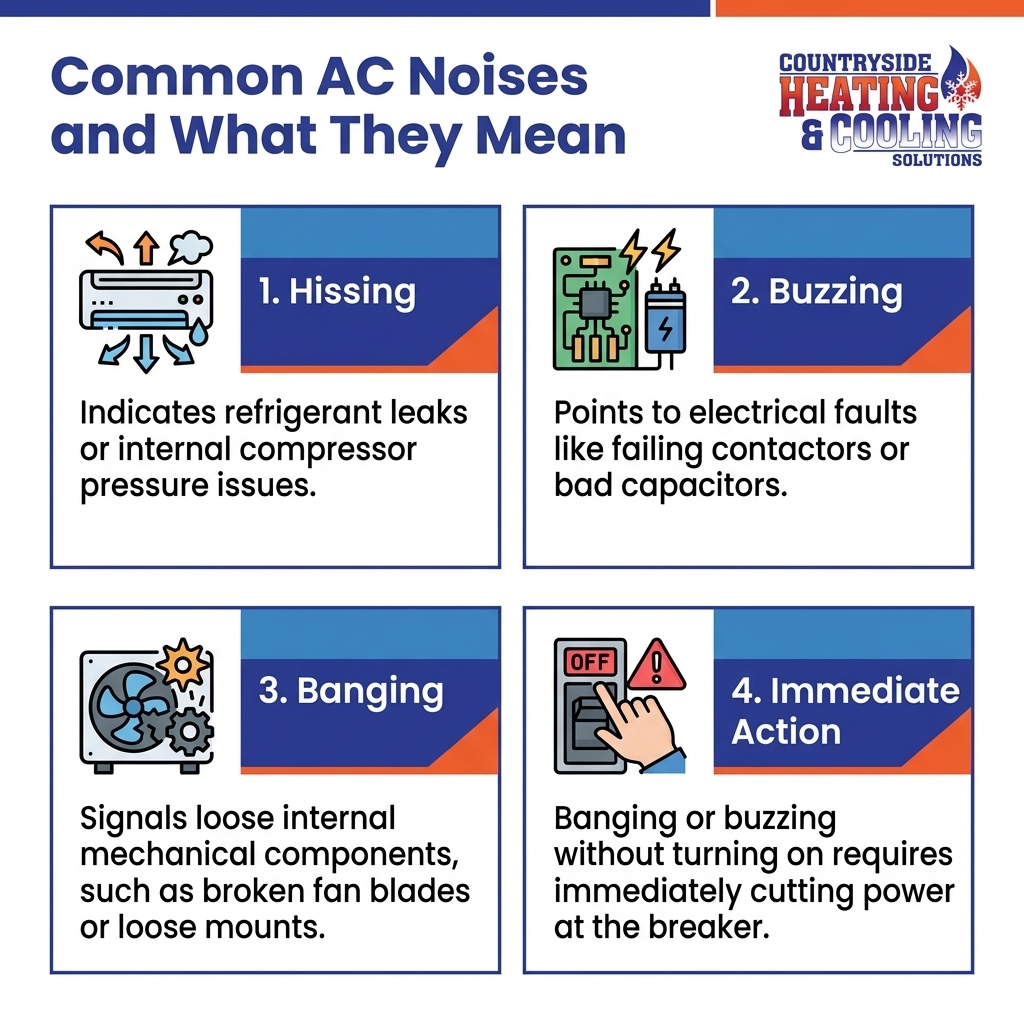
A hissing sound coming from your air conditioner is almost always related to gas or pressure. When a system is operating normally, the refrigerant flows silently through copper lines, changing from a liquid to a gas and back again. If you hear a distinct hiss—especially one that continues for a few moments after the system shuts off—it typically indicates a refrigerant leak or a severe internal compressor pressure issue.
Because refrigerant is heavily regulated by the EPA due to its environmental impact, only licensed professionals are legally permitted to handle, recover, or recharge residential refrigerant systems. You should never attempt to patch a refrigerant line or refill the system yourself with over-the-counter kits, as this can easily introduce moisture into the lines and permanently destroy the compressor.
Just as one customer experienced when they lost heat on a 10-below winter weekend and a service technician arrived promptly to explain the complex issue and restore comfort, our professionals will thoroughly check a hissing AC system and clearly explain the diagnostic process to you. You will never be left guessing about what is happening inside your equipment.
The Danger of Ignoring a Refrigerant Leak
Ignoring a hissing sound can trigger a domino effect of mechanical failures. When refrigerant escapes, the system's overall cooling capacity drops. To compensate for the lack of cooling power, the thermostat forces the compressor to run continuously.
This relentless operation spikes your energy usage and puts massive strain on the August late-summer cooling load. Furthermore, low refrigerant alters the pressure inside the evaporator coil, causing the condensation on the coil to freeze solid. A frozen coil completely blocks airflow, turning a simple leak into a total system shutdown.
• Continuous hissing while running — Likely Cause: Refrigerant line puncture or leaking valve — System Impact: Loss of cooling capacity, frozen indoor coil
• Brief hissing after shut-off — Likely Cause: Internal pressure equalization — System Impact: Often normal, but worth monitoring if it grows louder
• High-pitched screaming hiss — Likely Cause: Compressor internal pressure relief valve — System Impact: Critical danger; shut down immediately
Buzzing Noises: Electrical Faults and Component Fatigue
While hissing points to pressure, buzzing is a primary indicator of electrical faults. Air conditioners rely on a complex sequence of high-voltage electrical components to start and run. Over time, the high-humidity environments we see in late summer accelerate wear on these parts. Moisture and constant use cause pitting and corrosion on contactors, relays, and capacitors.
When an electrical component begins to fail, it often struggles to transmit the necessary voltage, resulting in a loud, vibrating buzz or hum. This is the sound of electricity arcing or a magnetic coil struggling to engage. Because these components handle 240 volts of electricity, you must strictly avoid opening electrical panels or attempting to test high-voltage AC components without a proper license.
If you want to understand the mechanics behind these failures, learning about the symptoms of a failing AC contactor vs. a bad capacitor can help you accurately describe the problem to your technician over the phone.
When Electrical Buzzing Means a Starting Failure
The most dangerous type of buzzing occurs when the system tries to turn on, makes a loud hum, but the fan blades never spin. This usually means the compressor is receiving power but lacks the starting torque provided by the capacitor. The compressor becomes "locked" and rapidly overheats.
The quick fix: If you hear this specific buzzing-without-starting sound, turn the system off at the thermostat immediately. Allowing a locked compressor to sit there and buzz will eventually burn out the motor windings, turning a relatively simple electrical repair into a massive component replacement.
Banging and Clanking: Loose Mounts and Internal Damage
Of all the noises an air conditioner can make, banging and clanking are the most urgent. These sounds indicate that internal components have broken loose, become unbalanced, or are actively striking other parts of the unit. Common culprits include broken fan blades, loose compressor mounts, or heavy debris like branches striking the condenser fan as it spins.
The physics of the problem are straightforward: operating heavy machinery with loose internal components causes irreversible damage. The components inside your outdoor unit spin at high speeds and operate under intense pressure. When a part comes loose during the heavy Maple Plain MN seasonal wear period, it acts as a wrecking ball inside the metal cabinet. Banging is never a sound to monitor—it requires immediate intervention.
The Risk to Your Compressor
The compressor is the heart of your air conditioning system, and it is a very heavy piece of equipment. It sits on rubber isolation mounts designed to absorb its natural vibration. By late summer, these mounts can dry rot or snap under the cumulative stress of continuous operation.
When a mount fails, the heavy compressor violently shakes and thrashes against the copper refrigerant lines attached to it. Within minutes, this thrashing can rupture the lines, venting all your refrigerant into the atmosphere. Similarly, a broken fan blade can act like a projectile, slicing through the delicate aluminum fins of the condenser coil and destroying the unit from the inside out.
The "Shut It Off" Decision Framework for Homeowners
When you hear an unsettling noise, the most important decision you will make is whether to let the system keep running or to cut the power. We recommend a definitive, easy-to-follow rule of thumb: if the noise is metallic, unusually loud, or accompanied by a burning electrical smell, cut the power immediately to prevent catastrophic failure.
One homeowner whose AC went out entirely in the autumn needed same-day service; technicians arrived promptly and repaired the system quickly and accurately. Shutting your system down early makes this kind of rapid, successful repair possible, preventing a minor issue from snowballing into a total replacement.
Follow this step-by-step decision framework:
1. Listen to the character of the sound: Is it a soft rattle (likely a loose cabinet panel) or a violent metallic banging? If it is metallic, proceed to shutdown.
2. Check for secondary symptoms: Is the air coming out of your vents warm? Is there a burning plastic smell near the outdoor unit? Is the fan failing to spin? If yes to any, proceed to shutdown.
3. Turn off the thermostat: Switch your indoor thermostat from "Cool" to "Off." This stops the call for cooling.
4. Cut power at the breaker: If the outdoor unit continues to buzz or run even after the thermostat is off (indicating a welded contactor), go to your main electrical panel and flip the dedicated AC breaker to the "Off" position.
5. Call for professional help: Frame the decision to shut down the unit as a proactive, money-saving choice. Professional technicians can often provide rapid, accurate repairs when called out for sudden failures before the damage worsens.
Comprehensive FAQ: Decoding Unsettling Air Conditioner Sounds
When an air conditioner starts making strange noises, homeowners often have immediate questions about safety and next steps. We have compiled the most common inquiries to help you navigate the heavy Maple Plain MN cooling season. For even more detailed answers about your home comfort systems, you can explore our HVAC frequently asked questions.
Should I turn off my AC if it's making a loud noise?
Yes, if the noise is a loud banging, screeching, or electrical buzzing, you should turn off the AC immediately. Continuing to run a system with severe mechanical or electrical faults can cause irreversible damage to the compressor. Always cut the power at the thermostat or breaker and wait for a professional diagnosis.
Why is my AC making a loud buzzing noise but not turning on?
A loud buzzing noise without the system turning on usually indicates a failed electrical component, such as a bad dual-run capacitor or a stuck contactor. The compressor is receiving electrical current but lacks the power to actually start spinning. You must turn the system off immediately to prevent the compressor motor from overheating and burning out.
Is a hissing sound from an air conditioner dangerous?
A hissing sound is not typically an immediate physical danger to your family, but it is highly dangerous to the health of your AC system. It usually points to a refrigerant leak, which will cause the system to lose cooling capacity and potentially freeze the indoor coil. Because refrigerant is regulated, a licensed professional must locate and repair the leak.
What does a bad AC compressor sound like?
A failing AC compressor often makes a hard starting noise, a loud mechanical clanking, or a deep, struggling rumble. If the internal valves are failing, you might hear a hissing or bubbling sound. Because the compressor is the most critical part of the system, any unusual noise from this component warrants an immediate professional inspection.
Can high humidity cause my air conditioner to make strange sounds?
High humidity itself does not make a sound, but it forces your air conditioner to run for much longer cycles to remove the heavy moisture from the air. This continuous operation accelerates mechanical wear and tear on fan motors, belts, and electrical relays. Over time, this humidity-driven fatigue leads to the buzzing and banging noises associated with worn-out parts.
How quickly can a loose fan blade damage the condenser coil?
A loose or broken fan blade can cause catastrophic damage to the condenser coil in a matter of seconds. Because the blades spin at high RPMs, a detached blade acts like a projectile, slicing through the delicate aluminum fins and copper tubing. If you hear a loud metallic banging from the fan area, shut the power off instantly.
Restore Your Peace of Mind with Professional Diagnostics
Translating the hissing, buzzing, and banging sounds your air conditioner makes is the crucial first step, but professional repair is the only permanent solution. Ignoring these warning sounds during the peak of the August late-summer cooling load only guarantees that a small mechanical issue will evolve into a severe, system-ending breakdown.
We know that sudden AC noises can cause significant anxiety, which is why Countryside Heating & Cooling Solutions backs our diagnostic and repair work with a Satisfaction Guarantee, providing true peace of mind when you need it most. Do not let an unsettling noise keep you awake at night or put your equipment at risk. Reach out today to talk to an expert or schedule a comprehensive inspection, and let our professionals restore both your comfort and your confidence.
