.webp)

Why Knowing the Signs of Mold in Your HVAC System Could Protect Your Family's Health
The signs of mold in your HVAC system are something every Twin Cities homeowner should know how to spot — because once mold takes hold inside your heating and cooling equipment, it gets distributed into every room of your home with every cycle of the fan.
Here are the most common signs to watch for:
- Musty or earthy smell coming from vents when the system turns on
- Visible dark spots (black, green, or gray) around vent covers, registers, or the air handler
- Black dust or particles blowing out of supply vents
- Worsening allergy or asthma symptoms indoors that improve when you leave the house
- Condensation or moisture around ductwork, registers, or the air handler cabinet
- Air filter turning black much faster than the normal 1–3 month replacement cycle
- Reduced airflow or system efficiency without an obvious mechanical cause
- Water stains or discoloration near vents or on ceilings below ductwork
We spend roughly 90% of our time indoors, according to the EPA — and in Minneapolis–Saint Paul, where we keep our homes sealed tight against cold winters and humid summers, indoor air quality matters more than most people realize. Mold only needs moisture and 48 hours to start growing. Your HVAC system, with its dark ducts, condensation-prone coils, and steady supply of dust, gives mold almost everything it needs to thrive.
If you've noticed a stale, musty smell when your furnace or air conditioner kicks on, or your family seems to have unexplained allergy symptoms that never quite go away, your HVAC system may be the source. The good news is that catching the problem early — before mold colonies spread deep into your ductwork — makes a real difference in how easy and straightforward remediation can be.
What Causes Mold to Grow and Spread in Heating and Cooling Systems?
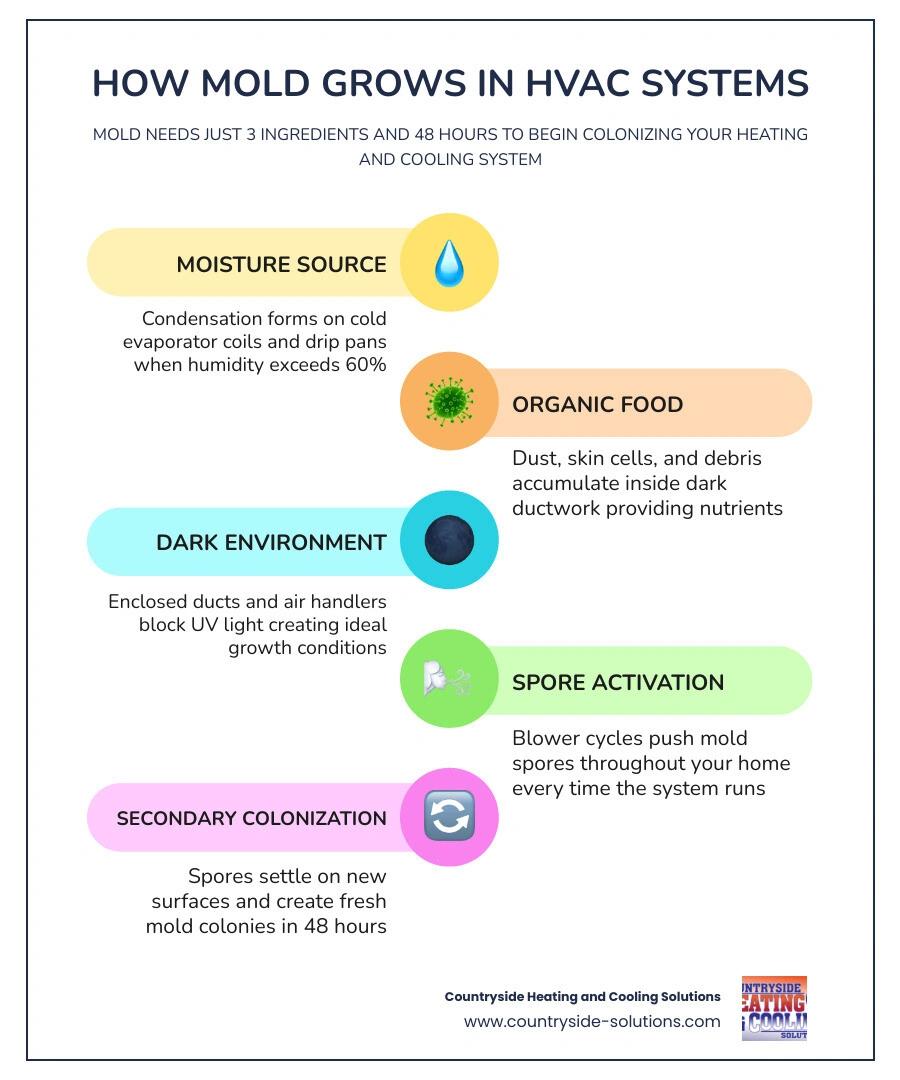
Mold is not particularly picky. To establish a thriving colony inside your home’s climate control system, it only requires three basic ingredients: moisture, an organic food source, and a comfortable temperature. Unfortunately, your heating and cooling system naturally provides all three.
The primary driver is condensation. When your air conditioner runs during our muggy Minnesota summers, the evaporator coil gets extremely cold. As warm, humid air from your home passes over this coil, moisture condenses out of the air and drips into the condensate pan. If this moisture doesn't drain away quickly, or if the high humidity inside the dark cabinet remains unaddressed, it creates a perfect breeding ground.
Furthermore, mold needs to eat. While metal ductwork itself isn't organic, the steady stream of household dust, pet dander, pollen, and skin cells flowing through your return vents certainly is. Over time, a fine layer of this organic debris accumulates along the inner walls of your ducts. When combined with the high-humidity environment of an air conditioner, mold spores find a luxurious buffet waiting for them. Understanding How Your HVAC Affects Indoor Air Quality is the first step in learning how to disrupt this cycle.
How Humidity and Condensation Fuel Mold
In the Twin Cities, outdoor humidity levels can soar during the peak summer months. If your indoor relative humidity climbs above the 60% threshold, you are practically rolling out the red carpet for biological growth. Mold thrives in high-humidity environments, and your air conditioner's internal components are the most vulnerable areas.
When warm air hits the cold evaporator coils, gallons of water are pulled from the air daily. This water is supposed to flow down into the drip pan and out through the condensate drain line. However, if the drain line becomes clogged with algae or debris, or if the drip pan is pitched incorrectly, water pools inside the dark air handler. This stagnant water, combined with the warmth generated by the blower motor, creates a highly localized humid microclimate where mold can begin growing in as little as 48 hours. If you notice persistent humidity issues, it might be one of the key Signs Your Home Needs Better Ventilation to keep moisture levels balanced.
How Mold Spreads Throughout Your Home via Ductwork
Once mold establishes a foothold inside your air handler or evaporator coil cabinet, it doesn't stay put. Your ductwork acts as an incredibly efficient distribution network. As the mold grows, it matures and begins releasing microscopic spores into the air stream.
Every time your system’s blower motor cycles on, it pushes thousands of cubic feet of air through your home. These airborne spores are carried along with the airflow, searching for new damp surfaces to colonize. If you have high humidity in your bathrooms, kitchen, or basement, the spores delivered by your supply registers will quickly settle and establish secondary colonies on your drywall, carpets, or furniture. Utilizing mechanical fresh air exchange can help dilute these airborne concentrations; read more about How Fresh Air Exchange Improves Indoor Air Quality to see how it keeps spores from accumulating.
Key Signs of Mold in Your HVAC System to Watch For
Recognizing the early warning signs of an issue can save you from extensive remediation projects down the road. Because your ductwork is hidden behind walls and ceilings, you must rely on other sensory clues to detect a problem.
The most common indicator is a distinct, persistent musty or earthy odor that intensifies whenever the heating or cooling system kicks on. This scent is caused by microbial volatile organic compounds (mVOCs) released by active mold colonies. If your home smells fine when the HVAC is off, but suddenly smells like a damp basement or rotting leaves the moment the air starts blowing, mold is likely growing near your blower fan or inside the main supply plenum.
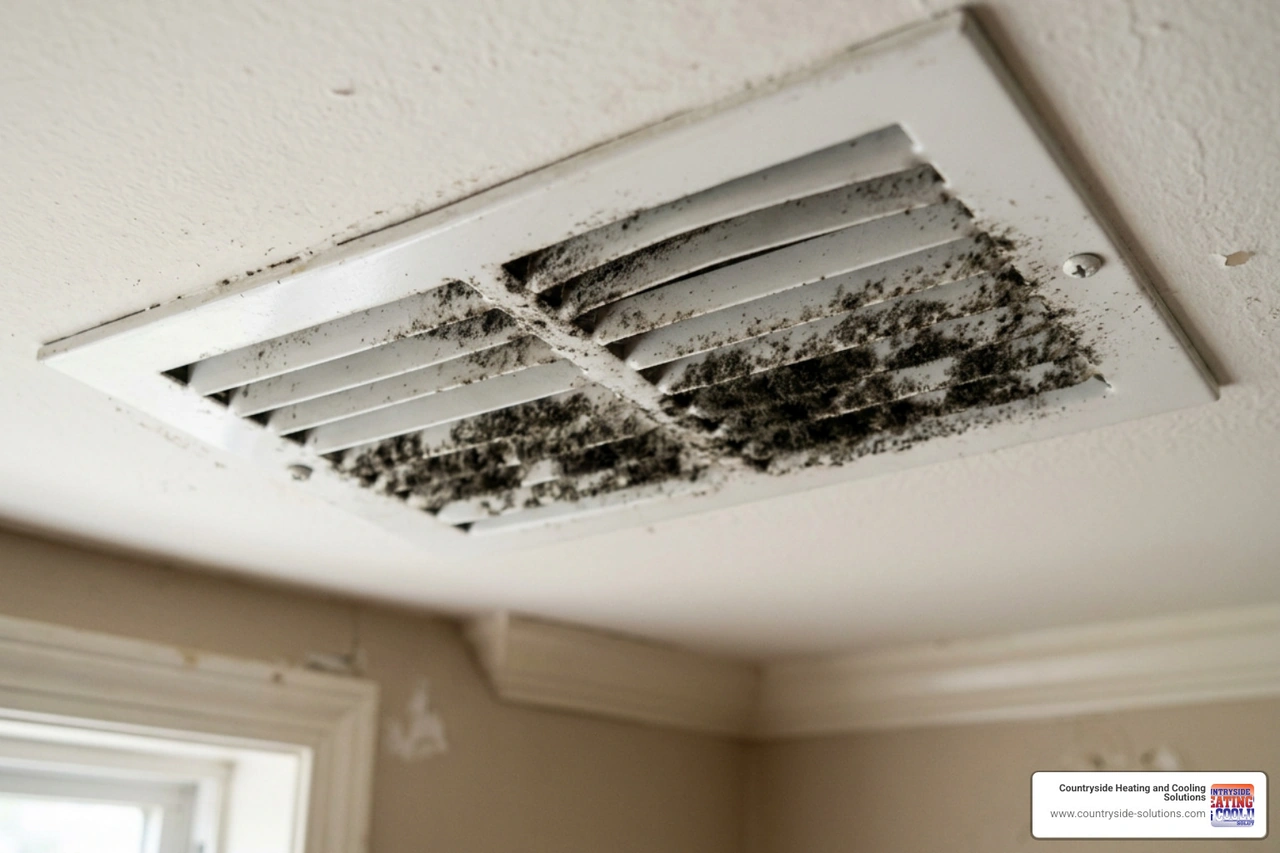
Additionally, keep an eye out for visible growth. You might notice fuzzy green, grey, or black spots forming around the edges of your supply registers or on the drywall immediately surrounding your vents. This occurs when highly humid air cools the metal vent cover, causing localized condensation that allows spores to colonize the surface. Learning How Clean Ducts Reduce Mold Risk can help you understand how keeping these pathways clear prevents these unsightly and unhealthy accumulations.
Physical Signs of Mold in Your HVAC System vs. Normal Dust
It is incredibly common for homeowners to mistake mold growth around their vents for standard household dust. Because HVAC vents naturally attract dust due to static electricity and airflow, a dark buildup on your grilles isn't always cause for panic. However, there are distinct differences in color, texture, and behavior.
| Characteristic | Normal Household Dust | Mold Growth |
|---|---|---|
| Color | Light grey, brown, or fibrous white | Black, dark green, olive, or fuzzy white |
| Texture | Dry, flaky, powdery, and easily wiped away | Slimy, fuzzy, or damp; smudges when touched |
| Smudge Test | Wipes off cleanly with a dry cloth | Leaves a dark, smear-like stain on surfaces |
| Regrowth Rate | Accumulates slowly over several months | Returns rapidly within days or weeks of cleaning |
| Odor | No odor or a dry, dusty smell | Strong, musty, damp, or earthy scent |
If you perform a quick "smudge test" using a damp paper towel and the residue smears like dark paint or feels slightly slimy, you are likely dealing with active mold rather than harmless dust.
Health Symptoms and Signs of Mold in Your HVAC System
Sometimes, the first and most pressing sign of a mold problem inside your HVAC system isn't something you see or smell, but rather something your body feels. Because your HVAC system circulates air throughout your entire living space, airborne mold spores and mycotoxins are easily inhaled.
This constant exposure can lead to chronic respiratory irritation, often referred to as mold toxicity. Common symptoms include:
- Unexplained coughing, sneezing, and nasal congestion
- Watery, itchy, or red eyes
- Frequent headaches and persistent fatigue (often described as "brain fog")
- Dry, itchy skin or rashes
- Increased frequency and severity of asthma attacks
A key indicator that your HVAC system is the culprit is the "weekend effect": if your symptoms worsen significantly when you spend extended periods at home but improve when you go to work, run errands, or travel, the air quality inside your home is likely compromised.
Black Mold vs. Common HVAC Mold Types
Not all molds are created equal. While many common household molds are relatively harmless to individuals without pre-existing allergies, certain species pose more significant health risks.
- Cladosporium: This is one of the most common outdoor molds that easily finds its way indoors. It typically appears as green, brown, or black patches on vents and can trigger standard allergy symptoms, but it is generally non-toxic.
- Aspergillus: Thriving in warm, damp environments, this mold can form white, yellow, or green colonies inside air handlers. For individuals with compromised immune systems, inhaling Aspergillus spores can lead to a more serious respiratory condition known as aspergillosis.
- Stachybotrys chartarum (Black Mold): Often referred to as "toxic black mold," this species is a dark, slimy greenish-black fungus. It is a bit of a "diva" in the mold world, requiring highly saturated materials (like wet drywall or water-logged duct insulation) and consistent moisture for at least 72 hours to grow. It produces mycotoxins that can cause severe respiratory issues, chronic fatigue, and cognitive difficulties.
How to Confirm and Test for Mold in Your Air Ducts
If you suspect mold but cannot see it clearly, a simple visual inspection is your starting point. Turn off your HVAC system, grab a bright flashlight, and remove a few of your supply and return register covers. Shine the light inside the ductwork or use your smartphone to take a photo or video as far down the line as possible. Look for fuzzy patches, dark streaks, or damp spots along the metal or flexible lining.
While a visual check can confirm obvious growth near the registers, mold often hides deep inside the system—such as on the backside of the evaporator coil or within the insulation of the air handler plenum. To confirm these hidden colonies, professional air quality testing is highly recommended.
Specialists can take air samples from different rooms and compare the indoor spore counts to outdoor baseline levels. If the indoor spore count is significantly higher, or if specific toxic species are identified in the lab analysis, it confirms an active mold source within the home. If your ductwork is older, leaky, or poorly insulated, it may be pulling in damp air from crawlspaces or attics, making a Professional Ductwork Installation a smart long-term solution to prevent recurring moisture issues.
Prevention and Maintenance: Keeping Your HVAC Mold-Free
The most effective way to handle mold in your HVAC system is to prevent it from growing in the first place. Because mold requires moisture and organic material to survive, your maintenance routine should focus on eliminating these two factors.
First, stay diligent with filter replacements. The U.S. Department of Energy recommends replacing your HVAC filters every 1 to 3 months. When filters become clogged with dust, they restrict airflow, which causes the evaporator coils to get colder and produce excess condensation. Furthermore, dirty filters can trap moisture, turning the filter itself into a breeding ground for mold spores.
Second, consider upgrading your system with air-quality accessories. Installing UV-C germicidal lights inside your air handler—specifically pointing at the evaporator coil—is an incredibly effective way to destroy the DNA of mold, bacteria, and viruses before they can colonize. Additionally, keeping your home's relative humidity below 50% is crucial. If your home struggles with high humidity, installing a whole-house dehumidifier can keep moisture levels perfectly balanced.
For our neighbors in the western suburbs, we offer targeted air quality upgrades to keep your indoor environment pristine. If you reside in Chanhassen, you can learn more about our Whole House Air Filtration - Chanhassen MN options. Likewise, if you are located in Eden Prairie, we invite you to explore our specialized Whole House Air Filtration - Eden Prairie MN services to keep your system running clean and mold-free.
Frequently Asked Questions About HVAC Mold
When should I call a professional instead of attempting DIY mold cleaning?
According to EPA guidelines, if the mold coverage is less than 10 square feet on easily accessible, hard surfaces (like a metal vent cover), you can generally clean it yourself using a mixture of water and household detergent or white vinegar.
However, you should always call a professional if the mold is inside your ductwork, covers more than 10 square feet, or has colonized porous materials like fiberglass duct board or duct insulation. Attempting to scrub mold out of ducts yourself often does more harm than good; without proper containment and negative air pressure, the physical scrubbing will release millions of spores into your living spaces, severely contaminating your carpets, furniture, and indoor air. If you suspect your system needs professional attention and you live in the Rockford area, check out our Indoor Air Quality - Rockford MN services for expert guidance.
Can running the air conditioner cause mold to grow?
Running your air conditioner does not directly cause mold to grow, but it does create the physical conditions that make it possible. As your AC cools, it naturally generates condensation. If your system is properly sized, well-maintained, and draining correctly, this moisture is safely escorted out of your home.
However, if your AC system is oversized for your home, it will suffer from "short-cycling"—turning on and off rapidly. Because an air conditioner must run for a sustained period to effectively pull humidity from the air, a short-cycling system will cool the air quickly but leave the humidity behind, creating a cool, damp environment that mold loves. If you are noticing humidity issues in Maple Plain, our local experts can help evaluate your system; read more about our Indoor Air Quality - Maple Plain MN solutions to keep your system balanced.
How often should I inspect my HVAC system for mold?
You should perform a quick visual inspection of your vents and check your air filters every 30 to 90 days. A deeper inspection of the air handler, condensate pan, and evaporator coils should be performed twice a year during seasonal transitions—once in the spring before the cooling season begins, and once in the autumn before the heating season starts.
Scheduling annual professional maintenance is the best way to ensure that hard-to-reach components are thoroughly inspected and cleaned by a trained eye. For our customers in Buffalo, we provide dedicated support to keep your system in top shape; explore our Indoor Air Quality - Buffalo MN page to schedule your seasonal check-up.
Conclusion
Detecting the signs of mold in your HVAC system early is one of the best ways to protect your home's structural integrity and your family's health. From musty odors to unexplained allergy symptoms, these warning signs should never be ignored.
At Countryside Heating and Cooling Solutions, we have been helping Twin Cities families breathe easier since 1974. Serving Maple Plain, Minnetonka, Minnetrista, and the surrounding western suburbs, our family-owned business relies on licensed, NATE-certified technicians who bring decades of experience to every job. We stand by our commitment to your comfort and reliability with our guaranteed next-business-day service, ensuring you never have to wait long for peace of mind.
If you suspect mold is lingering in your ductwork or want to take proactive steps to improve your home's air quality, we are here to help. Reach out to us today to schedule an inspection, and let us help you Breathe Easier with Countryside's Indoor Air Quality Solutions.
