.webp)

Why Knowing How to Stay Cool During Minnesota Heat Waves Could Save Your Life
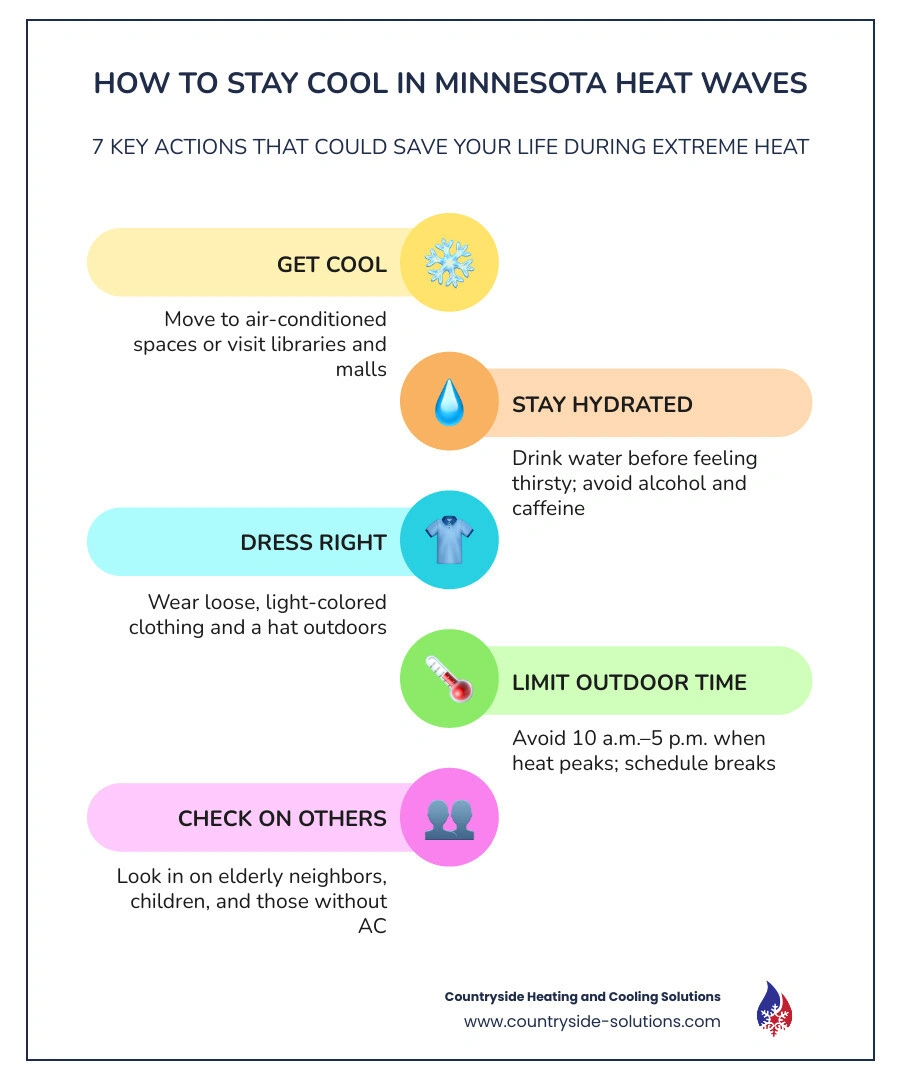
How to stay cool during Minnesota heat waves starts with a few key actions: get into air-conditioned spaces, stay hydrated with water or electrolyte drinks, avoid outdoor activity during peak heat hours (10 a.m.–5 p.m.), check on vulnerable neighbors, and never leave children or pets in a parked car.
Quick answers at a glance:
- Get cool - Move indoors to air conditioning, or visit a public cooling center like a library or mall
- Stay hydrated - Drink water throughout the day before you feel thirsty; skip alcohol and caffeine
- Dress right - Wear loose, lightweight, light-colored clothing and a hat outdoors
- Limit outdoor time - Avoid being outside between 10 a.m. and 5 p.m. when heat peaks
- Know the warning signs - Recognize heat exhaustion and heat stroke symptoms early
- Check on others - Look in on elderly neighbors, young children, and anyone without AC
- Never leave anyone in a car - Temperatures inside parked vehicles can become lethal within minutes
Most Minnesotans think of winter when they think of dangerous weather. But here is a fact that might surprise you: extreme heat kills more Americans every year than tornadoes, hurricanes, and flooding combined. And Minnesota is not immune.
Between 2000 and 2023, 77 people in Minnesota died from heat-related causes. In recent summers, health care facilities across the state have handled around 800 heat-related emergencies each year. And the trend is heading in the wrong direction — climate projections suggest that parts of Minnesota could experience a heat index of 135°F for multiple days by 2045.
Part of what makes this so dangerous is that Minnesotans simply are not as prepared for heat as they are for blizzards. As one public health expert put it, residents here tend to "power through" the heat rather than take it seriously. That mindset can be deadly.
Whether you own a home in the western Twin Cities suburbs or work outdoors around Minneapolis–Saint Paul, understanding how to protect yourself — and your household — during a heat wave is no longer optional. It is essential.
Understanding Extreme Heat and Climate Trends in Minnesota
To understand why extreme heat is so dangerous in our state, we have to look at how climate change is shifting our summer weather patterns. Historically, Minnesota summers have been comfortably warm with occasional hot stretches. However, climate projection trends show our summers are becoming increasingly hot and, more importantly, much more humid.
Climate change has significantly increased local humidity levels. When the air is saturated with moisture, our sweat cannot evaporate efficiently. Since evaporation is the body's primary way of cooling itself, high humidity makes the air feel much hotter than the thermometer reads. This combination of air temperature and relative humidity is what we call the heat index.
In the seven-county Twin Cities metro area (which includes our service areas like Minnetonka, Edina, and Eden Prairie), the National Weather Service has established specific safety thresholds:
- Heat Advisory: Issued when the heat index is expected to reach 95°F or higher.
- Extreme Heat Warning: Issued when the heat index is expected to reach 100°F or higher.
These thresholds are actually lower than those in southern states like Texas or Arizona. Why? Because Minnesotans are not physiologically acclimated to sustained high temperatures, and many of our older homes lack adequate central cooling systems.
Urban areas face an additional challenge known as the urban heat island effect. Hard surfaces like asphalt, concrete, and brick absorb and trap heat during the day and radiate it back out at night. This prevents nighttime temperatures from cooling down, depriving our bodies of the recovery time they need.
| Alert Level | Heat Index Threshold | Recommended Action |
|---|---|---|
| Heat Advisory | 95°F to 99°F | Limit outdoor activities; drink plenty of water; seek air-conditioned spaces. |
| Extreme Heat Warning | 100°F or higher | Avoid all unnecessary outdoor activity; check on vulnerable neighbors; ensure AC is running efficiently. |
How to Stay Cool Indoors During Extreme Weather
When a heat wave rolls through the Twin Cities suburbs, your home should be your primary sanctuary. However, if your indoor spaces are not prepared, they can quickly become dangerously hot.
If you do not have functional air conditioning at home, do not try to "tough it out." Seek out public cooling centers during the hottest hours of the day. Public libraries, shopping malls, and community centers across Hennepin and Carver counties offer air-conditioned environments where anyone can find relief.
For those staying at home, here are several highly effective ways to keep indoor temperatures down:
- Close the drapes and blinds: Keep windows covered, especially those facing east and west, to block out solar heat gain.
- Be smart with electric fans: While fans are great for creating a wind-chill effect on your skin, they can actually be dangerous when indoor temperatures reach 90°F or above. At that point, fans do not cool you down; they simply blow hot air over your body, which can accelerate dehydration.
- Limit heat-producing appliances: Avoid using the oven, stove, or clothes dryer during the hottest parts of the day. Opt for outdoor grilling or microwave meals instead.
To ensure your home is fully prepared for the summer heat before the next heat wave strikes, check out our comprehensive guide on how to Get Ready for Summer AC Tips to Keep You Cool. If you are looking to keep your utility bills manageable during these hot spells, we have also compiled 10 Super Easy Ways to Reduce Your AC Costs.
Smart Thermostat Settings and How to Stay Cool During Minnesota Heat Waves
Upgrading to a smart thermostat is one of the easiest ways to balance indoor comfort with energy efficiency during a heat wave. Smart thermostats allow you to program cooling schedules around your daily routine, ensuring you aren't wasting energy cooling an empty house while still returning to a comfortable home.
During a heat wave, we recommend setting your thermostat to 78°F when you are at home and active. While this might sound warm to some, it keeps your system from running constantly and prevents the electrical grid from becoming overloaded.
For a complete breakdown of how to manage your home's temperature settings when the mercury rises, read our article on the Ideal Temperature Setting for Thermostat in Summer. For additional strategies on keeping your monthly utility bills in check, explore these 5 Ways to Reduce Your Cooling Costs This Summer.
AC Maintenance and How to Stay Cool During Minnesota Heat Waves
Your air conditioner has to work incredibly hard to maintain comfortable indoor temperatures when outdoor heat indexes surpass 100°F. If your system has not been serviced recently, a sudden heat wave can push it past its breaking point, leading to unexpected breakdowns right when you need cooling the most.
Regular maintenance is the key to preserving air conditioner performance and extending the lifespan of your system. Simple tasks like replacing clogged air filters every 30 to 90 days can improve airflow and keep your system running smoothly. However, deeper technical inspections should always be performed by licensed, NATE-certified technicians.
Before the peak of summer arrives, we highly recommend scheduling a professional system tune-up. To understand what goes into keeping your system in peak condition, read our AC Maintenance Tips to Increase the Performance of Your Unit. To maximize your unit's output, you can also implement these Top 10 Tips to Improve the Efficiency of Your Air Conditioner Cooling.
If you are planning ahead for the warmer seasons, it is also highly beneficial to review our guides on The 2023 Ultimate Air Conditioning Guide, 6 Best Summer Maintenance Tips for Your Air Conditioner, Spring AC Preparation After a Long Winter, and our essential Tips to Prepare for Spring Air Conditioning.
How to Stay Cool During Minnesota Heat Waves Outdoors

Whether you are attending a summer festival in Lake Minnetonka, working in your yard in Maple Grove, or walking the trails in Wayzata, outdoor safety during a heat wave requires proactive planning.
The golden rule of outdoor heat safety is proactive hydration. Do not wait until you feel thirsty to drink water; by then, you are already mildly dehydrated. Keep a water bottle with you at all times and sip from it constantly.
- Choose the right beverages: Water is best, but if you are sweating heavily, supplement it with electrolyte drinks or sports drinks to replenish lost minerals.
- What to avoid: Skip alcoholic beverages, heavily sugared sodas, and highly caffeinated drinks like energy shots or coffee. These act as diuretics and can accelerate fluid loss.
- Dress appropriately: Wear loose-fitting, lightweight, and light-colored clothing. Dark colors absorb solar heat, while tight clothes trap heat against your skin. Natural fibers like cotton or linen are highly breathable and help keep you cool.
- Protect your skin: Wear a wide-brimmed hat, sunglasses, and apply a broad-spectrum sunscreen. Sunburns actually damage your skin's ability to dissipate heat.
When planning outdoor activities, look beyond the standard temperature and consult the Wet Bulb Globe Temperature (WBGT). Unlike the heat index, which is calculated in the shade, WBGT is measured in direct sunlight and accounts for temperature, humidity, wind speed, sun angle, and cloud cover. It is the gold standard for athletic and military outdoor safety.
You can monitor local WBGT readings via the Hennepin West Mesonet. Use these strict thresholds to guide your outdoor plans:
- WBGT of 83°F to 85°F: Limit strenuous outdoor activity to 2 hours or less, taking scheduled 30-minute breaks in the shade or AC.
- WBGT of 86°F to 88°F: Limit outdoor activity to 1 hour or less, with 45 minutes of rest for every 15 minutes of work.
- WBGT of 88°F or Higher: Cancel all non-essential outdoor activities immediately.
Recognizing Heat-Related Illnesses and Protecting Vulnerable Groups
Heat-related illnesses develop progressively, and recognizing the early signs can prevent a medical emergency.
Heat exhaustion occurs when your body loses excessive water and salt through heavy sweating. If left untreated, it can quickly escalate to heat stroke, which is a life-threatening medical emergency where the body loses its ability to regulate its temperature.
Heat Exhaustion Symptoms (Act Quickly):
- Heavy sweating and cool, pale, clammy skin
- Fast, weak pulse
- Nausea, vomiting, or mild headache
- Dizziness, lightheadedness, or weakness
- Muscle cramps
What to do: Move the person to a cool, shaded, or air-conditioned space. Loosen their clothing, apply cool, wet cloths to their neck and forehead, and have them sip cool water. If symptoms do not improve within an hour, or if they vomit repeatedly, seek medical help.
Heat Stroke Symptoms (Call 911 Immediately):
- High body temperature (103°F or higher)
- Hot, red, dry, or damp skin
- Fast, strong pulse
- Severe headache, dizziness, or confusion
- Agitation, slurred speech, or loss of coordination
- Loss of consciousness or seizures
What to do: Call 911 immediately. Move the person to a cooler place. Use cool cloths, ice packs, or a cool bath to lower their body temperature. Do not give them anything to drink, as they may be unable to swallow safely.
Certain populations are at a much higher risk during extreme heat events:
- Older Adults: Their bodies do not adjust to temperature changes as efficiently, and they are more likely to have chronic medical conditions (like diabetes, high blood pressure, or kidney disorders) or take medications that interfere with heat regulation.
- Young Children and Infants: They rely entirely on caregivers to keep them hydrated and cool, and their bodies heat up much faster than adults.
- Outdoor Workers: Landscapers, construction crews, and utility workers in places like Waconia and Buffalo must take scheduled, mandatory shade breaks.
- Unsheltered and Vulnerable Individuals: Those without stable housing or access to reliable cooling are highly exposed. Carrying extra bottled water to distribute to those in need can make a life-saving difference.
Never leave children or pets in a parked car. Even on an 80°F day with the windows cracked, the temperature inside a vehicle can climb to over 100°F in just 10 minutes, creating a lethal environment. Always check the backseat before locking your vehicle.
Frequently Asked Questions about Minnesota Heat Waves
What is the difference between heat exhaustion and heat stroke?
Heat exhaustion is the body's warning system showing that it is overheating and losing vital fluids. Symptoms include heavy sweating, pale skin, dizziness, and muscle cramps. Heat stroke is a life-threatening emergency where the body's cooling mechanism fails entirely, causing the internal temperature to spike above 103°F. Symptoms of heat stroke include confusion, hot red skin, a rapid pulse, and loss of consciousness. Heat stroke requires an immediate call to 911.
When is it too hot to exercise or work outdoors in Minnesota?
We recommend avoiding strenuous outdoor exercise or work when the heat index reaches 90°F or when the Wet Bulb Globe Temperature (WBGT) exceeds 83°F. Always avoid outdoor activities during peak heat hours between 10 a.m. and 5 p.m. If you must work outdoors, schedule frequent rest breaks in shaded or air-conditioned spaces.
Where can I find cooling centers in the Twin Cities?
Public cooling spaces are available across the western suburbs, including Hennepin County library branches in Maple Grove, Minnetonka, and Edina, as well as local shopping malls and community centers. You can consult local county websites or cooling maps to find designated air-conditioned facilities near you.
Conclusion
Staying safe during extreme summer weather requires proactive preparation. By keeping your home's air conditioner properly maintained, staying hydrated, choosing the right clothing, and monitoring vulnerable family members and neighbors, you can safely navigate the hottest days of the year.
At Countryside Heating and Cooling Solutions, we have been keeping families comfortable and safe across the western Twin Cities suburbs — from Maple Plain and Long Lake to Eden Prairie and Waconia — since 1974. Our team of licensed, NATE-certified technicians is dedicated to ensuring your home's cooling system is reliable, efficient, and ready to handle whatever summer throws our way.
Don't wait for the next major heat wave to find out if your air conditioner is up to the task. Schedule professional AC service today to keep your home cool, comfortable, and safe all summer long.
