.webp)

What Happens If You Don't Change Your Air Filter — And Why It Matters for Your Home
What happens if you don't change your air filter is something every Minneapolis–Saint Paul homeowner should understand — because the consequences are faster, more expensive, and more damaging than most people expect.
Here's a quick summary:
| What Happens | How Soon It Can Start |
|---|---|
| Higher energy bills (up to 20–30% more) | Within weeks of clogging |
| Reduced airflow and uneven room temperatures | Within 1–2 months |
| Poor indoor air quality and allergen buildup | Ongoing and cumulative |
| HVAC system strain and component wear | Within a few months |
| Frozen evaporator coils or overheating | After prolonged neglect |
| Potential system breakdown or failure | Long-term neglect |
Most homeowners don't think much about their air filter — it's tucked away, out of sight, and easy to forget. But that small, inexpensive filter is doing a critical job every single hour your heating or cooling system runs. When it gets clogged with dust, pet hair, and debris, your entire HVAC system starts working harder to push air through. That extra strain shows up on your energy bill, in your air quality, and eventually in expensive repair calls.
According to the EPA, indoor air is already two to five times more polluted than outdoor air on average — and a neglected filter makes that problem significantly worse by allowing dust, allergens, and even mold spores to keep circulating through your home.
The good news? This is one of the easiest and most affordable maintenance tasks you can do to protect your system and your family's health. This guide walks you through everything you need to know.
Basic what happens if you dont change your air filter terms:
- best air filter for homes in cold dusty climates
- how extreme cold affects filter replacement frequency
- how often should you change your hvac air filter
The Primary Function of Your HVAC Air Filter
To truly understand what happens when you skip filter replacements, it helps to understand what that filter is actually doing inside your system. There is a common misconception that air filters are designed solely to purify the air you breathe. While they certainly help clean your indoor air, their primary, engineering-first job is actually to protect your HVAC equipment itself.
Your furnace and air conditioner rely on a delicate balance of airflow to heat and cool your home. The air filter acts as a shield, preventing airborne particles like dust, dirt, lint, pet dander, and cooking grease from entering the inner workings of your system. Without this shield, these microscopic particles would quickly coat your expensive evaporator coils, blower motors, and heat exchangers, leading to rapid wear and tear.
How well a filter performs this defensive job is measured by its MERV rating, which stands for Minimum Efficiency Reporting Value. MERV ratings range from 1 to 20:
- MERV 1–4: Basic fiberglass filters. These are cheap and only stop large particles like lint and carpet fibers. They do very little for your health, but they keep the biggest debris out of your system.
- MERV 5–8: Standard pleated paper filters. These are the sweet spot for most standard homes, successfully trapping pollen, mold spores, and dust mites.
- MERV 9–12: Superior pleated filters. These trap smaller particles, including pet dander, fine dust, and some bacteria.
- MERV 13–16: High-efficiency filters. Often used in hospitals or superior residential systems, these can capture smoke, virus carriers, and microscopic allergens.
- MERV 17–20: True HEPA filters. These capture up to 99.97% of ultra-fine pollutants but are rarely compatible with standard residential HVAC systems without heavy modifications because they heavily restrict airflow.
Choosing the right filter means balancing filtration power with proper system airflow. If you choose a MERV rating that is too high for your system, it can behave exactly like a clogged filter, suffocating your furnace or air conditioner. For deep dives on choosing the right match, explore our guide on the Best Air Filter for Homes in Cold Dusty Climates. If you find your filter looks like a lint-roller after just a couple of weeks, you might want to read up on The Causes of Your Furnace Filter Getting Dirty So Fast to troubleshoot underlying household issues.
What Happens If You Dont Change Your Air Filter?
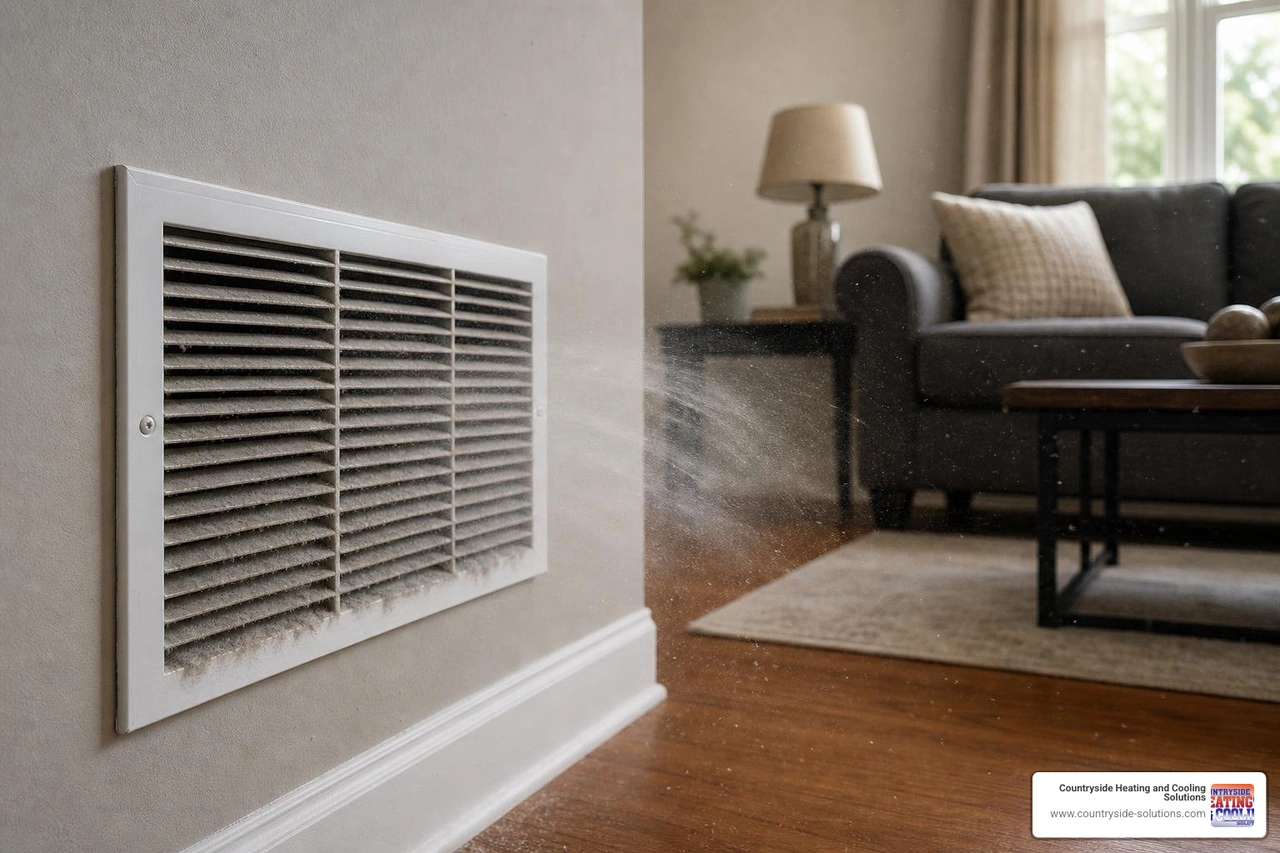
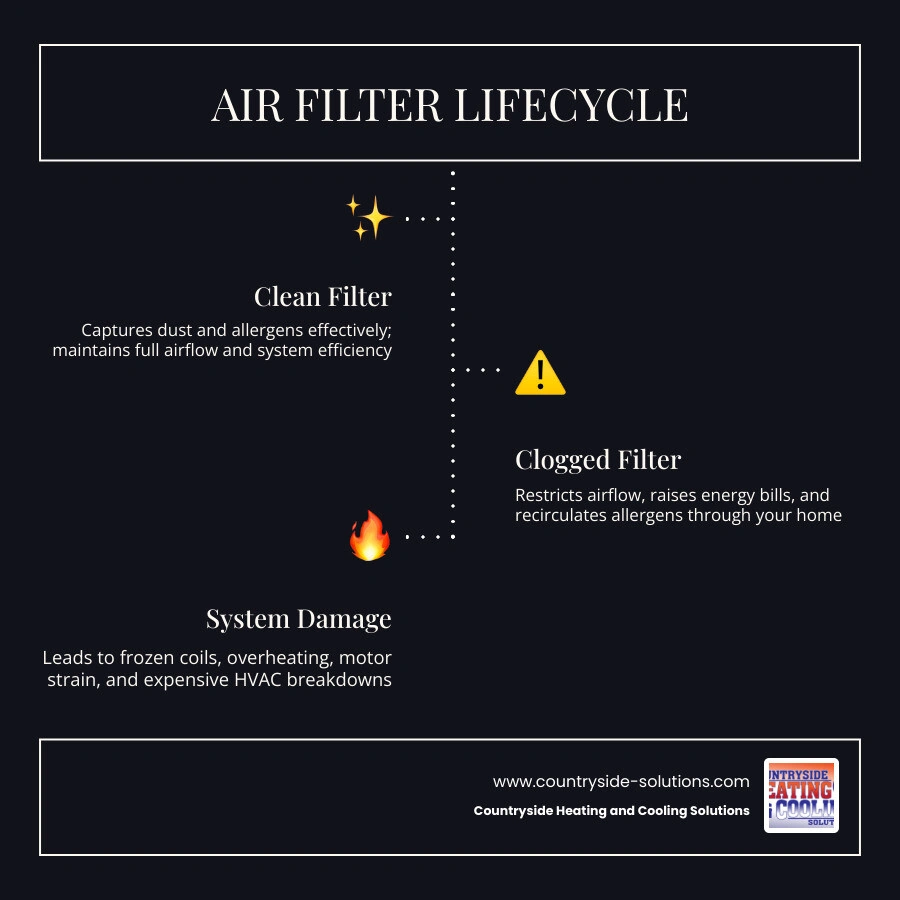
When you ignore your air filter, a slow-motion chain reaction begins. At first, you might not notice anything. But as the fibers of the filter become completely saturated with dust and hair, the space available for air to pass through shrinks to almost nothing.
This triggers three major household headaches:
- Restricted Airflow: Your system has to pull air through a solid wall of dirt. This means less air actually comes out of your vents, leading to weak airflow and sluggish performance.
- Uneven Temperatures: Because the system cannot push enough conditioned air to the furthest corners of your home, you will experience hot and cold spots. The living room might feel fine, but the upstairs bedrooms will remain stubbornly uncomfortable.
- Sinking Efficiency and Rising Bills: A clogged air filter can increase your system's energy consumption by 5% to 15%. In severe cases, a dirty filter can drive up your monthly utility costs by 20% to 30% because your system has to run twice as long to achieve the temperature set on your thermostat.
Over time, this restricted airflow translates directly into mechanical strain, which can trigger severe damage depending on whether you are running your furnace or your air conditioner. To understand how this impacts your breathing air, check out How Your HVAC Affects Indoor Air Quality.
What happens if you dont change your air filter in your furnace?
In the freezing depths of a Minnesota winter, your furnace is your home's lifeline. If you let your furnace filter clog up, you risk a dangerous phenomenon known as short cycling.
Here is what happens mechanically:
- The furnace burns fuel to heat up a metal component called the heat exchanger.
- Normally, the blower fan pushes cool indoor air over this hot heat exchanger. The air cools the metal down while warming your home.
- If the filter is clogged, there isn't enough cool air flowing over the heat exchanger.
- The heat exchanger rapidly overheats, reaching dangerous temperatures.
- To prevent a fire, your furnace's internal safety sensors trigger an emergency shutdown (short cycling).
This constant cycle of overheating and rapid cooling puts immense stress on the metal of your heat exchanger. Eventually, the metal will crack. A cracked heat exchanger is a worst-case scenario: it is incredibly expensive to repair and can leak lethal carbon monoxide gas into your home. If you run a Bryant system, you can avoid this nightmare by following our specific breakdown on How Often Do You Change the Filter in a Bryant Furnace.
What happens if you dont change your air filter in your air conditioner?
During our humid summer months, a dirty filter poses a completely different threat to your air conditioning unit: frozen evaporator coils.
Your AC cools your home by blowing warm indoor air over a freezing cold evaporator coil filled with liquid refrigerant. This process draws heat and moisture out of the air. However, if a clogged filter restricts the airflow, there is not enough warm air passing over the coil to keep it warm.
The temperature of the coil drops below freezing, causing the condensation on the coil to turn to ice. Once ice starts to form, it acts as an insulator, completely blocking any remaining airflow. Eventually, your AC will stop blowing cold air entirely. Even worse, the ice can cause liquid refrigerant to flood back into your outdoor compressor. This is known as "liquid slugging" and will instantly destroy your compressor — a part so expensive to replace that it often forces homeowners to buy an entirely new AC unit.
You can prevent these costly summer breakdowns by reviewing our Spring Air Filter Replacement Guide before the heat sets in.
How a Clogged Filter Affects Indoor Air Quality and Health
While the mechanical risks of a dirty filter are severe, the human toll can be even worse. Since we spend up to 90% of our lives indoors, the quality of the air we breathe has a massive impact on our physical well-being.
When your air filter becomes completely packed with dust, it loses its ability to trap new particles. In some cases, the pressure from the blower fan can actually deform the filter, bowing it backward and creating gaps around the frame. When this happens, completely unfiltered air bypasses the filter entirely.
This means that dust, pollen, pet dander, dust mites, and mold spores are continuously recirculated through your living spaces. For family members living with asthma, allergies, or chronic respiratory conditions, this can trigger constant flare-ups, sneezing, coughing, and sinus irritation.
Furthermore, a restricted system leads to stagnant air. Stagnant air allows humidity to build up in pockets of your home, creating the perfect breeding ground for mold and bacteria inside your ductwork. Some homeowners even notice a fine layer of gray dust settling on their furniture just hours after cleaning, or a distinct musty odor whenever the system kicks on.
If you want to ensure your home is a safe haven of clean air, check out our localized resources on Indoor Air Quality Maple Plain MN or learn how a dedicated system can help at Whole House Air Filtration Maple Plain MN.
Signs It's Time to Replace Your Air Filter
You don't have to wait for your system to break down to realize your filter is dirty. Your home and your HVAC system will drop plenty of hints along the way.
Keep an eye out for these classic warning signs:
- The Visual "Gray Test": Pull your filter out and hold it up to a bright light. If the filter is dark, gray, and you cannot see any light passing through the fibers, it is completely saturated and needs to be replaced immediately.
- Rapid Dust Accumulation: If you find yourself dusting your tables, TV screens, and shelves constantly, your filter is likely full and letting dust bypass the system.
- A Dusty or Musty Smell: If a wave of stale, dusty air hits your nose the moment your furnace or AC turns on, your filter is likely harboring a thick layer of organic debris.
- Longer System Runtimes: If your system seems to run continuously without ever reaching the temperature set on the thermostat, a restricted filter is likely choking the airflow.
- Rising Utility Bills: If your heating or cooling bills are steadily climbing but the weather outside has remained relatively stable, your system is working harder than it should have to.
Frequently Asked Questions About Air Filter Maintenance
To help you keep your home running smoothly, we've compiled the most common questions our team gets about managing and maintaining air filters.
Air Filter Comparison Table
| Filter Type | MERV Rating | Typical Lifespan | Best For |
|---|---|---|---|
| Fiberglass | MERV 1–4 | 30 days | Budget-conscious, basic system protection |
| Pleated Paper | MERV 5–8 | 60–90 days | Average households, basic allergen control |
| High-Efficiency Pleated | MERV 9–12 | 90 days | Homes with pets, mild allergies |
| Media Filters (4-inch) | MERV 11–16 | 6–12 months | Deep filtration, low maintenance frequency |
How often should you change your HVAC air filter in 2026?
There is no one-size-fits-all answer, as your replacement schedule depends heavily on your household dynamics. However, here are the industry-standard guidelines for 2026:
- Standard, Pet-Free Homes: Every 90 days (3 months).
- Homes with One Pet: Every 60 days (2 months).
- Homes with Multiple Pets or Allergy Sufferers: Every 20 to 45 days.
- Vacation Homes or Low-Use Properties: Every 9 to 12 months.
For a deeper look into these schedules and how to optimize them for your household, read our comprehensive guide on How Often Should You Change Your HVAC Air Filter.
Can you run your HVAC system without an air filter?
You should never run your HVAC system without an air filter, even for a single day.
Without a filter in place, there is absolutely nothing to stop airborne dust, hair, and grease from being sucked directly into your system. These particles will coat the wet evaporator coils, stick to the blower motor blades, and clog delicate electrical components. This can cause severe, permanent damage in a matter of hours, leading to thousands of dollars in professional cleaning or repairs. If you must remove a dirty filter, keep the system turned off until you have a fresh replacement installed.
Will a dirty air filter cause my utility bills to go up?
Yes, absolutely. When your air filter is clogged, your blower motor has to work twice as hard to pull air through the restricted barrier. This massive increase in electrical resistance drains more power. Furthermore, because the airflow is restricted, your system will take much longer to heat or cool your home, meaning it runs for extended periods. This combination of higher power draw and longer runtimes can easily increase your monthly energy bills by 20% to 30%.
Conclusion
At the end of the day, neglecting a simple, inexpensive air filter is one of the quickest ways to turn a minor maintenance chore into a major household crisis. From skyrocketing energy bills and dusty, stagnant air to frozen AC coils and cracked furnace heat exchangers, the risks are simply not worth the gamble.
At Countryside Heating and Cooling Solutions, we’ve been helping families across Maple Plain, Minnetonka, Waconia, and the surrounding Minneapolis–Saint Paul suburbs stay comfortable since 1974. Our licensed, NATE-certified technicians are committed to providing the reliable service, honest advice, and quality workmanship you deserve.
Whether you need a hand choosing the perfect filter setup, want to schedule your annual system tune-up, or are looking to upgrade your home’s overall air quality, we are here to help. Explore our professional Indoor Air Quality Services or give us a call today to keep your home’s air fresh, clean, and perfectly conditioned all year long!
